
A bike leaning in a garage doorway blocks tools, bins, and parked cars, and lifting it onto a wall hook clears that floor space in seconds. Vertical hooks suit narrow walls, horizontal racks suit wider walls, and swivel mounts let a bike sit flat beside a car. If you park beside a car, a vertical hook frees floor space without moving the bike far from the door. You need to match hook style to bike weight, tire width, and wall type before mounting.
A Fast Comparison Of The Options

Housolution Bike Wall Mount with Fixed Hook 2 Pack

monTEK Swivel Bike Wall Mount Heavy-Duty 1 Pack

Gootus Bike Wall Mount Hanger Horizontal Heavy-Duty Rack

Zostera Swivel Bike Wall Mount Rack 150° 2 Pack

Housolution Bike Wall Mount with Fixed Hook 4 Pack
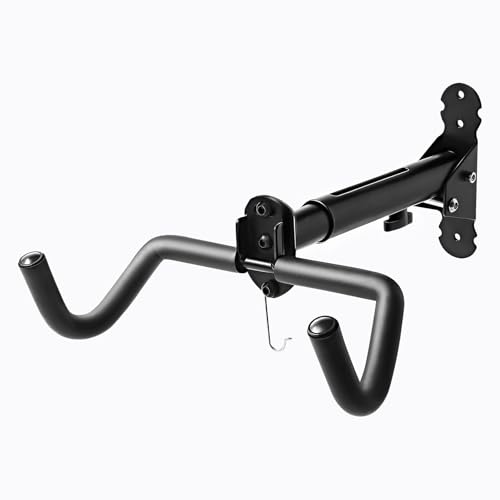
Gootus Bike Wall Mount Hanger Horizontal Rack

monTEK Swivel Bike Wall Mount 2 Pack
What Each Pick Brings To The Table
A fixed L-shaped hook suits a garage where a bike stays put for days between rides. You can lift most road and mountain bikes onto it, then pull the front wheel straight off again without a lever or strap. The iron frame carries 77 to 99 pounds, so heavier cruisers and e-bikes sit within the stated limit for most garages.
Rubber on the hook cushions the rim, and a locking detail helps stop a bump from knocking the wheel loose. Orientation matters here, because the maker warns that installing the hook opposite the pictured direction creates uneven stress. That detail makes a careful first mounting session worthwhile.
Noteworthy Benefits
- Iron construction with a 77 to 99 pound limit
- Rubber coating helps limit rim scratches
- Two hooks cover a pair of bikes
- Simple hang and detach motion for daily use
Things To Consider
- Fixed angle gives no swivel for tight parking bays
- Correct hook direction matters for even loading
A 150-degree swivel changes the whole parking math beside a car. The bike hangs vertically, then turns flat against the wall, so the frame no longer juts into the walkway. In our view, that rotation is the main reason to pick this over the fixed Housolution hook above.
Solid steel carries 66 pounds, and rubber coating cushions wheel contact points. Tire width caps at 3.54 inches, so fat tires need a check before mounting. Screws suit concrete, masonry, or stud walls, and plasterboard alone will not hold the load.
The Case For It
- 150-degree swivel stores bike flat to the wall
- Steel frame rated to 66 pounds
- Rubber coating cushions rims and spokes
- Fits road, mountain, cruiser, BMX, and e-bike styles
- Mounting screws included for solid walls
Worth Noting
- Tires wider than 3.54 inches will not fit
- Single pack covers one bike only
Horizontal storage spreads the bike along the wall instead of stacking it upright. You get a layout that works well on a long garage wall where vertical space feels tight. An extendable beam fits handlebars up to 32 inches, and the hook angle adjusts to keep frames level.
Steel construction carries 48.5 pounds, and sponge wrapping covers the hook contact area. Step-through frames, fat bikes, and handlebars past 31.5 inches fall outside the fit list. That limit matters more than the load number for some households.
Advantages To Know
- Horizontal layout suits long, low walls
- Beam extends to 32-inch handlebars
- Sponge-wrapped hook cushions frame contact
Trade Offs
- 48.5 pound limit is lower than vertical picks
- Step-through and fat bikes are excluded
- Needs stud, brick, masonry, or concrete
Two swivel mounts in one pack suit a household storing a pair of bikes side by side. Each mount turns 150 degrees, with rotation split to plus 65 and minus 85 degrees, so bikes can angle toward a corner or sit flat. That two-pack setup differs from the single monTEK mount earlier in the list.
Solid steel carries 66 pounds per mount, and a wall tire block helps keep tire marks off paint. Tire width caps at 3.54 inches and tire-to-hub height at 3.15 inches, so measure wide tires first. Mounting screws suit concrete and stud walls.
The Practical Payoff
- Two mounts store two bikes on one wall
- 150-degree swivel with bearing system
- Rubber coating cushions wheel contact
- Wall block helps protect paint from tires
Minor Gripes
- Wide tires beyond 3.54 inches will not fit
Four fixed hooks spread storage across a family garage, a shed corner, or a small bike shop. You can place hooks where each bike actually lives, instead of crowding two bikes onto one short wall section. Iron construction carries 77 to 99 pounds per hook, matching the two-pack version earlier in the list.
Vertical hanging keeps floor space open for bins and tools, and rubber coating cushions contact points. No assembly is needed, but solid walls only will hold the load safely. Hook direction follows the pictured orientation for even stress.
The Upside
- Four hooks cover four bikes or split locations
- Iron frame rated to 99 pounds
- Rubber coating helps limit scratches
Points To Note
- Fixed hooks do not swivel flat to the wall
- Solid wall mounting is required
Who It Suits Best
Households with three or four bikes sharing a garage or shed.
Where Another Pick Suits Better
The monTEK Swivel Bike Wall Mount 2 Pack suits garages where bikes need to turn flat beside a parked car.
Horizontal hanging keeps a bike low and level along an apartment wall or shed interior. The beam extends for handlebars up to 32 inches, and the hook tilts to level different frame shapes. For most apartments, that level stance looks tidier than a steep vertical angle.
Steel carries 48.5 pounds, and sponge wrapping covers the hook. Road, mountain, cyclocross, hybrid, and kid bikes fit the stated list, while step-through frames and fat bikes do not. Screws and plugs come in the package for solid mounting surfaces.
Real-World Strengths
- Horizontal layout keeps bikes level and low
- Adjustable beam fits handlebars to 32 inches
- Sponge covering cushions frame contact
- Screws and plugs included for installation
Small Caveats
- Lower 48.5 pound limit than vertical picks
- Step-through and fat bikes are excluded
Made For
Apartment dwellers with a long wall and a standard road or hybrid bike.
Consider Something Else When
The Zostera Swivel Bike Wall Mount Rack 150° 2 Pack suits households storing two bikes vertically in a garage.
Two swivel mounts give a two-bike garage the same flat-to-wall trick as the single monTEK mount, without buying separately. You can angle each bike left or right across 150 degrees, then swing it flush when the car pulls in. Solid steel carries 66 pounds per mount.
Rubber coating cushions wheels, rims, and spokes during hanging. Tires wider than 3.54 inches fall outside the fit range, so wide rubber needs measuring first. Screws suit concrete, masonry, or stud walls, and drywall without a stud behind it will not support the load.
Everyday Perks
- Two mounts store two bikes vertically
- 150-degree swivel turns bikes flat
- Steel frame rated to 66 pounds each
- Rubber coating cushions wheel contact
- Screws included for solid walls
Areas To Watch
- Tires wider than 3.54 inches will not fit
- Needs stud, concrete, or masonry backing
- Two mounts need enough wall length to space
What Matters Most Before Choosing Wall Bike Hanger
Wall Type Comes First
Check the wall material before selecting any hook. Concrete, masonry, brick, and studs hold screws reliably, while plasterboard alone needs a stud behind it. Measure handlebar width next, because horizontal racks cap at 32 inches and vertical hooks need tire clearance.
Weight and Tire Size Set Limits
Compare bike weight against the stated load limit, not the heaviest bike in the household. Measure tire width too, since swivel mounts cap at 3.54 inches. A bike that exceeds either number needs a different style, even when the frame looks compatible.
Layout Shapes Daily Use
Vertical hooks use less wall length, horizontal racks spread a bike along a long wall, and swivel mounts turn flat beside parked cars. Pick the layout that matches the wall length available. That choice affects how often the bike gets used, because awkward access discourages regular rides.
Key Considerations Across These Picks
Common Shopping Slip Ups
Many shoppers match frame style first and skip tire width and wall type. That order leads to a mount that looks right but cannot hold the bike safely. Measure the tire, weigh the bike, and locate a stud before drilling.
What The Higher Tier Buys
Higher-tier mounts add swivel bearings, steel frames, and wider tire clearance. Those parts pay off in garages where bikes must turn flat or carry heavier frames. Basic fixed hooks remain a sound choice for simple, open walls.
Frequently Asked Questions
Can a wall mount hold an e-bike?
Some models can, provided the bike weight stays within the stated limit. The 66-pound swivel mounts and 77 to 99 pound fixed hooks cover many e-bikes, so check the exact weight first.
Which wall types work for mounting?
Concrete, masonry, brick, and walls with a solid stud behind plasterboard work for these picks. Plasterboard or drywall without backing will not support a hanging bike.
Do swivel mounts suit a garage with a parked car?
Yes, that is their main strength. You can rotate a bike flat against the wall, which keeps the frame out of the parking space and walkway.
What tire width fits most swivel mounts?
Most swivel picks here cap at 3.54 inches wide. Measure the tire before mounting, because wider rubber will not seat properly in the hook.
Vertical or horizontal storage suits a small apartment?
Vertical storage uses less wall length, while horizontal storage spreads the bike low along a long wall. Choose based on wall length, ceiling height, and handlebar width.
Final Verdict
For a single bike beside a parked car, the monTEK swivel mount turns flat and saves the most floor space. For two bikes, the two-pack swivel options cover a pair without separate purchases. If space is tight, you should prioritize swivel movement, tire clearance, and a solid wall before anything else.