
A toddler who is still mastering walking needs a ride that feels stable at ankle height, not a miniature bicycle with pedals added. That need shows up at a first birthday, on a smooth driveway, and during short hallway glides at home. You can narrow the choice by matching age range, seat height, and weight before looking at colors. Shorter frames suit new walkers, while adjustable frames last longer as legs grow.
A Side-By-Side Look

Youthkkee Toddler Balance Bike, Tool-Free Adjustable
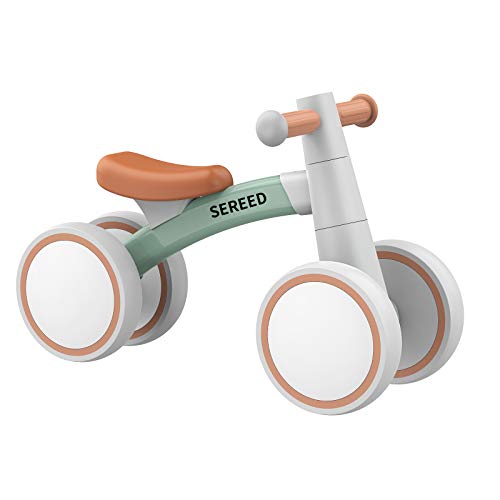
SEREED Baby Balance Bike for 1 Year Old

Gamfeiny Colorful Lighting Baby Balance Bike 10-36 Month

SEREED Toddler Balance Bike 2 Year Old Adjustable

Umatoll Toddler Balance Bike 2 Year Old

SEREED Toddler Balance Bike Adjustable Bike Toy for 2-5

Bobike Baby Balance Bike Toys for 12-36 Months
A Closer Look At Each Pick
Youthkkee suits children moving past the four-wheel stage toward true two-wheel balance. Tool-free adjustment matters because seat height changes quickly during these months. The frame supports up to 110 lbs, which gives headroom as a child grows heavier.
The 12-inch wheel and low center of gravity, meaning the balance point sits low, give a steadier feel on paved paths. You can expect the padded seat and non-slip grips to help small hands stay placed during short rides. In our view, rounded frame edges also reduce bumps during tumbles.
A Few Strong Suits
- Adjustable seat and handlebars for growing legs
- Puncture-resistant tires for paved paths
- Padded seat for longer practice sessions
- 110 lb weight capacity for extended use
- Custom plate with two stickers included
Things To Consider
- 12-inch wheel feels larger than baby models
- 3.23 kg weight needs trunk space for trips
SEREED Baby Balance Bike targets the 12 to 24 month window, when walking practice and first rides overlap. At 1.6 kg, the aluminum alloy frame stays light enough for parents to carry between rooms. That weight also helps a child push the bike without much strength.
Closed, widened wheels reduce the chance of small feet catching during pushes. Depending on floor surface, the non-slip TPU wheels suit indoor tiles and smooth outdoor paving. The 135 degree steering limit keeps turns shallow for new riders.
Reasons It Performs
- Only 1.6 kg for easy carrying
- Aluminum alloy frame keeps weight low
- Closed wheels protect small feet
- Softly supportive seat for short rides
Worth Noting
- Narrow age range limits growth window
- Mini size suits indoor use more than trails
Who It Suits Best
New walkers aged 12 to 24 months who need a low, light starter for indoor glides.
Where Another Pick Suits Better
Umatoll Toddler Balance Bike 2 Year Old suits taller children who will outgrow a mini frame within months.
You get a light-up rear wheel on a four-wheel starter frame for ages 10 to 36 months. Motion powers the glow, so no batteries are needed for the lighting effect. That detail adds visual interest during evening walks around the block.
The 135 degree steering limit keeps turns shallow, which helps new riders avoid tipping sideways. For most driveways, the soft PU seat and EVA handle give a gentler grip for small hands. Closed wheels also keep feet clear of moving parts.
Good Reasons To Consider
- Light-up wheel adds play value
- No batteries needed for lighting
- Buckle design assembles in three minutes
- Soft PU seat for comfort
- 4.6 lbs weight for carrying
Trade Offs
- Four wheels delay two-wheel balance practice
- Lighting depends on wheel motion
SEREED Toddler Balance Bike for ages 2 to 3 focuses on adjustment range rather than novelty. Seat height moves from 12.6 to 17.1 inches, and handlebar height moves from 19.6 to 22.5 inches. That span helps the same frame fit a short two-year-old and a taller three-year-old.
Quick-release levers, meaning hand-operated clamps, allow height changes without tools. EVA foam tires resist punctures and stay quiet on indoor floors. For most apartment living, that quiet tire type also reduces noise in shared hallways.
What Stands Out
- Seat range 12.6 to 17.1 inches
- Handlebar range 19.6 to 22.5 inches
- EVA foam tires never go flat
- Carbon steel frame supports 110 lbs
- Plate and stickers allow personalization
Minor Gripes
- 7.8 lbs weight feels heavier than baby models
- Higher starting seat may suit shorter toddlers less
Umatoll covers 18 months to 5 years, giving a longer growth window than several other picks here. Tool-free seat and handlebar changes keep fit current as height increases. Seat height spans 11 to 15.7 inches, and handlebar height spans 19 to 20.9 inches.
A footrest under the seat gives younger riders a place to lift their feet while gliding. You can use that footrest to practice balance before full gliding begins. On rougher pavement, puncture-resistant tires may feel firmer than foam tires on the SEREED models.
Positive Points
- Age span 18 months to 5 years
- Footrest helps practice lifting feet
- Puncture-resistant tires need no inflation
- Carbon steel frame for stability
Points To Note
- Handlebar range narrower than SEREED models
- Long use span still requires height checks
Made For
Children from 18 months to 5 years who need one frame to last through several growth stages.
Consider Something Else When
Gamfeiny Colorful Lighting Baby Balance Bike 10-36 Month suits new walkers who need four wheels for stability first.
SEREED Adjustable Bike Toy for ages 2 to 5 sits close to the earlier SEREED model, with a slightly lower starting seat. Seat height spans 11.8 to 16.5 inches, while handlebars span 19.6 to 22.5 inches. That lower start helps shorter two-year-olds get feet flat on the ground.
The carbon steel frame supports up to 110 lbs, and the 3.5 kg weight keeps carrying manageable. In a small hallway, the wider frame may feel bulky to store upright. EVA foam tires stay quiet indoors and resist punctures outdoors.
The Practical Payoff
- Lower starting seat at 11.8 inches
- Quick-release height changes without tools
- EVA foam tires for indoor and outdoor use
- Soft saddle and rubber grips
Small Caveats
- Similar to earlier SEREED model in design
- 7.8 lbs weight needs space in a car trunk
Bobike covers 12 to 36 months with a four-wheel layout aimed at first rides. Closed wheels and a 135 degree steering limit address foot safety and tipping concerns. The design encourages walking pushes before real gliding begins.
The steel frame and soft seat suit indoor and outdoor use under adult guidance. For most families, assembly in a few minutes without complex tools reduces setup friction. Non-slip wheels help on smooth floors without marking them.
Why It Works Well
- Four wheels for early stability
- Closed wheels protect feet
- 135 degree steering limit reduces tipping
- Quick assembly without complex tools
Areas To Watch
- Four-wheel layout suits beginners more than advanced riders
- Adult guidance needed for indoor and outdoor play
What Matters Most When Choosing Toddler Balance Bikes
Seat Height and Fit
Seat height decides whether feet reach the ground flat, which builds confidence during glides. You should check the lowest seat setting against inseam length before ordering. A frame that starts too high forces tiptoe pushes and short practice sessions.
Weight and Carrying
Weight ranges from 1.6 kg on baby models to 3.5 kg on adjustable toddler models. Lighter frames suit daily carrying up stairs, while heavier frames often bring wider adjustment ranges. Trunk space also matters for park trips, so measure storage before travel days.
Wheel Type and Surface
EVA foam tires resist punctures and stay quiet indoors, while puncture-resistant tires handle mixed outdoor surfaces. Closed wheels on baby models keep feet away from spokes. Your main riding surface, tile, pavement, or gravel, should guide the tire choice.
Age Range and Growth
A narrow range like 12 to 24 months fits a specific stage, while 18 months to 5 years spreads cost over more years. Adjustment range matters more than the headline age range. Handlebar height should rise with seat height to keep steering comfortable.
Key Considerations Across These Picks
Common Shopping Slip Ups
Many shoppers pick by color or character theme and skip seat height checks. That mistake leads to a bike that sits too high for months. Measure inseam length and compare it with the lowest seat setting first.
What The Higher Tier Buys
Higher-tier frames often add wider adjustment ranges, carbon steel construction, and puncture-resistant tires. Those details help when a child will ride for years rather than months. Paying more makes sense when the adjustment span covers the full growth period.
Frequently Asked Questions
What age should a child start on a balance bike?
Most models here start between 10 and 18 months, depending on walking skill. You can start when feet reach the ground flat on the lowest seat setting.
How do you know the seat height is right?
Feet should rest flat with knees slightly bent while seated. A seat that is too high makes pushes unsteady and shortens practice time.
Are foam tires better than regular tires?
EVA foam tires resist punctures and stay quiet on indoor floors. They suit mixed indoor and outdoor use without inflation checks.
Can a balance bike be used indoors?
Yes, many models suit smooth indoor floors under adult guidance. Non-slip wheels help grip tiles without marking surfaces.
How long will an adjustable model last?
Models spanning 18 months to 5 years cover several growth stages with tool-free changes. Seat and handlebar ranges determine how long the fit stays usable.
Closing Remarks
For a first ride at twelve months, the lightweight SEREED baby model fits the stage well. For longer use through age five, the Umatoll and SEREED adjustable models offer wider growth ranges. Match seat height, weight, and wheel type to daily space and surface, and the choice becomes clear.