
A soft fork at the trailhead changes how a bike tracks over roots, braking bumps, and small chatter. You set pressure by body weight, riding style, and terrain, then fine tune in small steps. Your air suspension needs a pump that reaches high pressure in small volumes, holds a seal on the valve, and lets air out in controlled amounts. These seven options cover that job with different hose, gauge, and valve approaches.
A Snapshot Of The Selections

RockShox High-Pressure Fork & Shock Pump 300psi
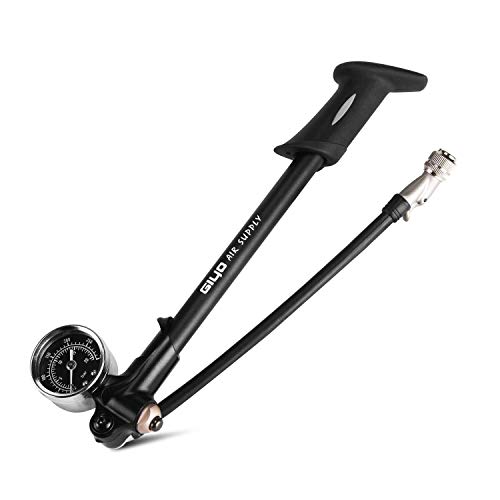
Giyo High Pressure Shock Pump 300 PSI (Black)
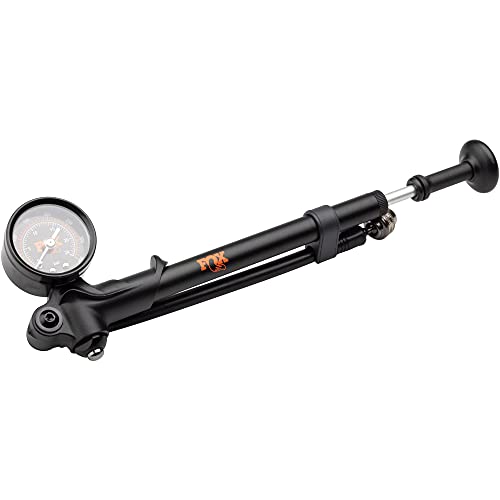
Fox High Pressure Shock Pump

Hycline Shock Pump for Mountain Bike 300 Psi

JACO ShockPro MTB Shock Pump 300 PSI

RHEOLITH High Pressure Shock Pump 300 PSI

Fox Factory HP Shock Pump 350PSI Swivel Head
The Details Behind The Selections
RockShox forks respond well to this straightforward pump, and the 300 psi ceiling covers most air fork and rear shock setups. You get a swivel hose that turns at the valve, which helps in tight frame triangles where a fixed hose feels awkward. A Schrader valve, the standard car-style valve with a spring-loaded core, is the only valve type listed for this head.
The aluminum barrel gives a firm pumping feel, and the finger tap bleeder releases small amounts of air for fine adjustment after an overshoot. That bleeder matters because suspension pressure is set in small increments, and starting over from zero wastes time. For garage use between rides, the ergonomic handle keeps strokes steady through the final high pressure range.
Useful Strengths
- 300 psi maximum suits high pressure forks and shocks
- 360 degree swivel hose eases connection at awkward angles
- Finger tap bleeder allows small pressure corrections
- Aluminum barrel construction supports repeated pumping
Things To Consider
- Schrader only head limits use on Presta valve setups
- Compact barrel means more strokes to reach high pressure
Air loss on disconnect is a common annoyance, and the lever lock head on this Giyo pump addresses that moment directly. The lock holds the seal while the head comes off, so a careful setup keeps a small pressure drop from undoing a fine adjustment. Compared with the RockShox pump, the focus here shifts from swivel reach to seal retention.
Your Schrader valve fork or rear shock is the intended target, and the maker states plainly that tire inflation is not the purpose. A rubber handle gives a larger grip than a hard plastic one, which helps on the last strokes near 300 psi. The foldable rotary hose keeps total length short for a bag or drawer.
Bright Spots
- Lever lock head reduces air loss during removal
- Rubber handle provides a larger, softer grip
- Foldable hose keeps the pump compact for storage
Worth Noting
- Designed for suspension valves, not tire inflation
- Lever lock needs correct operation to hold a seal
Who It Suits Best
Riders with Schrader valve suspension who lose pressure during disconnect.
Where Another Pick Suits Better
Hycline Shock Pump for Mountain Bike 300 Psi suits riders who need Presta compatibility.
Fox suspension owners will recognize the black 350 psi pump as a matched tool for the brand range. You’ll notice the higher ceiling compared with the 300 psi options, which gives headroom for shocks that run near the top of their range. The bleed valve and swivel head keep the core workflow familiar.
At 7.2 ounces, the pump stays light enough for a pack on longer rides, and the manual handheld format needs no battery or charger. In our view, the appeal is brand fit and pressure headroom rather than a long feature list. The honest read is a focused tool for Fox setups, not a universal adapter for every valve type.
Advantages To Know
- 350 psi maximum exceeds the 300 psi ceiling on most picks
- Bleed valve supports controlled pressure release
- Swivel head improves access around linkages
- 7.2 ounce weight suits pack carry
- Fox Factory model 027-00-006 matches brand systems
Trade Offs
- Focused design offers fewer listed extras than multi valve pumps
Valve compatibility sets this Hycline pump apart, with switching between Presta and Schrader valves for road and mountain setups. A Presta valve uses a narrower stem with a small locking nut, so a head that covers both types removes a common compatibility check. That flexibility makes the pump useful across more than one bike in a household.
Your gauge reading comes from a 1.5 inch dial with PSI and Bar scales, which helps riders who think in either unit. The pull out T handle and 26.5 cm hose that rotates 360 degrees give leverage and reach at the valve. At 13 inches long and 0.17 kg, the aluminum alloy barrel fits a backpack for trailside adjustments.
Where It Delivers
- Works with Presta and Schrader valves
- 1.5 inch gauge shows PSI and Bar
- T shaped handle improves pumping leverage
- 26.5 cm rotating hose reaches varied valve positions
Minor Gripes
- Tire inflation takes longer than a floor pump
- 300 psi ceiling sits below the Fox 350 psi options
- Valve switching needs a correct seal check before pumping
Gauge accuracy is the headline here, with a 300 psi dial calibrated to ANSI B40.1 accuracy standards. That standard relates to gauge tolerance, so repeat settings land closer to the intended number across sessions. For riders who set sag by weight and then chase a precise repeat value, that consistency has practical value.
Aircraft grade aluminum paired with ABS forms the body, and a bleeder button releases pressure for micro adjustment. The compact shape fits a trail bag, and the flexible hose with twist on nozzle connects to fork, rear shock, or dropper post valves. Depending on frame clearance, the twist on connection may need a steadier hand than a lever lock head.
Strong Points
- Gauge calibrated to ANSI B40.1 accuracy standards
- Aluminum and ABS construction for durability
- Bleeder button for micro pressure adjustment
- Compact design fits a trail bag
Room For Improvement
- Twist on nozzle demands careful alignment on tight valves
Made For
Riders who repeat suspension settings and value gauge consistency.
Consider Something Else When
RHEOLITH High Pressure Shock Pump 300 PSI suits riders who prioritize low weight for pack carry.
Weight and folded length drive the appeal of this RHEOLITH pump for riders who carry tools on every ride. You can slip a 0.34 lb pump into a hydration pack or jersey pocket, and the 12.6 inch folded length extends to 19.7 inches in use. That extension keeps stroke length workable despite the small packed size.
The slim 0.6 inch barrel reduces resistance on each stroke, which matters near 300 psi on a downhill rear shock. A CNC aluminum alloy body with engineering plastic parts, a micro bleed button, and a 360 degree swivel hose round out the design. The head fits Presta and Schrader valves without loose adapters, unlike the Schrader only RockShox head.
A Strong Showing
- 0.34 lb weight fits hydration packs easily
- Slim 0.6 inch barrel eases strokes at high pressure
- Micro bleed button allows precise fine tuning
- 360 degree swivel hose reaches tight valve placements
- Fits Presta and Schrader valves without adapters
Points To Note
- High volume tire inflation needs many strokes in an emergency
- Engagement knob sequence matters to prevent air loss
Linkage access is the problem this Fox Factory pump solves, with a stainless swivel head that reaches shocks where a traditional head gets in the way. The 350 psi ceiling matches the maximum listed for DPS and DPX2 shocks, so headroom is not a concern on those models. Compared with the earlier Fox pump, the stainless head and 6063 aluminum barrel and handle add material detail.
Your fine adjustment comes from a micro adjust bleeder that releases air in 2 to 3 psi steps per push. A foldable hose keeps the pump tidy in a toolbox or pack, and the analog gauge reads directly without batteries. For most Fox setups, that combination of reach and small step adjustment keeps setup sessions short.
Notable Upsides
- 350 psi maximum covers DPS and DPX2 shocks
- Stainless swivel head reaches linkage crowded valves
- Micro adjust bleeder releases 2 to 3 psi per push
Softer Spots
- Analog gauge needs a close look in low light
- Fox focused design adds little for non Fox valve needs
Pressure, Fit, And Hose Reach Explained
Valve Fit Comes First
Valve type decides shortlist fit before pressure numbers matter. Schrader valves use a wider stem, while Presta valves use a narrower stem with a locking nut, and a head built for one type will not seal correctly on the other. Riders with multiple bikes should check each valve before selecting a head.
Pressure Ceiling And Bleeder Control
A 300 psi ceiling covers most forks and shocks, while 350 psi adds headroom for specific Fox models. The bleeder matters just as much, because releasing air in 2 to 3 psi steps lets settings land near a target without a full reset. Gauge readability also affects repeatability, with larger dials and calibrated gauges helping in garage light.
Hose Reach And Pack Size
Hose rotation helps when linkages crowd a rear shock valve, and a swivel head reduces stress on the stem during pumping. Folded length and weight decide whether a pump rides along on long routes or stays in a workshop drawer. Riders who adjust pressure at the trailhead gain more from a light, compact pump than from extra features.
Key Considerations Across These Picks
Common Shopping Slip Ups
A frequent slip is matching a pump to tire inflation instead of suspension volume. Another is ignoring valve type, then discovering a seal problem at the first connection. Checking valve type, pressure ceiling, and hose reach before selection avoids both issues.
What The Higher Tier Buys
Higher tier pumps often add material upgrades, such as stainless heads or CNC alloy bodies, plus finer bleeder steps. Those details help with linkage access and repeat settings, not with basic inflation. Paying more makes sense when frame clearance or pressure range demands those specific traits.
Frequently Asked Questions
Can a shock pump inflate tires?
A shock pump can inflate tires in an emergency, but the small barrel volume means many strokes. A floor pump moves more air per stroke for tires.
What pressure do forks and rear shocks need?
Pressure varies by model, rider weight, and riding style, with sag as the usual starting point. The pump gauge helps repeat a chosen setting, and the bleeder helps correct an overshoot.
Why does air escape when the pump disconnects?
Many heads release a small amount of air as the seal breaks during removal. Lever lock heads and careful removal sequences reduce that loss.
Do Presta and Schrader valves need different heads?
Presta and Schrader valves have different stem shapes and sealing needs. Pumps listed for both types switch or fit each stem without loose adapters.
Is 300 psi enough for most suspension?
A 300 psi ceiling covers most air forks and rear shocks in this list. Fox models listed at 350 psi suit shocks that run closer to that higher ceiling.
Final Verdict
For a RockShox setup, the RockShox pump covers the core job with a swivel hose and bleeder. For Fox shocks with crowded linkages, the Fox Factory HP pump adds reach and a higher ceiling. For pack carry, the RHEOLITH pump keeps weight low. Match valve type first, then pressure ceiling, and the right choice becomes clear.