
A mountain bike leaning in a corner can block a walkway and collect knocks from daily traffic. A dedicated stand lifts the wheels into a fixed tray, keeps the frame clear of walls, and makes storage feel tidy in a garage or apartment. You can match the style to a repair workflow or to simple parking, and that choice shapes everything else. Wide tires, heavier frames, and limited floor space all push the decision in different directions.
A Side-By-Side Look
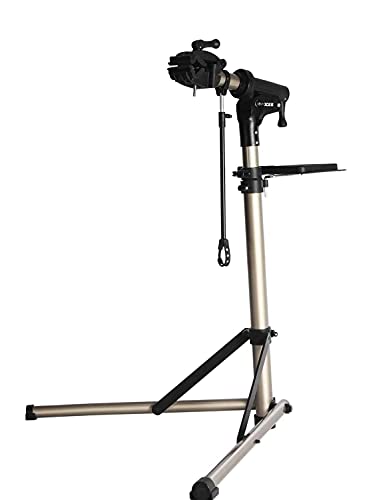
CXWXC Bike Repair Stand RS-100 Champagne

ALIXUEQIN Bike Stand Floor Portable Garage Red

CXWXC Bike Rack Garage Stand Floor 20-29 Inch

Vertical Bike Stand Freestanding Garage Rack 24-29 Inch
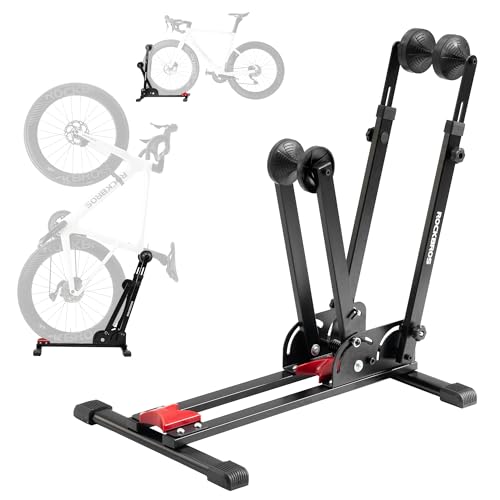
ROCKBROS Bike Stand 2-in-1 Vertical Horizontal 20-29 Inch

Bike Floor Stand Adjustable Indoor Rack 16-29 Inch

CHEPARK Bike Floor Stand Rack Indoor Garage 20-29 Inch
A Breakdown Of The Leading Choices
You get a repair stand rather than a parking tray, with the bike held at working height for chain, gear, and wheel tasks. The clamp rotates a full circle, so the drive side, meaning the chain and gear side of the bike, stays accessible without repositioning the frame.
Height adjusts from 102 to 161 cm, which suits a range of standing positions in a garage workshop. For most garages, the tripod base needs clear floor space around it, and the included rod steadies the front wheel during work.
What Stands Out
- 360 degree clamp rotation for access to both sides
- Height range suits standing maintenance work
- Aluminum barrel keeps the frame lighter to carry
- Rubber feet grip smooth floors and protect surfaces
- Front wheel rod limits swivel during adjustments
Things To Consider
- 60 pound limit excludes some heavier builds
- Tripod footprint needs open floor space
Rolling the wheel into a lower tray locks the tire against a support arm, and that simple motion suits daily parking after a ride. Unlike the CXWXC repair stand, this design holds the bike upright for storage rather than lifting it for work.
Heavy duty steel construction and four non slip feet keep the base planted on a garage floor. Depending on tire width, the tray accepts up to 3.5 inches, which covers many mountain bike tires in the 24 to 29 inch range.
What It Does Well
- No lifting needed to roll a bike into the tray
- Steel frame supports steady upright parking
- Contact stays on the tire, away from rim and frame
- Rubber feet reduce movement on smooth floors
Worth Noting
- 65 pound shelf capacity limits heavier e-bikes
- Assembly note warns against fully tightening tray screws
- Only one bike per stand
Who It Suits Best
Home riders who park the same bike daily in a garage and want quick roll-in storage.
Where Another Pick Suits Better
CXWXC Bike Repair Stand RS-100 Champagne suits riders who need raised access for maintenance tasks.
You park a heavier bike upright without drilling into a wall, and the wheel tray holds the tire while the frame stays clear of knocks. Capacity reaches 83.6 pounds, which gives more headroom than the ALIXUEQIN model at 65 pounds.
Steel construction with a rust resistant coating suits garages where humidity varies through the seasons. In our view, the wider 20 to 29 inch range also helps households with mixed bike sizes, including smaller wheels.
Key Advantages
- Supports bikes up to 83.6 pounds
- Fits tires up to 4 inches wide
- No drilling or wall mounting needed
- Roll-on loading avoids lifting the bike
- Tire only contact protects rim and frame
- Compact footprint for garage corners
Trade Offs
- Single bike storage only
Four lockable casters, meaning wheels that rotate and lock in place, let the whole rack move between a garage corner and a patio. That mobility differs from fixed floor trays, and it helps in shared spaces where the bike needs to shift for other gear.
Your vertical footprint stays narrow, with V shaped brackets and seatpost support forming a triangular structure. Straps steady the front wheel and seatpost, and the adjustable rod adapts to different bike sizes within the 24 to 29 inch range.
Useful Highlights
- Lockable casters allow repositioning between rooms
- Upright design saves floor space in corners
- Adjustable height fits different bike sizes
Minor Gripes
- 55 pound limit is lower than steel tray models
- Straps add a small setup step for each park
You switch between vertical and horizontal parking, and that flexibility helps bikes with fenders, baskets, or kickstands that do not suit upright mode. Horizontal mode takes more floor length, while vertical mode keeps the footprint compact.
The frame folds flat to 21.45 by 15.75 by 5 inches for storage behind a door or under a bed. For most apartments, that foldaway size matters more than a fixed tray that stays in place all year.
Strengths Worth Knowing
- Two parking orientations for different bike setups
- Folds flat for storage behind doors or furniture
- Spring loaded arms adjust without tools
- Anti slip pads protect indoor floors
- Carbon steel frame with curved wheel rollers
Room For Improvement
- Tire width limited to 2.4 inches
- Vertical mode excludes bikes with added accessories
- Horizontal mode needs a longer floor run
You cover a wider wheel range than most floor trays, from 16 inches up to 29 inches, including BMX and commuter styles. Adjustable wheel stabilizers pop out to secure the tire after the bike rolls inward.
Heavy duty metal construction keeps the base steady in garages, sheds, and basements. The small footprint helps in tight corners, though the design stays focused on parking rather than raised repair work.
Positive Takeaways
- Handles 16 to 29 inch wheels in one stand
- Tire slot accepts widths up to 3.55 inches
Points To Note
- Single wheel design holds one bike at a time
Made For
Households with mixed bike sizes who need one adjustable parking stand for indoor storage.
Consider Something Else When
Vertical Bike Stand Freestanding Garage Rack 24-29 Inch suits riders who want movable upright storage with casters.
Rolling the bike onto a wheel tray keeps loading simple, with no lifting required for routine parking. A wide base contacts the wheel at three points, which steadies the bike better than leaning against a wall.
Your tire width check matters here, because compatibility stops at 2.4 inches and heavy e-bikes are not recommended. For standard mountain and road bikes in the 20 to 29 inch range, the small footprint fits apartments and garages well.
A Strong Showing
- Roll-in loading with no lifting needed
- Three point wheel contact for stability
- Rubberized feet resist movement on polished floors
- Lightweight portable frame for moving between spaces
Softer Spots
- 2.4 inch tire limit excludes wider mountain tires
- Not recommended for heavy e-bikes
What Matters Most Before Choosing Mountain Bike Stands
Tire Width and Wheel Size
Measure tire width before comparing trays, because a 4 inch limit and a 2.4 inch limit lead to very different fits. You gain a cleaner match by checking both numbers against the bike that will use the stand most often.
Weight Capacity and Frame Contact
Capacity ranges from 55 pounds on movable vertical racks to 83.6 pounds on heavier steel trays. Tire only contact protects rims and frames, while clamp stands hold the frame itself for repair work.
Footprint and Floor Protection
Rubber feet and non slip pads matter on polished garage floors, and a tripod base needs more open space than a narrow tray. Foldable frames suit small apartments, while casters help when storage needs to shift between rooms.
Repair Use Versus Parking Use
A repair stand lifts the bike to waist height and rotates for access, which suits chain and gear work. Parking stands keep the bike upright at floor level, and that split should drive the shortlist from the start.
Key Considerations Across These Picks
Common Shopping Slip Ups
Skipping tire width checks causes the most avoidable mismatch, especially with wide mountain bike tires. Confirming weight capacity before ordering also prevents a stand that looks right but holds too little.
What The Higher Tier Buys
Higher capacity steel, wider tire clearance, and rotating clamps add real function for heavier bikes and hands-on work. Paying more makes sense when those details match daily use, not as a general upgrade.
Frequently Asked Questions
Does a floor stand work for wide mountain bike tires?
Some models accept tires up to 4 inches wide, while others stop at 2.4 inches. You should compare that limit with the actual tire before choosing a tray design.
Can a parking stand hold an e-bike?
Capacity varies by model, with one steel tray rated to 83.6 pounds. Heavier e-bikes need a stand rated above the full bike weight.
Do stands damage garage floors?
Rubber feet and non slip pads are designed to grip smooth floors and reduce scratching. Your floor type still matters, because polished surfaces need more grip than concrete.
What is the difference between a repair stand and a parking stand?
A repair stand clamps the frame at working height and rotates for access. A parking stand holds a wheel at floor level for upright storage.
Do stands require drilling into a wall?
Freestanding floor models do not require drilling or wall mounting. Assembly typically uses included screws and tools for the base or tray.
Final Thoughts
Match tire width, weight, and floor space first, then decide between repair access and simple parking. You will land on a stronger fit by starting with those three checks and narrowing from there.