
Hardpack speed comes down to tread shape, casing, and width working together. Riders covering long mixed routes need low rolling resistance on pavement without losing control on loose gravel. These seven options balance those demands across different widths and protection levels. You can match width to clearance and tread to terrain for a setup that suits long rides.
An Overview Of The Picks

Maxxis Rambler 700x40C Tubeless Gravel Tire
Panaracer GravelKing GKX1 Classic 700x40C Black/Brown

Maxxis Rambler 700x45C Tubeless Gravel Tire Tan
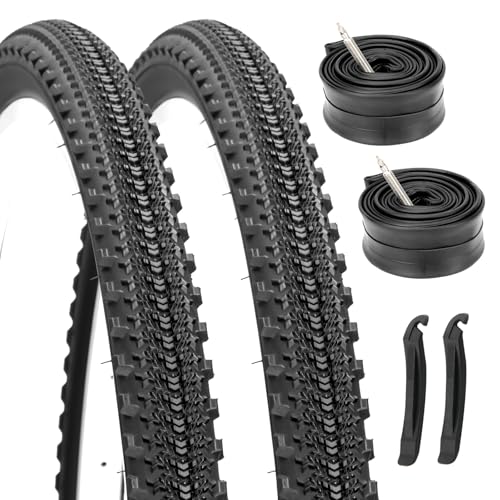
Hycline 700x42C Gravel Bike Tire Set 2-Pack

Continental Terra Competition 700×40 Gravel Tire

Michelin Power Adventure Tubeless 700×42 Tire
WTB Vulpine Gravel Bike Tire 700c Tubeless Folding
Why These Options Stand Out
Packed center knobs with ramped profiles suit hardpack and pavement, while wider spaced side knobs handle loose corners. That split shapes the 40 percent road and 60 percent off-road balance described for mixed riding. You get a familiar do-it-all pattern that works for training rides and events alike.
Dual compound rubber separates rolling and grip zones across the tread. SilkShield bead-to-bead protection adds coverage beyond the tread, and tubeless readiness allows lower pressure or tube use. At 1.1 pounds, weight stays moderate for a 40C casing. For most riders, that combination keeps speed without giving up cornering control.
A Favorable Mix
- Ramped center knobs support efficient rolling on hardpack
- Dual compounds balance speed with cornering grip
- Tubeless ready design allows lower pressure setup
- Bead-to-bead protection covers sidewall areas
Things To Consider
- 40C width needs frame clearance on tighter gravel frames
- Side knobs spaced for loose terrain may feel less planted on deep mud
Compared with the Maxxis Rambler 700x40C Tubeless Gravel Tire, this Panaracer option leans more aggressive for rough terrain. Center tread stays tuned for speed, while open spacing sheds mud and debris. You’ll notice that design intent on wet gravel where clearing matters more than a smooth centerline alone.
ZSG compound aims for grip in wet and dry conditions with lower rolling resistance. BeadLock helps rim security during tubeless setup, and AX-Alpha layer plus 120 TPI casing, meaning threads per inch in the fabric, add puncture coverage. At 16 ounces, weight is lighter than several 40C rivals here.
Strengths Worth Knowing
- Mud-shedding spacing helps maintain traction in wet conditions
- ZSG compound targets wet and dry grip with fast rolling
- 120 TPI casing supports a supple ride feel
- BeadLock design aids tubeless rim security
- 16-ounce weight keeps rotating mass low
Worth Noting
- Aggressive pattern can feel less smooth on clean pavement
- Black and brown sidewall color limits styling choices
The wider 45C version builds on the same Rambler layout as the 40C model, with tightly packed center knobs for hardpack speed. Extra width adds volume for comfort on rough gravel and light trail sections. That trade-off shows up as slightly more rolling bulk compared with narrower options.
EXO sidewall material targets cuts and abrasion, while 120 TPI casing keeps the ride supple. Tan sidewalls give a distinct look, and tubeless readiness matches the smaller Rambler. At 1.3 pounds, weight rises with width, a normal consequence of the larger casing.
Real-World Strengths
- 45C width adds comfort on rough gravel routes
- EXO sidewalls target cut and abrasion resistance
- 120 TPI casing supports a flexible ride feel
- Same fast center pattern as the 40C Rambler
Trade Offs
- Wider casing needs confirmed frame and fork clearance
- Heavier than the 40C Rambler at 1.3 pounds
- Tan sidewalls show dirt more readily than black
Who It Suits Best
Riders prioritizing comfort and sidewall coverage on mixed gravel and light trail routes.
Where Another Pick Suits Better
Panaracer GravelKing GKX1 Classic 700x40C Black/Brown suits riders who want a lighter 40C tire for muddy terrain.
Unlike the single-tire options above, this set includes two tires, two butyl tubes, and two tire levers. That complete package suits riders setting up a gravel, hybrid, or touring bike without sourcing extras separately. You can handle a roadside change with the included levers.
Center tread stays tightly spaced for efficient rolling, while open shoulder knobs add grip on loose ground. Recommended pressure sits at 40 to 70 PSI, and deeper grooves help shed mud and debris. Folding packaging means laying tires flat for one to two days before installation helps them settle.
Why It Works Well
- Two-pack includes tubes and levers for immediate setup
- Tightly spaced center supports efficient rolling
- Open shoulders add grip on loose and uneven terrain
- 42C width absorbs bumps on long rides
Minor Gripes
- Tube-based setup adds weight compared with tubeless options
- Folded shipping requires a settling period before fitting
Road speed shapes this Continental design more than the Rambler or GravelKing patterns. Reduced weight and lower rolling resistance target faster climbs and sharper acceleration on hardpack. That focus suits riders whose gravel routes include long paved connectors.
Trail casing adds reinforced sidewalls and crown for puncture protection, while Grip compound balances traction with rolling efficiency. Hookless compatibility fits 17 to 27 mm internal rim widths, with pressure limits printed on the tire. At approx. 475 g, weight is lighter than the 40C Maxxis and Panaracer options.
Useful Touches
- Approx. 475 g weight supports faster acceleration
- Hookless compatible design fits modern gravel rims
- Reinforced casing adds protection for rough tarmac
- Tubeless ready with tube use also supported
Points To Note
- Hookless pressure limits must be checked before setup
- Road-leaning design offers less loose-terrain bite than aggressive patterns
Made For
Riders with hookless-compatible rims who prioritize paved speed and light weight on hardpack routes.
Consider Something Else When
Hycline 700x42C Gravel Bike Tire Set 2-Pack suits riders who want tubes and levers included in one kit.
A slick center tread sets this Michelin apart from knobbier picks for paved and dirt-road mixes. Gum-X compound targets speed and efficiency, while the design stays aimed at gravel, tarmac, and dirt. Your long bikepacking days benefit from that low-resistance center on smoother stretches.
Bead to Bead Shield protection and 3×100 TPI casing add puncture coverage and flexibility. Folding bead construction supports easier installation, and tubeless readiness aligns with adventure setups. At 1.2 pounds, weight sits between the lighter 40C options and the wider 45C Rambler.
The Upside
- Slick center supports low rolling resistance on pavement
- Bead to Bead Shield adds puncture protection coverage
- 3×100 TPI casing balances flexibility with durability
- Folding bead aids installation and storage
Small Caveats
- Slick center offers less bite in deep mud than open patterns
- 42C width requires clearance check on compact frames
Tightly spaced center knobs form a nearly uninterrupted centerline for pavement, hardpack, and gravel speed. Short knobs across the tread provide predictable cornering traction without deep blocks. You get race-focused rolling with all-terrain versatility in one pattern.
Round profile and efficient knob spacing support durability on debris-strewn paths. TCS tubeless system allows lower pressures for traction and comfort, with optional SG puncture protection available. Multiple widths exist in the range, so checking the exact width matters for frame clearance.
Real Benefits
- Near continuous centerline reduces rolling resistance
- Short knobs give predictable cornering traction
- Tubeless setup allows lower pressure for comfort
- Round profile supports efficient mixed-terrain rolling
Honest Caveats
- Exact width must be confirmed for the selected variant
- Short knobs offer less mud clearing than open patterns
What Matters Most Before Choosing Fastest Gravel Tires
Width And Clearance
Width shapes comfort, rolling feel, and fit. A 40C tire suits many gravel frames, while 42C and 45C options add volume for rougher routes. Measure clearance before selecting a wider casing, since frame limits decide the practical choice.
Tread For Terrain
Center knob spacing drives speed on hardpack, and shoulder design drives cornering on loose surfaces. Open patterns shed mud better, while slick or ramped centers roll faster on pavement. Match tread to the surfaces covered most often.
Casing And Setup
TPI describes fabric density, with higher counts often feeling more supple. Tubeless-ready casings allow lower pressure and sealant use, while tube setups need fewer tools. Check rim width and hookless limits, since those details affect pressure choices.
Protection Needs
Sidewall protection matters on sharp gravel and debris-heavy paths. Bead-to-bead coverage, EXO, and reinforced casings each target different wear areas. Riders on smooth hardpack may prioritize weight, while rough-route riders may prioritize coverage.
Key Considerations Across These Picks
Common Shopping Slip Ups
Width gets overlooked more than any other detail. A tire that measures correctly on paper may still rub under mud, so clearance checks prevent wasted swaps. Pressure range and rim compatibility also deserve a check before ordering.
What The Higher Tier Buys
Higher-tier casings often combine lighter weight, finer fabric counts, and targeted protection in one package. That combination helps on long rides where rotating mass and puncture coverage both matter. The upgrade pays off for event riders and rough-route regulars.
Frequently Asked Questions
What width works for most gravel bikes?
40C to 42C suits many gravel frames and balances speed with comfort. Wider 45C options add volume for rougher terrain. Clearance decides the widest practical choice.
Are tubeless tires faster than tube setups?
Tubeless setups allow lower pressure and reduce rolling resistance in many conditions. Tubes remain simpler for some riders and setups. You can choose based on rim compatibility and maintenance preference.
Which tread rolls fastest on pavement?
Tightly spaced or slick center treads roll efficiently on hardpack and pavement. Open shoulder knobs still help on loose gravel. Mixed routes benefit from a center-focused pattern with useful side grip.
What does TPI mean on a gravel tire?
TPI means threads per inch in the casing fabric. Higher TPI often supports a more supple feel. Protection layers and compound choices also shape ride quality.
How wide should a tire be for bikepacking?
42C offers a practical balance for loaded riding on mixed surfaces. It adds comfort without the bulk of wider options. Frame clearance and luggage clearance both need checking.
Final Verdict
Maxxis Rambler 700x40C Tubeless Gravel Tire suits mixed riders who want proven balance across road and gravel. Panaracer GravelKing GKX1 Classic 700x40C Black/Brown suits rougher and muddier routes. You can narrow the choice by width, tread, and protection needs.