
Sand, snow, and loose gravel punish narrow tires and leave riders pushing a heavy frame through soft ground. You need tire width matched to terrain, a frame sized to inseam, and gearing that handles climbs without a struggle. Your height range, local surfaces, and riding style decide which wheel size and suspension setup make sense.
A Side-By-Side Look

Mongoose Argus Trail Fat Tire Bike 24-Inch 16-Speed Red
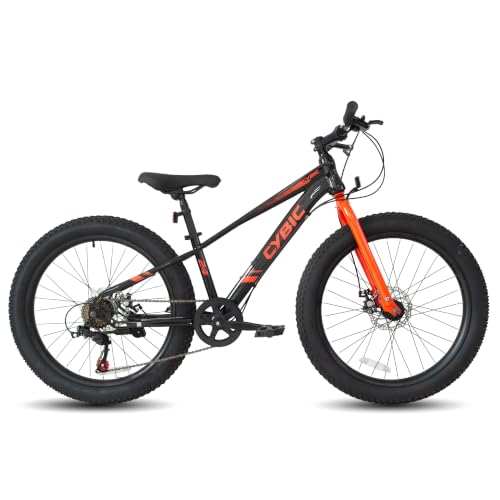
24 Inch Fat Tire Mountain Bike 7-Speed for Teens

HH HILAND 26 Inch Fat Tire Mountain Bike 7-Speed Green

Max4out 26 Inch Fat Tire Mountain Bike 21-Speed Black

Ecarpat 26×4 Inch Full Suspension Fat Tire Bike 21-Speed

StarterRide 24 Inch Fat Tire Kids Bike 7-Speed Black

DTTZH F6 Electric Fat Tire Bike 20 Inch NFC
A Closer Look At Each Pick
You get a youth-focused trail bike built around a 12-inch aluminum hardtail frame and 24-inch wheels. The 4-inch-wide tires suit dirt, gravel, sand, and snow, while a Shimano drivetrain, meaning the gears and chain system that move the wheels, provides 16 speeds for hills and flats.
Mechanical disc brakes act on both wheels for steady stopping in varied conditions. A rigid fork keeps the setup simple, and the listed maximum weight recommendation is 125 pounds, a clear limit for growing riders.
The Value In It
- 16 speeds cover climbs and flat trail sections
- 4-inch tires add traction on loose surfaces
- Aluminum frame keeps weight manageable for younger riders
- Disc brakes provide control on descents
Things To Consider
- Rigid fork transmits more bumps than suspension models
- 125-pound limit narrows the fit for larger riders
- Confirm height fit before ordering for a growing child
Shorter riders gain a real advantage here, since the frame fits heights from 4 feet 7 inches to 5 feet 5 inches. That sizing helps feet reach the ground at a stop, a practical confidence point for teens moving up from a 20-inch bike.
Knobby 24×3.0 tires handle packed sand, hard snow, gravel, and rough pavement, and they steer more easily than 4-inch rubber. You’ll find seven gears with a grip shifter, meaning a twist control on the handlebar, plus disc brakes front and rear for wet pavement.
The Upside
- Height range suits teens and shorter adults
- 3.0-inch tires spin up faster than wider tires
- Rigid fork avoids suspension maintenance
- Dual disc brakes add stopping control
- 85 percent assembled for quicker setup
Worth Noting
- 3.0-inch tires float less in deep powder than 4-inch tires
- Seven speeds offer less range for steep climbs
- High-carbon steel frame adds weight compared with aluminum
Who It Suits Best
Teens and shorter adults riding packed sand, gravel, and neighborhood paths.
Where Another Pick Suits Better
StarterRide 24 Inch Fat Tire Kids Bike suits younger riders who need an adjustable seat and kid-focused sizing.
Adult riders get a straightforward 26-inch platform in high-carbon steel, sized for heights from 60 to 72 inches. Wide tires provide grip across beach, snow, gravel, rain, mud, and sand, which suits mixed weekend terrain.
Your taller riders benefit from the larger wheel compared with the 24-inch option, since rolling over rough ground feels smoother. A TY300D rear derailleur and MICROSHIFT MS25 shifters handle the seven speeds, and disc brakes support controlled descents in wet conditions.
Strengths Worth Knowing
- 26-inch wheels suit taller adult riders
- Wide tires grip beach, snow, and gravel
- Disc brakes help on slopes and wet ground
- 85 percent assembled with tools included
Trade Offs
- Rigid fork offers no suspension smoothing
- Seven speeds limit climbing range on steep grades
- Steel frame is heavier than aluminum alternatives
Big and tall riders get a frame sized for heights from 5 feet 5 inches to 7 feet 1 inch, with a listed rider weight capacity of 400 pounds. That capacity separates this model from standard adult bikes in this list.
Twenty-one speeds provide a wider range than the seven-speed options, and a front suspension fork absorbs impacts on rough trails. You can check the 61-pound bike weight against storage space, since lifting and storing a heavier frame takes planning.
Benefits That Matter
- 400-pound rider capacity for heavier riders
- 21 speeds ease steep climbing
- Front suspension smooths rough impacts
- 4-inch tires grip sand, snow, and trails
Minor Gripes
- 61-pound weight complicates lifting and storage
- Steel frame adds heft on long rides
- Front suspension only, rear remains rigid
Full suspension sets this model apart, with thickened front forks and rear shock absorbers working together. That setup suits riders who prioritize smoothing bumps on off-road trails over a lighter, simpler build.
An 18.5-inch high-carbon steel frame pairs with 26×4.0-inch tires that include reflective strips. Twenty-one speeds and mechanical disc brakes cover varied gradients, and the bike arrives 85 percent assembled.
Useful Touches
- Front and rear suspension smooth off-road bumps
- Reflective tire strips aid visibility
- Ergo grips and comfortable saddle for longer rides
- 21 speeds cover climbs and descents
Room For Improvement
- Full suspension adds complexity and weight
- Steel frame is heavier than aluminum options
- 4-inch tires roll slower on pavement
Made For
Adult riders seeking suspension comfort on mountain trails, beaches, and snow.
Consider Something Else When
Max4out 26 Inch Fat Tire Mountain Bike suits heavier riders who need a 400-pound capacity.
Your growing riders get a 24-inch bike sized for ages 10 to 16 and heights from 51 to 65 inches. A steel frame, adjustable quick-release padded seat, and kickstand add everyday practicality for school and park rides.
Wide 3.0-inch knobby tires on aluminum rims handle snow, gravel, dirt, and pavement. Seven speeds with a trigger shifter and dual disc brakes give young riders gear choices without a steep learning curve.
Notable Gains
- Adjustable seat grows with the rider
- Dual disc brakes support confident stopping
- 3.0-inch tires grip varied surfaces
- 85 percent assembled for easier setup
Points To Note
- Rigid fork lacks suspension smoothing
- Steel frame weighs more than aluminum
- Check height range against current growth
Electric assist changes the category, and this 20-inch model uses a 750W brushless motor with peak output of 1500W. A 48V 15.6Ah removable battery supports 22 miles of pure electric range and 60 miles of pedal assist range.
NFC unlock and a 4-digit password replace a key, while a 4-inch color LCD shows speed, battery level, mode, mileage, and time. Full suspension and 20×4-inch tires suit pavement, sand, and grass, with three riding modes and seven-speed shifting.
What Makes Sense
- NFC and password unlock simplify sharing
- Removable battery eases charging at home
- Full suspension smooths uneven ground
- Three modes cover electric, assist, and manual riding
- 95 percent assembled for quick setup
Softer Spots
- Electric drive adds weight and charging needs
- 20-inch wheels differ from larger trail sizes
- Charging takes 5 to 7 hours with included charger
What Matters Most Before Choosing Fat Bikes
Frame Size and Rider Height
Height ranges vary widely across this list, from youth models to frames for riders over 6 feet. Matching inseam and reach to the listed range prevents a cramped or stretched position on long rides. You should measure height first, then compare that number to each frame range.
Tire Width and Terrain
Three-inch tires steer easily and suit packed sand, gravel, and pavement. Four-inch tires float better in deep snow and loose sand, with a trade-off in rolling effort on hard ground. Terrain choice should drive tire width, not the widest option by default.
Gearing, Brakes, and Suspension
Seven speeds suit flat and moderate routes, while 21 speeds help on steep climbs. Disc brakes front and rear provide more consistent stopping than rim brakes in wet conditions. Suspension smooths bumps, and rigid forks keep weight and maintenance lower.
Key Considerations Across These Picks
Common Shopping Slip Ups
Ordering by wheel size alone leads to poor fit, since height ranges differ between brands. Checking tire width against local terrain avoids paying for float that packed trails do not need.
What The Higher Tier Buys
Higher-tier models add suspension, wider gear ranges, and electric assist for hills and longer routes. Those upgrades pay off on rough terrain and frequent climbs, while simple rigid builds suit flat neighborhood riding.
Frequently Asked Questions
Which tire width suits snow and sand?
Four-inch tires suit deep snow and loose sand because wider rubber spreads weight across soft surfaces. Three-inch tires suit packed snow, gravel, and pavement with easier steering.
How should height affect the choice?
Height range determines whether feet reach the ground and whether the riding position stays comfortable. You should compare measured height to the listed range for each frame.
Do fat bikes need suspension?
Front suspension smooths bumps on rough trails, and full suspension adds rear comfort for off-road routes. Rigid forks suit pavement, boardwalks, and packed sand with simpler maintenance.
How many speeds are enough?
Seven speeds cover hills, headwinds, and long flat runs for casual riding. Twenty-one speeds provide more range for steep climbs and varied terrain.
Are disc brakes important?
Disc brakes on both wheels give predictable stopping on wet pavement and loose gravel. That control matters on descents and in changing conditions.
Final Verdict
Youth riders suit the Mongoose and StarterRide models, shorter adults suit the 24-inch option, and taller or heavier riders suit the Max4out. Full suspension and electric assist bring distinct comfort and power for rough terrain. Match height, terrain, and gear range to the right model, and the choice becomes clear.