
Matching tread to terrain matters more than brand loyalty when a trail turns to loose sand halfway through a ride. You need a front tire that steers predictably on hardpack and a rear tire that hooks up when the surface gets soft. Tube-type construction means carrying tubes and tire levers, and sizing must match rim diameter exactly. The seven options below split by terrain, size, and street use so you can narrow the list by rim size first.
The Leading Options At A Glance
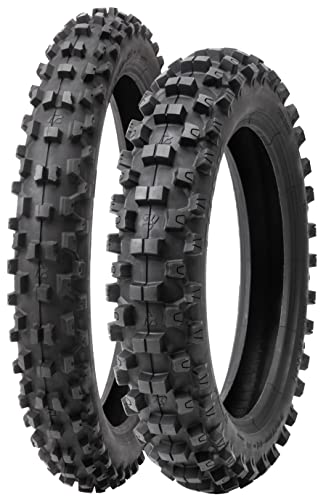
Tusk EMEX T-35 Front/Rear Tire Set 80/100×21, 120/80×19

Tusk Dsport Adventure Tire Set 90/90-21, 120/90-18

Kenda K760 Dual/Enduro Rear Tire 100/100-18 59C

Tusk EMEX T-45 Rear Tire 100/90×19 Intermediate/Hard
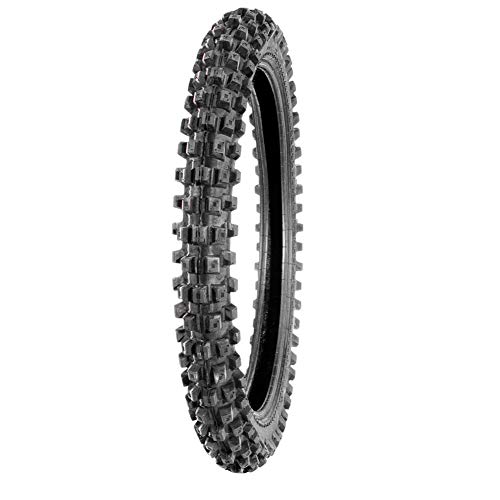
IRC Volcanduro VE-35 Enduro Front Tire 80/100-21

Tusk EMEX T-45 Front/Rear Tire Set 90/100×21, 110/100×18

Tusk Waypoint Adventure Tire Set 90/90-21, 130/90-17
More Details On Our Top Picks
Soft and intermediate ground is where this matched set earns its place. You get an 80/100×21 front and 120/80×19 rear sized for trail bikes that spend time in loam, sand, and loose dirt. Deep knobs, meaning the raised blocks on the tread, bite into soft surfaces instead of skating across them.
Bias construction, meaning plies run diagonally inside the casing, gives a stiffer sidewall feel that suits tube-type rims. That trade-off shows up on hardpack, where a softer-terrain tread can feel less precise than a hard-terrain pattern. For most riders, the honest read is that this set targets loose trails first and packed surfaces second.
The Upside
- Matched front and rear sizing in one set
- Deep tread for loose dirt and sand
- Tube-type design simplifies trail repairs
- Abrasion-resistant compound for wear resistance
Things To Consider
- Soft-terrain focus limits hardpack precision
- Tube-type setup requires tubes and levers
Street miles between trails change the math, and this set is built for that split. DOT compliance, meaning the tire meets road-use standards, lets the set handle paved connectors without a separate street tire. Tall knobs keep off-road bite while the compound aims for longer wear on pavement.
Compare that to the Tusk EMEX T-35 set above, which leans soft-terrain only. The Dsport carries deeper measured tread, 16mm at the rear and 11.5mm at the front, so loose ground still gets traction. One thing worth considering is road manners on wet pavement, where tall knobs rarely match a street tread.
What Makes Sense
- DOT compliant for on and off road use
- Deep rear tread for off-road traction
- Compound aimed at grip plus road wear
Worth Noting
- Tall knobs compromise wet road grip
A single rear tire solves a common problem, a worn rear knob pattern on an otherwise usable bike. This Kenda K760 in 100/100-18 targets dual and enduro use with a 90 percent dirt, 10 percent road split. Tall knobs handle varying terrain without pretending to be a street tire.
Unlike the matched sets above, this is a rear-only choice, so front fitment stays separate. That matters when only the rear is squared off and the front still has life. Depending on your soil, loose loam may pack the tread differently, so spacing matters more than knob height alone.
Good Reasons To Consider
- Rear-only option for targeted replacement
- Dirt biased split suits trail riding
- Durable compound aimed at tread life
- Classic knob layout for varied terrain
- Tube-type design for trail repairs
Trade Offs
- Rear only, front sold separately
- Road portion is minimal by design
Who It Suits Best
Riders needing only an 18 inch rear replacement for trail-focused dual sport bikes.
Where Another Pick Suits Better
The Tusk EMEX T-35 Front/Rear Tire Set suits riders who need both ends replaced together.
Hardpack and rocks punish a soft-terrain rear tire, and this 100/90×19 rear is shaped for that ground. Bridged side knobs, meaning side blocks connected to reduce flex, help cornering stability under load. Wide center lugs transition across packed surfaces without digging excessively.
Self-cleaning spacing sheds mud and debris, which keeps traction consistent when conditions change mid-ride. That contrasts with the Kenda K760 rear above, which favors varied terrain over a hard-terrain focus. In our view, the trade-off is clear, hard ground gains precision while deep sand loses some bite.
Everyday Advantages
- Bridged side knobs for cornering stability
- Self-cleaning tread for mud shedding
- Hard terrain grip on packed surfaces
- Rear-only sizing for 19 inch wheels
Minor Gripes
- Rear only, front pairing needed
- Hard focus reduces soft sand bite
- 19 inch rear size limits fitment
Cross country enduro racing shaped this front tire, with hard surfaces as a priority. Dimpled knobs add gripping edges, and stronger knobs transmit power and braking force to the ground. Radial construction, meaning plies run outward from the center, differs from the bias builds elsewhere on this list.
That construction choice can affect feel, with radial casings often running more compliant at the contact patch. Puncture resistant casing details help on rocky sections where a front flat ends a ride. You may find the front-only format suits racers who already run a matching rear.
Strong Points
- Front tire tuned for hard surfaces
- Dimpled knobs for extra grip
- Radial casing, unlike bias rivals
Points To Note
- Front only, rear pairing required
- Single 80/100-21 size offered
Full size motocross and enduro bikes need a matched set that handles hardpack without a soft-terrain compromise. This pairing runs 90/100×21 front and 110/100×18 rear, a different rear diameter than the Tusk EMEX T-35 set at the top of the list. Reinforced bridged side knobs reduce flex and chunking in corners.
Self-cleaning spacing keeps mud from packing the tread during trail and track rides. That helps when a ride moves from dry hardpack into a wet section. For most backyards of trail terrain, the sizing check matters more than any tread claim, so rim diameter comes first.
Standout Benefits
- Matched set for full size bikes
- Bridged side knobs for cornering
- Self-cleaning tread for mud shedding
- Hard terrain grip on rocky trails
- Complete front and rear replacement
Softer Spots
- 18 inch rear size limits fitment
Made For
Riders on full size motocross and enduro bikes with 21 inch front and 18 inch rear wheels.
Consider Something Else When
The Tusk Waypoint Adventure Tire Set suits riders who need more street manners than this hard terrain set provides.
Weekday commuting plus weekend dirt creates a different brief than pure trail riding. This set splits use 70 percent dirt and 30 percent street, sitting between aggressive dirt tires and 50/50 street-oriented options. Aggressive knobs keep off-road control while the tread profile aims for consistent handling.
DOT compliance supports road use, and the compound targets grip with long wear. Compare that balance to the Tusk Dsport set, which leans more aggressive off-road with deeper measured tread. One thing worth considering is that a 70/30 split still favors dirt, so road noise and wet grip will not match a street tire.
What Works In Its Favor
- 70 percent dirt, 30 percent street split
- DOT compliant for road use
- Consistent tread profile for handling
- Compound aimed at grip and wear
Small Caveats
- Dirt bias limits road refinement
- 17 inch rear size restricts fitment
What Matters Most Before Choosing Enduro Tires
Rim Size And Tire Size First
Rim diameter decides fit before tread enters the conversation. A 21 inch front with an 18 inch rear will not swap with a 19 inch rear setup. Check sidewall markings and measure rim diameter before comparing knobs.
Terrain Split Defines Tread
Soft terrain tires use deeper, widely spaced knobs for loose dirt and sand. Hard terrain tires use bridged side knobs and tighter spacing for packed ground and rocks. Street split tires trade some dirt bite for road manners, with ratios like 70/30 or 90/10 stating the priority.
Construction And Tube Type
Bias construction is common across most picks here, while radial construction appears on the IRC front tire. Tube-type tires need tubes, rim locks where required, and tire levers for trail repairs. That setup suits field fixes and older rim designs.
Load And Speed Ratings
Load index and speed rating on the sidewall indicate rated limits for the tire. Matching those ratings to bike weight and intended pace keeps sizing honest. A higher rating does not improve traction, it only defines the operating envelope.
Key Considerations Across These Picks
Common Shopping Slip Ups
Many shoppers match brand instead of rim size, then discover fitment problems at mounting time. Another slip is choosing a soft-terrain tread for hardpack trails, where cornering precision drops. Confirm size, terrain, and street split before comparing compound claims.
What The Higher Tier Buys
Higher tier options often add construction differences, such as radial casing, or a more specific terrain tune. That can mean steadier front feel on hard surfaces or better mud shedding. The upgrade pays off when riding style matches that tune, not as a general improvement for every trail.
Frequently Asked Questions
What size enduro tire fits a 21 inch front and 18 inch rear wheel?
Sizes like 90/100×21 front and 110/100×18 rear match that combination. Always confirm sidewall size against rim diameter before ordering.
Are tube-type enduro tires harder to maintain?
Tube-type tires require tubes and levers for trail repairs. That setup allows field fixes with basic tools.
What does a 70 percent dirt and 30 percent street split mean?
The split describes intended use balance, with dirt as the priority. Road manners improve compared with a pure dirt tire, while off-road bite remains the focus.
How do bias and radial construction differ?
Bias plies run diagonally inside the casing, creating a stiffer feel. Radial plies run outward from the center, creating a more compliant contact patch.
Can a dirt-biased tire handle short road sections?
DOT compliant options can handle road sections within their rating. Tall knobs still limit wet road grip compared with a street tread.
Final Verdict
Your rim size and terrain split should decide the shortlist first. Hardpack riders gain from the Tusk EMEX T-45 sets, soft trail riders gain from the Tusk EMEX T-35 set, and mixed road use points toward the Tusk Waypoint Adventure Tire Set. Match those priorities and the choice gets simpler.