
Steep descents and long climbs place very different demands on a helmet, and enduro riding asks for both in one session. Full-face coverage helps on aggressive lines, while ventilation and a manageable weight matter during the pedal back up. You need to decide whether a fixed full-face, a removable chin bar, or an open-face trail helmet matches where you ride most. The seven options below split those approaches, so fit, airflow, and protection priorities can guide the choice.
An Overview Of The Picks
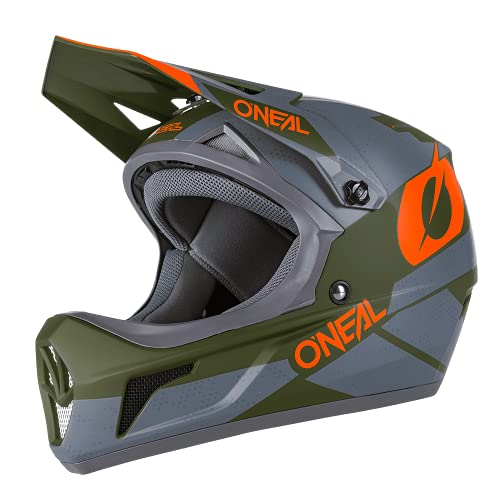
O’Neal Sonus Deft Mountain Bike Helmet Olive/Orange MD

SMITH Engage MTB Cycling Helmet Matte Black X-Large

Leatt MTB Enduro 2.0 Helmet Junior RED XS

POC Otocon Fullface Helmet

POC Otocon Race MIPS Fullface Helmet

Kali Protectives Maya 3.0 Helmet Gloss Midnight Blue

Leatt MTB Gravity 4.0 V25 Galaxy Blue Large
The Picks, Examined More Closely
Full-face protection defines this O’Neal Sonus Deft, with an ABS shell built for downhill and enduro lines. You get chin and face coverage on steep, rocky descents where an open-face helmet leaves more exposed. The shape suits riders who spend most time pointed downhill rather than climbing for hours.
Multiple vents channel air across the head, and the magnetic Fidlock buckle opens with one hand, a small help with gloves on. The padded liner is removable and washable, which matters after sweaty shuttle days. EN1078 is the European bicycle helmet standard referenced for this model, meaning it meets that specific benchmark rather than a generic claim.
Notable Upsides
- Full-face coverage for aggressive descents
- Removable washable liner keeps fit fresh
- Magnetic buckle works with gloved hands
- Vent layout supports airflow on climbs
Things To Consider
- Fixed chin bar adds heat on long pedals
- Medium sizing in olive and orange limits fit choice
Unlike the full-face O’Neal Sonus Deft, this Smith Engage is an open-face trail helmet for riders who pedal more than they shuttle. Zonal Koroyd coverage, meaning structured foam zones placed where impact energy is managed, pairs with MIPS, a low-friction layer designed to allow slight helmet movement during angled impacts. That combination targets all-mountain terrain rather than bike park laps.
Twenty fixed vents keep airflow steady, and Ionic+ lining is treated to reduce odor when sweat activates it. The visor adjusts to two positions, useful for sun on exposed ridges and for goggle strap placement. X-Large sizing in matte black suits larger heads, so head circumference matters more than usual here.
Notable Gains
- MIPS plus Koroyd for trail protection
- 20 vents for consistent airflow
- Odor-control lining for repeated rides
- Two-position visor for sun and goggles
- Low-bulk webbing reduces pressure points
Worth Noting
- Open-face design gives no chin coverage
- X-Large only suits larger head sizes
Who It Suits Best
Trail riders with larger heads who pedal long distances and want MIPS protection without full-face weight.
Where Another Pick Suits Better
POC Otocon Fullface Helmet suits riders seeking chin coverage for steep, rocky descents.
Convertibility sets this Leatt Enduro 2.0 apart from fixed full-face models such as the POC Otocon. A push-button chin bar snaps on for downhill sections and comes off for climbs, giving junior riders two configurations in one shell. That flexibility helps families whose routes mix fire roads and steeper descents.
360 Turbine Technology uses small discs that can move in multiple directions to manage impact forces, paired with in-molded foam for higher-speed impacts. Twenty vents, a washable moisture-wicking liner, and a magnetic buckle round out the setup. A sunglasses dock port gives eyewear a place to sit at the top of a climb.
Well-Handled Touches
- Removable chin bar for climb and descent modes
- 20 vents that work at low speeds
- Washable anti-odor liner for freshness
- Magnetic buckle for one-handed use
Trade Offs
- Junior XS sizing from 50 to 54 cm only
- Chin bar removal requires a deliberate push-button step
Race-focused construction shapes the POC Otocon, with a polycarbonate shell, abbreviated PC, and a dual-material liner. EPP in the lower section is a foam that handles multiple impacts, while EPS above keeps weight lower. An injection-molded cage in the lower liner adds structure around the chin area.
Ventilation channels air through the shell at high and low speeds, and removable cheek pads plus a removable mouth grill let airflow be tuned during long climbs. The breakaway peak is designed to detach in a fall, reducing leverage on the neck. Race Lock is the integrated adjuster for a secure fit.
Points In Its Favor
- Dual-material EPP and EPS liner design
- Removable cheek pads for climb airflow
- Breakaway peak for neck protection
- GoPro mount shape under the peak
Minor Gripes
- Full-face format suits racing more than casual trail rides
- Removable parts need careful reinstallation before descents
Shared POC Otocon architecture carries over here, with the same polycarbonate shell and EPP plus EPS liner split. MIPS Integra changes the picture, integrating rotational protection into the liner with aramid bridges, aramid being a strong fiber molded into the structure for stability and penetration resistance. That layering aims at angled impacts common on rocky enduro terrain.
A RECCO reflector supports location in an emergency, and NFC Medical ID stores medical details accessible by phone. Ventilation, Race Lock adjustment, and the breakaway peak match the standard Otocon. In our view, the added tech suits riders who value identification features alongside protection.
Features That Help
- MIPS Integra rotational protection layer
- Aramid bridges for structural stability
- NFC Medical ID for emergency details
- RECCO reflector for location support
- Breakaway peak and GoPro-ready shape
Room For Improvement
- Extra tech adds complexity for casual riders
- Full-face design remains warm on long climbs
Open-face simplicity defines the Kali Maya 3.0, aimed at trail, enduro, and all-mountain routes where pedaling dominates. A unibody build means the shell and structure are shaped as one form, and extended coverage reaches lower at the back of the head. Approx. 245 g weight keeps neck fatigue lower on long rides.
The dial fit system adjusts with one hand and includes vertical adjustment for different head shapes. A flexible visor, removable washable padding, and accessory mount compatibility add practical touches. RHEON is a low-density layer in the impact system, listed among the helmet features for energy management.
What It Does Well
- Approx. 245 g for long pedaling days
- Dial fit with vertical adjustment
- Removable washable padding
- Flexible visor for sun glare
Small Caveats
- No chin bar for steep downhill sections
- Large/X-Large sizing in gloss midnight blue
Made For
Trail riders who prioritize low weight and airflow over full-face coverage on mixed terrain.
Look Elsewhere When
Leatt MTB Gravity 4.0 V25 Galaxy Blue Large suits riders wanting full-face protection for bike park laps.
Gravity-focused design drives this Leatt MTB Gravity 4.0, a full-face-only helmet for enduro, bike park laps, and e-bike trails. A polymer outer shell forms the exterior, and 360 Turbine discs inside can move in multiple directions to address rotational and linear impacts. That system differs from the MIPS approach in the Smith Engage.
A modular mouthpiece removes to increase airflow during climbs, and the Fidlock magnetic buckle stays easy to operate with cramping fingers. Ventilation is a stated strength of the full-face design. Large sizing in galaxy blue and an age guidance of 13 years or older shape the fit check.
The Practical Payoff
- 360 Turbine system for impact management
- Removable mouthpiece for extra airflow
- Magnetic buckle for gloved or tired hands
- Full-face coverage for gravity riding
Points To Note
- Full-face-only format adds heat on long climbs
- Large size only in galaxy blue
What Matters Most Before Choosing Enduro Mtb Helmet
Coverage For The Terrain Ahead
Full-face models such as the POC Otocon protect the chin on steep descents, while open-face models such as the Kali Maya 3.0 reduce weight and heat on climbs. Terrain mix should drive the decision, since shuttle days and pedal-heavy routes pull in opposite directions.
Fit And Adjustment
Head circumference and shape determine whether dial systems, Race Lock, or fixed sizing will feel secure. Vertical adjustment helps riders whose head shape sits lower or higher than average, and a quick check of strap position prevents pressure under the chin.
Airflow During Climbs
Vent counts, removable cheek pads, and removable mouthpieces all affect comfort at low speed. You may find that 20 vents on the Smith Engage and Leatt Enduro 2.0 help on slow climbs, while full-face models rely more on channel design.
Impact Systems In Plain Terms
MIPS, Koroyd, and 360 Turbine each describe a different approach to managing impact forces. The practical difference shows up in how the system is built into the liner or shell, not in a simple ranking between names.
Key Considerations Across These Picks
Common Shopping Slip Ups
Sizing gets overlooked when color or style takes priority, leading to a helmet that shifts during descents. Skipping a fit check for junior sizes, such as the 50 to 54 cm range, creates the same problem for younger riders.
What The Higher Tier Buys
Higher-tier full-face models add layered liners, breakaway peaks, and identification tech such as NFC Medical ID. Those additions make sense for race schedules and remote trails, while trail riders often gain more from weight and ventilation.
Frequently Asked Questions
Is a full-face helmet needed for enduro riding?
Full-face coverage suits steep, rocky descents where chin protection matters. Open-face helmets suit pedal-heavy routes with moderate terrain.
What does a removable chin bar do?
A removable chin bar switches a helmet between open-face and full-face modes. Push-button systems make the change quick at the top of a climb.
How do MIPS and 360 Turbine differ?
MIPS uses a low-friction layer inside the helmet, while 360 Turbine uses discs that move in multiple directions. Both aim to manage rotational forces during angled impacts.
Are washable liners worth considering?
Washable liners help control sweat and odor after repeated rides. Removable padding also lets airflow be tuned by removing cheek pads on climbs.
What size should be checked first?
Head circumference should be checked before style or color. Junior and X-Large or Large listings narrow the range sharply.
Final Verdict
For steep descents, the POC Otocon Race MIPS Fullface Helmet pairs full-face coverage with MIPS Integra and emergency ID features. For pedal-heavy trail days, the Kali Protectives Maya 3.0 keeps weight low with dial fit adjustment. Match coverage to terrain, and fit will follow.