
A deep-section wheelset can turn a steady triathlon effort into a faster bike split, yet the wrong depth or width can leave you fighting crosswinds on an exposed coastal stretch. The choice comes down to rim depth, internal width, and brake compatibility, matched to the courses you ride most. This guide compares seven carbon options built for that decision.
You need a set that holds speed on flat, fast sections without punishing you on climbs or in gusty conditions. Your frame clearance, tire choice, and rim-brake setup shape which depth makes sense, so the reviews below focus on those practical details.
The Essentials At A Glance

Carbon Road Bike Rim Brake Aero Wheel Set 700c 82mm

60mm Carbon Wheel Sets Road Bike 700C Wheelset 28mm

700c Road Bike Carbon Wheels Tubeless Ready 50mm Depth
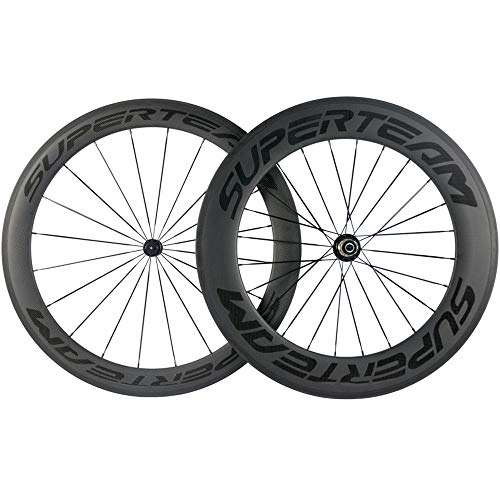
Superteam Carbon Clincher Wheelset 60/88mm 700c

Superteam Road Bike 3 Spoke Wheelset 70mm 23mm Clincher

Superteam Classic PRO Carbon Wheelset 25mm Width Ceramic Hub

SUPERTEAM Full Carbon Tri Spokes Wheel 700C Fixed Gear Rear
Why These Options Stand Out
An 82mm depth puts this set at the deep end of the list, aimed at flat triathlon courses where sustained speed matters more than low-speed climbing. The U-shaped profile, a rounded rim shape designed to smooth airflow, suits riders who hold a steady aero position for long stretches. In our view, that focus makes it a specialist choice rather than an all-rounder.
Clincher means a tire with a bead that hooks onto the rim, and this set also lists tubeless compatibility, a setup where sealant replaces an inner tube. A 2:1 spoke pattern places twice as many spokes on one side of the rear hub, a layout intended to balance tension under pedaling load. For most triathletes racing flat courses, the 28mm width gives room for wider tires that can run at lower pressure.
Points In Its Favor
- 82mm depth suits flat, fast triathlon courses
- 28mm width supports wider, lower-pressure tires
- 2:1 spoke pattern balances rear-wheel tension
- Matte UD finish keeps the look understated
Things To Consider
- Deep rims catch more side wind on exposed routes
- Rim-brake braking surface needs checks in wet conditions
Stepping down from the 82mm set, this 60mm option trades a little outright depth for easier handling in mixed wind. That middle ground suits training weeks as well as race day, since the same wheels can stay on the bike all season. You get a profile that still feels aero without demanding calm conditions.
The tubeless-ready rim and clincher design give flexibility between tube and tubeless setups. A 28mm width matches the wider tire trend, and the listed weight of 3.9 pounds helps compare it with the lighter 50mm set later in the list. Assuming a standard rim-brake frame, the U-shaped rim keeps the focus on steady cruising speed.
Useful Highlights
- 60mm depth balances speed and crosswind handling
- Tubeless-ready rim allows tube or tubeless setups
- 28mm width fits wider tires for comfort
Worth Noting
- Less deep than the 82mm option for flat courses
- Confirm cassette compatibility before ordering
Who It Suits Best
Triathletes who train and race on the same wheels across varied courses.
Where Another Pick Suits Better
The 700c Road Bike Carbon Wheels Tubeless Ready 50mm Depth suits riders who prioritize lighter climbing over maximum depth.
At 50mm, this set sits below the 60mm and 82mm options, which changes the trade-off toward climbing and handling. Rolling hills reward a lighter wheelset, and the listed 3.5 pounds is the lightest figure among the first three sets. That makes it a sensible pick for hilly Olympic-distance courses.
The 28mm width and tubeless-ready design carry over from the earlier sets, so tire choice stays flexible. CNC-drilled spoke holes, meaning holes cut with computer-controlled precision, aim for consistent spoke alignment. One-piece construction, where the rim is formed as a single unit, is listed as a stiffness improvement over multi-piece builds.
Well-Handled Touches
- 50mm depth suits rolling and climbing courses
- 3.5 pounds keeps climbing effort lower
- 28mm width supports modern tire sizes
- Tubeless-ready rim adds setup flexibility
- 28 spokes provide a conventional, serviceable build
Trade Offs
- Shallower profile gives up some flat-course aero benefit
A split-depth setup, 60mm at the front and 88mm at the rear, takes a different approach from the matched sets above. The deeper rear wheel is intended to smooth airflow behind the rider, while the shallower front can feel easier to steer in wind. That logic suits time-trial style positions on calm, flat courses.
Toray T700 carbon refers to a specific grade of carbon fiber, and the rim uses layered carbon on the braking track. The cassette body fits Shimano 8 to 11 speed, a detail that matters for drivetrain matching. With 20 front and 24 rear spokes, the build is lighter on spoke count than the 28-spoke sets, and the listed weight is 1720 g per pair.
Key Advantages
- Split 60/88mm depths suit time-trial positions
- 1720 g weight keeps the pair light
- Transparent decals allow a clean look
- Includes brake pads and quick-release skewers
Minor Gripes
- 88mm rear depth demands calm, flat conditions
- 23mm width is narrower than the 28mm sets
- Shimano 8 to 11 speed cassette fit only
Three spokes replace the conventional spoked layout, giving a distinctive triathlon look that stands apart from every set above. The 70mm depth and 23mm width place it between the 60mm and 82mm options in profile, yet the narrow width changes tire fit. That design appeals to racers who want a dedicated race-day wheel rather than a daily trainer.
Novatec hubs and a 3k matte finish, a woven carbon pattern, keep the appearance clean. The pair weighs 1995g, heavier than the split-depth Superteam set, which matters on climbs. In our view, the honest read is that this is a specialist wheel for flat courses, not a general-purpose upgrade.
What Helps Most
- Three-spoke design gives a dedicated triathlon look
- 70mm depth suits flat race courses
- Matte finish reduces glare in bright conditions
Room For Improvement
- 23mm width limits wider tire choices
- 1995g weight adds climbing effort
- Shimano 8 to 11 speed cassette fit only
Made For
Racers who use a dedicated wheel for flat, non-technical triathlon courses.
Consider Something Else When
The Superteam Classic PRO Carbon Wheelset 25mm Width Ceramic Hub suits riders who want wider tire support and more versatile depths.
Multiple depth options from 38mm to 88mm let riders match the wheel to the course, a flexibility the fixed-depth sets do not offer. Ceramic bearings, bearings with ceramic races that reduce rotational friction, sit in a straight-pull R18 hub with sealed bearings front and rear. That hub detail matters for riders who keep wheels for several seasons.
The 25mm external width and 18mm internal width, the measurement across the inside of the rim, pair with 700x25C to 28C tires. An integrated braking surface, a single-piece rim design, aims to avoid peeling at the brake track. Cassette fit spans Shimano 8 to 12 speed or SRAM XDR 12 speed only, so checking the drivetrain before ordering is essential.
Everyday Advantages
- Depth options from 38mm to 88mm for course matching
- Ceramic bearings reduce hub friction
- 25mm width fits 25C to 28C tires
- Extra spokes and nipples included in the package
- 18/21 aero spokes balance tension at the rear
Points To Note
- Cassette choice must match Shimano or XDR format
- Depth selection changes wind handling significantly
Full carbon tri-spoke construction returns here, with a fixed-gear rear option that separates it from the road-hub version of the three-spoke set. The fixed hub uses nuts and screws and includes a 17-tooth single-speed cog, a cog being the rear sprocket that drives the wheel. That setup suits fixed-gear training or track-style riding more than standard triathlon drivetrains.
A basalt braking surface, a textured rim material intended for rim-brake heat and water management, pairs with a 3k woven finish. The road hub version fits Shimano 8 to 12 speed with quick-release included, while the fixed version does not include quick-release. Listed weights differ by hub type, with road wheels lighter than fixed-gear wheels.
Useful Touches
- Fixed-gear rear option with 17-tooth cog included
- Road hub fits Shimano 8 to 12 speed
- Basalt braking surface for rim-brake setups
- Brake pads included with the wheelset
Softer Spots
- Fixed-gear hub will not suit geared triathlon bikes
- 23mm outer width limits wider tire choices
Factors To Consider When Choosing Triathlon Wheels
Rim Depth And Course Profile
Deeper rims hold speed on flat courses, while shallower rims steer more calmly in crosswinds and climb with less effort. Your race calendar should drive the depth, not the other way around. A rider with hilly events gains more from a 50mm set than from an 82mm set.
Width, Tires, And Brake Fit
Internal width determines which tire sizes sit correctly, and wider rims allow lower pressures for comfort on rough roads. Rim-brake frames also need a braking surface matched to the pads supplied. Check frame clearance and cassette format before ordering, since those details decide whether the wheels install without changes.
Hub Type And Drivetrain Match
Road hubs, fixed-gear hubs, and cassette bodies serve different bikes, and mixing them creates avoidable compatibility work. Ceramic bearings and spoke patterns affect maintenance expectations and long-term service. Your current drivetrain speed range is the simplest filter for narrowing the list.
Key Considerations Across These Picks
Common Shopping Slip Ups
Ordering by depth alone, without checking internal width and cassette fit, leads to tire and drivetrain mismatches. Confirm axle spacing and brake type against the current frame before committing to a set.
What The Higher Tier Buys
Ceramic bearings, integrated braking surfaces, and multiple depth options add cost through hub and rim construction. Those upgrades pay off for frequent racers who keep wheels for several seasons. Occasional racers gain less from hub upgrades than from choosing the right depth.
Frequently Asked Questions
What depth works for most triathlon courses?
A 50mm to 60mm depth suits most mixed courses, balancing speed with handling. Deeper 82mm or 88mm options suit flat, calm courses where sustained speed matters most.
Are tubeless-ready wheels better for triathlon?
Tubeless-ready rims allow either tubeless or clincher setups, giving flexibility in tire choice. Sealant-based setups suit riders who prefer lower pressures, while tubes remain simpler for race-day changes.
How does rim width affect tire choice?
Wider internal widths support wider tires that can run at lower pressure for comfort. Narrow 23mm rims limit tire options compared with 25mm or 28mm designs.
What cassette compatibility should be checked?
Shimano 8 to 11 speed and Shimano 8 to 12 speed bodies cover different drivetrains, and XDR 12 speed fits SRAM only. Matching the cassette body to the current drivetrain avoids extra parts.
Do tri-spoke wheels suit everyday training?
Three-spoke wheels suit dedicated race days on flat courses, where their design and depth align with sustained speed. Conventional spoked wheels handle varied training conditions and crosswinds more easily.
Final Verdict
Flat, fast courses point toward the 82mm set, while mixed terrain favors the 50mm or 60mm options. Riders who want depth choices and ceramic hubs should look at the Classic PRO, and fixed-gear riders have a clear specialty option. Match depth, width, and hub type to the courses ahead, and the right set becomes clear.