
Wet feet on a bike, socks in a transition bag, and a clock running against a quick change create a specific kind of pressure. Triathletes need footwear that drains, dries, secures fast, and still supports the run that follows. You get a clearer shortlist by matching closure speed, drainage, sole stiffness, and run cushioning to race distance and training routine. The picks below separate run-first, bike-first, and cross-training options so the trade-offs stay visible.
The Leading Options At A Glance

ASICS Men’s Noosa TRI 16 Running Shoes, 10, NEON Blue/Illuminate Mint
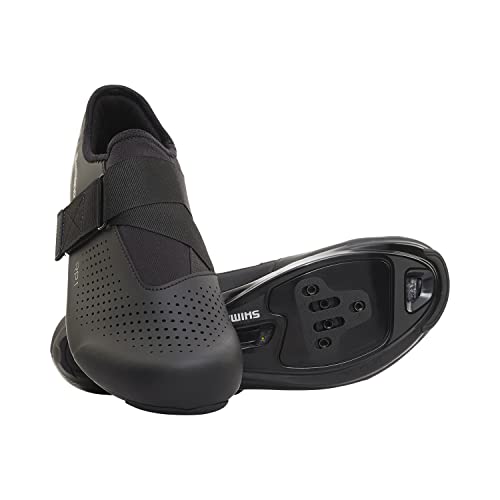
Shimano SH-RP101 Cycling Shoe, Black, EU 46

Fizik Transiro Hydra Triathlon Shoes, White/Black, 13.5-14

Fizik Transiro Hydra Triathlon Shoes, White/Metallic Blue, 10.5-11

Fizik Transiro Hydra Triathlon Shoes, White/Metallic Red, 9.5-10
TYR Men’s CXT-Flow Cross-Training Shoe, Black/Gum

Fizik Transiro Hydra Aeroweave Carbon, White/Red-Blue, 11
More Details On Our Top Picks
Run-first triathletes get the clearest benefit here, because the Noosa TRI 16 is built as a road running shoe rather than a cleated cycling shoe. FF BLAST PLUS is a foam midsole compound, meaning the layer between foot and ground, and the listing positions it as soft and lightweight. GUIDESOLE is a curved sole geometry that rolls the foot forward at toe-off, which helps smooth the final part of each stride.
Mesh upper construction supports airflow on warm runs, and ASICSGRIP rubber on the outsole targets grip across varied surfaces. You need to plan sizing carefully, because the listing notes a small fit, and that affects toe room on long runs. For most long-course athletes, that sizing note matters more than any single cushioning claim.
What Stands Out
- Maximum cushioning level for the run leg
- Mesh upper supports breathability during warm efforts
- Curved GUIDESOLE geometry encourages smoother toe-off
- Rubber outsole targets grip on varied terrain
Things To Consider
- Runs small, so size planning affects fit on long runs
- Lace-up closure is slower than a strap for quick transitions
The SH-RP101 takes a simpler approach than the ASICS above, with a cycling-specific sole and a single strap closure. A cleat is the hardware that locks a cycling shoe to the pedal, and the five-hole outsole accepts SPD and SPD-SL formats, which covers many road and indoor setups. Synthetic leather and mesh form the upper, pairing structure with airflow.
Your pedal system decides whether this shoe works, so cleat compatibility needs a check before ordering. Fiberglass reinforcement in the sole aims to transfer pedaling effort more directly than a flexible trainer. In our view, that focus suits riders who train indoors and on the road with the same pair.
What Helps Most
- Single strap closure gives a snug, simple fit
- Five-hole outsole works with SPD and SPD-SL cleats
- Fiberglass-reinforced sole supports pedaling power transfer
Worth Noting
- Cleat and pedal compatibility must be confirmed before use
Who It Suits Best
Road and indoor cyclists who want one pair for both settings and already use compatible cleats.
Where Another Pick Suits Better
The ASICS Men’s Noosa TRI 16 Running Shoes, 10, NEON Blue/Illuminate Mint suits athletes who prioritize the run leg over cleated pedaling.
Unlike the Shimano model, this Fizik design centers on transition speed and sockless comfort. The 3D air mesh upper is a raised textile construction that creates space for airflow, and the Powerstrap closure uses a wide hook-and-loop band for quick securing. At 233 grams, the shoe stays light for the bike leg.
The R5 nylon outsole carries a stiffness index of 6, which signals moderate rigidity on Fizik’s scale, balancing pedaling efficiency with walking comfort in transition. You benefit most in larger sizes here, because this listing covers 13.5-14, a range that can be harder to find in triathlon-specific models. For most sprint racers, that size coverage alone changes the shortlist.
The Value In It
- 3D air mesh upper supports breathability for sockless racing
- Powerstrap closure enables faster securing in transition
- 233-gram weight keeps the bike leg light
- Moderate nylon stiffness balances efficiency and comfort
- Large-size listing helps athletes with bigger feet
Trade Offs
- Moderate stiffness will feel less responsive than carbon
Same Transiro Hydra platform as the previous pick, with a different size range and colorway, so the decision comes down to fit and availability. The 233-gram weight and R5 nylon outsole with stiffness index 6 carry over, keeping the ride in that moderate zone. Mesh construction and Powerstrap closure remain the core transition tools.
You’ll want to confirm the 10.5-11 sizing against foot length measurements, because triathlon shoes often feel snug without socks. On a hot race day, the breathable upper helps manage sweat, but the honest read is that color choice does not change performance. That makes sizing, not color, the deciding factor here.
Where It Helps
- Breathable mesh supports sockless racing
- Powerstrap closure speeds up transition
- Moderate stiffness suits mixed bike and run demands
Minor Gripes
- Snug triathlon fit needs careful size checking
- Nylon sole lacks the stiffness of carbon models
- Colorway offers no functional difference from sibling listings
Made For
Triathletes in the 10.5-11 range who race sockless and want a balanced nylon sole.
Consider Something Else When
The Fizik Transiro Hydra Aeroweave Carbon, White/Red-Blue, 11 suits racers who want maximum carbon stiffness for pedaling.
Smaller feet get the same Hydra formula here, with sizes listed as 9.5-10 and a 233-gram weight. The 3D air mesh upper and Powerstrap closure keep the focus on airflow and fast securing, while the R5 nylon outsole holds that stiffness index of 6. Performance foam in the insole adds a layer of cushioning underfoot.
Your foot shape matters with sockless shoes, because seams and straps sit directly against skin. For most athletes in this size range, the moderate cushioning level feels more forgiving than a minimal racing flat. Nothing flashy, just a focused transition tool.
The Upside
- Lightweight 233-gram build for the bike leg
- Air mesh upper supports breathability
- Powerstrap closure allows quick adjustment
- Moderate cushioning suits sockless use
Small Caveats
- Smaller size range limits fit options
Fizik Transiro Hydra Triathlon Shoes, White/Metallic Red, 9.5-10
Cross-training changes the priorities completely, and the CXT-Flow is built for gym work rather than cleated cycling or long runs. A wide toe box is the front section of the shoe, and extra width there allows toes to spread, which can help stability during lifting and multi-directional moves. Mesh upper and foam cushioning keep the feel flexible.
You get a low-profile silhouette that stays light during HIIT circuits, with a lace-up closure for an adjustable fit. The trade-off shows up on the bike, because a flexible training sole cannot transfer pedaling power like the nylon or carbon outsoles above. In our view, that flexibility is a feature in the gym and a limit on the road.
Useful Strengths
- Wide toe box supports natural toe spread
- Breathable mesh upper aids airflow in workouts
- Flexible fit supports multi-directional movement
Points To Note
- Flexible sole lacks pedaling stiffness for cycling
- Lace-up closure takes longer than strap systems
Carbon changes the equation compared with the nylon Hydra models above. The R2 outsole uses an engineered carbon-fiber layup, meaning layered carbon sheets, and carries a stiffness index of 10, the highest in this group. At 225 grams, the shoe is also the lightest listed here.
The Aeroweave upper interlaces nylon with thermoplastic filaments, a woven construction aimed at breathability with support. You pay for that stiffness with a firmer feel, and walking in transition will feel less forgiving than the index-6 nylon options. For most racers chasing bike-leg efficiency, that trade-off feels worthwhile.
Useful Touches
- Carbon R2 outsole delivers high pedaling stiffness
- 225-gram weight reduces load on the bike leg
- Aeroweave upper supports breathability and support
- Single strap closure speeds transition
- Vent inlet and channeling aid cooling airflow
Room For Improvement
- High stiffness feels firm for walking in transition
- Minimal to moderate cushioning limits run comfort
What Matters Most Before Choosing Tri Shoes
Closure Speed And Sockless Fit
Strap closures secure faster than laces, and that difference grows in a timed transition area. Sockless racing needs a smooth upper and a fit that avoids rubbing on wet skin. Mesh and air-mesh uppers help with airflow, while a snug heel keeps the shoe planted during a run.
Sole Stiffness For The Bike Leg
Stiffness index numbers show how rigid a cycling sole feels, with higher values transferring pedaling effort more directly. Nylon soles around index 6 balance pedaling with walking, while carbon at index 10 feels firmer and more responsive. Gym training shoes sit at the opposite end, with flexible soles for lifting and lateral movement.
Run Cushioning And Sizing
Run-first shoes use foam midsoles, the cushioned layer under the foot, to absorb impact over distance. Sizing notes matter here, because a small fit or a snug triathlon fit changes toe room on long efforts. Checking foot length against size charts helps avoid a rushed race-day surprise.
Cleat Compatibility And Use Case
Cleated cycling shoes require matching pedal hardware, and five-hole outsoles accept common road and mountain formats. A trainer without cleats suits running and gym work, but cannot lock to a pedal for efficient cycling. Matching the shoe type to the main discipline keeps the choice honest.
Key Considerations Across These Picks
Common Shopping Slip Ups
Sizing gets rushed, and triathlon shoes often run snug for sockless use. Cleat compatibility also gets overlooked until pedals and shoes fail to match. Checking both details before ordering saves a return and a missed training week.
What The Higher Tier Buys
Carbon outsoles and woven uppers add material cost and manufacturing complexity. Higher stiffness, lower weight, and cooling channels come with that spending. The upgrade pays off for racers who value bike-leg efficiency over walking comfort.
Frequently Asked Questions
Are triathlon cycling shoes different from regular cycling shoes?
Yes, triathlon models use breathable mesh and single-strap closures for faster transitions. Regular cycling shoes often use multiple straps or dials for a more locked-in fit.
Can a running shoe work for a triathlon?
A running shoe handles the run leg well and needs no cleats for a casual event. Cleated cycling shoes transfer pedaling power more directly on the bike leg.
What does stiffness index mean on a cycling shoe?
Stiffness index rates sole rigidity on the brand’s scale, with higher numbers feeling firmer. Index 6 feels moderate, while index 10 feels very stiff for pedaling.
Are sockless triathlon shoes comfortable?
Sockless designs use breathable mesh and smooth seams to reduce rubbing on wet feet. Fit must feel secure without socks, so size checking matters more than usual.
Which shoe suits gym training instead of racing?
A flexible cross-training shoe with a wide toe box suits lifting and HIIT work. Its sole cannot transfer pedaling power like a nylon or carbon cycling outsole.
Wrap Up
For run-first racing, the ASICS option keeps cushioning front and center. For bike-first racing, the carbon Fizik model offers the stiffest sole here. Match closure, stiffness, and sizing to the leg that matters most, and the right choice becomes clear.