
Long touring days put pressure on legs, frame fit, and battery planning. A touring e-bike helps when hills, headwinds, or a loaded rack would otherwise shorten the route. The picks below balance pedal-assist range, tire width, suspension, and carry capacity for paved roads and mixed surfaces. You can match motor size and battery capacity to the distance and terrain ahead.
A Snapshot Of The Selections
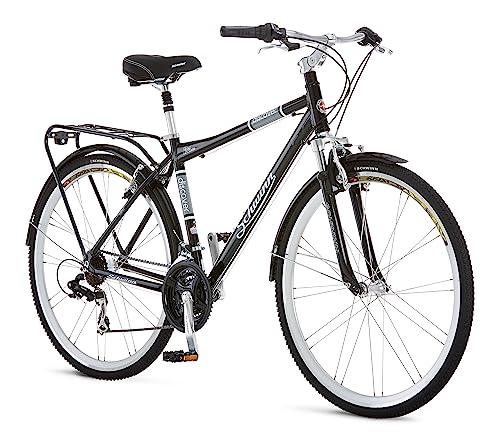
Schwinn Discover Adult Hybrid Bike 700c 21-Speed Black

Jasion RetroVolt Electric Bike 70-Mile Fat Tire

9000W Dual Motor Electric Bike 48MPH 58V 36Ah

EcoE 9000W Dual Motor Electric Bike 52MPH 26×4 Fat Tire

Jasion Roamer/ST Electric Bike 1200W 528WH 28MPH

Jasion EB5 Electric Bike 26 inch 1000W Peak Motor

TST Electric Bike 48V 15Ah 1500W Peak Fat Tire
The Strengths Of Each Pick
Unlike the electric models later in this list, the Schwinn Discover works as a traditional hybrid for riders who want pedal power on paved paths. A 19-inch aluminum frame suits riders from 5’9″ to 6’1″, and the upright swept-back handlebars keep posture relaxed over distance. Front suspension and a padded saddle soften cracked pavement on longer leisurely rides.
You get 21 speeds through SRAM grip shifters and a rear derailleur, which helps on climbs without motor assistance. Promax linear pull brakes pair with fenders and a rear cargo rack for wet-road touring and carrying a small bag. In most neighborhoods, that setup covers commuting and path cruising with simple mechanical parts.
A Few Strong Suits
- 21-speed gearing handles hills through pedaling alone
- Front and rear fenders reduce road spray on damp routes
- Rear cargo rack carries touring essentials without a backpack
- Adjustable stem rise changes handlebar height for comfort
- Aluminum frame keeps weight lower than steel alternatives
Things To Consider
- No motor assist, so long climbs demand full leg effort
- Frame size suits taller riders, limiting shorter riders
Compared with the Schwinn hybrid, the RetroVolt adds a 2000W peak motor and 99Nm of torque for assisted starts and hills. A 48V 15Ah removable battery supports up to 70 miles, and charging takes about 5 to 6 hours. That range suits commuters covering daily routes without recharging every evening.
You can switch among five riding modes and a 7-speed drivetrain for cruising, commuting, or pedal-assisted exercise. Dual suspension and 20 x 4.0 fat tires help on gravel paths and beach routes, while a 330 lb payload capacity and rear seat pad support short passenger trips. One thing worth considering is the 75 lb weight, which affects lifting into a vehicle.
The Good Stuff
- 70-mile stated range covers longer touring days
- Fat tires and dual suspension improve mixed-surface stability
- Headlight, horn, and rear brake light aid low-light riding
- 85% pre-installed setup reduces assembly time
- 330 lb payload supports cargo and short passenger rides
Worth Noting
- 75 lb weight makes transport and storage more demanding
- Fat tires roll with more resistance on smooth pavement
- Rider fit range of 5.4 to 6.3 feet needs checking before ordering
Who It Suits Best
Commuters and weekend riders who mix pavement, gravel, and beach paths at moderate speeds.
Where Another Pick Suits Better
Jasion Roamer/ST Electric Bike suits riders who prefer a lighter, more conventional 26-inch touring frame.
Power is the clear theme here, with dual motors peaking at 9000W and a stated top speed of 48MPH. A 58V 36Ah removable battery provides the capacity for extended adventure trips, and the 2088 watt-hour energy content signals a large pack. Full suspension uses front hydraulic forks plus rear shock absorption for rough trails.
You may find the 26 x 4.0 fat tires helpful on sand, snow, and dirt, where narrower tires struggle for traction. Hydraulic disc brakes match the higher speeds, and LED lighting supports night riding. Depending on your terrain, the 400 lb maximum weight recommendation and 90% pre-assembled delivery affect storage and setup planning.
What Works In Its Favor
- Dual motors deliver strong torque for steep climbs
- Large removable battery supports longer-distance rides
- Hydraulic disc brakes provide control at higher speeds
- Full suspension reduces vibration on rough surfaces
Trade Offs
- High output suits open terrain more than busy city streets
- Large battery and fat tires increase overall bulk for storage
The EcoE model shares the 9000W dual motor idea with the previous pick, but the stated top speed reaches 52MPH and the battery is listed as 60V 32Ah. Pedal assist range spans 35 to 80 miles depending on mode, load, and terrain. A 6061 aluminum alloy frame keeps the build focused on mountain terrain.
Dual front suspension and rear shocks work with 26-inch wheels and 4-inch tires for grip across varied ground. Front and rear hydraulic disc brakes, a 600-lumen LED front light, and an LCD display showing speed, mileage, and battery level add practical touring tools. Accessories include a mirror, bottle holder, phone mount, and reinforced cargo rack.
Where It Excels
- 32Ah battery supports wide pedal-assist range estimates
- Aluminum alloy frame suits demanding terrain use
- Cargo rack and accessory set aid loaded touring
- Bright front and tail lighting improves night visibility
- Hydraulic disc brakes handle high-speed stops
Minor Gripes
- 330 lb maximum weight recommendation limits heavier riders
- Minimum rider height of 165 cm needs confirmation for fit
- LCD settings should stay unchanged to avoid confusion
Stepping down from the 9000W models, the Roamer/ST uses a 750W motor with 1200W peak output for speeds up to 28MPH. A 528Wh removable battery supports 40 to 62 miles, with charging in 4 to 6 hours in one listing detail and 6 to 7 hours in another. That middle ground suits touring without extreme power.
You can choose pure electric, pedal assist, or pure pedal modes across 7 speeds, with an LCD display for speed, battery, assist level, and distance. Turn signals, brake light, and front lighting help in traffic, while 80mm front suspension travel softens rough roads. In our view, the 80% pre-installation level balances setup time against cost.
Useful Touches
- Three riding modes suit commuting and longer tours
- Turn signals improve visibility in mixed traffic
- Removable battery allows charging away from the bike
- Front suspension absorbs bumps on unpaved paths
Room For Improvement
- Mechanical disc brakes differ from hydraulic systems on other picks
- Range depends heavily on mode and rider weight
The EB5 takes a simpler city approach than the Roamer/ST, with a 1000W peak motor and a top speed of 20MPH. A 360Wh battery covers 25 to 40 miles per charge over 5 to 6 hours, and the removable design helps with home or office charging. At 49.6 lbs, the high-carbon steel frame is lighter than the fat tire models.
You can use pedal assist in 1 to 3 levels, pure electric throttle, pure pedal mode, or a booster mode for walking uphill at 4.5 to 7.5 km/h. Puncture resistant 26-inch tires, front fork suspension, dual lights, and mechanical disc brakes cover basic touring needs. For most short commutes, that combination keeps daily riding straightforward.
Reasons It Performs
- 49.6 lb weight eases lifting and storage
- Four working modes cover different riding styles
- LCD display shows speed and ride data
- Puncture resistant tires suit city touring
- Removable battery simplifies charging indoors
Points To Note
- 20MPH top speed limits longer touring pace
- 25 to 40 mile range suits shorter routes mainly
- Steel frame lacks the weight advantage of aluminum
Made For
City commuters who need short-range assist and easy handling in everyday clothes.
Look Elsewhere When
TST Electric Bike suits riders who want fat tires and dual suspension for mixed terrain.
Unlike the EB5 with its single front suspension, the TST pairs front and rear suspension with 20 x 4 inch fat tires for uneven routes. A 750W motor peaks at 1500W, and a 48V 15Ah removable battery charges in 6 to 7 hours. Stated range reaches up to 60 miles in pedal assist mode and 40 miles in throttle mode.
You can select among 3 working modes and 7 speeds, with an LCD display for speed, distance, and battery level. At 66 lbs with a 450 lb maximum load, the bike targets beginner cyclists who want cushioning on city streets, mountains, and beaches. The honest read is that mechanical disc brakes need inspection and adjustment before riding.
Well-Handled Touches
- Dual suspension reduces bumps on rough paths
- 450 lb maximum load supports heavier riders
- 90% pre-assembled delivery speeds setup
- Bright front light helps night touring
Softer Spots
- 66 lb weight complicates lifting and car transport
- Mechanical brakes need regular checks before rides
What Matters Most Before Choosing Touring E Bike
Range Against Real Routes
Battery capacity in watt-hours shapes how far a touring day can go before charging. A 528Wh pack and a 32Ah pack serve different distance goals, and throttle use drains charge faster than pedal assist. You should map the longest planned route first, then leave margin for hills and headwinds.
Tires, Suspension, and Brakes
Fat tires at 4 inches wide improve traction on sand and gravel, while narrower 26-inch tires roll more efficiently on pavement. Dual suspension softens rough ground, and hydraulic disc brakes give stronger control at higher speeds than mechanical systems. Brake type matters most on long descents and loaded rides.
Fit, Weight, and Carry Capacity
Frame size, rider height range, and maximum load determine whether a bike fits daily use. A 49.6 lb city model stores easily, while a 75 lb fat tire model needs garage space and a way to lift it into a vehicle. Racks, fenders, and payload limits decide how much touring gear the bike can carry comfortably.
Key Considerations Across These Picks
Common Shopping Slip Ups
Shoppers often compare peak motor watts without checking battery capacity or tire type for the planned terrain. Another slip is ignoring rider height and load limits until delivery. Matching those details to the route avoids a mismatch on the first long ride.
What The Higher Tier Buys
Higher tier models add dual motors, larger batteries, hydraulic brakes, and full suspension for demanding terrain. That spending pays off on steep climbs, loose surfaces, and long distances. For short paved commutes, a lighter single motor model often covers the need with less bulk.
Frequently Asked Questions
What range should a touring e-bike cover?
Range should exceed the longest planned route with margin for hills and wind. A 40 to 70 mile stated range suits many touring days, depending on assist mode.
Are fat tires better for touring?
Fat tires help on sand, gravel, and snow through wider contact and traction. Narrower tires roll more efficiently on smooth pavement for longer road tours.
How much motor power is enough?
Motor needs depend on terrain, rider weight, and desired speed on climbs. A 1200W peak model handles mixed routes, while 9000W dual motor models target steep off-road terrain.
What brake type matters most?
Hydraulic disc brakes provide stronger, more consistent stopping at higher speeds. Mechanical disc brakes work well for moderate speeds with regular adjustment.
Can these bikes carry touring gear?
Payload limits and racks determine carrying capacity for bags and supplies. You can check the stated maximum load and included rack before planning a loaded tour.
Final Verdict
For mixed touring, the Jasion Roamer/ST balances power, range, and road manners. Riders wanting fat tire comfort should look at the TST, while steep terrain calls for the dual motor models. Match battery, tire width, and fit to the longest route, and the choice becomes clear.