
A power meter can mean a plug-in monitor for a refrigerator, a pedal sensor for a road bike, or a fiber tool for a technician. That spread makes matching the device to the job more important than chasing a long feature list. Households tracking energy costs, riders training with structured workouts, and installers checking fiber runs all need different ranges, connectors, and readouts. The seven options below separate those jobs clearly, so a shortlist stays practical rather than confusing.
The Picks In Brief

P3 International P4460 Kill A Watt EZ Monitor
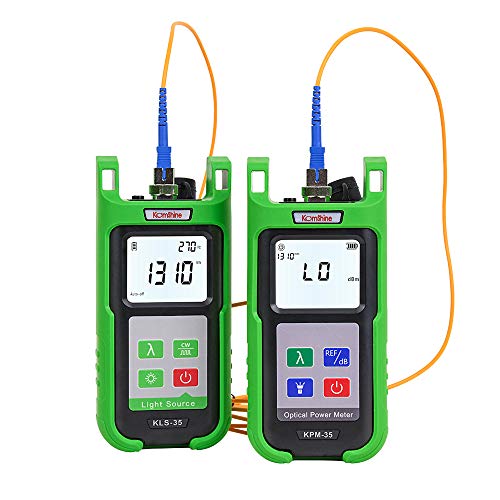
Komshine KPM-35 Fiber Power Meter with KLS-35-MS Light Source

Magene P715 Dual-Sensing Cycling Power Meter Pedals Silver

Garmin Rally RS210 Dual-Sensing Power Meter Shimano SPD-SL

Aituzero CL200 Digital Electric Sub Meter 120/240V

AstroAI Digital Multimeter True RMS 6000 Counts

Emporia Vue 3 Home Energy Monitor Smart Module
A Deeper Look At The Lineup
A plug-in monitor suits a household that wants one appliance checked at a time without panel work. The P3 International P4460 Kill A Watt EZ Monitor sits between outlet and appliance, then shows eight measures on a large LCD. That layout helps a person move it from a fridge to a heater and compare draw in plain numbers.
Cost forecasting by hour, day, week, month, and year turns kilowatt-hours into a familiar billing view. Built-in backup keeps accumulated data during an interruption, and accuracy within 0.2% supports repeat checks. In a busy kitchen, a short test on a fridge or an older air conditioner gives a clearer keep-or-replace signal than guessing.
Good Reasons To Consider
- Large LCD shows eight measures at once
- Cost forecasts cover week, month, and year
- Backup memory retains accumulated readings
- 0.2% accuracy supports appliance comparisons
Things To Consider
- Indoor use only, so outdoor circuits stay out of scope
- Single-appliance testing takes longer than whole-home tracking
Fiber work needs light levels in dBm, a unit that describes optical power relative to one milliwatt. The Komshine KPM-35 covers seven calibrated wavelengths, including 850, 1300, 1310, 1490, 1550, and 1625 nm. That range suits FTTH checks where different wavelengths carry different signals.
Paired light source KLS-35-MS sends 850/1300 nm and 1310/1550 nm light for attenuation tests. A silicone jacket, waterproof keys, and 2-meter drop protection suit field use, and automatic shutdown helps conserve battery. For most outdoor installs, that rugged shell matters more than a bench-style readout.
Notable Gains
- Seven calibrated wavelengths cover FTTH testing
- Measurement range reaches -70 to +6 dBm
- Light source supports single and multimode checks
- Silicone jacket withstands 2-meter drops
- Automatic shutdown conserves battery power
Worth Noting
- Bundle format suits technicians, not casual home checks
- SC connector focus requires matching patch cords
Komshine KPM-35 Fiber Power Meter with KLS-35-MS Light Source
Who It Suits Best
Fiber installers and network technicians who test FTTH lines in the field.
Where Another Pick Suits Better
AstroAI Digital Multimeter True RMS 6000 Counts suits general electrical troubleshooting instead of fiber light levels.
Pedal-based sensing moves with a rider between bikes, unlike a crank-only setup. The Magene P715 measures left and right legs independently at ±1% accuracy, so balance shows up in training data. You’ll get separate leg numbers rather than a single combined total.
KEO compatibility lets riders keep existing cleats, and Bluetooth plus ANT+ connect to computers, apps, and trainers. A 120-hour battery life covers long training blocks, and a one-minute install keeps setup simple. On a long-haul ride, that battery margin removes mid-season charging pressure.
A Few Strong Suits
- Independent left and right leg measurement
- ±1% accuracy for structured training
- KEO cleat compatibility avoids cleat changes
- 120-hour battery supports long training blocks
- Bluetooth and ANT+ cover computers and trainers
Minor Gripes
- KEO focus limits use with other pedal systems
- Pedal swap still needs correct cleat setup
Road riders who swap bikes often benefit from pedals that install like standard pedals. The Garmin Rally RS210 uses Shimano SPD-SL cleats and transfers quickly, with a removable sensor that also fits Rally XC210 off-road bodies. That flexibility beats a fixed crank setup for households with two bikes.
Dual sensing adds left/right balance, seated versus standing, platform center offset, and power phase. A strain gauge and gyroscope deliver ±1% accuracy with fast response, and Pedal IQ alerts cover calibration timing. Carbon bodies cut weight, rechargeable batteries last up to 90 hours, and 15 minutes adds up to 12 hours. Travel mode helps preserve charge during transport, which matters on a long flight with a bike case.
Positive Takeaways
- Dual sensing adds balance and power phase data
- Removable sensor fits XC210 off-road bodies
- Carbon bodies reduce pedal weight
- 90-hour rechargeable battery supports long seasons
- Pedal IQ alerts guide calibration timing
- Compatible with oval chain rings
Points To Note
- SPD-SL cleat requirement excludes other pedal systems
- Recharging adds a routine between rides
Sub-metering separates one circuit or unit from a main service for fair billing. The Aituzero CL200 is a single-phase 120/240V meter in ANSI Form 2S, so it snaps into a standard socket base. That format suits RV pads, garages, workshops, and rental units where a separate kWh total matters.
Pulse output and Modbus communication support system integration, and EEPROM memory retains data during outages. An IR port allows checks without opening a panel, and LEDs signal pulse activity and reverse flow. You can track solar import and export between an inverter and a home, though panel wiring still calls for careful planning and qualified help.
What Makes Sense
- Form 2S socket simplifies panel installation
- kWh tracking supports tenant cost allocation
- Pulse and Modbus outputs aid system integration
- EEPROM memory retains data during outages
Small Caveats
- Panel installation requires electrical wiring knowledge
- 120/240V single-phase limit excludes three-phase services
Made For
Landlords and property managers who bill tenants for separate circuit use.
Consider Something Else When
Emporia Vue 3 Home Energy Monitor Smart Module suits whole-home tracking without separate tenant billing.
Troubleshooting calls for voltage, current, resistance, continuity, capacitance, frequency, duty cycle, diode, and temperature checks in one handheld tool. The AstroAI model uses True RMS, which gives accurate AC readings on non-sine waveforms from modern electronics. Auto-ranging selects the scale automatically, so range switching stays out of the way.
A large backlit LCD, data hold, auto shut-off, and kickstand support garage and automotive work. Ceramic fuses rated F400mA/600V and F10A/600V add overload protection. For most home diagnostics, that combination covers circuits without a bench instrument.
The Good Stuff
- True RMS handles modern AC waveforms accurately
- Auto-ranging simplifies scale selection
- Backlit LCD aids low-light garage work
- Data hold freezes readings for note-taking
- 600V ceramic fuses add overload protection
Areas To Watch
- Handheld format lacks panel-mount data logging
- Test leads need cap removal before use
Whole-home monitoring shows total draw in real time, rather than one outlet at a time. The Emporia Vue 3 uses clamp-on sensors inside a circuit panel and reports through an app over 2.4 GHz Wi-Fi. That setup suits a household watching peak demand, time-of-use rates, or solar net metering.
Accuracy within ±2% covers daily energy management, with one-second data available while an app stays open and longer-term minute and hour data retained in cloud storage. Automation settings can target peak periods and excess solar. Your panel layout and sensor count decide fit, so a pre-check of panel space helps before ordering.
Useful Highlights
- Clamp-on sensors install inside circuit panels
- Real-time app reporting tracks home draw
- Solar and net metering support included
- Automation targets peak demand periods
- Cloud retention keeps minute and hour history
Honest Caveats
- Panel access and 2.4 GHz Wi-Fi are required
- Some three-phase systems need an extra sensor
What Matters Most Before Choosing Power Meters
Match Range To The Circuit Or Task
Voltage, current, wavelength, and power limits decide fit before features do. A plug-in monitor capped at 15A suits household appliances, while a fiber meter needs dBm range and wavelength coverage. Pedal sensors need cleat compatibility first, then accuracy and battery life.
Check Installation And Data Needs
Panel devices need space, wiring access, and sometimes extra sensors. Handheld tools need leads, fuses, and readable displays in low light. App-based monitors need Wi-Fi and a phone habit that will actually be used. You get more value from a format that matches daily routine than from extra metrics left unchecked.
Weigh Accuracy Against Practical Use
Accuracy figures such as ±1% or 0.2% help compare repeat readings, yet range and connectors often matter more in the field. A precise meter with the wrong cleat or connector creates friction. Start with compatibility, then compare accuracy within that shortlist.
Key Considerations Across These Picks
Common Shopping Slip Ups
Shoppers often compare wattage or accuracy numbers without checking voltage limits, cleat systems, or connector types. That mismatch leads to returns or unused gear. A quick compatibility check before ordering prevents most of those problems.
What The Higher Tier Buys
Higher-tier models add transferable sensors, richer dynamics data, faster charging, and broader system support. Those additions pay off for riders swapping bikes or households automating energy use. Basic models still cover single-appliance checks and general troubleshooting well.
Frequently Asked Questions
Which type suits a single appliance check?
A plug-in monitor suits single appliance checks because it sits between outlet and device. It shows draw and cost without panel work.
Which type suits cycling training?
Pedal-based dual sensing suits cycling training because it tracks left and right leg power. Transferable pedals also move between bikes easily.
Which type suits fiber installation?
A fiber power meter with a light source suits fiber installation because it measures dBm across calibrated wavelengths. Wavelength coverage should match the network being tested.
Which type suits tenant billing?
A Form 2S sub-meter suits tenant billing because it records separate kWh totals. Panel wiring and single-phase limits need checking first.
Which type suits whole-home tracking?
A clamp-on panel monitor suits whole-home tracking because it reports total draw through an app. Wi-Fi and panel space are required for setup.
Final Verdict
Home energy checks start well with the P3 International P4460 Kill A Watt EZ Monitor, while serious road training points toward the Garmin Rally RS210. Fiber work, sub-metering, and general troubleshooting each have a clearer specialist above. Match the format to the job, and the choice narrows quickly.