
Climbing a long grade at steady effort feels different when wattage numbers guide pacing instead of guesswork. A power meter measures force at the crank or pedal and converts it to watts, the unit for power output, so training zones become repeatable across rides.
You see effort clearly on hills, in headwinds, and during interval work, rather than relying on speed alone. The lineup below splits between pedal systems and cranksets, plus one GPS computer for speed and distance without power data.
A Quick View Of The Lineup

Favero Assioma UNO Power Meter Pedal

GEOID PM500 Bike Power Meter Crankset 170mm

Magene P715 S Power Meter Pedals

Garmin Rally RS210 Dual-Sensing Power Meter SPD-SL
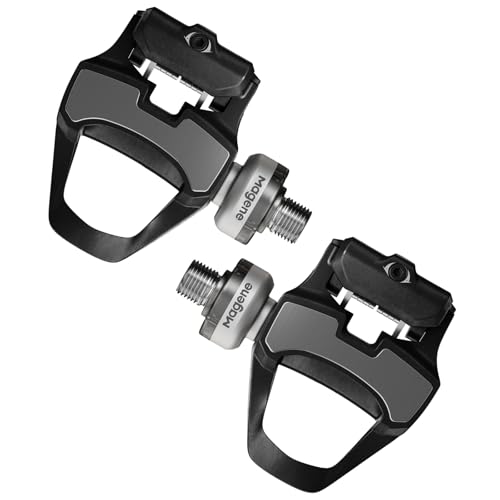
Magene P715 Dual-Sensing Power Meter Pedals Silver

Magene PES P505/P515 Power Meter Crankset

BKVTOP Wireless GPS Bike Computer 50g
The Details Behind The Selections
Left-side pedal sensing keeps setup simple for road riders who want wattage without changing a crankset. The Favero Assioma UNO Power Meter Pedal measures power from one pedal and doubles the estimate for total output, a method common in single-sided systems. That approach suits riders who value easy transfer between bikes.
Bluetooth and ANT+, two wireless standards for connecting sensors to computers and apps, handle data transfer to most head units. An inbuilt cadence sensor counts pedal revolutions per minute, while a gyroscope tracks angular velocity for IAV Power Phase, a measure of where force peaks during each stroke. Accuracy is listed at ±1%, and you may notice a leg imbalance stays hidden with left-side doubling.
A Few Strong Suits
- ±1% accuracy supports consistent training zones
- Pedal install transfers quickly between bikes
- IAV metrics show force timing across the stroke
- Bluetooth and ANT+ connect to many computers
Things To Consider
- Single-sided sensing estimates total power
- Advanced dynamics need compatible software for full use
Crankset power suits riders who want left and right balance without pedal hardware. The GEOID PM500 Bike Power Meter Crankset pairs a spider, the central mount linking chainrings to crank arms, with a Senicx PR3 crank in 170mm length. Total weight is listed at 680g for crank plus spider.
Dual sensors combine strain gauges, which measure tiny flex under load, with an accelerometer for temperature compensation. Power quadrant analysis and left-right balance tracking break down effort by cadence and leg side. You get cadence from 20 to 240 rpm, plus pedaling smoothness, in a single package.
Where It Excels
- ±1.5% accuracy with temperature compensation
- 300-hour battery reduces charging frequency
- 110 BCD fits standard four-bolt chainrings
- IPX7 sealing suits wet rides
- Magnetic charging simplifies top-ups
Worth Noting
- ±1.5% accuracy is wider than ±1% pedal options
- 170mm length limits fit choices
Dual pedal sensing gives independent left and right readings at ±1% accuracy. The Magene P715 S Power Meter Pedals weigh 157g per pedal, keeping added mass low for road and time trial bikes. A one-minute install claim points to a swap-friendly design for riders with more than one bike.
Seven training functions cover power, cadence, left-right balance, torque effectiveness, pedaling smoothness, power phase, and riding position. Torque effectiveness compares useful force to total force across the stroke. You can move the pair between road, time trial, and triathlon bikes as needed.
Positive Points
- Independent left and right power at ±1%
- 120-hour battery per charge cycle
- IPX7 waterproof rating for rain
Trade Offs
- 157g per pedal adds weight versus plain pedals
- SPD-SL and KEO fit needs cleat check before ordering
Who It Suits Best
Riders with two bikes who want left-right data and quick swaps will suit this pair.
Where Another Pick Suits Better
The Garmin Rally RS210 suits riders who want carbon pedal bodies and smart calibration alerts.
Carbon pedal bodies and dual sensing place this option in a higher tier. The Garmin Rally RS210 Dual-Sensing Power Meter SPD-SL measures both legs and reports left-right balance, seated versus standing effort, platform center offset, and power phase. Removable sensors also fit Rally XC210 off-road pedal bodies for gravel use.
A new strain gauge and gyroscope deliver ±1% accuracy with quick response to effort changes. Pedal IQ, a smart calibration system, flags when temperature shifts call for recalibration. Rechargeable cells run up to 90 hours, and 15 minutes of charging adds up to 12 hours, in our view a handy margin for a long weekend.
Standout Benefits
- Dual sensing with ±1% accuracy
- Carbon bodies cut weight and add durability
- 90-hour runtime with quick top-up charging
- Pedal IQ flags calibration needs
- Sensors swap to off-road pedal bodies
- Compatible with oval chainrings
Minor Gripes
- SPD-SL cleat system required for road use
Silver finish aside, the key distinction here is dual sensing in a pedal pair. The Magene P715 Dual-Sensing Power Meter Pedals Silver measures left and right legs independently at ±1% accuracy. SPD-SL compatibility lets riders keep existing cleats, which matters for anyone already clipped into that system.
Battery life reaches 120 hours, and Bluetooth plus ANT+ link to computers, apps, and trainers. Install takes about one minute, so swapping between bikes stays straightforward. You keep the same cleat setup while gaining left-right balance data for training analysis.
A Favorable Mix
- Independent left and right power at ±1%
- 120-hour battery for long training blocks
- One-minute install for bike swaps
- SPD-SL fit keeps current cleats
Room For Improvement
- Silver finish is a style choice, not a performance gain
- Pedal weight adds up across both sides
- Cleat system must match SPD-SL
Made For
Road riders already using SPD-SL cleats who want dual-leg data will suit this set.
Consider Something Else When
The Magene PES P505/P515 Power Meter Crankset suits riders who prefer crank-based power over pedal hardware.
A crankset route avoids pedal bulk and keeps the cockpit area clean. The Magene PES P505/P515 Power Meter Crankset weighs 625g, with the spider at 99g, and uses 7075 aluminum, an aircraft-grade alloy noted for strength at low weight. A triple hollow crank design aims for stiffness through each stroke.
Accuracy is listed at ±1%, with strain gauges, acceleration sensors, and temperature compensation working together. Battery life reaches 380 hours, and 110 BCD four-bolt mounting fits standard chainrings. You also get power, cadence, left-right balance, and torque effectiveness from one unit.
Noteworthy Benefits
- ±1% accuracy with temperature compensation
- 625g weight for a complete crankset
- 380-hour battery for extended training
- IPX7 waterproof rating for wet conditions
- 110 BCD fits standard chainrings
Points To Note
- Crankset install needs more effort than pedals
- 24mm steel spindle fit needs frame check
Speed and distance without power data define this pick. The BKVTOP Wireless GPS Bike Computer weighs 50g and uses built-in GPS, so no wheel sensor or spoke magnet is needed for current speed, average speed, top speed, distance, ride time, and total mileage.
A 2.4-inch LCD screen shows temperature, altitude, gradient, and accumulated ascent for hill planning. Battery runtime reaches 28 hours, and IPX7 sealing covers rainy commutes. You should note this model works standalone, with no app connection or external sensor support.
Advantages To Know
- 50g weight keeps handlebar setup light
- 28-hour runtime covers long weeks
- IPX7 rating suits wet conditions
Small Caveats
- No power meter sensor connection
- No app connection for ride sharing
Key Attributes To Check Before Choosing Power Meter For Cycling
Accuracy And Sensing Side
Accuracy figures range from ±1% to ±1.5% across these options, and that gap matters for structured training zones. Single-sided pedals estimate total power from one leg, while dual systems measure each leg directly. You gain left-right balance data only from dual sensing or crankset systems.
Fit And Compatibility
Pedal systems depend on cleat type, with SPD-SL and KEO options across the list. Cranksets depend on BCD, the bolt circle diameter for chainring mounting, plus crank length and spindle fit. A quick check of existing cleats and chainrings prevents a mismatched order.
Battery And Data Use
Battery life spans 90 hours to 380 hours, which changes charging habits for daily riders. Bluetooth and ANT+ cover most computers and apps, while IPX7 sealing helps in rain. For most commutes, a mid-range battery paired with dual connectivity keeps data flowing without frequent top-ups.
Key Considerations Across These Picks
Common Shopping Slip Ups
Ordering pedals without confirming cleat compatibility is a frequent mistake. Crankset length and BCD also need a check before ordering, since a mismatched crankset will not fit a frame or chainring setup.
What The Higher Tier Buys
Higher-tier models add carbon bodies, dual sensing, and smart calibration features. Those additions support detailed dynamics data and easier transfers between bikes, which suits riders who train with structured plans.
Frequently Asked Questions
Does a power meter replace a GPS bike computer?
No, a power meter measures watts while a GPS computer tracks speed, distance, and route data. Riders often pair both for complete ride records.
What accuracy should riders look for?
±1% accuracy is common for pedal systems in this lineup. Crankset options at ±1.5% still provide useful training data for many riders.
Can pedal power meters move between bikes?
Yes, pedal systems install like standard pedals and transfer quickly. That swap ease suits riders with road and gravel bikes.
What does left-right balance show?
Left-right balance compares power from each leg during the pedal stroke. A persistent imbalance can point to fit or strength differences worth addressing.
How long do batteries last?
Battery life ranges from 90 hours to 380 hours across these picks. Longer ratings reduce charging frequency for regular training.
Final Verdict
For structured training, dual-sensing pedals or a crankset give the richest data, while left-side pedals keep entry simple. You can match sensing side, cleat fit, and battery life to training goals, then ride with numbers that make effort repeatable.