
A bent rim or worn hub can end a ride before the trail does, and a replacement wheelset often brings a mountain bike back into use without a full rebuild. Riders facing a damaged rear wheel, a full pair replacement, or a brake-type change need to match wheel size, hub spacing, brake mounting, and cassette compatibility before anything else. That matching work matters more than chasing a lighter rim, because a wheel that does not fit the frame or drivetrain will not solve the problem. The seven options below cover full pairs and rear-only replacements in 26, 27.5, and 29 inch sizes, with disc and rim brake variants clearly separated.
The Picks In Brief

ZTZ Mountain Bike Wheelset WH-001 32H Disc Brake

WEEROCK Bike 26 Inch MTB Wheel Set Disc Brake

WEEROCK 27.5 Inch MTB Wheel Set Disc Brake

WEEROCK Bike 29 Inch Rear MTB WheelSet Disc Brake
WEEROCK Bike 27.5 Inch Rear MTB WheelSet Disc Brake
WEEROCK Bike 26 Inch Rear MTB WheelSet Disc Brake
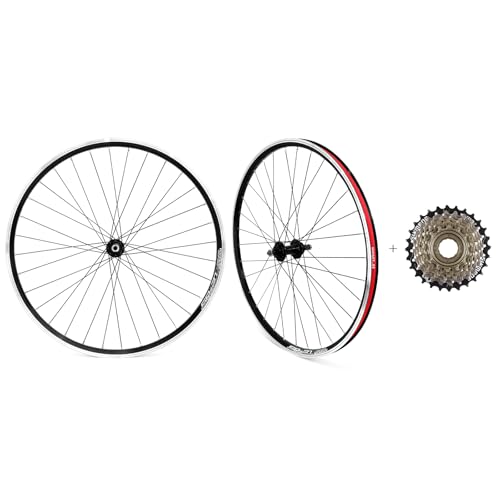
Exceedhub 26 Mountain Bike Wheels V Brakes 7 Speed
The Strengths Of Each Pick
A full pair built around a 32-hole aluminum rim suits riders replacing both wheels at once. Quick release, abbreviated QR, means a lever-clamped axle that opens without tools, and the listed 9×100 mm front and 10×135 mm rear spacing matches older mountain bike frames. A cassette, the splined stack of rear gears, covers 7 to 12 speeds in the listing.
Double-layer rim construction adds material at the spoke bed, and PVC pads sit over spoke nipples to reduce tube punctures from inside. The hub layout uses two front bearings and five rear bearings, a denser arrangement than the two-bearing hubs on several WEEROCK options later in this list. That difference matters for long-distance riders who value smooth rolling and easier hub servicing.
Where It Excels
- 32 spokes per wheel for even tension across the rim
- Double-layer aluminum rim with inner tube protection pads
- Detachable hub design simplifies cleaning and maintenance
- Front 2 and rear 5 bearing layout supports smoother rotation
- QR front and rear for tool-free wheel removal
Things To Consider
- Disc brake only, so rim brake frames need a different pick
- Confirm cassette speed range before moving existing gears over
This 26 inch pair takes a simpler route than the ZTZ set, with double-wall aluminum rims and two bearings in each hub. The 25 mm rim width and 26-spoke count keep the build straightforward for trail and mixed-surface riding. Six-bolt disc mounting is the key check, because the rotor must bolt directly to the hub flange.
Cassette compatibility spans 7 to 11 speeds, which covers many older drivetrains without a hub change. Front 100 mm and rear 135 mm spacing aligns with the same QR standard used by the first pick, so frame fit is easier to confirm. In a busy garage, the included quick releases make swapping a flat or moving the pair between similar frames quicker.
Practical Pluses
- Double-wall rims resist dents better than single-wall designs
- Two-bearing hubs run with less adjustment over time
- Quick releases included for both wheels
- Wide cassette range from 7 to 11 speeds
Worth Noting
- 26 spokes per wheel, fewer than the ZTZ 32-spoke build
- Requires a 6-bolt disc rotor, not centerlock mounting
- Disc only, so V-brake frames cannot use this pair
Who It Suits Best
Riders with a 26 inch disc brake bike who need a matched front and rear replacement at a straightforward spec level.
Where Another Pick Suits Better
Exceedhub 26 Mountain Bike Wheels V Brakes 7 Speed suits rim brake frames where this disc-only pair cannot be used.
Moving up to 27.5 inch changes handling in a way many trail riders notice on climbs and tight turns. This pair keeps the same WEEROCK formula as the 26 inch version, with double-wall aluminum rims, 25 mm rim width, and two-bearing hubs front and rear. The shared hub and brake layout makes comparison simple: size is the main difference.
Your existing 27.5 inch tires and rotors transfer over, provided the cassette sits within 7 to 11 speeds and the rotor uses six bolts. Front 100 mm and rear 135 mm QR spacing remains the fit check before ordering. For riders commuting daily, sealed bearings help keep grit out of the hub, though regular cleaning still matters after muddy rides.
Standout Benefits
- 27.5 inch size balances maneuverability and rollover
- Double-wall rim construction for trail use
- Sealed bearing hubs with dust and water resistance
- Quick release axles for both wheels
- Cassette range covers 7 to 11 speeds
Trade Offs
- Full pair only, so a rear-only repair costs more in parts
- Six-bolt disc requirement limits rotor options
A rear-only wheel makes sense when the front wheel still runs true and the damage sits at the back. This 29 inch rear wheel uses a 28 mm double-wall aluminum rim with 32 spokes, a stronger spoke count than the 26-spoke pair earlier in the list. That extra spoke support matters on a larger wheel, where leverage on the rim is greater.
You need a 135 mm rear dropout and a six-bolt rotor to make this work, and the cassette range stays at 7 to 11 speeds. The two-bearing hub keeps maintenance simple, with sealing aimed at dust and water. On a long-haul flight of stairs or a trailhead carry, a single rear wheel is also easier to transport than a full pair.
Real Benefits
- Rear-only format avoids replacing a sound front wheel
- 32 spokes support the larger 29 inch rim
- Double-wall aluminum rim for impact resistance
- Quick release included for fast installation
Minor Gripes
- No front wheel included, so mismatched pairs can result
- Measure rear spacing carefully before ordering
- Disc only, with six-bolt rotor mounting
This rear-only 27.5 inch wheel mirrors the 29 inch rear option in construction, with a 28 mm double-wall rim and 32 spokes. The wider rim than the 25 mm pair earlier gives a different tire profile, which can feel more planted on loose surfaces. Two-bearing hub construction keeps the design consistent across the WEEROCK rear range.
Fit checks stay the same: 135 mm rear spacing, six-bolt disc rotor, and a 7 to 11 speed cassette. Quick release installation means a press-fit swap in the workshop, though disc alignment still needs a check after fitting. For a rider keeping a sound front wheel, this avoids paying for a second rim.
Everyday Wins
- 28 mm rim width suits trail tire profiles
- 32-spoke build for rear wheel strength
- Double-wall rim resists trail impacts
- Sealed bearings reduce hub maintenance
- Quick release for straightforward fitting
Points To Note
- Rear only, so front damage needs a separate solution
- Requires six-bolt disc and cassette drivetrain
Made For
27.5 inch riders with a damaged rear wheel and a healthy front wheel on a disc brake frame.
Consider Something Else When
WEEROCK 27.5 Inch MTB Wheel Set Disc Brake suits riders who need both wheels replaced as a matched pair.
Completing the rear-only set, this 26 inch wheel pairs a 28 mm double-wall rim with 32 spokes and a two-bearing hub. Compared with the 26-spoke full pair in the same size, the higher spoke count here gives a sturdier rear build for riders who stress the back wheel on climbs. The rim width also steps up from 25 mm to 28 mm.
Compatibility follows the same pattern as the other rear wheels: 135 mm QR spacing, six-bolt disc mounting, and 7 to 11 speed cassette support. Quick release fitting keeps the swap simple, and the sealed bearing design aims to limit dust and water entry. It is a focused repair part rather than a full upgrade.
Where It Helps
- 32 spokes strengthen the rear wheel build
- 28 mm double-wall rim for trail durability
- Two-bearing hub with sealed design
- Quick release installation
Softer Spots
- Rear only, so it cannot refresh the front wheel
- Measure 135 mm spacing before ordering
- Six-bolt disc only, cassette drivetrain required
This pair stands apart as the only rim brake option in the list, built for V-brake frames rather than disc frames. V-brakes, also called rim brakes, squeeze the rim sidewalls, so the rim needs a smooth braking surface and the hub carries no rotor mount. Double-wall aluminum construction with 32 holes front and rear supports that setup.
You get Schrader valve holes, a 19 mm internal and 25 mm outer rim width, and compatibility with a 7-speed threaded freewheel, the screw-on rear gear cluster used on older drivetrains. Front 2 and rear 2 bearings with sealing aim to keep dust out, and QR axles at 9×100 mm and 10×135 mm match common frame spacing. PVC pads over spoke nipples add inner tube protection, similar in purpose to the ZTZ design.
The Value In It
- Rim brake design for V-brake frames
- 32 holes front and rear with 45# steel spokes
- Schrader valve holes for common tubes
- Sealed front 2 and rear 2 bearing layout
- Quick release axles included front and rear
Small Caveats
- 7-speed threaded freewheel only, not cassette hubs
- Cannot be used with disc brake rotors
- Tire width range is 1.5 to 2.125 inches
What Matters Most Before Choosing Mtb Wheels
Size, Spacing, and Brake Type
Wheel size must match the frame and tire diameter, and hub spacing must match the fork and rear dropouts. A 100 mm front and 135 mm rear QR setup fits older frames, while newer thru-axle frames need a different hub entirely. Brake type splits the list sharply: disc wheels need rotors, and rim brake wheels need a braking surface on the rim.
Drivetrain and Rotor Mounting
Cassette hubs slide a splined gear stack on, while threaded freewheels screw on, and the two systems do not interchange. Speed range matters too, because a hub rated for 7 to 11 speeds will not suit a 12-speed cassette. Six-bolt disc rotors bolt to the hub flange, and centerlock rotors use a splined lockring instead.
Rim, Spokes, and Bearings
Double-wall rims add a second layer of aluminum for dent resistance, and spoke count affects how evenly tension spreads across the wheel. Bearing count and sealing influence rolling feel and maintenance intervals, though neither replaces periodic cleaning. For riders storing wheels in a damp shed, sealed bearings and aluminum rims reduce corrosion concerns compared with bare steel parts.
Key Considerations Across These Picks
Common Shopping Slip Ups
Ordering by wheel size alone causes most fit problems, because spacing and brake mounting get overlooked. Measuring the frame dropouts and checking the existing rotor mount takes minutes and prevents a return. You should also confirm whether the drivetrain uses a cassette or a threaded freewheel before selecting a rear wheel.
What The Higher Tier Buys
Higher-tier builds in this group add more spokes, denser bearing layouts, and detachable hubs for easier servicing. The ZTZ pair, for example, uses five rear bearings compared with two on the WEEROCK hubs. That extra hardware pays off for riders who service hubs themselves or ride long distances regularly.
Frequently Asked Questions
How do I know which wheel size fits my bike?
Check the size printed on the current tire sidewall and match it to the replacement wheel. Frame clearance for tire width should also be confirmed before ordering a wider rim.
What does 135 mm rear spacing mean?
It is the distance between the inside faces of the rear frame dropouts where the axle sits. A 135 mm QR rear wheel fits frames built to that standard.
Can disc brake wheels work on a V-brake bike?
No, disc wheels lack a rim braking surface and V-brake calipers cannot reach a rotor. Rim brake wheels are required for V-brake frames.
What is the difference between cassette and freewheel hubs?
Cassette hubs use a splined body that the gear stack slides onto, while freewheel hubs use a threaded body that the gears screw onto. The drivetrain type determines which hub is needed.
Do I need a new rotor with a replacement wheel?
An existing six-bolt rotor can transfer to a matching six-bolt hub, provided the rotor diameter matches the caliper and frame. Rotor condition and pad alignment should be checked during the swap.
Final Verdict
Your best match depends on brake type first, then wheel size and rear spacing. Disc riders replacing both wheels should weigh the ZTZ pair against the WEEROCK pairs by spoke count and bearing layout, while rear-only repairs suit the single WEEROCK wheels. V-brake frames need the Exceedhub pair, and that brake check alone narrows the field quickly.