
Trail riding on a budget comes down to frame material, gear range, and braking setup matching the terrain ahead. A commuter crossing gravel paths needs different support than a rider tackling steeper park trails, and sizing helps you find a frame that fits the route. Your height, typical distance, and storage space narrow the field faster than a long feature list. Seven options below cover aluminum hardtails, carbon frames, steel dual suspension, and electric assist for varied needs.
The Picks In Brief

WEIZE 27.5 Inch Mountain Bike Gray

Xathquia Electric Bike for Adults 1500W Step-Thru

SAVADECK Carbon Fiber MTB U6000 10 Speed Rock Grey

ROCKBROS MT200 27.5 Mountain Bike Shimano 8-Speed

WEIZE Mountain Bike 27.5 inch 18-Speed Dual Suspension

Electric Bike for Adults 1500W 26 Fat Tire Ebikes
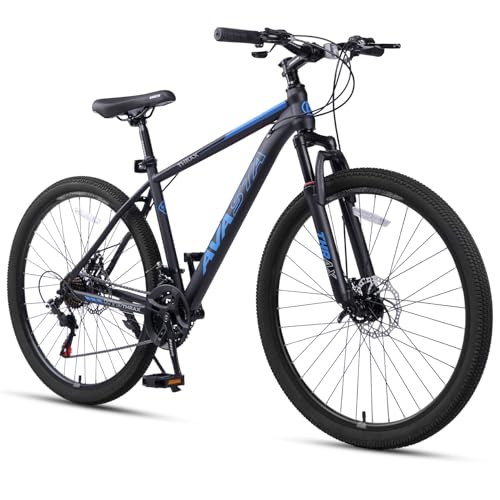
AVASTA Thrax 27.5 Inch MTB Mountain Bike
A Closer Look At Each Pick
An aluminum frame and 21-speed gearing give this WEIZE model a broad everyday role, from neighborhood streets to gravel paths. Sizing guidance places the 27.5-inch version for riders from 5’5″ to 6’5″, so height matching comes first before anything else. That clarity helps you avoid a frame that feels cramped on longer rides.
Front and rear suspension address bumps on uneven roads, while disc brakes at both wheels support controlled stops in traffic and on descents. A 17-inch frame, 2.125-inch tires, kickstand, and front reflector round out a commuter-ready setup. Shorter park loops and fitness rides suit the package well.
A Favorable Mix
- Aluminum frame keeps weight manageable for daily carrying and riding
- 21 speeds cover flat roads and moderate hills with room to adjust
- Full suspension softens vibration on cracked pavement and light trails
- Dual disc brakes add stopping confidence beyond rim brakes
- Clear height ranges simplify selecting between 26 and 27.5 inches
Things To Consider
- Full suspension adds complexity for riders wanting a simpler hardtail
- Single 17-inch frame size limits fit adjustment compared with multi-size options
Electric assist changes the equation for commuters facing headwinds or hills, and this step-thru frame makes mounting simple. An upright position and widened saddle shift pressure away from longer rides. You get a city-focused machine rather than a trail-focused one, with geometry aimed at daily travel.
A 1500W peak brushless motor reaches 25 MPH, paired with a 48V 12Ah removable battery rated up to 65 miles in pedal-assist use. Front suspension and 26-inch anti-slip tires handle rough pavement and light gravel. Charging takes about 4 to 5 hours, and removal allows charging away from the bike.
Features That Help
- Step-thru frame simplifies getting on and off in street clothes
- Removable battery supports charging at home or work
- 7-speed gearing and dual disc brakes suit mixed urban routes
- Front LED light and reflective parts support low-light travel
Worth Noting
- Front suspension only, so rear bumps reach the rider more directly
- Battery storage needs a secure indoor spot for charging and locking
Who It Suits Best
Commuters wanting easy mounting and pedal-assist range for city routes.
Where Another Pick Suits Better
Electric Bike for Adults 1500W 26 Fat Tire Ebikes suits riders wanting wider tires for loose surfaces.
Carbon fiber moves this SAVADECK away from aluminum options such as the ROCKBROS MT200, trading frame weight for a different ride character. Internal cable routing keeps the profile clean, and corrosion resistance matters for riders storing bikes in damp garages. You are looking at a more committed trail build here.
Shimano U6000 shifting pairs with a U6020 CUES rear derailleur across 10 speeds, giving a wide range for climbs and gravel stretches. Hydraulic disc brakes provide modulation that mechanical systems struggle to match on long descents. An oil spring fork handles small bumps with progressive compression.
Everyday Perks
- Carbon frame reduces weight compared with aluminum builds
- Hydraulic brakes deliver smoother control on steep terrain
- 10-speed Shimano groupset supports precise gear changes
- Oil spring fork responds to small bumps without temperature sensitivity
Trade Offs
- Frame size selection is critical, with 15.5, 17, and 19 inch options tied to height
- Carbon ownership calls for careful handling around impacts
Aluminum construction and a Shimano 8-speed drivetrain place this ROCKBROS model in a practical middle ground. The EF500 shifter works with TY300 and M310 derailleurs and an HG200 cassette, a combination aimed at dependable shifting rather than race-day speed. You get components that are widely understood by local shops.
An adjustable suspension fork includes lockout, which stiffens the front end for smooth pavement and releases for rough sections. CST 27.5 x 1.95 inch tires and double-wall rims suit bike paths and light trails. S, M, and L frame options help match rider height more closely than single-size builds.
Where It Excels
- Lockout fork adapts between roads and uneven trails
- Shimano drivetrain simplifies future parts and adjustments
- Mechanical disc brakes provide dependable stopping on descents
- Multiple frame sizes improve fit across rider heights
- Quick-release wheels ease transport and storage
Minor Gripes
- Mechanical discs need more cable attention than hydraulic systems
- 8 speeds offer less range than 10-speed or 21-speed setups
High-carbon steel and dual suspension define a simpler approach than the aluminum WEIZE model earlier in the list. Front fork and rear coil shock work together on neighborhood roads and light trails. You get a straightforward build aimed at riders aged 13 and up.
Twist shifters control 18 speeds through front and rear derailleurs, helping riders find a comfortable cadence on hills. Linear pull brakes handle stopping duties, and 27.5-inch all-terrain tires suit mixed surfaces. Partial assembly with included tools points to about 20 minutes for setup.
What Makes Sense
- Steel frame offers a sturdy feel for casual riding
- Dual suspension smooths bumps at both ends
- 18-speed twist shifting keeps gear changes simple
Room For Improvement
- Linear pull brakes lack the modulation of disc systems
- Steel construction adds weight compared with aluminum frames
- Height guidance centers on 5’4″ and taller riders, limiting smaller fit
Made For
Casual riders wanting dual suspension and simple shifting for local routes.
Consider Something Else When
ROCKBROS MT200 27.5 Mountain Bike Shimano 8-Speed suits riders wanting disc brakes and a lockout fork.
Fat tires change traction completely compared with the narrower tires on the Xathquia step-thru model. Wide 26 x 4.0 inch tires grip sand, snow, and loose gravel, while a suspension fork and adjustable saddle manage rough ground. You get an e-bike built for surfaces beyond paved paths.
A 1500W peak motor and 48V 15Ah removable battery support up to 60 miles per charge, with charging in 5 to 6 hours. Five riding modes include throttle, pedal-assist levels, booster, cruise, and regular cycling, paired with 7-speed gearing. Dual disc brakes, a headlight, fenders, and an LED display cover daily use details.
The Good Stuff
- Fat tires improve grip on sand, snow, and loose trails
- Removable battery allows charging away from the frame
- Multiple riding modes adapt to commuting or trail use
- Aluminum frame and rear rack support loads up to 330 lbs
- Fenders reduce splashes in wet conditions
Points To Note
- Wide tires and motor add bulk for apartment storage and lifting
- Range varies with mode, rider weight, and terrain
High-carbon steel construction and a premium suspension fork give this AVASTA model a familiar hardtail layout. Three wheel sizes, 24, 26, and 27.5 inches, help households match a bike to rider height. Quick-release wheels support transport and storage in smaller spaces.
A 21-speed derailleur system pairs with disc brakes for gear range and stopping control. Assembly starts at 75% pre-assembled, with an installation video available through the product page. You can check wheel size against height before ordering, which matters more than color or trim level.
Strong Points
- Three wheel sizes cover a wider height range
- 21 speeds provide range for hills and flat routes
- Disc brakes support controlled stops on descents
- Quick-release wheels simplify carrying and storage
Softer Spots
- Steel frame weighs more than aluminum alternatives for carrying upstairs
Key Factors Behind a Smart Mtb Choice
Frame Material and Fit
Aluminum keeps weight down for commuting and carrying, carbon fiber reduces weight further for trail-focused riding, and steel offers a sturdy feel at a simpler setup. Frame size matters as much as material, since reach and standover affect control on descents. Height ranges and multiple size options deserve a close check before ordering.
Suspension and Braking
Front suspension suits most riders, while full suspension adds comfort on uneven roads at the cost of extra complexity. Disc brakes, especially hydraulic systems, provide stronger modulation than linear pull brakes on long stops. Lockout features help hardtails ride efficiently on pavement.
Gearing and Electric Assist
Gear range should match local terrain, with wider ranges helping on steep climbs and mixed routes. Electric models add motor power and battery considerations, including charging time and removable battery storage. Fat tires change traction and storage needs, so garage or apartment space needs measuring first.
Key Considerations Across These Picks
Common Shopping Slip Ups
Ordering by wheel size alone leads to poor fit, since frame size and rider height interact. Checking storage space before delivery prevents surprises with fat tire and electric models. Comparing gear counts without checking derailleur quality also misses how shifting feels on hills.
What The Higher Tier Buys
Higher tier builds often pair carbon frames with hydraulic brakes and wider gear ranges. Those upgrades pay off on steep, technical routes where control matters most. Casual neighborhood riding gains less from the same spend, and simpler steel or aluminum frames handle those routes well.
Frequently Asked Questions
Which wheel size fits most adult riders?
27.5 inch wheels suit many adults from about 5’4″ upward, depending on frame size. Height ranges listed for each model give a clearer fit guide than wheel size alone.
Does full suspension help on paved roads?
Full suspension softens cracks and small bumps on uneven pavement. Hardtails with lockout forks often feel more efficient on smooth roads.
What braking type matters most for trails?
Disc brakes provide stronger control than linear pull brakes on descents. Hydraulic discs add smoother modulation for steep terrain.
How long does battery charging take on electric models?
The step-thru model charges in about 4 to 5 hours, while the fat tire model takes 5 to 6 hours. Removable batteries allow charging away from the bike.
Can a beginner handle 21 speeds?
Beginners often manage 21 speeds well with twist or trigger shifters on varied routes. Simpler 8-speed or 18-speed setups reduce adjustment complexity for new riders.
Final Thoughts
Match frame size to height first, then decide between hardtail simplicity and full suspension comfort. Commuters benefit from disc brakes and lockout forks, trail riders gain from hydraulic control, and electric models suit longer routes with hills. The right choice depends on terrain, storage, and riding frequency.