
A rough gravel stretch can turn a short ride into a sore afternoon, and saddle choice shapes how much vibration reaches your hips. Width, padding density, and rail shape decide whether pressure stays spread across sit bones or concentrates in one spot. You need a shape that matches your riding posture, whether upright on a hybrid or leaned forward on a trail bike. The picks below balance cushioning, airflow, and weight for different styles of riding.
How The Shortlist Stacks Up

GORIX Bike Saddle Seat GX-C19 (All White)
ROCKBROS Carbon Fiber Bike Saddle Lightweight
ROCKBROS Bike Saddle Memory Foam for MTB

Avelori Mountain Bike Seat Comfort Kit with Grips

ROCKBROS Memory Foam Wide Bike Seat Dual Shock
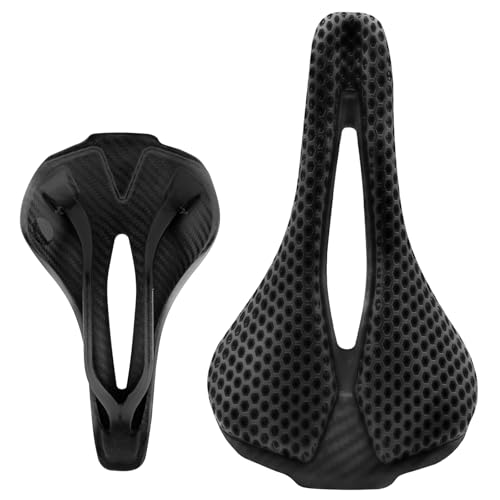
Bike Saddle 3D Printed Carbon Road Bike Seat

Mountain Bike Seat Wide Dual Shock Absorbing Balls
Taking A Closer Look At The Options
The GX-C19 suits riders who want a thick, rounded rear section rather than a narrow racing shape. Foam padding spreads load across a 5.9 inch width, and a central hole gives airflow and pressure relief along the middle. That layout works well on an upright mountain bike where longer seated stretches matter more than weight savings.
PU leather over polyester keeps the surface easy to wipe after dusty trails. Steel rails measure 2 inches tip to tip, so clamp fit needs a quick check against the existing seatpost. At 0.7 lb, the saddle stays light enough for commuting, and the wide colour range helps match different frames.
The Upside
- Thick foam softens bumps on longer rides
- Central hole improves airflow and pressure relief
- Rounded rear supports upright riding posture
- PU leather surface wipes clean after trail dust
Things To Consider
- Steel rails add weight compared with carbon options
- 10.8 inch length needs clearance on compact frames
Carbon construction sets this saddle apart from the foam-heavy GORIX GX-C19, with a focus on pedalling efficiency and low mass. Two widths give a real choice: 103 mm at 136 g for a narrow race position, or 152 mm at 150 g for broader support. Microfiber leather over elastic padding keeps the contact area flexible while the shell holds shape.
A hollow centre and suspension bow design aim to cut pressure and absorb vibration, which matters on longer road efforts. You may find the narrower version demanding for upright mountain bike use, since support depends more on precise positioning. Carbon rails at 7 x 9 mm also need clamp compatibility confirmation.
Well-Handled Touches
- Carbon shell keeps total weight near 0.30 lb in narrow size
- Two widths allow matching support to riding position
- Hollow centre aids airflow during long efforts
- Suspension bow adds controlled flex under load
- Microfiber surface balances grip and cleanability
Worth Noting
- Narrow 103 mm shape suits forward posture, not upright leisure
- Carbon rail size requires clamp compatibility check
Who It Suits Best
Road and gravel riders using a forward leaning position who value low weight over thick padding.
Where Another Pick Suits Better
Upright leisure riders get more cushion from ROCKBROS Memory Foam Wide Bike Seat Dual Shock.
Memory foam here takes a different route from the wide ROCKBROS option later in the list, with a slim 9.84 x 5.7 inch profile for active riding. High-density foam holds a steadier shape under vibration, and a long central channel improves airflow while reducing inner thigh contact. Your position matters with this shape, since it suits a forward lean rather than an upright cruise.
A water-resistant PVC cover helps with splashes and wipes clean after commuting or trail use. Scale markings on 7 mm round rails guide fore-aft adjustment, which is the distance the saddle sits forward or back on the post. That detail makes setup repeatable across bikes.
Benefits That Matter
- High-density memory foam maintains consistent support
- Central channel reduces pressure and improves airflow
- Slim nose limits thigh contact during pedalling
- PVC cover resists splashes and wipes clean easily
Trade Offs
- Slim profile offers less rear support for upright riders
- Round 7 mm rails need clamp compatibility confirmation
This bundle addresses contact points at both ends of the bike, pairing a memory foam saddle with ergonomic grips. A dual-spring base under the saddle absorbs vibration, while textured rubber grips dampen trail buzz through the bars. That two-point approach helps on long commutes where hands and seat both fatigue.
Grips use a double aluminium lock system for 22.2 mm handlebars, with an enlarged palm rest to support wrists in a natural position. You get a rain cover, seat wrench, end plugs, and tools in the box, which simplifies a single order. Waterproof leather on the saddle also eases cleaning after wet rides.
Practical Pluses
- Saddle and grips tackle comfort at both contact points
- Dual-spring base absorbs vibration under the saddle
- Lock-on grips stay secure on 22.2 mm bars
- Enlarged palm rest supports wrists on long rides
- Tools and rain cover included in the kit
Minor Gripes
- Bundle costs more effort to install than a saddle alone
- Grip fit depends on standard 22.2 mm handlebar size
Width defines this option, with 4 cm of memory foam over a wide rear section and a narrower nose for thigh movement. Two shock-absorbing balls sit underneath to soften potholes and rough ground, unlike the slim profile of the earlier ROCKBROS memory foam saddle. That combination suits upright riding on hybrids and leisure mountain bikes.
A central airflow vent helps heat dissipate during longer rides, keeping the contact area drier. You can mount the saddle on standard seatposts with the included hex tool and wrench, and adjust height and angle during setup. Universal fit covers mountain, folding, and road frames with compatible posts.
Noteworthy Benefits
- 4 cm memory foam padding cushions rough surfaces
- Dual shock balls absorb bumps and potholes
- Wide rear with narrow nose frees thigh movement
- Central vent improves airflow on long rides
Room For Improvement
- Wide shape adds bulk for weight focused riders
- Extra padding suits upright posture more than racing posture
Made For
Casual riders on upright bikes who prioritise cushioning over low weight.
Consider Something Else When
Performance riders chasing low mass get a lighter shell from ROCKBROS Carbon Fiber Bike Saddle Lightweight.
A 3D printed honeycomb layer sits over a carbon shell, creating a surface that flexes under sit bones while the base stays firm. Open cells channel air through the top, and a textured surface helps hold position without constant shifting. That structure differs sharply from foam saddles, trading thick padding for targeted flex.
Carbon construction keeps weight low for road, mountain, gravel, BMX, and XC frames with standard seatposts. Your riding style still shapes fit, since a firm shell rewards a position that matches the saddle profile. Scratch-resistant materials also simplify cleaning after dusty or wet rides.
Useful Highlights
- Honeycomb top flexes to cradle sit bones
- Open structure channels air for cooler contact
- Textured surface helps maintain pedalling position
- Carbon shell keeps weight low across bike types
Points To Note
- Firm shell offers less thick cushioning than foam options
- Standard seatpost fit still needs a compatibility check
Two rubber shock balls under a wide, ventilated shape give this saddle a straightforward approach to rough ground. High-density foam inside supports longer rides, while a central duct and pressure-relief groove improve airflow in warm weather. You get a honeycomb PVC synthetic leather surface that grips in wet conditions and resists wear.
At 25 x 20 x 7 cm and about 740 g, the shape suits commuter and mountain frames with double rail or clamp spring posts. A reflective strip at the rear adds visibility for night riding, and tools plus a rain cover are included. That mix of practical details makes setup simple on a standard post.
Useful Touches
- Dual rubber balls cushion uneven terrain
- Honeycomb PVC surface grips in wet weather
- Central duct improves airflow and pressure relief
- Reflective rear strip aids night visibility
- Tools and rain cover included for setup
Softer Spots
- 740 g weight is heavier than carbon shell options
- Wide 20 cm shape needs frame clearance check
What Matters Most Before Choosing Mtb Seat For Comfort
Width And Riding Position
Sit bone width and posture decide whether a wide rear or narrow nose works better. Upright riders often need broader support, while forward leaning riders can use a slimmer shape. Measure the current saddle and compare length and width before ordering, since a mismatch changes pressure distribution quickly. Your existing saddle gives a useful baseline for that comparison.
Padding And Shock Absorption
Memory foam, dual shock balls, and spring bases each handle vibration differently. Thick foam suits rough leisure routes, while carbon shells with flex layers suit faster riding where weight matters. Rails, meaning the metal bars under the saddle that clamp to the seatpost, also affect fit and adjustment range. Check rail diameter and clamp type against the post already fitted.
Airflow And Surface Grip
Central cutouts and vents reduce heat buildup on long rides, especially in summer. Textured PVC or microfiber surfaces hold position in wet weather and wipe clean after muddy trails. For most riders, airflow matters more on rides over an hour than on short errands. Surface choice should match typical weather and cleaning habits.
Fit, Tools, And Setup
Standard seatpost compatibility simplifies installation, and included tools reduce extra purchases. Scale markings help repeat fore-aft position across different bikes. Confirm dimensions against frame clearance, particularly for wide saddles on compact frames. A short setup check saves adjustment trouble later.
Key Considerations Across These Picks
Common Shopping Slip Ups
Many shoppers match colour or shape alone and skip rail and width checks. That leads to clamp mismatch or pressure in the wrong spot. Compare dimensions with the current saddle and confirm post compatibility first.
What The Higher Tier Buys
Carbon shells and 3D printed layers focus on low weight and controlled flex. Foam and shock ball designs focus on thick cushioning for rough surfaces. Paying more makes sense for performance riding, while leisure riders often get better value from padded wide shapes.
Frequently Asked Questions
How wide should a mountain bike saddle be?
Width should match sit bone distance and riding posture. Upright riders usually suit a wider rear section, while forward leaning riders suit a slimmer profile.
What does a central cutout do?
A central cutout reduces pressure along the middle and improves airflow. That can help on longer rides where heat and numbness build up.
Are carbon saddles comfortable for trails?
Carbon saddles can suit trails when the shape matches posture and the shell has flex. Thick foam options remain better for riders who want maximum cushioning on rough ground.
How do rail sizes affect installation?
Rail diameter and shape must match the seatpost clamp. Round 7 mm rails and carbon rails need different clamps, so check compatibility before ordering.
Which saddle suits daily commuting?
A wide foam saddle with shock absorption and a water-resistant cover suits daily commuting. That combination handles potholes and wet weather without demanding a precise race position.
Wrap Up
Match width and padding to posture first, then check rail fit and frame clearance. Upright riders should lean toward wide foam shapes, while performance riders should consider carbon or slim memory foam profiles. Your best choice balances cushioning, airflow, and weight for the routes ridden most often.