
A sore sit bone area can shorten a trail day faster than a flat tire. You need a saddle that supports weight distribution, allows movement, and stays stable when the bike pitches over roots. Width, padding density, cutout design, and rail material shape how each option feels across different riding styles.
A Fast Comparison Of The Options

ROCKBROS Waterproof Ergonomic Bike Seat Saddle

Bike Saddle Seat Pad Breathable Hollow Thick Black

FIFTY-FIFTY Mountain Bike Seat Lightweight Memory Foam Saddle

Title JS1 MTB Bike Saddle Performance Mountain Bike Seat

WTB Volt Bike Seat Medium Padding Mountain Gravel E-Bikes
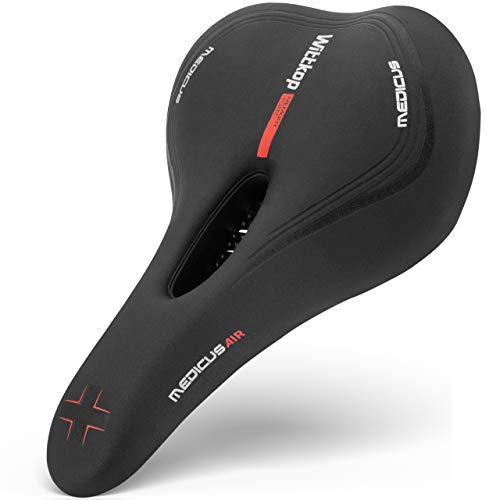
Wittkop Bike Seat I Waterproof 5-Zone Saddle MTB Road
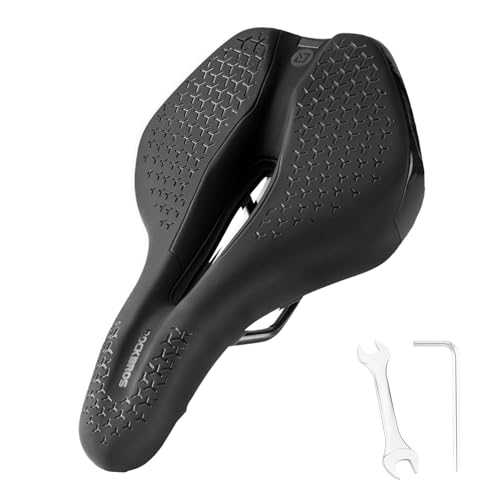
ROCKBROS Comfort Bike Seat Wave Ergonomic Saddle High-Density Foam
More Details On Our Top Picks
This ROCKBROS saddle suits commuters and casual trail riders who want cushion without a heavy, bulky shape. The tapered profile narrows at the nose and widens at the rear, a layout that can reduce thigh rubbing during pedal strokes.
PU leather over dense foam gives a matte, grippy top surface, and a central slot channel helps air move through the middle. You get marked rails that make fore and aft adjustment easier to repeat after a first setup, which helps on shared bikes.
A Few Highlights
- 262 g weight keeps the bike light for climbs
- 220 lb capacity covers many adult riders
- Waterproof PU surface sheds rain and mud spray
- Airflow channel reduces heat buildup underneath
- Marked rails simplify repeatable saddle position
Things To Consider
- Dense foam feels firm, not plush, on rough descents
- Narrow nose needs a fit check for upright posture
Unlike the ROCKBROS option above, this pad focuses on thickness rather than a shaped saddle profile. The hollow construction aims to add cushion while keeping airflow through the center, a trade-off that suits short, seated rides.
Compatibility lists MTB, road, and fixed gear bikes, so it fits a broad range of casual setups. In our view, the thicker pad may feel bulky during standing climbs, and a quick check of seatpost clamp space before fitting makes sense.
Reasons It Performs
- Hollow thick padding adds seated cushion
- Breathable center helps reduce sweaty contact
- Fits MTB, road, and fixed gear frames
Worth Noting
- Thick profile can feel less precise when standing
- Minimal shaping limits sit bone support detail
- Check clamp clearance before installation
Who It Suits Best
Casual riders on short rides who want extra padding over a hard stock seat.
Where Another Pick Suits Better
FIFTY-FIFTY Mountain Bike Seat Lightweight Memory Foam Saddle suits longer trail rides needing shaped support.
Memory foam is the main story here, paired with a carry handle that makes lifting the bike easier around a garage or trailhead. Flexible edges at the wings and rear aim to soften contact near the inner legs, a detail that matters on long seated stretches.
Chromoly rails, meaning steel alloy rails, keep weight at 289 g while adding strength compared with lighter rail materials. You can adjust position and angle with the included instructions, and ventilation slots help air circulate under the rider.
Positive Takeaways
- Memory foam layer molds to sit bone shape
- 289 g weight aids carrying and climbing
- Waterproof surface handles wet conditions
- Carry handle helps lift and move the bike
Trade Offs
- 253 mm length may feel long for aggressive positions
- Memory foam can feel softer than dense foam options
FIFTY-FIFTY Mountain Bike Seat Lightweight Memory Foam Saddle
Compact dimensions set this Title JS1 apart from longer trail saddles above. At 246 mm long and 137 mm wide, the shape leaves more room to move behind the saddle during jumps and steep descents.
A soft, grippy, flexible top surface aims to reduce pinch on hard landings, a trait that matters in skateparks and dirt jumps. You can move more freely on technical features, though the smaller platform may feel less supportive during long seated climbs.
Useful Touches
- 282 g weight supports quick bike handling
- 8 mm chromoly rails add strength for impacts
- Flexible surface reduces pinch on landings
- Compact shape aids movement behind saddle
- Grippy top helps control during tricks
Minor Gripes
- Narrow 137 mm width offers less seated support
- Short length suits aggressive riding over touring
The Volt takes a different route with a deeply contoured shell that cradles the pelvis. Medium padding thickness balances cushion and firm support, a middle ground between plush comfort seats and hard performance saddles.
Three widths let riders match sit bone spacing, meaning the distance between the two bony points in the rear. A central channel and underside cutout, both pressure relief features, aim to reduce numbness on longer rides.
What Earns Its Place
- Three widths improve sit bone fit
- Contoured shell stabilizes pelvis position
- Central channel relieves soft tissue pressure
- Medium padding suits mixed trail use
Points To Note
- Width selection needs careful measurement
- Three rail options add a choice to confirm
The Wittkop uses a 5-Zone-Concept, a design that divides the surface into distinct zones for support and pressure distribution. That zoning approach differs from the single foam block in earlier picks and aims to spread load across the rear.
Waterproof construction suits wet commutes and muddy trails, and compatibility covers BMX, MTB, and road bikes. For most trail days, the zone layout may feel structured, so checking the rear width against sit bone spacing helps before fitting.
A Few Strong Suits
- Five zone design spreads seated pressure
- Waterproof surface suits wet riding
- Fits BMX, MTB, and road bikes
Softer Spots
- Zone feel may differ from uniform foam
- Confirm rear width for upright riding posture
Made For
Riders who want zoned pressure distribution and waterproof cover for mixed bike types.
Consider Something Else When
Title JS1 MTB Bike Saddle Performance Mountain Bike Seat suits aggressive riders needing compact movement.
A downward tilting wave at the front sets this ROCKBROS model apart from the first ROCKBROS saddle in the list. The wave shape aims to ease pressure at the nose while the wide rear supports sit bones on longer rides.
Carbon steel rails add strength, and side markings help repeat an adjustment position. You can use included tools for setup, and a straight slot channel keeps air moving through the center on warm days.
Points In Its Favor
- Wave front reduces nose pressure
- High-density foam absorbs vibration
- Carbon steel rails resist deformation
- Anti-slip PU surface adds grip
- Included tools simplify installation
Small Caveats
- 340 g weight exceeds lighter picks above
- Wave shape may feel unusual at first
Factors That Shape Mtb Saddle Comfort
Width And Sit Bone Support
Rear width determines how sit bones are supported, and a narrow rear can concentrate pressure. You can measure sit bone spacing at a bike shop or with foil, then match that measurement to the saddle width. A wider rear often suits upright riding, while a narrower rear suits a forward lean.
Padding Density And Cutouts
Dense foam holds shape under load, while memory foam molds more around the body. Cutouts and channels, meaning openings that reduce contact in the center, affect pressure on longer rides. Thick padding suits seated touring, and thinner padding suits riders who stand often.
Rails, Weight, And Movement
Chromoly rails add strength at moderate weight, and carbon steel rails offer a different strength to weight balance. Shorter saddles leave more room to move behind the bike, which matters for jumps and steep descents. Longer saddles provide more seated support for climbs.
Surface And Weather Handling
Waterproof PU surfaces shed rain and mud, and matte finishes add grip in wet conditions. Ventilation slots and airflow channels help reduce heat on warm days. Checking rail compatibility with the seatpost clamp prevents a frustrating installation.
Key Considerations Across These Picks
Common Shopping Slip Ups
Picking a saddle by padding thickness alone often leads to a poor fit. Width and shape matter more for pressure distribution than softness. Measuring sit bones and checking nose width prevents a common mismatch.
What The Higher Tier Buys
Higher tier models often add stronger rails, multiple widths, and refined cutouts. Those details help riders who log long hours or ride technical terrain. Casual short rides gain less from those upgrades.
Frequently Asked Questions
How wide should an MTB saddle be?
Width should match sit bone spacing, with the rear supporting both bony points. A wider rear suits upright posture, and a narrower rear suits a forward lean.
What does a cutout do on a saddle?
A cutout reduces contact in the center and can relieve pressure. It helps on longer rides where numbness becomes a concern.
Are chromoly rails better than steel rails?
Chromoly rails offer strength at lower weight than standard steel rails. That balance suits trail riders who carry the bike often.
Can one saddle fit road and MTB bikes?
Many saddles in this list fit both types, depending on riding posture. You can check the listed compatibility and seatpost clamp fit before ordering.
How often should saddle position be checked?
Position should be checked after the first few rides and after any crash. Marked rails help return to a known setting.
Wrap Up
For long seated rides, the WTB Volt and the wave ROCKBROS offer shaped support with pressure relief. For aggressive trail riding, the Title JS1 gives compact movement and strong rails. Match width to sit bones first, then choose padding and rail material for the terrain ahead.