
A power meter turns effort into numbers that show up on a computer or phone during a ride. Pedal systems move between bikes in minutes, while crankset systems stay hidden inside the drivetrain. You move between trail, gravel, and road bikes, so pedal compatibility and sensor placement matter more than headline wattage. The shortlist below separates single-sided and dual-sided options, plus one crankset built around a 12-speed MTB drivetrain.
How The Shortlist Stacks Up

Favero Assioma Uno Power Meter Pedal

Favero Assioma PRO MX-1 Single-Sided Power Meter Pedals
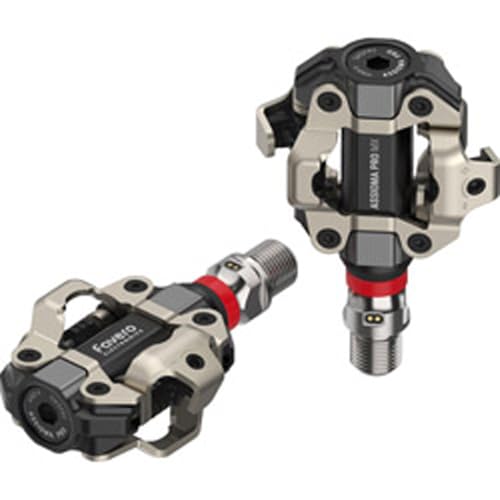
Favero Assioma PRO MX-2 Dual Sided Power Meter Pedals

Favero Assioma PRO MX-2 Dual-Sensing MTB Power Meter Pedals

SRAM X0 T-Type Spindle Power Meter Crankset 165mm

Favero Assioma PRO MX-1 Single-Sided Pedals Cleats Tool Kit

Magene PES P505/P515 Power Meter Crankset
Meet The Standout Selections
Left-side sensing keeps this pedal focused on total power and cadence without dual-sensor cost. Riders who want pedaling technique detail get IAV data, meaning instantaneous angular velocity tracking through the stroke. That gyroscope-based detail helps explain uneven torque on climbs.
Bluetooth and ANT+ cover most computers and phones, so pairing stays straightforward across setups. The ±1% accuracy figure gives a clear benchmark against crankset options rated at ±3%. For most riders, that tighter tolerance matters during structured intervals.
Bright Spots
- ±1% accuracy supports consistent interval comparisons
- IAV Power Phase adds stroke-level technique insight
- Built-in cadence sensor removes a separate sensor
- Bluetooth and ANT+ pair with computers and phones
- Pedal format moves easily between bikes
Things To Consider
- Left-only sensing doubles one leg for total power
- Road pedal focus differs from SPD MTB cleat systems
Single-sided sensing gives a direct entry into power-based training on an MTB. The left pedal measures wattage, then doubles that value for total power. That approach suits riders tracking effort on regular trail loops.
Standard pedal compatibility keeps setup simple, and Bluetooth plus ANT+ connect to computers and training apps. Unlike the Uno above, this MX-1 targets MTB use rather than road technique analysis. You keep the system simple while still getting structured data.
Key Advantages
- Single-sided format lowers complexity for new power users
- Pairs with cycling computers and training apps
- Standard pedal setup avoids special tools
Worth Noting
- No independent right-leg measurement for balance checks
- Doubled left-leg data can hide a leg imbalance
- Check cleat compatibility before ordering for existing shoes
Who It Suits Best
Trail riders starting structured training who need simple left-leg power data.
Where Another Pick Suits Better
The Favero Assioma PRO MX-2 Dual Sided Power Meter Pedals suits riders who need left and right balance data.
Dual sensing measures each leg independently, so balance becomes visible instead of estimated. That detail helps riders spot a stronger side during climbs or after an injury. You care about balance, this format answers that question directly.
Bluetooth and ANT+ link to computers and apps for live data and post-ride review. Compared with the single-sided MX-1, the MX-2 adds cadence and pedal stroke dynamics for each side. The trade-off is cost and a second sensor to charge and maintain.
What It Does Well
- Independent left and right power for balance analysis
- Measures cadence and pedal stroke dynamics
- Accurate, consistent readings across rides
- Lightweight construction for trail use
Trade Offs
- Dual sensing adds cost over single-sided options
- Two powered pedals need charging attention
SPD compatibility puts dual sensing on MTB and gravel shoes without a cleat change. The modular pedal body lets the same sensor move between road and MTB setups. That flexibility helps riders with more than one bike.
Automatic Temperature Compensation keeps readings steadier from cold starts to hot afternoon rides. You can swap pedals like a normal pair, with no special tools for moving between bikes. A 6061-T6 aluminum body and magnetic charging add trail-ready practicality.
Strengths Worth Knowing
- 100% SPD compatible for MTB and gravel cleats
- ±1% accuracy with IAV gyroscope tracking
- At least 160 hours per charge
- Magnetic charging avoids cable tugging issues
- Modular body swaps between road and MTB setups
Minor Gripes
- Dual sensing carries a higher cost than single-sided pedals
- Confirm SPD cleat fit with existing MTB shoes
Power hides inside the DUB spindle, so the crankset looks like a standard lightweight aluminum setup. Quarq integration measures left-side power and calculates total output at ±3% accuracy. Riders who already run SRAM T-Type components get clean AXS integration.
The 32-tooth direct-mount ring and 165mm arms suit a specific 12-speed build. A removable 2-Guard bashguard protects the ring on rough terrain. Unlike pedal options, this crankset stays with one bike and needs bottom bracket compatibility checks.
The Case For It
- Hidden spindle design keeps the build clean
- 400-hour battery life reduces charging stops
- ANT+ and Bluetooth LE support AXS integration
- IPX7 rating suits wet trail conditions
Points To Note
- ±3% accuracy is wider than ±1% pedal systems
- 165mm length and 32T ring fit only matching builds
- DUB bottom bracket and spacers are not included
This kit bundles the single-sided MX-1 with cleats, tools, washers, and a cleaning cloth. Left-pedal wattage and cadence double for total power, which keeps training data consistent. The package suits riders who want everything in one box.
Electronics sit inside the spindle with IP67 protection for mud and rain. A 6061-T6 aluminum body and chromium-molybdenum clipless system handle trail impacts. You get over 60 hours per charge, with magnetic charging for quick top-ups.
What Helps Most
- Complete kit includes cleats, tools, and washers
- ±1% IAV accuracy on climbs and rough terrain
- IP67 spindle protection for wet trails
- 60+ hours per charge with magnetic charging
Small Caveats
- SPD cleats are not included despite kit contents
- Single-sided data cannot show leg balance
Made For
MTB riders who want a bundled single-sided setup with trail protection.
Consider Something Else When
The Favero Assioma PRO MX-2 Dual-Sensing MTB Power Meter Pedals suits riders who need dual-leg data and modular SPD use.
A 625g crankset pairs ±1% accuracy with a 380-hour battery claim for long training blocks. Strain gauges, acceleration sensors, and temperature compensation support steady readings. You prefer crankset power, this option covers power, cadence, balance, and torque effectiveness.
7075 aluminum and a triple hollow design aim for stiffness at low weight. Bluetooth and ANT+ connect to Garmin, Bryton, Magene computers and apps such as Strava and Zwift. The 110BCD four-bolt pattern and 24mm steel spindle need a careful frame compatibility check before ordering.
Real Benefits
- ±1% accuracy with temperature compensation
- 625g total weight with 99g spider
- 380-hour battery for extended training
- IPX7 waterproof rating for wet rides
- Tracks power, cadence, balance, and torque effectiveness
Areas To Watch
- 24mm spindle fit depends on frame and bottom bracket
- Crankset format stays with one bike, unlike pedals
What Matters Most Before Choosing Mtb Power Meter Options
Pedal Versus Crankset Placement
Pedals move between bikes with a normal pedal swap, which helps riders with a trail bike and a gravel bike. Cranksets stay fixed to one frame and need spindle, chainline, and chainring checks. A pedal system suits multi-bike households, while a crankset suits a single dedicated build.
Single-Sided Versus Dual-Sided Data
Single-sided systems double left-leg power, so total wattage stays useful but balance stays hidden. Dual-sided systems show each leg, which helps technique work and rehab monitoring. You check crank length, BCD, and cleat type before ordering, since a mismatch blocks installation.
Accuracy, Battery, and Weather Protection
Accuracy ratings range from ±1% on several pedal and crankset options to ±3% on the SRAM spindle system. Battery life spans 60 hours to 400 hours, so charging habits matter for frequent riders. IPX7 and IP67 ratings signal water protection for muddy trail conditions.
Key Considerations Across These Picks
Common Shopping Slip Ups
Ordering a crankset without checking spindle diameter and crank length causes most fit problems. Cleat mismatch creates a second slip, especially between road and SPD systems. Confirm both details against the current setup before placing an order.
What The Higher Tier Buys
Dual sensing, temperature compensation, and modular pedal bodies add cost through extra sensors and flexibility. Those features pay off for riders who track balance or switch bikes often. Single-sided systems remain a practical choice for consistent effort tracking.
Frequently Asked Questions
Can a pedal power meter move between bikes?
Yes, pedal systems install like normal pedals and move with standard tools. That portability suits riders with more than one bike in the garage.
What does single-sided power measurement mean?
A left-side sensor measures one leg, then doubles that value for total power. Balance data requires a dual-sided system instead.
Which accuracy rating matters for training?
±1% ratings appear on several options here, while the SRAM crankset lists ±3%. Tighter ratings make interval comparisons more consistent across weeks.
Do MTB pedal systems use SPD cleats?
Several Favero options list SPD compatibility for MTB and gravel shoes. You can confirm cleat inclusion in the box before ordering for existing shoes.
How long does a charge last on these options?
Listed battery life ranges from over 60 hours to 400 hours depending on the model. Magnetic charging on some pedal systems simplifies regular top-ups.
Final Verdict
Dual-sensing SPD pedals suit riders who want balance data across multiple bikes. Single-sided pedals suit riders who want simple, consistent training numbers. Your next step is matching cleat type, crank fit, and sensor side to the way you ride each week.