
A dusty singletrack descent at midday brings heat, glare, and loose stones into focus. Head protection for that kind of riding needs low weight, steady airflow, and a fit that stays put over rough ground. For trail and mixed-surface riding, the right shell shape, vent layout, and retention dial matter more than a long feature list.
How The Shortlist Stacks Up

KINGBIKE Bike Helmet with USB Light White Matte M

Jetxles 717-J-TK Adjustable Dial Bike Helmet Visor
Jetxles 717-J-TK Ebike Helmet Large Celadon Green
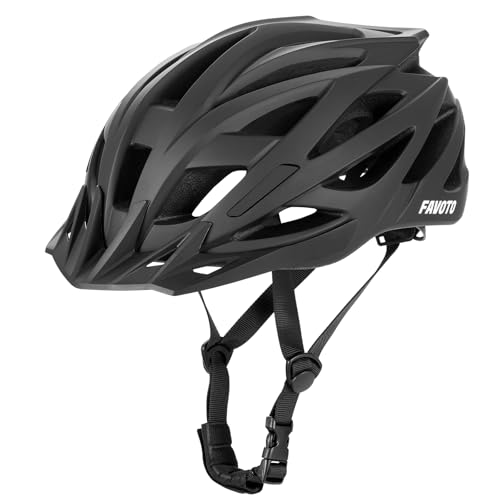
Favoto Bike Helmet 26-Vent Large Detachable Visor
InnerKing Bike Helmet for Adults Adjustable Fit

Schwinn Thrasher Helmet 58-62 cm Microshell Visor

Giro Fixture MIPS Bike Helmet Universal Adult 54-61 cm
More On The Choices That Made The List
Low-light commuting and weekend trail loops share one need: visibility without extra gear. This KINGBIKE model answers that need with a USB rear light, three flash modes, and a 260g shell that keeps neck fatigue low on longer spins. EPS, meaning expanded polystyrene foam, forms the impact layer inside a polycarbonate shell.
Twenty-four vents move air across the scalp, a practical detail on warm climbs. A dial at the rear tunes fit across M and L ranges, and two sets of pads plus two visors let a rider swap a sweat-soaked liner or add shade in seconds. The trade-off is a smaller M range, 52 to 56 cm, so head measurement matters before ordering.
Positive Takeaways
- Rear USB light with steady, slow, and fast flash modes for evening visibility
- 260g weight reduces pressure during long rides
- Two pad sets make washing and rotation simple
- Two detachable visors block sun, wind, and dust
- 24 vents support airflow on hot days
Things To Consider
- M size covers 52 to 56 cm only, a narrow window for larger heads
- Light needs charging, so a routine check before night rides helps
City riding asks for a different mood than aggressive trail use. This Jetxles 717-J-TK uses a retro profile, ABS shell, and EPS core, a construction aimed at mixed traffic and intersections. Twelve vents with five cooling channels keep the interior moving on warm afternoons.
Fit comes from a 360-degree dial and flexible straps across 54 to 61 cm. A removable moisture-wicking liner simplifies cleaning after a sweaty commute. Depending on head shape, the retro shell may sit higher than a sport shell, a small trade-off for a cleaner look with everyday clothing.
Useful Strengths
- ABS shell with EPS core for city impact protection
- 360-degree dial gives fine fit adjustment
- Washable moisture-wicking liner eases cleanup
- Low-profile visor cuts daytime glare
Worth Noting
- Twelve vents provide less airflow than 24 to 26 vent trail models
- Retro shape suits commuting more than technical singletrack
Who It Suits Best
City commuters and ebike riders wanting a casual look for daily routes.
Where Another Pick Suits Better
Favoto Bike Helmet 26-Vent Large Detachable Visor suits long trail rides needing stronger ventilation.
Same 717-J-TK platform as the previous pick, presented here in Large and Celadon Green for riders who prefer color over a sporty silhouette. The ABS shell and EPS core pairing remains the core protection story, with a quick-release buckle for fast on and off at stops. That shared base makes comparison straightforward: sizing and color drive the choice between these two listings.
Large sizing and the 54 to 61 cm range across M and L options matter for fit. Twelve vents and a removable liner keep city rides manageable in summer. The honest read is that loose fit returns have been noted for this style, so measuring head circumference and using the dial carefully is worth the time.
The Practical Payoff
- Large option in Celadon Green for a distinct look
- Quick-release buckle speeds daily use
- Removable liner supports regular washing
Trade Offs
- Fit consistency varies, so a careful size check is needed
- No integrated rear light, unlike the KINGBIKE model
- Vent count stays at twelve for warm-weather limits
Long weekend rides punish heavy shells and poor airflow. This Favoto model counters both with 260g weight and 26 vents, two more vents than the KINGBIKE option and more than double the Jetxles count. In-mold construction pairs a PC shell with high-density EPS foam for trail and road use.
A snap-on visor switches the look between dusty trails and clean road days without tools. The dial fits Large heads from 58 to 60 cm, with Medium listed at 55 to 58 cm in product details. Larger heads near the top of that range should size up, a practical check that prevents a return.
Practical Pluses
- 26 vents pull heat away on climbs and summer rides
- 260g weight eases neck strain over distance
- Detachable visor adapts to trail or road mode
- Removable padding allows washing between rides
- Dial fit tunes Large range 58 to 60 cm
Small Caveats
- Large range is narrow at the upper end of head sizes
Daily commuting rewards simplicity: a dial that adjusts one-handed, a buckle that releases fast, and a shell that does not look out of place at the office. This InnerKing design leans minimalist, with a rugged outer shell and EPS foam for road and commute use. A reflective strip adds low-light visibility without a light to charge.
Airflow comes from a micro-vent matrix, and moisture-wicking chin padding keeps the contact points drier. Seamless edges aim for durability in everyday wear. In most commutes under an hour, that setup covers the basics well, though vent count and weight are not detailed in the same way as the Favoto model.
Useful Touches
- Reflective strip aids visibility in low light
- Dial fit with quick-release buckle for one-handed adjustment
- Moisture-wicking chin padding for comfort
Points To Note
- No detachable visor for glare on open trails
- No integrated rear light for night riding
- Vent and weight details are less specific than trail-focused picks
Made For
Daily commuters wanting a clean, low-maintenance helmet for city routes.
Consider Something Else When
KINGBIKE Bike Helmet with USB Light White Matte M suits riders wanting a built-in rear light.
Recreational fitness riding calls for extended coverage and easy cleaning. This Schwinn Thrasher uses microshell construction, a lightweight outer layer bonded to foam, with full-coverage padding that wraps 360 degrees. Twenty air vents, listed as 21 in one detail line, keep airflow reasonable for casual trails.
Dial retention plus side and chin straps fine-tune fit for head sizes 58 to 62 cm, a range that suits larger adult heads better than several smaller shells here. A removable visor adds shade. Storage is simple, though the larger shell takes more room in a bag than compact commuter models.
Key Advantages
- Extended head coverage for recreational riding
- Removable, washable full-coverage padding
- Dial plus straps for a secure, tuned fit
- 58 to 62 cm range fits larger heads
Areas To Watch
- Size range starts at 58 cm, so smaller heads are excluded
- Larger shell needs more storage space
Off-road riding brings rotational forces into the conversation. MIPS, meaning a low-friction layer inside the helmet, aims to reduce rotational energy during certain impacts. This Giro Fixture integrates that layer with a fused shell and foam construction that keeps weight down and airflow up compared with traditional builds.
Roc Loc Sport fit offers one-handed adjustment across 7 cm, with ponytail compatibility and quick-dry padding for trail days. Reflective rear decals help in low light. The trade-off is cost and a universal 54 to 61 cm range that may need fine tuning for an exact fit.
Points In Its Favor
- Integrated MIPS layer for rotational force management
- Roc Loc Sport dial with 7 cm adjustment range
- Fused shell construction for lighter, cooler feel
- Reflective details for low-light visibility
- Quick-dry padding for trail use
Honest Caveats
- Universal sizing may need extra adjustment for a precise fit
- No detachable visor for trail glare
What Matters Most Before Choosing Mtb Cycle Helmet
Fit Range and Retention
Head circumference decides safety and comfort before style enters the picture. Dial systems and strap adjustments help fine-tune fit, though ranges differ widely across the shortlist. Measure first, then match the range, especially for Large sizes that start at 58 cm.
Ventilation and Weight
Vent counts from 12 to 26 change how a helmet feels on a hot climb. Weight near 260g reduces neck load over distance, a clear benefit for long rides. City commuters may trade some airflow for a cleaner profile.
Visibility and Extras
Rear lights, reflective strips, and reflective decals serve different night-riding needs. A built-in light needs charging, while reflective details work passively under headlights. Visors add shade on trails but change the look on road rides.
Shell and Impact Layer
EPS foam inside PC, ABS, or microshell layers forms the basic protection structure. MIPS adds a separate low-friction layer for rotational forces on off-road terrain. That distinction helps separate trail-focused models from commuter-focused ones.
Key Considerations Across These Picks
Common Shopping Slip Ups
Ordering by color before checking size range causes many returns. A helmet that looks right can still sit loose, shifting during a ride. Measuring head circumference and checking dial range prevents that mismatch.
What The Higher Tier Buys
Higher-tier models add systems such as MIPS and refined fit dials. Those features address specific trail risks and adjustment needs. Commuters on paved routes gain less from those additions than riders on rough terrain.
Frequently Asked Questions
How should head size be measured before ordering?
Measure around the head above the ears and eyebrows, then compare that number with the listed range. A dial can fine-tune fit within the range, not expand it.
Are detachable visors useful for mountain biking?
A visor blocks direct sun and some dust on open trails. Road riders often remove it for a lower profile and different airflow.
What does MIPS add to a helmet?
MIPS is a low-friction layer designed to reduce rotational forces during certain impacts. It sits between the head and the shell, separate from the EPS foam layer.
How many vents are enough for hot weather?
Vent count alone does not tell the full story, since channel design also matters. Models with 24 to 26 vents generally feel cooler on climbs than 12-vent city models.
Can one helmet handle commuting and trail riding?
Several picks here cover both uses, with visors and dials bridging the gap. Trail-focused ventilation and city-focused styling still pull the choice in different directions.
Final Verdict
Trail riders needing airflow and low weight should lean toward the Favoto model, while off-road riders wanting MIPS should consider the Giro Fixture. Commuters who ride after dark benefit from the KINGBIKE rear light. Match size range first, then match features to the terrain ahead.