
A gravel path after work, a park loop on Saturday, and a short paved route between them can all belong to the same ride. That mix is where a mountain bike under 700 earns its keep, giving you knobby tires, suspension, and gears without moving into higher price territory. Frame material, wheel size, and brake type change how each option feels on climbs, descents, and flat ground. The seven options below sort those differences by rider height, terrain, and setup effort.
The Lineup, Simplified

CamPingSurvivals 26 Inch Mountain Bike 21 Speed (Blue)

EOYOBIKE Hybrid Bike 29 Commuter Bicycle Granite Smoke

VEVOR Mountain Bike 27.5 in 21 Speeds Aluminum Frame
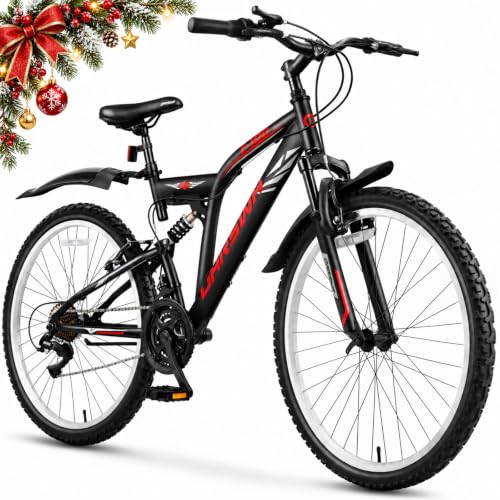
GASENDALA 26 Inch Mountain Bike 21 Speed Full Suspension

RideOrigin 24/26 Inch Mountain Bike Aluminum Full Suspension

QARSWA 26/27.5 Inch Mountain Bike Aluminum Dual Disc Brakes

WEIZE Mountain Bike 26 Inch 18-Speed Dual Full Suspension
More Details On Our Top Picks
A high-carbon steel frame and 21-speed trigger shifting give this 26-inch model a straightforward trail focus. Dual mechanical disc brakes act at both wheels, which helps control speed on loose descents. Riders who split time between dirt paths and paved connectors get a single setup for both.
The lock-out front fork lets the suspension be firm for smooth pavement and open for bumps on rough ground. That adjustability matters on mixed routes, where a locked fork reduces bobbing during steady pedaling. A quick-adjust seat clamp makes height changes simple between riders in a household, and your setup time stays short because the bike arrives 85% assembled.
Useful Strengths
- 21 speeds cover steep climbs and flat cruising
- Dual disc brakes provide control in wet conditions
- Lock-out fork adapts to pavement or trail
- Quick-adjust seat clamp simplifies fit changes
Things To Consider
- Steel frame adds carrying weight compared with aluminum models
- Assembly still requires handlebar, wheel, pedal, and brake adjustments
At 29.5 pounds, this aluminum hybrid is built around city movement rather than trail impact. Large 700C wheels roll efficiently on pavement, and a rigid fork transfers pedaling energy directly. Commuters carrying a bike up apartment stairs get a clear advantage here over heavier steel frames.
Eight speeds handle bridges and flat urban routes, with front and rear mechanical disc brakes for wet stops. You can adjust seat height without tools through a quick-release clamp. In our view, the trade-off is clear: pavement efficiency replaces suspension comfort on rough ground.
What Helps Most
- Aluminum frame at 29.5 pounds eases carrying
- 700C wheels maintain speed with less effort
- Disc brakes at both wheels aid wet-weather stops
- Tool-free seat adjustment speeds daily fit changes
- 85% pre-assembly shortens setup
Worth Noting
- Rigid fork offers little absorption on unpaved trails
- Eight speeds give less range than 21-speed mountain models
Who It Suits Best
Urban commuters riding mostly paved roads and carrying a bike indoors benefit most.
Where Another Pick Suits Better
GASENDALA 26 Inch Mountain Bike 21 Speed Full Suspension suits riders needing suspension and fenders for muddy paths.
Unlike the steel CamPingSurvivals model, this 27.5-inch bike uses an aluminum alloy frame and rims. Shimano shifting across 21 speeds supports flat acceleration and gentle climbs. Widened all-terrain tires add traction on gravel and light trails.
Front suspension absorbs bumps, while mechanical disc brakes at both wheels handle wet pavement. You may find the included bell, reflectors, and light mount useful for evening rides in parks. Assembly covers the front wheel, pedals, handlebar, saddle, kickstand, reflectors, and bell, with tools included.
Positive Takeaways
- Aluminum frame keeps weight lower than steel options
- Shimano drivetrain shifts smoothly across 21 speeds
- Widened tires improve grip on loose surfaces
- Bell and reflectors support safer evening riding
Trade Offs
- Front-only suspension differs from full-suspension models on rough descents
- Several small parts need installation before riding
Front and rear suspension on a high-carbon steel frame set this 26-inch bike apart from front-suspension-only models. A 21-speed drivetrain covers hills, flat roads, and rugged trails. Quick-release front wheel access simplifies storage and maintenance.
Dual fenders block mud and water on wet roads, a practical addition for commuting. Your commute on muddy paths stays cleaner with that coverage. A thickened padded saddle reduces fatigue on longer rides, and the bike arrives 90% pre-assembled with tools included.
Advantages To Know
- Full suspension absorbs bumps at both ends
- Front and rear fenders reduce mud splashes
- Quick-release front wheel aids storage
- Padded saddle supports longer rides
- 90% pre-assembly reduces setup steps
Minor Gripes
- V-brakes differ from disc brakes on wet descents
- Steel frame is heavier to lift into a car
An aluminum frame paired with full suspension gives this 26-inch model a lighter feel than steel full-suspension options. A Shimano TZ500 rear derailleur works with a 3 by 7 drivetrain, meaning three front chainrings and seven rear gears. Trigger shifters change gears with a thumb press, a simpler action than twist shifting for many riders.
Tires measure 26 by 2.35 inches, providing traction on pavement, gravel, and light trails. You can check the stated height range of 5’2″ to 5’11” before selecting the 26-inch size. Dual disc brakes act at both wheels, and the bike arrives 85% pre-assembled.
Strengths Worth Knowing
- Aluminum frame supports easier lifting
- Shimano TZ500 rear derailleur pairs with 21 speeds
- 2.35-inch tires grip mixed surfaces
- Dual disc brakes control both wheels
Points To Note
- Height range requires a careful size check before ordering
- Brake and gear checks are needed after assembly
RideOrigin 24/26 Inch Mountain Bike Aluminum Full Suspension
A lightweight aluminum frame and 21-speed trigger shifting keep this model focused on exercise and commuting. Dual mechanical disc brakes respond on steep descents and in traffic stops. Front suspension absorbs bumps, while a high-elastic foam saddle addresses seat comfort on longer rides.
Available in 26 and 27.5-inch sizes, the bike covers teens and adults. Your storage space matters here because a full-size mountain bike needs wall or floor room indoors. A quick-release front wheel and included tools reduce setup effort, with 85% pre-assembly.
What Earns Its Place
- Aluminum frame reduces carrying weight
- Dual disc brakes improve stopping control
- Front suspension smooths rough sections
- Two wheel sizes cover more riders
Small Caveats
- Front-only suspension differs from full-suspension picks
- Full-size frame needs dedicated storage space
Made For
Adults using a bike for exercise, commuting, and light trail routes benefit most.
Consider Something Else When
RideOrigin 24/26 Inch Mountain Bike Aluminum Full Suspension suits riders wanting rear suspension plus disc brakes.
High-carbon steel dual suspension pairs a front fork with a rear coil shock to smooth bumps. Eighteen speeds use twist shifters with front and rear derailleurs, a different control feel from trigger shifters on other picks. Linear pull brakes, also called V-brakes, act through cables at both wheels.
All-terrain tires in the 26-inch size suit varied ground, with fit listed for riders 5’2″ to 6’2″. You can watch the installation video before assembly, with tools included for a quick setup. An adjustable ergonomic seat helps riders find a comfortable position for casual rides.
Key Advantages
- Dual suspension smooths bumps front and rear
- 18 speeds with twist shifters change gears simply
- Adjustable ergonomic seat aids fit
- All-terrain tires handle varied surfaces
Areas To Watch
- 18 speeds offer less range than 21-speed models
- V-brakes need cable checks for consistent stopping
What To Check Before Choosing a Mountain Bike Under 700
Frame Material and Weight
Aluminum frames in the EOYOBIKE, VEVOR, RideOrigin, and QARSWA models reduce carrying weight compared with high-carbon steel frames. That difference matters for apartment stairs, car trunks, and overhead racks. Steel frames in the CamPingSurvivals, GASENDALA, and WEIZE models offer a sturdy structure, with weight as the trade-off.
Suspension and Brake Type
Full suspension absorbs bumps at both wheels, while front-only suspension keeps setup simpler and weight lower. Disc brakes act through rotors at both wheels and provide strong control in wet conditions. V-brakes and linear pull brakes use cables and pads, which suit riders comfortable with simple adjustments.
Wheel Size and Fit
Wheel size affects rollover and handling, with 26, 27.5, and 29-inch options across this list. Rider height ranges vary by model, so checking the stated range protects against a poor fit. Seat clamp type also matters, since quick-release and tool-free designs speed adjustments between riders.
Key Considerations Across These Picks
Common Shopping Slip Ups
Skipping the height range check leads to a frame that feels cramped or stretched on longer rides. Ignoring brake type also causes surprises on wet descents, where disc and cable systems behave differently.
What The Higher Tier Buys
Higher-tier models often use lighter frames, more refined suspension, and higher-end drivetrain components. The upgrade pays off for frequent trail riders, while casual mixed-route riders get solid value from the options here.
Frequently Asked Questions
Which wheel size suits most adult riders?
Wheel size depends on height and terrain preference rather than a single standard. Taller riders often prefer 27.5 or 29-inch wheels, while shorter riders may find 26-inch wheels easier to handle.
Are disc brakes better than V-brakes for trails?
Disc brakes provide strong stopping control in wet and muddy conditions. V-brakes remain simpler to adjust and suit dry, casual riding.
How much assembly should be expected?
Most models here arrive 85% to 90% assembled. Handlebars, wheels, pedals, and saddles typically need installation, with tools included.
Can these bikes handle paved roads and trails?
All-terrain tires and suspension forks support both paved connectors and light trails. Rough, technical terrain places more demand on suspension and brakes than these models are designed for.
What should be checked after assembly?
Brake alignment, gear shifting, and seat height need a check before riding. A short test ride in a safe area helps confirm fit and control.
Closing Remarks
For mixed trails and paved routes, the VEVOR Mountain Bike 27.5 in 21 Speeds Aluminum Frame balances weight, shifting, and traction. Riders focused on city commuting should look at the EOYOBIKE hybrid for lighter carrying. Your best match comes down to terrain, storage, and how much assembly time feels acceptable.