
A gravel path after work, a fire road on Saturday, a short commute that cuts through a park, each one asks for a different kind of bike. This list separates pedal-powered hardtails from electric options, then matches wheel size, gearing, and suspension to the terrain ahead. You’ll get a clearer sense of which frame and motor setup fits your routes, your storage space, and your riding style.
The Main Contenders
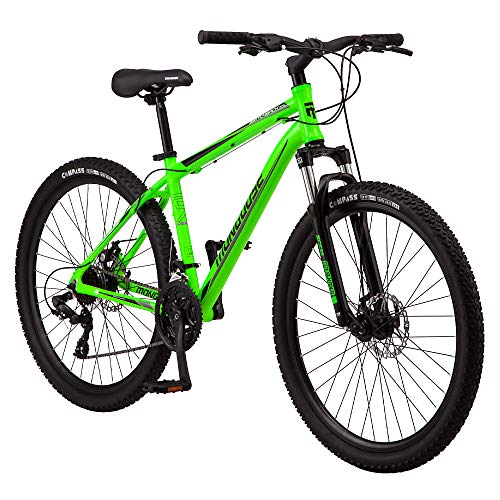
Mongoose Switchback Trail Hardtail Mountain Bike 27.5-Inch
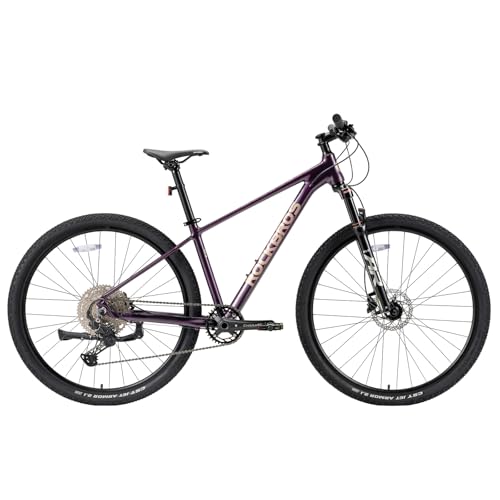
ROCKBROS MT400 29 Mountain Bike Aluminum Frame

VOLTVOGUE 1000W Peak Electric Bike 26 45 Miles

Funhang 1000W Peak Ebike 26 Fat Tire 48V 13AH

Funhang 1000W Peak Ebike 26 48V Removable Battery

Huffy Stone Mountain Bike 26 for Men Women
A Breakdown Of The Leading Choices
New trail riders get a straightforward hardtail here, with an aluminum frame sized for riders from 5’3″ to 6’2″. The 27.5-inch wheels turn more quickly than a 29-inch setup, which helps on tight single track. You’ll notice that agility on switchbacks and in wooded sections.
A 21-speed drivetrain with trigger shifters gives a wide spread for climbs and descents, while mechanical disc brakes keep stopping consistent in wet conditions. Double-wall alloy rims and 2.1-inch tires add grip without a heavy wheel build. The SR Suntour XC-E28 fork handles smaller bumps up front, leaving the rear rigid for efficient pedaling.
Where It Helps
- Aluminum frame keeps weight manageable for trail days
- Trigger shifters make gear changes quick on climbs
- Mechanical discs work steadily in rain and mud
- 2.1-inch tires suit dirt, gravel, and packed trails
Things To Consider
- Front suspension only, so rough rear impacts reach the saddle
- Medium frame sizing needs a fit check before ordering
Cross-country riders who hold speed across gravel and open trail get a clear step up here compared with the Mongoose Switchback. A lightweight 29-inch aluminum frame rolls over roots with less effort, and the larger wheels carry momentum on long stretches. Your pace on flowing routes benefits from that efficiency.
The 1×10 drivetrain pairs a 36T crankset with an 11-50T cassette, a wide range that eases steep climbs while keeping shifting simple with one front chainring. Hydraulic disc brakes give stronger control on descents than mechanical systems. An oil-spring fork with remote lockout and preload adjustment lets the front end firm up for pavement, then soften for rough ground.
The Good Stuff
- 29×2.1-inch tires roll over obstacles smoothly
- Remote lockout switches fork behavior on the fly
- Hydraulic brakes respond firmly in wet conditions
- Single-chainring setup reduces shifting complexity
- Double-wall rims and bearing hubs support long rides
Worth Noting
- 29-inch wheels feel less nimble in tight, technical turns
- 10-speed range depends on cassette condition over time
Who It Suits Best
Experienced riders covering long cross-country routes at steady speed.
Where Another Pick Suits Better
The Mongoose Switchback Trail Hardtail Mountain Bike 27.5-Inch suits newer riders wanting simpler gearing and quicker handling.
Commuters who want motor help on hills get a different kind of mountain bike here, one built around a 1000W peak brushless motor and a top speed of 22 MPH. The 48V 5.2Ah integrated battery carries a stated range up to 45 miles, with charging taking 4 to 6 hours. In our view, that range suits a round-trip commute with room to spare.
A 3-speed drivetrain keeps gear choices simple for flat roads, climbs, and descents. Thick 26×1.95-inch tires handle pavement, gravel, and uneven paths, while an LCD dashboard shows speed, mileage, and remaining battery. Arrival at 90% pre-assembled shortens setup, though final assembly still needs time and basic tools.
A Strong Showing
- Integrated battery design gives a clean frame profile
- LCD display tracks speed and battery during rides
- 3-speed shifting stays simple for mixed routes
- 90% pre-assembly reduces setup work
Trade Offs
- Charging takes 4 to 6 hours between longer rides
- Range shifts with rider weight, terrain, and assist level
- Only three gears limit fine-tuning on varied grades
Beach, sand, and snow routes call for wider rubber, and this fat-tire model answers with 26×4.0-inch anti-skid tires. A 500W motor with 1000W peak output reaches 20 MPH, and the 48V 13Ah removable battery gives 30 to 35 miles in pure electric mode, or 55 to 60 miles in pedal assist. One thing worth considering is the 6.5-hour charge time before a long day out.
Front suspension and a soft saddle soften bumps, while a 7-speed gearing system covers varied terrain. A rear rack rated to 60 pounds carries groceries or gear, and headlight plus taillight with turn signal help at night. Dual 180mm disc brakes add stopping control, and five riding modes with five pedal assist levels let the rider match power to the surface.
Well-Handled Touches
- Removable battery charges on or off the bike
- Rear rack carries up to 60 pounds of cargo
- LCD display shows speed, battery, and mileage
- Lighting system improves night visibility
- Fat tires spread load on soft surfaces
Minor Gripes
- Fat tires add rolling resistance on pavement
- 85% pre-assembly still requires setup time
Street and trail mix well on this 26-inch electric model, which trades fat tires for fenders and a slimmer profile. A 500W motor with 1000W peak output handles varied terrain, and the 48V 374.4Wh removable battery gives 25 to 30 miles in full electric mode, or 40 to 50 miles in pedal assist. For most commutes under 25 miles, that balance works comfortably.
Front suspension smooths bumps, and fenders guard against mud and splashes on wet roads. An LCD display shows battery, speed, mileage, and assist level, while dual disc brakes, an LED headlight, horn, and reflectors round out the setup. Five working modes and five pedal assist levels pair with 7-speed gearing for flexible pacing.
Notable Gains
- Fenders keep wet rides cleaner and drier
- Removable battery charges in 4 to 5 hours
- Booster mode helps pushing the bike uphill
- 85% pre-assembly with tools included
Room For Improvement
- Standard tires grip less on deep sand than fat tires
- Rider height range of 5’3″ to 6’1″ needs checking
- Weight capacity tops at 300 pounds
Made For
Adult riders mixing daily commuting with weekend trail loops.
Consider Something Else When
The Funhang 1000W Peak Ebike 26 Fat Tire 48V 13AH suits riders tackling sand and snow more often.
Casual riders who want suspension at both ends get a steel-frame option here, with a front fork and rear spring shock absorbing bumps on gravel paths. The gray gloss finish with red accents gives a modern look, and the build suits riders 5’0″ or taller. Compared with the Mongoose Switchback, this model adds rear suspension while moving from aluminum to steel.
A 21-speed Shimano system with twist shifters and a rear derailleur covers steep hills with smooth changes. Knobby 26-inch all-terrain tires grip dirt, gravel, and pavement. The honest read is that steel adds weight, so longer carries and steep climbs will feel heavier than on an aluminum hardtail.
Notable Upsides
- Dual suspension softens trail bumps at both wheels
- Shimano 21-speed gearing handles varied grades
- Knobby tires give grip on loose surfaces
Points To Note
- Steel frame weighs more than aluminum alternatives
- Wheel size options need confirmation at ordering
What Matters Most Before Choosing a Mountain Bike
Wheel Size and Frame Fit
Wheel diameter shapes handling more than most specs. A 27.5-inch wheel turns quickly in tight woods, while a 29-inch wheel rolls over roots and maintains speed on open trails. Frame size and rider height range decide comfort on long rides, so checking standover and reach before ordering saves return trips. Your inseam and preferred riding position matter here.
Drivetrain and Braking
Gear range decides how steep a climb feels. A wide cassette helps on sustained grades, while a simple 1×10 setup reduces front shifting. Disc brakes, hydraulic or mechanical, stop more consistently than rim brakes in wet conditions. Hydraulic systems give a firmer lever feel, and mechanical systems need more frequent adjustment.
Electric Range and Charging
Motor peak output helps on hills, but battery capacity decides how far a ride goes. Stated range assumes a rider weight, terrain, and assist level, so real distance shifts with each factor. Charging time affects how often the bike sits plugged in, and a removable battery adds flexibility for indoor charging and storage.
Key Considerations Across These Picks
Common Shopping Slip Ups
Shoppers often match a fat-tire model to paved commuting, then struggle with rolling resistance. Another slip is ignoring frame size, then fighting an awkward reach on every ride. Checking wheel size, height range, and intended terrain first prevents most mismatches.
What The Higher Tier Buys
Higher-tier models tend to add hydraulic brakes, wider gear ranges, and lighter aluminum frames. Those upgrades pay off on long rides, steep climbs, and wet descents. For short neighborhood loops, a simpler setup often covers the same ground with less upkeep.
Frequently Asked Questions
What wheel size suits most trail riders?
27.5-inch wheels suit tight, technical trails with quick steering. 29-inch wheels suit open trails and longer distances with smoother rollover.
Hydraulic or mechanical disc brakes make more sense?
Hydraulic brakes give stronger, more consistent stopping with less lever effort. Mechanical brakes cost less to maintain and adjust with basic tools.
How far does an electric mountain bike range per charge?
Range depends on battery size, assist level, rider weight, and terrain. Pedal assist mode usually extends distance well beyond pure electric mode.
What frame size should be checked before ordering?
Rider height range and inseam give the clearest starting point. A frame sized for a taller rider can leave reach too long on climbs.
Do electric models need extra storage planning?
Charging time and battery removal affect where the bike lives. A removable battery allows indoor charging in smaller storage spaces.
Wrap Up
Trail riders who want pedal power and simple gearing will find a clear match in the Mongoose Switchback, while cross-country speed points toward the ROCKBROS MT400. Electric commuting and soft-surface riding split between the VOLTVOGUE and the two Funhang models, each with a distinct battery and tire setup. Match wheel size, gear range, and range needs to the routes ahead, and the right choice becomes much clearer.