
A first mountain bike needs to handle paved paths, gravel, and uneven trails without feeling harsh on longer rides. Frame material, wheel size, gear range, and braking style change how a bike climbs, stops, and fits in storage. The picks below balance those trade-offs for new riders who want room to grow beyond neighborhood loops.
A Closer Look At The Lineup

CamPingSurvivals 26 Inch Mountain Bike 21 Speed (Blue)

AVASTA 19 Inch Frame Road Hybrid Bike Gray

GASENDALA 24 Inch Mountain Bike 21 Speed MTB

AVASTA Thrax 24 26 27.5 Inch MTB Mountain Bike
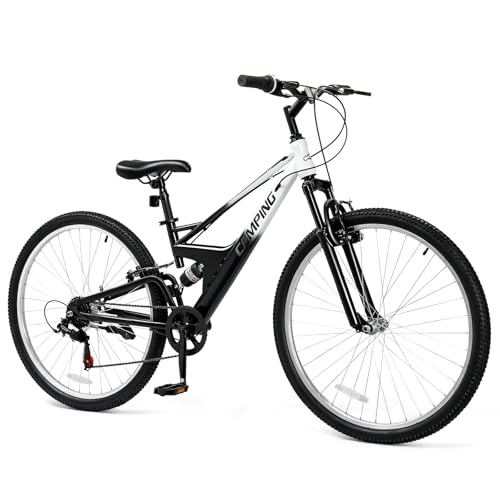
CamPingSurvivals 26/27.5 Full Suspension Mountain Bike 7 Speed

CamPingSurvivals 29 Inch Mountain Bike

Ktaxon Mountain Bike 24/26/27.5 Inch 21-Speed
The Strengths Of Each Pick
A 26-inch wheel with 21 speeds suits new riders exploring gravel paths and mild trails. The high-carbon steel frame keeps the build straightforward, and the quick-adjust seat clamp helps dial in height without tools.
Dual mechanical disc brakes give stronger stopping control in wet conditions than rim brakes. A lock-out suspension fork lets the front absorb bumps on rough sections, then firm up for smoother pavement. For many beginners, that mix covers weekends on dirt and weekday rides on mixed surfaces.
Real-World Strengths
- 21-speed trigger shifting covers climbs and flat stretches
- Dual disc brakes add confidence on descents
- Lock-out fork adapts from trail bumps to pavement
- Quick-adjust seat post speeds fit changes
Things To Consider
- Steel frame adds weight compared with aluminum options
- 85% assembly still needs handlebar, wheel, and pedal fitting
Unlike the steel mountain bike above, this hybrid uses a lightweight aluminum frame and 700C wheels for paved roads. Rigid suspension keeps the ride direct, which suits commuting and fitness loops on smooth surfaces.
Shimano EF500 Easyfire shifters pair with 21 speeds for precise gear changes on hills. Multiple mounting points accept a bottle holder, mudguards, or rear rack, so adding cargo gear stays straightforward. Adjustable saddle and handlebars help find a comfortable position for longer city rides.
A Strong Showing
- Aluminum frame keeps handling lighter on pavement
- Shimano EF500 shifters support smooth gear changes
- Mounting points allow racks, mudguards, and bottle holder
- Dual disc brakes work well in city traffic
- Pearl finish resists scratches during daily use
Worth Noting
- Rigid fork offers less cushioning on rough trails
- 700C wheels suit pavement more than loose dirt
A smaller 24-inch wheel and full suspension make this pick approachable for shorter riders and teens. Front and rear suspension absorb bumps that would otherwise travel through the frame on gravel and dirt paths.
Dual fenders block mud and splashes, a practical touch for wet commutes. The quick-release front wheel simplifies storage and maintenance, and 90% pre-assembly shortens setup. V-brakes keep maintenance simple, though disc brakes on other picks offer stronger wet stopping.
Benefits That Matter
- Full suspension smooths rough paths and trails
- Dual fenders reduce mud and water spray
- Quick-release front wheel aids storage
- Padded saddle supports longer casual rides
Trade Offs
- V-brakes provide less stopping power than disc brakes
- 24-inch wheels roll slower on long paved stretches
- Steel frame adds carry weight for stairs
Who It Suits Best
Shorter adults and teens who ride mixed paths and want mud protection.
Where Another Pick Suits Better
AVASTA Thrax 24 26 27.5 Inch MTB Mountain Bike suits taller riders who want disc brakes and more wheel size choices.
Wheel size choice is the main appeal here, with 24, 26, and 27.5-inch options for different heights. A high-carbon steel frame and premium suspension fork handle trail bumps while disc brakes manage stops on descents.
The 21-speed derailleur covers climbs and flat sections without a steep learning curve. Quick-release wheels help with transport, and 75% pre-assembly plus an installation video keep setup manageable. Height matters most for the choice, since the larger wheels suit taller riders better.
Features That Help
- Three wheel sizes help match rider height
- 21-speed derailleur supports varied terrain
- Disc brakes add downhill control
- Installation video guides assembly steps
Minor Gripes
- Steel frame is heavier than aluminum hybrids
- 75% assembly leaves more setup than 90% models
Front fork plus rear shock create a true dual suspension setup for rough trails. That combination reduces impacts before they reach the saddle, which helps on gravel, dirt, and rocky sections.
A 7-speed system keeps shifting simple for new riders, though 21-speed picks give finer gear choices on steep climbs. The high-carbon steel frame resists deformation, and the quick-adjust seat clamp sets height without tools. V-brakes keep things simple, while disc brake models elsewhere stop harder in wet conditions.
What Pays Off
- Dual suspension cushions front and rear impacts
- 7-speed shifting stays simple to learn
- All-terrain tires grip gravel and dirt
- Quick-adjust seat clamp speeds height changes
Room For Improvement
- 7 speeds offer less range than 21-speed options
- V-brakes need more care in wet weather
Larger 29-inch wheels and an extended wheelbase help hold a line through rock gardens and fast straights. That stability suits taller riders who feel cramped on 26-inch frames.
A 21-speed drivetrain provides a gear for climbs, flats, and descents, and dual disc brakes deliver consistent stopping. Aluminum alloy wheels reduce wind resistance, and front and rear reflectors add visibility for low-light rides. Setup is 75% complete, with a QR-linked video walking through each step.
What Makes Sense
- 29-inch wheels improve straight-line stability
- 21 speeds cover steep climbs and descents
- Dual disc brakes support confident descents
- Reflectors help with night visibility
- Video guide supports assembly steps
Points To Note
- Large wheels need more storage space
- 29-inch size suits taller riders best
- 75% assembly requires front wheel and pedal fitting
Made For
Taller riders who prioritize stability on longer trail sections.
Consider Something Else When
GASENDALA 24 Inch Mountain Bike 21 Speed MTB suits shorter riders who want a smaller frame and fenders for wet paths.
Multiple wheel sizes and a familiar 21-speed setup keep this option flexible for households with different rider heights. The high-carbon steel frame and lock-out suspension fork mirror the first pick, with dual disc brakes for wet-weather control.
All-terrain tires handle gravel, dirt, and rocky paths, and the quick-adjust seat clamp helps set height quickly. Arrival at 85% assembled means handlebar, seat, front wheel, and pedals still need fitting, plus brake and gear adjustments. That setup time is the main trade-off against higher pre-assembly models.
Strengths Worth Knowing
- Wheel size options help match rider height
- 21 speeds handle climbs and flat roads
- Dual disc brakes improve wet stopping
- Lock-out fork adapts to surface type
Softer Spots
- Steel frame adds weight versus aluminum
- Assembly includes brake and gear tuning
What Matters Most Before Choosing a First Mountain Bike
Frame Material and Weight
Aluminum frames feel lighter to lift up stairs and carry to a car, while high-carbon steel frames cost less and handle entry-level use well. Commuters carrying a bike daily benefit from aluminum, and garage storage reduces the weight gap for casual riders.
Wheel Size and Fit
Wheel diameter affects rolling speed, stability, and fit. Smaller wheels turn more easily in tight spaces, and larger wheels roll over bumps with less effort. Height and inseam should guide the choice, since a frame that feels cramped limits control on trails.
Gears and Brakes
Twenty-one speeds give fine steps for steep climbs, and seven speeds keep shifting simple for flat routes. Disc brakes offer stronger stopping in rain, and V-brakes suit dry, gentle terrain. Matching gears and brakes to local hills matters more than chasing the highest count.
Suspension Type
A front suspension fork absorbs trail bumps, and rear suspension adds comfort on rough descents. Rigid forks suit pavement and keep handling responsive. Riders planning gravel and dirt benefit from suspension, and lock-out options help on smooth roads.
Key Considerations Across These Picks
Common Shopping Slip Ups
Height gets overlooked, and a frame that feels fine in a listing photo can feel cramped on a trail. Checking wheel size against rider height prevents that mismatch. Assembly level also surprises new owners, so counting the remaining steps before ordering saves frustration.
What The Higher Tier Buys
Higher-tier builds often pair aluminum frames with disc brakes and wider gear ranges. Those combinations reduce carry weight and improve wet stopping. The upgrade pays off for frequent riders, and casual weekend use often stays comfortable at entry level.
Frequently Asked Questions
What wheel size suits a first mountain bike?
Height decides the best size, with 24-inch wheels for shorter riders, 26-inch for average heights, and 29-inch for taller riders. A quick inseam check helps narrow the choice before ordering.
Are disc brakes better than V-brakes for beginners?
Disc brakes provide stronger stopping in wet conditions and on descents. V-brakes remain simple to maintain for dry, flat routes.
How many speeds does a beginner need?
Seven speeds handle flat and gently rolling routes with simple shifting. Twenty-one speeds add finer options for steep hills and varied terrain.
Steel or aluminum frame for a first bike?
Steel frames offer a sturdy entry-level build with extra weight. Aluminum frames feel lighter to carry and suit daily commuting.
What assembly should be expected?
Most picks arrive between 75% and 90% assembled. Handlebars, front wheel, seat, and pedals typically need fitting, plus brake and gear adjustments.
Final Verdict
For mixed trails and a learning curve, the CamPingSurvivals 26 Inch Mountain Bike 21 Speed (Blue) covers the basics well. City riders may prefer the AVASTA hybrid, and taller riders gain stability from the 29-inch option. Matching wheel size, frame weight, and brake type to regular routes leads to a bike that gets used often.