
A hoverboard suits a child ready for a first self-balancing ride, a teen cruising smooth pavement, or an adult wanting a compact way to cross a park. Self-balancing means the board tilts slightly to sense weight shifts and keep the deck level. Wheel size, motor strength, and load limit decide where a model feels steady and where it feels underpowered. Range and charging time shape how long a session lasts before a break.
The Choices Worth Comparing

SISIGAD Scooters for Kids Ages 7-12 Bluetooth Speaker Starry Purple
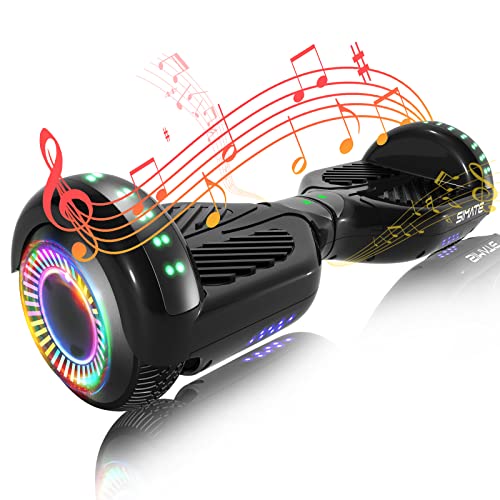
SIMATE Hoverboard Bluetooth LED UL 2272 APP Control 6.5 Wheels

Hoverstar Hoverboard for Kids 7-12 Bluetooth LED Lights 6.5-Inch

Gyroor G13 All Terrain Hoverboard LED Lights Bluetooth
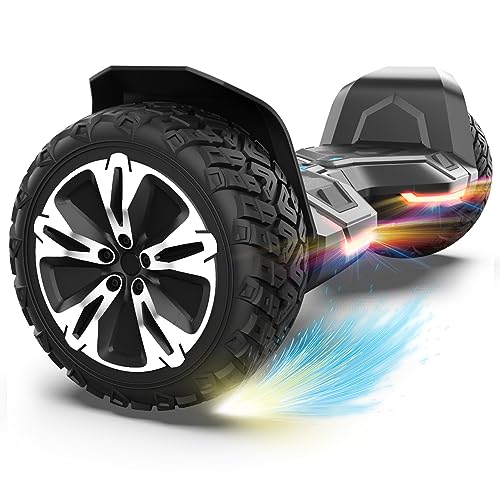
Gyroor Warrior 8.5 inch All Terrain Off Road Scooter Bluetooth

Gyroor G13 Hoverboard with Seat Attachment 6.5 Go Kart

SIMATE Hoverboard Bluetooth All Terrain LED Lights APP Control
A Closer Look At Each Pick
The SISIGAD model gives a young rider a gentle entry point, with dual hub motors built into the wheels and a self-balancing system that responds to small weight shifts. For a child learning on a driveway, that setup lowers the wobble that makes early attempts frustrating.
Colorful wheel lights and a built-in Bluetooth speaker add music without headphones, which keeps attention on balance rather than earbuds. Rubber tires on 6.5-inch wheels smooth out pavement seams, though rough grass still asks more from a small wheel than larger off-road designs provide.
Notable Upsides
- Bluetooth speaker pairs quickly for music during rides
- LED wheel lights improve visibility in low light
- Dual hub motors support steady beginner movement
- Rubber tires soften small pavement bumps
Things To Consider
- 5-hour charging time means planning ahead between sessions
- Smaller wheels suit smooth surfaces better than loose gravel
SISIGAD Scooters for Kids Ages 7-12 Bluetooth Speaker Starry Purple
App control sets this SIMATE apart from the SISIGAD model, since the XsCar app handles power, lights, speed modes, and battery monitoring from a phone. That extra layer helps a parent cap speed for a younger rider, then raise it later for an older teen.
Dual 250W motors and solid rubber wheels handle gentle slopes up to 15 degrees, with a stated 220 lb load limit that covers many adults. For most backyards, the aluminum frame and non-slip deck give a steadier platform than a basic plastic deck, though app setup adds a step before the first ride.
Useful Highlights
- App adjusts lights, speed modes, and power settings
- Bluetooth speaker and flashing wheels add evening visibility
- Aluminum frame keeps weight manageable for carrying
- 220 lb load limit suits a wider age range
- Regenerative braking helps manage speed on downhills
Worth Noting
- App dependence adds setup time for casual riders
- 6.5-inch wheels still limit deep gravel performance
Hoverstar sizes this board specifically for children ages 7 to 12, with a 20.5-inch frame and a 165 lb load limit that matches a smaller rider better than adult-focused models. That narrower fit helps a child place feet comfortably and learn balance without excess deck length.
Dual 300W brushless motors, meaning motors without carbon brushes for smoother power delivery, reach 8.7 mph and climb 15-degree inclines. Range sits at roughly 2.5 to 3.7 miles per charge, so short neighborhood loops suit it well, while longer outings call for a model with more battery capacity.
Real Benefits
- 20.5-inch frame fits younger riders more comfortably
- 300W brushless motors deliver smooth acceleration
- 2 to 4 hour recharge shortens downtime
Trade Offs
- 165 lb limit excludes heavier teens and adults
- Shorter range suits brief rides over long excursions
- Smaller frame becomes tight as a child grows
Who It Suits Best
Children ages 7 to 12 learning on smooth driveways and sidewalks.
Where Another Pick Suits Better
Gyroor Warrior 8.5 inch suits older riders needing larger wheels and higher load capacity.
The Gyroor G13 moves the focus outdoors, with all-terrain rubber tires that grip grass, turf, and gravel where smoother 6.5-inch wheels from earlier picks tend to spin. Dual 250W motors climb 15-degree hills at up to 7.75 mph, which feels brisk on a park path.
A 37V 2Ah lithium-ion battery delivers up to 8 miles per charge, giving longer sessions than the Hoverstar model. Dual headlights and glowing wheel lights help evening rides, and the board can pair with a separately sold seat attachment for seated use later.
Where It Delivers
- All-terrain tires grip grass and gravel surfaces
- Up to 8 miles per charge supports longer outings
- Dual headlights improve low-light visibility
- Bluetooth speaker pairs with a phone for music
Minor Gripes
- 176 lb load limit narrows adult rider fit
- Seat attachment is sold separately
Wheel diameter makes the biggest difference here, since 8.5-inch solid tires roll over grass, dirt, and gravel with less effort than 6.5-inch designs. That larger contact patch helps a rider cross uneven ground without constant speed loss.
Self-balancing technology keeps learning straightforward for ages 6 to 12 and adults, and a built-in speaker keeps music playing during longer outdoor sessions. Depending on soil softness, even large tires can bog down in mud, so firm dirt and packed gravel remain the sweet spot.
The Helpful Details
- 8.5-inch solid tires handle rough outdoor surfaces
- Sturdy structure supports repeated outdoor use
- Built-in speaker adds music without extra gear
Small Caveats
- Larger wheels add bulk for indoor storage and carrying
Two riding styles in one package set this bundle apart, since the K1 seat attachment converts the G13 board into a seated go-kart. A younger child can start standing for balance practice, then switch to seated riding when stamina or confidence runs low.
Dual 250W motors reach 7.75 mph and climb 15 degrees, while the adjustable frame extends from 28.3 to 33.5 inches to grow with a child. Rider weight range spans 44 to 220 lbs, which covers a wide span, though the extra frame and seat mean more storage space in a garage or closet.
The Upside
- Seat attachment converts board into a go-kart
- Adjustable frame extends as a child grows
- 44 to 220 lb range covers kids and adults
- LED lights and Bluetooth speaker support evening rides
- Includes charging adapter and assembly tools
Points To Note
- Conversion takes setup time before seated riding
- Bundle takes more storage space than a board alone
Made For
Families wanting both standing balance practice and seated kart riding.
Consider Something Else When
SISIGAD Scooters for Kids Ages 7-12 suits a child who wants a simpler board without seat hardware.
SIMATE returns with a familiar formula, pairing dual 250W motors and all-terrain tires with app control for speed and battery checks. Three speed modes let a rider start gently on a sidewalk, then move up for open pavement later.
An aluminum frame and non-slip deck keep the platform light and grippy, with a 220 lb load limit and 15-degree slope capacity. Flashing LED wheels and a Bluetooth speaker keep the ride lively, though the feature set overlaps heavily with the earlier SIMATE model, so app preference becomes the deciding factor.
Well-Handled Touches
- Three adjustable speed modes for different skill levels
- App monitors speed and battery during rides
- Non-slip deck improves foot placement confidence
- 220 lb limit fits many adult riders
Areas To Watch
- Similar specs to the earlier SIMATE model reduce distinction
- App setup adds steps for quick casual rides
- 6.5-inch wheels remain less suited to deep gravel
What Matters Most Before Choosing Hoverboards
Wheel Size and Terrain
Wheel diameter decides where a board rolls comfortably. A 6.5-inch wheel suits pavement and packed paths, while 8.5-inch tires handle grass and gravel with less strain. You should match wheel size to the surface used most often, not the surface used once.
Load Limit and Frame Fit
Load limits range from 165 lb on the child-sized Hoverstar to 220 lb on both SIMATE models. Frame length matters too, since a 20.5-inch deck fits a younger child better than a longer adult platform. Checking both numbers prevents a board that feels cramped or overloaded.
Range, Charging, and Controls
Range estimates vary widely, from about 2.5 miles on the Hoverstar to 8 miles on the Gyroor G13. Charging time ranges from 2 to 4 hours on the Hoverstar to 5 hours on the SISIGAD model. App control adds speed limits and battery checks, while simpler boards trade those settings for faster setup.
Key Considerations Across These Picks
Common Shopping Slip Ups
Matching a board to a rider weight limit matters more than chasing top speed. A 165 lb limit excludes many teens, even when speed looks appealing on paper. Terrain mismatch causes similar trouble, since small wheels struggle on loose gravel regardless of motor size.
What The Higher Tier Buys
Larger wheels, longer range, and convertible frames explain higher-tier pricing in this group. The Gyroor Warrior adds 8.5-inch tires for rough ground, while the G13 bundle adds a seat and adjustable frame. Those additions pay off for families using varied terrain or growing riders, less so for short driveway sessions.
Frequently Asked Questions
What age range suits a first hoverboard?
Models here target ages 6 to 12 for younger riders, with load limits setting the real boundary. A child near the top of a load range may outgrow a compact board quickly.
Do all-terrain tires work on grass?
All-terrain tread and larger wheels grip grass better than smooth pavement tires. Firm, dry grass works best, while soft or muddy ground can still slow any 6.5-inch wheel.
How long does a charge last?
Stated range varies by model, from roughly 2.5 to 3.7 miles on the Hoverstar to up to 8 miles on the Gyroor G13. Rider weight, slope, and surface change real distance from those figures.
What does app control add?
App control on SIMATE models adjusts lights and speed modes and shows battery level. That helps cap speed for a beginner, though riders wanting instant setup may prefer a board without an app step.
Can a hoverboard become a go-kart?
The Gyroor G13 bundle includes a seat attachment that converts the board into a seated kart. The frame adjusts from 28.3 to 33.5 inches, which helps the setup grow with a child.
Final Verdict
For a young beginner, the SISIGAD model keeps things simple and musical. For varied terrain, the Gyroor Warrior 8.5 inch offers larger wheels, while the G13 bundle adds seated variety. Your best match depends on rider size, surface, and session length, so weigh those three factors first.