
A half shell helmet covers the top and sides of the head while leaving the face open, which suits trail riding where airflow and visibility matter on climbs. Riders moving between fire roads, singletrack, and short road links need a fit that stays put without feeling heavy. Size range, vent layout, visor shape, and shell construction separate the choices below, and each pick handles a different mix of those needs.
The Choices Worth Comparing

BATFOX Mountain Bike Helmet (White, L 58-61CM)
Fox Racing Speedframe Helmet White Solid Large

BATFOX Mountain Bike Helmet (White, L 55-59CM)

BATFOX NTA 8776 E-Bike Helmet (Black Gold, L)

Lightweight MTB Helmet with Visor 54-63cm
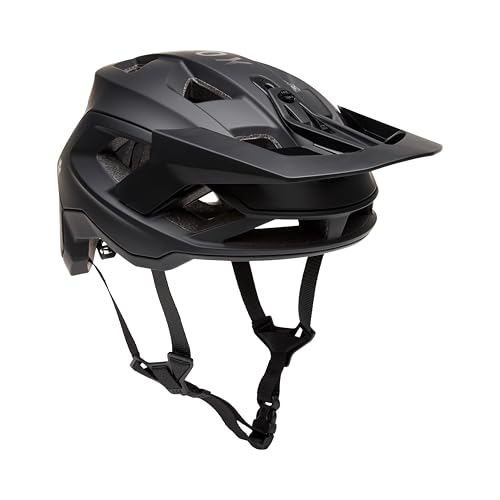
Fox Racing Speedframe Helmet
A Breakdown Of The Leading Choices
Trail riders who want extended rear coverage without a full-face shell get a clear match here. The polycarbonate outer shell is fused to an EPS liner, where EPS means expanded polystyrene foam that absorbs impact energy. That pairing keeps the shape firm while limiting bulk on long climbs.
Measure head circumference before ordering, since size choice drives fit more than the dial alone. L covers 58-61cm in this listing, and that range suits many adults. You get a large visor for sun and debris, plus removable padding that can be washed after dusty rides.
What Helps Most
- Polycarbonate shell with EPS liner for impact absorption
- 18 vents with internal channels for airflow on climbs
- Removable, washable padding and chin pad for hygiene
- Large visor shields sun, rain, and trail debris
Things To Consider
- Size bands are narrow, so a circumference check matters
- Full coverage adds bulk compared with a minimal trail shell
All-mountain riders get a different emphasis here, with a Mips liner at the center. Mips is a low-friction layer inside the helmet, designed to reduce rotational motion during an angled impact. That design direction differs from the BATFOX shell-and-foam approach in the previous pick.
Venting runs through channeled, in-molded EPS, where in-molded means the shell and foam are formed together as one piece. You can adjust the visor with one hand, and it works with sunglasses or goggles. The 360 fit system dials in a snug hold around the full circumference.
Practical Advantages
- Mips liner designed to reduce rotational motion
- Channeled EPS venting for efficient cooling on descents
- Removable moisture-wicking liner that can be washed
- Sunglass storage built into the helmet design
- One-hand visor adjustment for quick position changes
Worth Noting
- Large sizing needs a circumference check before ordering
Who It Suits Best
All-mountain riders who value a Mips liner and goggle-compatible visor for technical trails.
Where Another Pick Suits Better
BATFOX NTA 8776 E-Bike Helmet suits e-bike riders who need NTA 8776 coverage for higher-speed use.
Commuters and weekend trail riders get a lighter-feeling option here at about 390g. The in-mold polycarbonate shell and EPS liner keep the structure compact, and the balanced shape reduces pressure on the neck during longer rides. Unlike the first BATFOX pick, sizing here runs smaller.
L covers 55-59cm, while M covers 52-55cm, so head shape matters in the overlap zone. Eighteen ventilation channels with internal air guides help release heat in summer conditions. A wide visor blocks sunlight, dust, and debris on mixed surfaces.
What Makes Sense
- Approx. 390g weight supports longer rides with less neck strain
- 18 aerodynamic channels improve airflow and heat release
- Rear dial adjustment helps stabilize fit across head shapes
Trade Offs
- Smaller size bands exclude larger heads compared with L 58-61cm models
- Removable padding needs regular washing to stay fresh in heat
E-bike riders get a distinct reason to consider this shell, with NTA 8776 coverage alongside CPSC, CE, and EN1078 standards. NTA 8776 is a Dutch standard aimed at higher-speed e-bike impacts, which sets it apart from standard bicycle-only coverage. The polycarbonate shell and shock-absorbing foam liner handle the impact structure.
Seventeen ventilation holes move air during longer, faster rides, and the detachable visor cuts glare and rain exposure. Your size choice needs care, since L spans 57-61cm and overlaps the M band at 55-58cm. A dial system fine-tunes hold after the size is selected.
Where It Delivers
- NTA 8776 coverage suits e-bike speeds beyond standard cycling
- 17 vents manage heat and moisture during longer rides
- Detachable visor reduces sun glare and rain exposure
- Dial adjustment helps secure fit across head shapes
Minor Gripes
- Overlapping size bands make circumference measurement important
- Detachable visor needs secure attachment checks before riding
- Black Gold styling may run warm in direct summer sun
Mixed-use riders get breadth here, with coverage from 54-63cm across M, L, and XL sizes. The polycarbonate shell and EPS liner mirror the construction in earlier BATFOX picks, while the wider size span helps households with different head sizes. Eighteen vents with internal channels keep air moving on road links and trails.
Removable padding and a washable chin pad support hygiene after repeated use, and a large visor shields against sun, rain, and debris. You can dial the fit at the rear for a secure hold during descents. In our view, this range makes size selection simpler for shared use.
Real-World Strengths
- 54-63cm range covers children through larger adult heads
- 18 vents with internal channels support warm-weather riding
- Removable, washable padding helps with upkeep
Points To Note
- Wide range still needs a tape measurement for a close fit
Made For
Households and mixed-use riders who need one helmet style across trail, road, and commuting.
Consider Something Else When
Fox Racing Speedframe Helmet suits riders who prioritize a Mips liner over a broad size range.
Goggle wearers get a strong match in this Speedframe variant, with a three-position visor built for goggle compatibility. The Mips liner aims to reduce rotational motion and redirect forces during a crash, while channeled EPS venting supports cooling. That combination places it close to the earlier Fox pick in purpose.
The 360 fit system adjusts around the head for a consistent hold, and the moisture-wicking liner is removable and washable. Sunglass-specific storage adds a practical touch for bright, exposed trails. Depending on head shape, the dial range may need a few clicks to settle evenly.
Advantages To Know
- Mips liner designed to reduce rotational motion
- Three-position visor works with goggles and sunglasses
- 360 fit system dials in a consistent hold
- Washable moisture-wicking liner supports hygiene
Small Caveats
- Fit tuning may take several adjustments for round head shapes
- Visor position needs checking with the eyewear planned for riding
What Matters Most Before Choosing Half Shell Mtb Helmet
Fit Before Features
Head circumference determines the size band, and the dial only refines a correct band. Measure around the widest part of the head, then compare that number with the listed range for each model. A helmet that shifts during a descent will not feel secure, regardless of vent count.
Ventilation For Long Climbs
Vent count alone tells only part of the story, since channel shape guides air across the head. Eighteen channels with internal guides, as on several BATFOX models, suit sustained climbs in warm weather. Channeled EPS on the Fox models takes a different route to the same cooling goal.
Visor And Eyewear Fit
Visor design affects sun coverage and compatibility with sunglasses or goggles. A large fixed visor suits trail debris and glare, while a three-position or detachable visor gives more flexibility. Check eyewear clearance before ordering, since storage and visor angle change the fit.
Shell Standards For Speed
Standard bicycle coverage suits pedal-powered riding, while e-bike use calls for NTA 8776 coverage. Mips liners add a rotational-motion design layer for riders who prioritize that system. Match the standard to riding speed first, then compare venting and fit systems.
Key Considerations Across These Picks
Common Shopping Slip Ups
Ordering by a usual hat size without measuring causes most fit problems. You can avoid that by checking the centimeter range for the exact size listed, not just the letter. Overlapping bands, such as 55-59cm and 58-61cm, need a tape check at the boundary.
What The Higher Tier Buys
Higher-tier models add systems such as Mips liners, channeled EPS, and multi-position visors. Those additions change how impact forces and airflow are handled, rather than adding decoration. Riders on technical trails gain more from those systems than riders on short, smooth routes.
Frequently Asked Questions
How do half shell helmets differ from full-face helmets?
Half shell helmets cover the top and sides while leaving the face open for airflow and visibility. Full-face models add chin and jaw coverage for downhill riding. Trail and all-mountain use usually suits a half shell design.
What size should be ordered for a half shell helmet?
Size should match measured head circumference in centimeters against the listed range. A dial then fine-tunes hold within that band. Overlapping size bands make measurement especially important.
Do e-bike riders need different coverage?
E-bike riders benefit from NTA 8776 coverage designed for higher speeds. Standard bicycle standards may not address those impact conditions. Your riding speed should guide that choice.
How many vents are enough for summer riding?
Vent count matters alongside channel design and internal air guides. Eighteen channels suit many warm-weather riders, while channeled EPS offers another cooling approach. Long climbs in heat place more demand on airflow.
Can a visor work with goggles?
Some visors are built for goggle use with adjustable positions. A three-position visor gives more clearance than a fixed large visor. Eyewear plans should be checked before ordering.
Final Thoughts
Trail riders who want broad size coverage and washable padding will find a strong match in the Lightweight MTB Helmet with Visor 54-63cm. E-bike riders should prioritize the NTA 8776 model, while all-mountain riders may prefer a Mips liner. Measure head circumference first, then match venting and visor style to riding conditions.