
A loose shoe on a platform pedal turns a rough descent into a guessing game. Platform pedals, also called flat pedals, keep the shoe in direct contact with a wide surface instead of clipping in, so foot position can shift on technical ground. You need pins that bite the sole, a platform wide enough for the shoe, and a spindle size that matches the crank. Sealed bearings, which keep water and dust away from the rotating parts inside, help the pedal spin smoothly after wet rides.
Mud, roots, and rocky climbs all punish a narrow or slick platform. Your shoe size matters here, because a larger shoe needs more support under the arch and heel. The seven options below differ in body material, pin layout, and profile, and that mix makes the right choice depend on trail use, commuting, and fit.
Your Options, Compared

ROCKBROS Nylon Fiber Bike Pedals Platform MTB BMX 9/16″

Road/Mountain Bike Pedals 3 Bearings CNC Machined Flat Pedals Black

OneUp Components Composite Pedals, Black Lightweight MTB

Hapleby Premium Bike Pedals 9/16 Inch with 2 Sealed Bearings
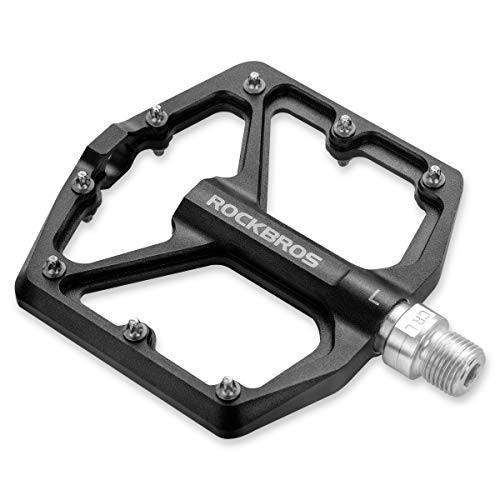
ROCKBROS Aluminum MTB Pedals Wide Platform Sealed Bearings
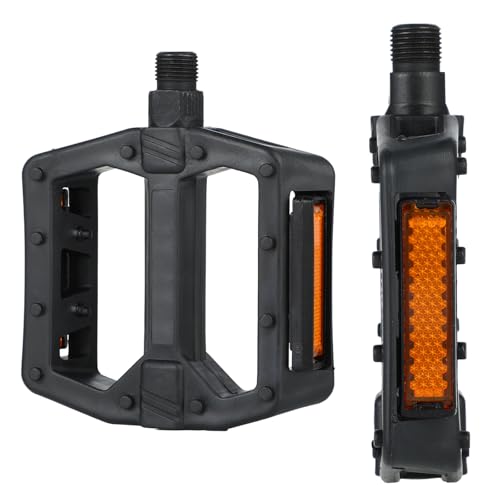
Universal Bike Pedals 9/16″ Nylon Lightweight Non-Slip Platform Pedals

Crankbrothers Stamp Flat MTB Pedals Size-Specific Lightweight
A Closer Look At Each Pick
Commuters and trail riders who want a light nylon body get a straightforward match here. The 4.1 inch wide platform spreads load under a sneaker or flat shoe, and anti-skid nails on each side add bite on wet ground. You can run the same pair across MTB, BMX, hybrid, and folding bikes because the spindle uses the standard 9/16 inch thread.
Cr-Mo means chromium-molybdenum steel, a stronger spindle material than plain steel. Sealed DU bearings sit inside the body to limit water and dust entry, which helps keep rotation smooth in rain. The honest read is that nylon keeps weight down at 0.8 lb, while aluminum options later in the list offer a different feel underfoot.
Useful Strengths
- 4.1 inch platform supports a broad shoe contact area
- 0.8 lb pair keeps rotating mass low on long rides
- Anti-skid nails hold grip even with mud on the sole
- Sealed bearings shield spindles from water and dust
- 9/16 inch spindle fits many bike types
Things To Consider
- Nylon body suits trail use, with less metal rigidity than aluminum bodies
- Left and right markings need a quick check before tightening
Technical climbs reward a slim aluminum platform, and the 14mm profile here helps clear rocks and roots. CNC machining means the body is cut from a solid block for consistent shaping. Sixteen replaceable pins per pedal, eight per side, give a locked-in feel on steep pitches.
Three sealed bearings per pedal spread load across the spindle, and the Cr-Mo spindle handles that load with a stronger steel alloy. Your shoe placement stays consistent because the 100 x 104mm platform and sloped leading edges reduce pedal strikes. In our view, the trade-off against the nylon ROCKBROS pair is a firmer, more metallic platform feel.
Reasons It Performs
- 14mm thin profile reduces strikes on trail obstacles
- 16 replaceable pins per pedal allow grip tuning
- Three sealed bearings protect against water and dust
- 332 gram weight keeps the pair light for climbing
Worth Noting
- Installation needs an 8mm Allen key, so the correct tool matters
- Aluminum body can show marks from rock contact over time
Who It Suits Best
Trail riders who prioritize a thin profile and replaceable pins for technical terrain.
Where Another Pick Suits Better
Crankbrothers Stamp Flat MTB Pedals Size-Specific Lightweight suits larger shoes that need a size-matched concave platform.
A convex shape sets the OneUp design apart from the flatter platforms above. Convex means the middle sits slightly higher, so the pedal nests into the arch of the foot. You get a natural midfoot contact point, and the thin 13.3mm edge helps avoid strikes.
The 115 x 105mm platform is the largest in this group, with ten hexagonal pins per side for grip. At 355g, the pair stays light, and the black chromoly axle pairs with stainless steel pins. Home servicing without proprietary tools adds a practical edge for riders who maintain equipment between rides.
Where It Helps
- 115 x 105mm platform gives broad support for climbing power
- Convex profile follows the foot arch for secure placement
- 355g weight suits long trail days
- Replaceable hexagonal pins allow grip adjustment
- Steel axle and stainless pins resist corrosion
Trade Offs
- Large platform needs clearance checks on tight trails
- Composite body differs in feel from machined aluminum bodies
Road and folding bike riders often need a simple aluminum pedal with a standard thread. The Hapleby pair uses a 9/16 inch spindle, two sealed bearings per pedal, and an aluminum alloy body with a Cr-Mo spindle. A rubber ring helps keep dust away from the bearing area.
Six pins per side add friction without aggressive spikes, which suits casual shoes and flip-flops on short rides. Your setup gets easier because a pedal wrench is included in the package. Compared with the OneUp pair, the smaller pin count trades maximum trail bite for a gentler feel on mixed surfaces.
What Pays Off
- Aluminum alloy body with Cr-Mo spindle for strength
- Two sealed bearings per pedal for smooth rotation
- Included pedal wrench simplifies installation
- Six pins per side suit everyday shoes
Minor Gripes
- Fewer pins than trail-focused options reduce bite on steep loose climbs
- Hex installation requires the correct tool size on hand
Hapleby Premium Bike Pedals 9/16 Inch with 2 Sealed Bearings
An aluminum platform changes the feel from the nylon ROCKBROS pair at the top of the list. The 101mm wide platform supports shoes up to US 12, and stainless steel spikes on each side resist sliding. You can use the pair on MTB, BMX, hybrid, and commuter bikes with the 9/16 inch thread.
Sealed bearings and a gasket design limit water, dust, and sand entry around the spindle. A carbon fiber bushing outside the spindle adds corrosion resistance, while the Cr-Mo spindle carries load. The 0.66 lb weight keeps the aluminum option competitive on the scale.
Points In Its Favor
- 101mm platform supports larger shoes evenly
- Stainless steel spikes add grip on both sides
- Sealed bearings and gasket limit grit entry
- 302g weight balances aluminum durability and lightness
- L and R markings simplify correct installation
Points To Note
- Spike grip can feel firm through thin soles on long rides
- Aluminum body needs care to avoid cosmetic marks on rocks
Made For
All-round riders who want aluminum strength and a wide platform for shoes up to US 12.
Consider Something Else When
Universal Bike Pedals 9/16″ Nylon Lightweight Non-Slip Platform Pedals suits commuters who value reflective strips and the lightest pair.
Night commuting brings a different priority, and reflective strips on the surface add visibility in low light. The one-piece PP body, a molded plastic construction, resists rust and wear in daily use. Dual-sided anti-slip studs keep contact on both faces of the pedal.
At 0.55 lbs per pair, the weight is the lowest in this group. You can fit the 9/16 inch thread to most mountain, road, folding, and commuter bikes, with clear L and R marks for installation. The catch is compatibility, because 1/2 inch thread cranks need a different pedal.
Standout Benefits
- Reflective strips improve low-light visibility
- 255g pair weight suits commuters and folding bikes
- One-piece PP body resists rust
- Sealed bearings guard against dust and rain
Small Caveats
- Not compatible with 1/2 inch thread cranks
- PP body offers a softer feel than aluminum platforms
Size-specific sizing separates the Stamp design from one-size platforms. The platform measures 114 x 114mm and targets US men’s shoe sizes 10 to 15, so the contact patch matches a larger foot. Your midfoot sits in a concave center, meaning the edges rise slightly around the shoe.
Ten one-piece replaceable pins per pedal and Igus internal bearings support grip and serviceability. The forged SCM 435 chromoly spindle and composite body keep the build light and rugged. A low 13.5mm to 15.5mm height gives a slim profile for aggressive trail riding.
The Value In It
- 114 x 114mm platform sized for larger shoes
- Concave center locks midfoot position
- Replaceable pins allow grip renewal
- Igus bearings support easy maintenance
- Slim 13.5mm to 15.5mm profile reduces strikes
Areas To Watch
- Size-specific fit suits larger shoes, less so smaller feet
- Composite body differs from machined aluminum in impact feel
Key Factors To Consider For Flat Pedals
Platform Size And Shoe Fit
A platform that ends under the heel or arch leaves the shoe rocking on rough ground. Match platform width and length to shoe size, and check the stated range for larger options. You can narrow the field quickly by ruling out platforms that are too small for the shoe.
Pin Count And Placement
Pins are the small studs that engage the sole, and more pins do not always mean better grip. Placement under the ball of the foot matters for climbing, while pins near the heel help on descents. Replaceable pins let the setup evolve as soles wear.
Body Material And Bearings
Nylon composite bodies keep weight low and resist corrosion, while CNC aluminum bodies give a firm platform feel. Sealed bearings protect the spindle from water and dust, which matters for riders in wet climates. Your climate and terrain should guide the material choice more than appearance.
Thread And Installation
Most options here use a 9/16 inch thread, the standard for adult bikes, and L and R marks prevent cross-threading. Confirm crank thread size before ordering, and keep the correct Allen key or wrench ready. A five minute install is common, but correct orientation matters for thread health.
Key Considerations Across These Picks
Common Shopping Slip Ups
Ordering by platform width alone misses pin placement and shoe size fit. Checking thread size after ordering causes avoidable returns, so confirm 9/16 inch compatibility first. Assuming every aluminum body feels the same ignores profile and concave shape differences.
What The Higher Tier Buys
Higher tier models often pair size-specific platforms with serviceable bearings and replaceable pins. The extra cost reflects machining, bearing quality, and maintenance access rather than a different basic function. Paying more pays off for aggressive trail riders who service pedals often and need precise shoe fit.
Frequently Asked Questions
What thread size fits most adult bikes?
Most adult bikes use a 9/16 inch pedal thread, and nearly every option in this list follows that standard. Checking crank markings before ordering prevents a mismatch with older 1/2 inch thread cranks.
How many pins should a flat pedal have?
Pin counts range from six to ten per side in this group, with placement mattering as much as the total. More pins help on loose climbs, while fewer pins suit casual shoes on commuter rides.
Are nylon pedals strong enough for trails?
Nylon composite bodies with Cr-Mo spindles handle trail loads while keeping weight low. Aluminum bodies offer a firmer feel, so the choice comes down to preferred platform feedback.
What makes a platform concave or convex?
A concave platform dips in the center so the shoe sits into the pedal, while a convex platform rises in the middle to follow the arch. Both shapes aim to keep the midfoot planted during rough sections.
How often should pedal pins be replaced?
Replaceable pins can be swapped when wear reduces grip on wet or loose surfaces. Keeping spare pins on hand makes maintenance quick and restores consistent foot placement.
Wrap Up
For trail use, the OneUp Components Composite Pedals, Black Lightweight MTB offers a large thin platform with strong pin grip. Commuters may prefer the lighter reflective Universal option, while larger shoes suit the size-specific Crankbrothers Stamp design. Matching platform size to shoe size remains the most useful starting point.