
Your feet slip on stock pedals during a steep climb or a loose descent, and that lost connection makes every trail feature harder to read. A wide platform with replaceable pins changes the equation, because the pins bite into shoe soles and keep your position steady through roots and rock gardens. Sealed bearings, meaning bearings closed against dust and water, also matter for riders who cross mud, creek crossings, and rain. You can narrow the list by platform size, pin count, body material, and spindle type, then match those details to the terrain and shoe type you use most.
A Quick View Of The Lineup
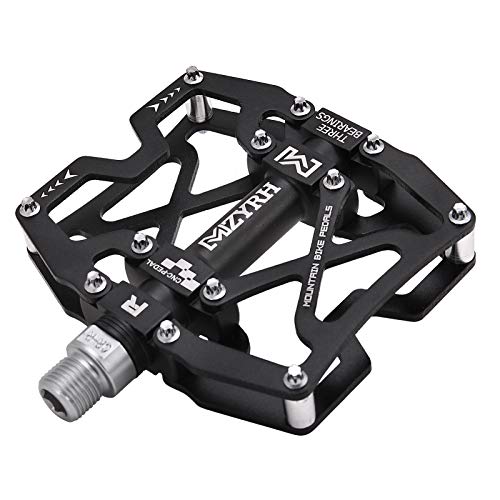
MZYRH Mountain Bike Pedals CNC Machined 9/16 Sealed 3 Bearing Black

GEWAGE 3 Bearing Flat Pedals 9/16 CNC Machined Black

Hapleby Premium Bike Pedals 9/16 Inch 2 Sealed Bearings

FIFTY-FIFTY Mountain Bike Pedals Nylon Composite Flat Gum

JETCAT Mountain Bike Pedals Flat 9/16 Black
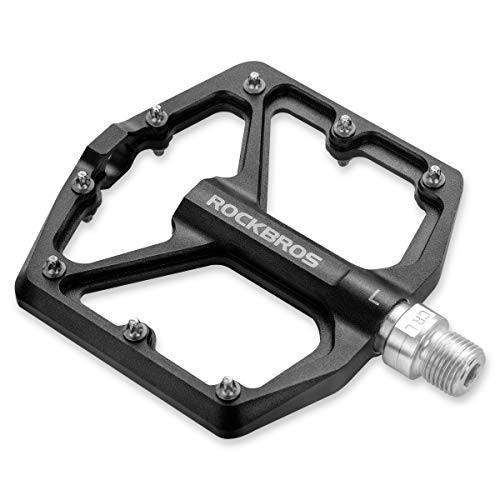
ROCKBROS Aluminum MTB Pedals Wide Platform Sealed Bearings

YBLNTEK Aluminum MTB Flat Pedals Dual DU Bearings 12 Pins
Meet The Standout Selections
A compact aluminum platform suits riders who want grip without a bulky pedal underfoot. The 105 by 91mm surface gives enough room for flat shoes, while the 26mm thickness keeps the profile low on tight trails. Three sealed bearings per pedal help the spindle turn smoothly after wet rides, and that setup is a step up from simpler bushing designs.
Anti-skid pins are machined into the aluminum body, so traction comes from the pedal itself rather than a separate insert. At 0.45lb per pedal, weight stays moderate for commuting and trail use, and you get L and R markings for correct installation. The honest read is that the smaller footprint suits mid-size shoes best, with larger shoes wanting the wider platforms later in this list.
A Strong Showing
- Aluminum alloy body resists bending on rock strikes
- Three sealed bearings shield the spindle from moisture
- Replaceable-style pins improve shoe connection on climbs
- 9/16 inch thread fits most standard cranks
- Low 26mm profile reduces pedal strikes
Things To Consider
- 91mm width feels narrow with larger shoe sizes
- Pin count is not stated, so grip tuning is less clear
MZYRH Mountain Bike Pedals CNC Machined 9/16 Sealed 3 Bearing Black
Width is the headline here, with a 100 by 104mm platform that spreads pressure across the midfoot. A 14mm profile and sloped leading edges help the pedal glance off trail obstacles instead of catching, which matters on rocky descents. Compared with the MZYRH option above, the larger surface and thinner profile suit aggressive trail riding more directly.
Sixteen replaceable pins per pedal, eight per side, give a clear way to tune grip as pins wear. Your shoes stay planted during technical climbs because the pins engage the sole pattern rather than relying on rubber alone. A chrome-molybdenum steel spindle, a stronger steel alloy used for axles, adds load-bearing strength, and an 8mm Allen key handles installation.
What Makes Sense
- Large platform supports midfoot placement on steep terrain
- Replaceable pins allow grip refresh over time
- Sloped edges reduce strikes on rocks and roots
- Sealed bearings protect against water and dust
Worth Noting
- 332 gram weight is per pedal, so total pair weight adds up
- Many pins mean more periodic checks for tightness
Who It Suits Best
Riders tackling steep climbs and loose descents who want a broad, low platform.
Where Another Pick Suits Better
Commuters wanting a simpler setup may prefer the JETCAT Mountain Bike Pedals Flat 9/16 Black for lighter mixed use.
A wide, lightweight aluminum body makes this set approachable for casual trail and road use. Two sealed bearings per spindle keep rotation smooth, and a rubber ring around the bearing area helps limit dust entry during dry, dusty rides. The 9/16 inch spindle matches the standard thread on most cranks, so compatibility checks stay simple.
Six pins per side create friction with shoe treads without the aggressive bite of higher pin counts. You ride over roots and uneven ground with a wide base that keeps feet centered, and the included pedal wrench removes a common setup hurdle. In our view, the included tool matters more than it sounds for first-time installers.
Practical Advantages
- Included pedal wrench simplifies first installation
- Wide base helps keep feet centered on climbs
- Cr-Mo spindle resists corrosion and abrasion
- Moderate pin count suits casual shoes well
Trade Offs
- Two bearings per pedal is simpler than triple-bearing designs
- Pin grip may feel mild on wet, muddy descents
Nylon composite changes the feel compared with full aluminum bodies earlier in this list. The material absorbs impacts from rock strikes, and the 0.7 inch thickness gives strong clearance through tight trail sections. At 106 by 104mm, the platform is among the largest here, so your feet get broad support on rough descents.
Nine replaceable steel pins per side provide firm engagement, and the Cr-Mo spindle adds strength at the center. Sealed bearings help in rain and dust, and the stated pair weight of 351 grams keeps the set light for enduro and all-mountain use. One thing worth considering is that nylon bodies flex more than aluminum, which some riders prefer for impact feel and others do not.
What Stands Out
- 0.7 inch thickness maximizes obstacle clearance
- Large 106 x 104mm platform supports larger shoes
- Nylon body softens trail impacts
- Replaceable steel pins refresh grip over time
- Light pair weight suits long trail days
Minor Gripes
- Nylon flex differs from rigid aluminum feel
- Thin profile requires care on pedal strikes
Mixed riding is the clear angle here, with a nylon body aimed at BMX, road, gravel, and mountain use. Eight anti-skid nails per pedal provide traction without the aggressive pin density of the GEWAGE option. Three sealed bearings keep dirt and moisture away from the spindle, which helps on wet commutes and dusty trails alike.
Standard 9/16 inch sizing and L and R markings make installation straightforward, and an included hex key covers the basic tool need. You swap these onto a second bike or a commuter without hunting for a pedal wrench. For most backyards and garage setups, that included key is a small but practical advantage.
Noteworthy Benefits
- Nylon body keeps weight low for mixed bikes
- Three sealed bearings limit dirt and moisture
- Included hex key simplifies installation
- Eight nails balance grip and shoe wear
Small Caveats
- Platform dimensions are not stated for shoe fit checks
- Nylon body may flex more than aluminum on hard strikes
Made For
Riders with multiple bikes who need one lightweight pedal set across disciplines.
Consider Something Else When
Aggressive downhill riding may suit the FIFTY-FIFTY Mountain Bike Pedals Nylon Composite Flat Gum with its larger, thinner platform.
Aluminum construction and a 101mm wide platform define this set for rough terrain. Stainless steel spikes on each side bite into soles, and the width supports shoes up to US 12 in the stated sizing. At 0.66lb per pedal, weight is higher than nylon options, and that trade-off buys a rigid body that holds shape on impacts.
A chrome-molybdenum steel spindle carries load, while a carbon fiber bushing outside the spindle adds corrosion resistance. Gaskets help keep water, dust, and sand away from the bearings, so rotation stays smooth after gritty rides. You need a pedal wrench for the 9/16 inch thread, and L and R markings keep left and right sides correct.
Reasons It Performs
- 101mm platform supports larger shoes evenly
- Stainless spikes provide firm traction on rough ground
- Chromoly spindle handles heavy loads
- Gasket design limits grit entry to bearings
- CNC aluminum body resists trail impacts
Points To Note
- Heavier per pedal than nylon alternatives
- Aggressive spikes can mark soft shoe soles
Dual DU bearings, a bushing type that uses a low-friction lining, sit at the center of this design. The sealed setup keeps dust and water out, and a chromoly steel axle supports smooth, quiet spinning over long rides. One-piece cast aluminum construction keeps the body light while resisting impacts from trail obstacles.
Twelve non-slip pins create strong hold on rough terrain and wet surfaces, and the wide platform spreads pressure across the foot for longer efforts. You want steady footing on both mountain trails and city roads, and the pin layout addresses both. Compared with the ROCKBROS set above, the dual DU system is the main differentiator for bearing longevity.
Notable Upsides
- Dual DU bearings reduce wear and noise
- 12 pins deliver strong traction in wet conditions
- One-piece aluminum casting balances strength and weight
- Wide platform improves comfort on long rides
Honest Caveats
- Platform dimensions are not stated for exact fit checks
- High pin count may wear casual shoe soles faster
What Matters Most Before Choosing Flat Pedals For Mountain Biking
Platform Size And Shoe Fit
Platform width determines how much of the shoe sits on the pedal. Larger shoes benefit from 100mm or wider surfaces, while smaller shoes can use compact platforms without catching obstacles. Check the stated length and width against the shoe size you ride in most often.
Pin Count And Replaceability
Pins create the actual grip by engaging shoe soles. Higher counts and replaceable designs allow traction tuning, while fixed pins simplify maintenance. Wet and muddy trails favor more pins, and dry hardpack needs fewer.
Body Material And Bearing Type
Aluminum bodies stay rigid, nylon bodies absorb impacts, and both pair with sealed bearings or bushings. Sealed bearings protect against water and dust, and DU bushings offer a different low-friction approach. Your crank thread is almost always 9/16 inch, so you check that standard first before comparing other details.
Key Considerations Across These Picks
Common Shopping Slip Ups
Many shoppers overlook shoe size when choosing platform width, leading to feet hanging off narrow pedals. Others ignore pin replaceability and face reduced grip as pins wear. Checking both details before ordering avoids a second purchase.
What The Higher Tier Buys
Higher tier sets often add stronger spindle alloys, sealed or DU bearing systems, and replaceable pins. Those details help with longevity and grip refresh, and they matter most for frequent trail use. Casual riders gain less from the upgrade, while regular riders see clearer value.
Frequently Asked Questions
Are flat pedals suitable for beginners?
Yes, flat pedals suit beginners because feet can move freely and reposition quickly. A wide platform with moderate pins gives confidence without locking shoes in place.
What spindle size do most bikes use?
Most bikes use a 9/16 inch spindle thread, and every set in this list follows that standard. Your crank arms should match that thread for direct installation.
How many pins provide good grip?
Eight to twelve pins per pedal cover most trail conditions, with higher counts favoring wet and loose terrain. Replaceable pins let you refresh traction as wear develops.
Do nylon pedals last on trails?
Nylon composite bodies absorb impacts well and suit enduro and all-mountain riding. Aluminum bodies stay more rigid, so the choice depends on preferred feel and terrain.
When should pins be replaced?
Pins should be replaced when they bend, loosen, or lose bite into shoe soles. Periodic checks during maintenance keep grip consistent.
Final Verdict
The GEWAGE set stands out for technical trail riders who want width and replaceable pins, while the FIFTY-FIFTY set suits larger shoes and tight trails with its thin profile. You can match platform size, pin count, and body material to the terrain you ride most, and that match matters more than any single specification.