
A wrist tracker can feel bulky under a cycling glove, and a chest strap can chafe on long rides. An arm band moves heart-rate sensing to the forearm or upper arm, keeping the wrist clear while data keeps flowing. That shift matters during climbs, descents, and long-distance efforts where arm position changes constantly. The picks below separate true trackers from simple reflective straps and from replacement bands, so compatibility stays clear before a purchase.
A Closer Look At The Lineup

WHOOP Bicep Band Compatible With 5.0/MG S/M

VVS 4 Pack High Visibility Reflective Bands for Cycling Green

Bolesi Stretchy Bicep Arm Bands for Amazfit Helio Strap 22mm
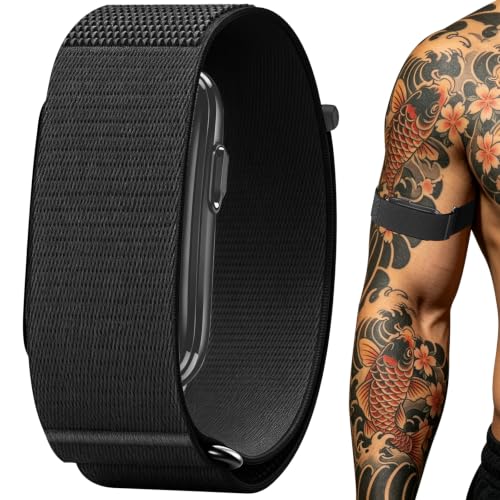
Arsfit Elastic Nylon Arm Band for Garmin Cirqa Upper Strap

Amazfit Helio Strap Screenless Activity Tracker 10-Day Battery

Xiaomi Smart Band 10 Pro AMOLED GPS 21-Day Battery Tracker

Wahoo TICKR FIT Heart Rate Armband Bluetooth ANT+
Inside Each Recommended Option
Long rides often mean gloves, bar tape, and a watch competing for wrist space. This bicep band moves WHOOP sensing to the upper arm, so a watch or bracelet can stay on the wrist without losing continuous data. CoreKnit fabric, a performance knit, gives the strap a softer feel than a rigid mount.
Fast Link adjustment lets tension change without tools, which helps during warm-up and cool-down shifts. S/M sizing suits smaller arms, while L/XL covers larger builds. In our view, that sizing split matters more than color for keeping the sensor steady on rough roads.
What Makes Sense
- Wrist-free tracking keeps gloves and watches separate
- Adjustable Fast Link slider changes fit quickly
- Performance knit aims for comfort during extended wear
- Two size ranges cover different arm circumferences
Things To Consider
- Works only with WHOOP One, Peak, and Life, not Gen 4.0
- ECG readings still need a wrist-worn accessory
Dark lanes and early starts create a visibility problem that a tracker alone does not solve. These reflective bands wrap ankles, wrists, or arms, adding moving points of light that drivers notice from a distance. Four straps in one pack spread coverage across limbs instead of relying on a single spot.
Hook and loop closure adjusts around different limb sizes, and the 12 by 2 inch dimensions suit ankle use as pant cuffs. You can place a pair on ankles for pedal motion visibility, which reads clearly at night. The honest read is that this set adds safety gear, not training data.
Real Benefits
- Four bands cover ankles, arms, or wrists together
- Reflective surface supports visibility from 700 feet
- Hook and loop closure adjusts without tools
Worth Noting
- No sensors or tracking data included
- Minimum 10 inch ring circumference needs checking
Unlike the WHOOP bicep band, this strap is a replacement accessory for Amazfit devices rather than a tracker itself. A 22mm nylon loop stretches over the bicep or ankle, moving a compatible device off the wrist for cycling. The one-piece design keeps setup simple, with quick-release connectors and no tools.
At 38cm long, the loop covers a range of arm sizes while staying light during sweaty efforts. Breathable nylon helps the wrist stay dry when the device shifts to the arm. One thing worth considering is compatibility, since the tracker and case are not included.
Useful Strengths
- Stretch nylon loop fits bicep or ankle placement
- Quick-release design swaps without tools
- Lightweight fabric suits long outdoor efforts
- 38cm length covers varied arm sizes
Trade Offs
- Tracker itself is not included in the pack
- Compatibility list must be checked before ordering
- Single size loop offers less fine adjustment
Who It Suits Best
Amazfit Helio Strap owners who want bicep placement during cycling and gym sessions.
Where Another Pick Suits Better
Amazfit Helio Strap Screenless Activity Tracker suits riders who still need the tracker unit itself.
Garmin Cirqa owners get a strap shaped for that device instead of a generic loop. Specialized connectors slide over watch pins, holding the sensor flat against the upper arm. That flat contact matters on the bike, where arm angle changes between hoods and drops.
Dual-layer elastic nylon stretches as muscles flex, while hook and loop fasteners at both ends lock the pins in place. Compared with the Bolesi loop, this design trades simple stretch for a tighter, device-specific lock. For most riders, that lock reduces wobble during high-intensity efforts.
Everyday Wins
- Device-specific connectors reduce gap and wobble
- Dual hook and loop closure locks pins securely
- Breathable nylon weave helps during sweaty rides
- Elastic stretch follows arm movement naturally
- Upper-arm placement frees the wrist completely
Minor Gripes
- Designed for Garmin Cirqa, not other trackers
- Bicep measurement is needed for proper tension
Cyclists who want recovery data without a screen on the wrist get a different kind of pick here. This screenless tracker records heart rate, blood oxygen, stress, and sleep around the clock. BioTracker technology, Amazfit’s sensor system, powers that continuous monitoring through the Zepp app.
Up to 10 days of battery life reduces charging during training blocks. Twenty-seven sports modes include cycling-relevant tracking, plus VO2 max, training load, and recovery time, where VO2 max estimates aerobic capacity. Sync with Strava and TrainingPeaks keeps ride data in familiar places.
Key Advantages
- Screenless design keeps the wrist clear on rides
- Continuous heart rate, sleep, and stress tracking
- 10-day battery supports long training stretches
- Zepp app syncs with Strava and TrainingPeaks
Points To Note
- No display means checking data through a phone
- Works best alongside other Amazfit devices
Route tracking sets this wrist band apart from the screenless Helio Strap. A 1.74 inch AMOLED display, a bright screen technology, reaches 2000 nits for readability in sunlight. Five-satellite GNSS positioning, satellite-based location, records routes without a phone in a pocket.
Battery life reaches up to 21 days on light use, with fast charging restoring power in just over an hour. At 9.7mm thick and 21.6g, the slim aluminum alloy frame stays low-profile under a glove. You can check heart rate, SpO2, stress, and sleep stages at a glance, where SpO2 measures blood oxygen saturation.
A Few Strong Suits
- Bright AMOLED display stays readable outdoors
- GNSS positioning records routes independently
- 150 plus sports modes cover cycling and running
- Slim 21.6g build suits daily wear
- 21-day battery reduces charging frequency
Softer Spots
- Wrist placement returns, unlike bicep options
- Display adds bulk compared with screenless trackers
Made For
Cyclists who want on-wrist route maps and long battery life between charges.
Look Elsewhere When
Wahoo TICKR FIT Heart Rate Armband suits riders who prefer forearm heart-rate broadcast to a bike computer.
Forearm placement gives this armband a different feel from bicep straps and wrist bands. Optical heart rate sensing, light-based pulse detection, reads from the forearm while Bluetooth and ANT+ broadcast data to phones, watches, and bike computers. ANT+ is a wireless protocol common on cycling computers.
Two adjustable bands, small and large, help secure the sensor during intense efforts. A rechargeable battery lasts up to 30 hours, and water-resistant construction suits rain and sweat. Depending on your computer setup, dual wireless support can simplify pairing across devices.
The Case For It
- Bluetooth and ANT+ connect to bikes and phones
- Forearm placement keeps the wrist clear
- Two band sizes improve secure fit
- 30-hour rechargeable battery covers long weeks
Small Caveats
- Heart-rate focus only, without sleep tracking
- LED connection light needs a quick check before rides
What Matters Most Before Choosing a Fitness Band
Placement and Sensor Contact
Wrist, forearm, and bicep placement each change comfort under gloves and sleeves. A flat sensor against skin supports steadier readings during vibration on rough roads. Measure the arm before ordering a bicep strap, since tension affects both comfort and contact.
Compatibility With Existing Devices
Replacement straps only work with listed models, so model numbers need a direct check. Trackers that broadcast over Bluetooth or ANT+ connect to bike computers without a phone nearby. That distinction separates accessories from complete tracking systems.
Battery and Data Needs
Long battery life suits riders who train daily and charge rarely. Screenless trackers favor recovery data, while display bands favor route checks and quick metrics. Reflective bands add visibility but provide no training data at all.
Fit During Long Efforts
Elastic nylon stretches with muscle movement, while hook and loop closures allow fine tension changes. Two band sizes in a pack help riders dial in security for climbs and descents. A secure fit prevents slippage without pinching during hours in the saddle.
Key Considerations Across These Picks
Common Shopping Slip Ups
Ordering a replacement strap without confirming the exact tracker model causes most returns. Reflective bands also surprise riders expecting heart-rate data, since they carry no sensors. Checking compatibility and purpose before ordering avoids both problems.
What The Higher Tier Buys
Higher-tier trackers add GNSS positioning, brighter displays, and longer battery life. Those additions help riders who check routes or train daily without frequent charging. Basic straps remain sensible when the goal is placement or visibility alone.
Frequently Asked Questions
Can a bicep band replace a wrist tracker?
Yes, bicep placement moves sensing off the wrist while keeping continuous data. Compatibility still depends on the exact tracker model and connector design.
Do reflective bands track heart rate?
No, reflective bands only improve visibility through reflective material. Heart-rate tracking requires a sensor in the band or tracker unit.
What does ANT+ do on a heart-rate armband?
ANT+ is a wireless protocol that sends heart-rate data to bike computers and watches. Bluetooth serves phones and apps, so dual support covers more setups.
How long does the Xiaomi Smart Band 10 Pro battery last?
Battery life reaches up to 21 days on light use, with shorter spans for heavier use. Fast charging restores a full charge in just over an hour.
Which option suits night rides best?
Reflective bands add moving visibility on ankles and arms during dark rides. Pairing them with a tracker covers both safety and training data.
Closing Thoughts
Arm placement solves a real problem for cyclists who want data without wrist bulk. Bicep straps suit WHOOP and Garmin Cirqa owners, the Helio Strap suits screenless recovery tracking, and the Wahoo armband suits bike-computer heart-rate display. Reflective bands remain a smart add-on for night rides, and your final choice should match the device already on the bike.