
Steep descents, loose corners, and heavier bikes put brakes under constant pressure. A pad that fades halfway down a trail or a caliper that rubs on every turn can ruin a ride. You need a setup matched to your bike type, rotor size, and riding style. The picks below cover V-brake pads, mechanical calipers, and hydraulic sets for different budgets and setups.
The Shortlist At A Glance
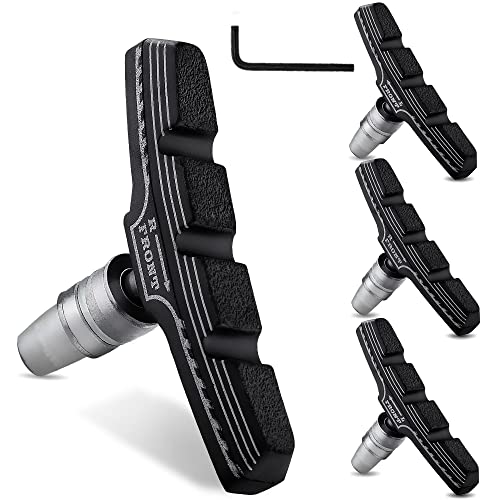
Hapleby 4PCS Premium Bike Brake Pads V-Brake Kit

LOOEEL 1 Pair Bike Mechanical Disc Brake Calipers

SHIMANO Deore Br-M6100 Disc Brake Resin Rear

Gekors Ceramic Copper-Free Bicycle Disc Brake Pads

Z00M HB876 4-Pistons Hydraulic Disc Brake Set

MT200 MTB Hydraulic Disc Brakes Set 2 Piston

TOBWOLF MTB Hydraulic Disc Brake Kit Dual Piston
Inside Each Recommended Option
For V-brake bikes, these Hapleby pads offer a straightforward refresh without changing the whole braking system. The compound blends synthetic fiber with nitrile rubber, a mix aimed at longer wear than plain rubber blocks. That matters on commuter bikes that see frequent stops in wet streets.
Three wear lines molded into the pad give a visual cue for replacement stages. The arched shape and drainage grooves help clear water and grit from the rim surface. In our view, that design suits riders who want a simple pad swap and a hex wrench is included in the kit.
Key Advantages
- Four pads cover both wheels in one kit
- Wear lines show replacement timing clearly
- Arched profile helps shed water and debris
- Fits V-brake systems from SRAM, Shimano, and Tektro
- Sized for bikes above 20 inches
Things To Consider
- V-brake only, so disc brake bikes need a different pad shape
- Rim condition affects braking feel, so check for deep grooves before fitting
Mechanical disc calipers keep cable actuation, which appeals to riders who prefer simple maintenance. This LOOEEL pair uses aluminum alloy bodies for a compact, lightweight build. Unlike the Hapleby V-brake pads above, this setup works on disc rotors rather than rims.
Mounting covers both 51mm IS and 74mm post formats, so frame compatibility is easier to confirm. Fine adjustment screws help set pad gap, and a long opening speeds pad changes. For most trail riders, cable feel will be firmer than hydraulic, and that trade-off is the point here.
Practical Advantages
- Front and rear calipers in one package
- Aluminum body resists corrosion and sheds heat
- Mounting bolts included for installation
- Pad gap adjustment built into the caliper
- Works with 160mm rotors front and rear
Worth Noting
- Cable actuation needs more hand force than hydraulic systems
- Rotor size must match the caliper offset before ordering
- Pad replacement access depends on frame clearance
Who It Suits Best
Riders with existing mechanical disc setups who want a matched front and rear caliper replacement.
Where Another Pick Suits Better
SHIMANO Deore Br-M6100 Disc Brake Resin Rear suits riders seeking hydraulic feel and stronger modulation.
Rear hydraulic braking with a two-piston caliper and resin pads brings a different feel from the mechanical LOOEEL calipers. Servo Wave actuation moves pads to the rotor with less lever travel, leaving more of the lever stroke for modulation. That helps on technical descents where speed control matters more than raw bite.
I-SPEC EV lever mounting braces the lever against the handlebar for stability under heavy braking. ICE Technologies cooling in the caliper helps manage heat on long braking sections. You get caliper, lever, pre-bled hose, and mounting parts in the package, which simplifies a rear-only upgrade.
Features That Help
- Servo Wave lever action improves modulation range
- I-SPEC EV mounting supports shift lever pairing
- Two-piston caliper balances power and control
- ICE Technologies design aids heat dissipation
- Pre-bled hose reduces setup work
Trade Offs
- Rear-only kit, so a front brake needs a separate purchase
- Post mount requirement limits frame compatibility
- Resin pads wear faster than metal compounds in abrasive conditions
Pad-only upgrades make sense when calipers still work well. These Gekors pads use ceramicized process polymers on a steel back plate, with a metal-free formula. The aim is lower dust, reduced noise, and steadier performance across wet and dry conditions.
Compatibility covers a long list of Avid Elixir, SRAM Level, Trickstuff, and several e-bike models. That breadth helps, yet exact caliper shape still needs a check before fitting. One thing worth considering is bedding-in time, since ceramic compounds often need several stops to reach consistent bite.
Points In Its Favor
- Ceramicized polymer compound for quiet braking
- Steel back plate supports heat resistance
- Metal-free formula reduces dust output
- Suited to heavier e-bike braking loads
Minor Gripes
- Pad shape must match the caliper exactly
- One pair per package, so multiple calipers need extra packs
Four pistons change the equation for heavier bikes and steep terrain. This HB876 rear set spreads force across both sides of the rotor, which can feel more even than a two-piston design like the SHIMANO Deore above. Aluminum alloy levers keep the controls light while hydraulic pressure does the heavy lifting.
The rear hose measures 1450mm, so frame size and cable routing need a careful check. Resin-metal composite pads aim for quiet operation without rotor damage. Assuming a standard post-mount frame, alignment and bleeding steps remain part of installation.
Standout Benefits
- Four-piston caliper increases braking force
- Hydraulic actuation reduces lever effort
- Aluminum alloy levers suit mountain and fat bikes
- Integrated cylinder design helps prevent leaks
- Resin-metal pads support quiet braking
- Rear hose length suits larger frames
Room For Improvement
- Rear-only configuration limits full-bike upgrades
- Hose length must be confirmed against frame routing
- Hydraulic bleeding may be needed after installation
A front and rear pair in one box simplifies a full upgrade from mechanical discs. This MT200 set uses dual-piston hydraulic calipers with aluminum alloy levers. Compared with the four-piston HB876, this setup trades maximum force for a lighter, more compact feel.
Front hose runs 800mm and rear hose runs 1450mm, with left front and right rear orientation. Resin-metal composite pads aim for quiet braking without rotor damage. Hose length remains the main fit check, since adapters are not included in the package.
Well-Handled Touches
- Complete front and rear hydraulic set
- Dual-piston calipers reduce lever effort
- Aluminum alloy lever construction
- Instruction manual included for installation
Points To Note
- Adapters not included, so mount compatibility needs checking
- Two-piston design offers less force than four-piston options
Made For
MTB and e-bike riders upgrading both wheels from mechanical to hydraulic braking.
Consider Something Else When
Z00M HB876 4-Pistons Hydraulic Disc Brake Set suits heavier bikes needing stronger four-piston force.
Rotors included in the box make this kit different from the MT200 set, which focuses on calipers and levers alone. Dual-piston calipers pair with 160mm stainless steel six-bolt rotors for a complete front and rear system. Ceramic pads round out the package, aiming for quiet braking and rotor care.
Left front hose measures 85cm and right rear hose measures 150cm, so routing checks matter before purchase. Aluminum alloy construction helps with heat resistance and weather exposure. For most riders, swapping lever sides is possible, though a small oil leak can occur during that process.
The Practical Payoff
- Complete kit includes rotors, calipers, and pads
- Ceramic pads support quiet, consistent braking
- Stainless six-bolt rotors fit standard hubs
- Vent and drill holes help with heat and weight
- Aluminum alloy body resists weather exposure
Softer Spots
- Lever side swapping can cause minor oil leakage
- Hose lengths must match frame routing before ordering
What To Check Before Fitting New Brakes
Brake Type And Mounting
V-brake pads, mechanical calipers, and hydraulic sets use different hardware. Post mount and IS mount frames need matching calipers, and rotor size must align with caliper offset. A quick mount check prevents returns and wasted installation time.
Hose Length And Routing
Hydraulic hoses vary by frame size, and internal routing adds length demands. Front hoses near 800mm and rear hoses near 1450mm suit many bikes, yet larger frames may need more. Measure the existing routing path before ordering a replacement set.
Pad Compound For Conditions
Resin pads offer strong bite and quiet operation, while ceramic and resin-metal compounds aim for longer wear and heat resistance. Wet, muddy trails favor compounds that clear debris well. E-bikes and heavier riders often benefit from pads built for higher braking loads.
Lever Feel And Control
Servo Wave, hydraulic pressure, and cable actuation each change lever travel and modulation. Riders who want fine speed control on technical descents should prioritize lever design. Those focused on low hand effort may prefer hydraulic systems over mechanical calipers.
Key Considerations Across These Picks
Common Shopping Slip Ups
Pad shape mismatches cause the most avoidable problems. Check caliper model and pad profile before ordering. Hose length and rotor size deserve the same attention, since both affect installation directly.
What The Higher Tier Buys
Higher tier brakes add lever refinement, cooling features, and stronger piston layouts. Those changes improve control on long descents and heavy bikes. The upgrade pays off for frequent trail riding, less so for short commutes.
Frequently Asked Questions
Are V-brake pads suitable for enduro riding?
V-brake pads fit older rim brake bikes and work for moderate terrain. Disc systems offer stronger control on steep, wet descents.
What piston count suits a heavier e-bike?
Four-piston calipers spread force more evenly for heavier loads. Two-piston systems remain lighter and suit standard mountain bikes well.
Do hydraulic brakes need bleeding after installation?
Air in the line can soften lever feel, so bleeding restores firmness. Pre-bled hoses reduce that step, yet alignment still matters.
How do ceramic pads compare with resin pads?
Ceramic compounds aim for quiet operation and longer wear. Resin pads often provide stronger initial bite in dry conditions.
What should be checked before changing brake pads?
Caliper shape and pad profile must match exactly. Rotor condition and mounting hardware also deserve a quick inspection.
Final Thoughts
Match the brake type to the bike first, then focus on mount, rotor size, and hose length. For V-brake bikes, the Hapleby kit handles routine replacement. For disc upgrades, hydraulic sets from Shimano, MT200, or TOBWOLF bring stronger control for steep trails.