
A first electric mountain bike should feel manageable on a fire road, steady on a climb, and simple to charge at home. You want enough torque for hills without a frame that feels bulky on pavement. The seven options below differ in tire width, gear range, motor output, and battery size, so matching those details to your routes matters more than chasing a headline number. Fat tires suit loose surfaces, while 26-inch and 27.5-inch wheels suit smoother trails and commuting.
The Main Contenders

ESKUTE V300 Electric Bike 48V 20.8Ah Fat Tire 500W

Sixblues EB3S Electric Bike 750W 26 Inch Tire

Funhang EB-M1 Electric Bike 1000W Peak 26 Inch
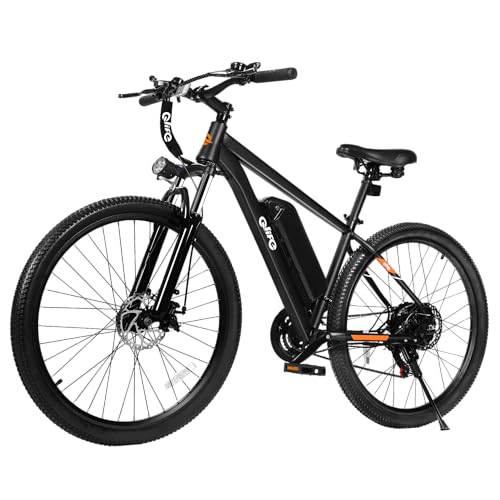
Qlife Racer Electric Bike 21-Speed Peak 1000W

M200 Electric Bike 21-Speed 27.5 Inch 1200W Peak

FLIWIN Electric Bike 1500W Peak 20 Inch Fat Tire
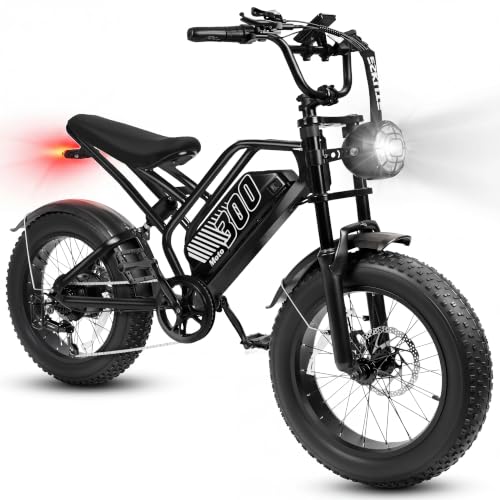
ESKUTE V300 Electric Bike 1500W 20 Inch Fat Tire
A Closer Look At Each Pick
Wide 20 by 4.0 inch tires and full suspension give this V300 a planted feel on gravel, sand, and muddy paths. A 500W motor with 90N·m torque, meaning rotational force for climbing, reaches 19MPH and handles grades up to 35 degrees in the listed data. That mix suits new riders who plan mixed pavement and trail use.
You get five riding modes, including pedal assist and cruise, plus a seven-speed drivetrain for manual control. The 48V 20.8Ah battery carries up to 85 miles with pedal assist, and charging can happen on the bike or with the battery removed. For most gravel paths, the hydraulic rear brake and integrated lights add practical confidence.
Noteworthy Benefits
- Large 20.8Ah battery supports long commutes between charges
- Fat tires spread load across soft, uneven surfaces
- Color LCD shows speed, battery, mode, and distance
- Seven speeds help match cadence on hills
Things To Consider
- Fat-tire width needs wider storage and transport space
- 19MPH top speed feels modest beside higher-output picks
Unlike the fat-tire V300, the EB3S uses 26-inch puncture-resistant tires and a front fork suspension, a setup that rolls more naturally on pavement. A 750W brushless motor, meaning a motor without carbon brushes for lower maintenance, delivers 80N·m torque and a 20MPH top speed. That profile fits city routes and smoother trails.
Your commute gets simpler with a 15Ah removable battery rated up to 80 miles with pedal assist and a 5 to 6 hour charge time. A USB port on the LCD display can charge a phone during longer trips. You also get Shimano seven-speed shifting, dual lights, and front and rear mechanical disc brakes.
What Helps Most
- Removable battery allows indoor charging away from the bike
- USB charging port supports phone use on long rides
- 90% pre-assembled design shortens setup time
- Walk assist mode helps while pushing uphill
Worth Noting
- Narrower tires offer less grip in deep sand or snow
- Front suspension only, unlike full-suspension options
- Rider height range is listed as 5’2″ to 6’2″
Who It Suits Best
Commuters and beginners riding mostly pavement and light trails benefit most from the removable battery and straightforward controls.
Where Another Pick Suits Better
ESKUTE V300 Electric Bike 1500W 20 Inch Fat Tire suits riders who need fat-tire traction on sand, snow, or mud.
Fenders set the EB-M1 apart from the EB3S, adding spray protection for wet commutes and muddy trail sections. Peak motor output reaches 1000W from a 500W base rating, while the 48V 374.4Wh battery covers 40 to 50 miles with pedal assist. Front suspension and dual disc brakes round out the trail setup.
Five modes and five pedal-assist levels, where PAS means motor help tied to pedaling effort, give fine control over speed. An LCD display shows battery, speed, mileage, and assist level, and the bike arrives 85% pre-assembled. On longer commutes, the fenders and horn are small details that add everyday ease.
Notable Gains
- Fenders reduce mud and water spray on wet rides
- Five assist levels allow gradual speed control
- Removable battery charges in 4 to 5 hours
- LED headlight, horn, and reflectors improve visibility
- Booster mode helps push the bike when needed
Trade Offs
- Pedal-assist range drops to 25 to 30 miles on throttle alone
- Listed rider range is 5’3″ to 6’1″, up to 300 lbs
At 48.1 pounds, the Racer is lighter than the fat-tire models and easier to move up stairs or into a vehicle. A 21-speed gearset gives a wider range than the seven-speed bikes, which helps on steep climbs and fast descents. Peak output reaches 1000W with 26 by 2.1 inch tires.
The 48V 7.8Ah battery provides up to 40 miles with pedal assist or 25 miles on throttle, charging in about 4 hours. Dual front suspension, an LCD screen, front light, and rear reflector support trail comfort and visibility. For riders who value pedaling control, the extra gears are the main draw.
Everyday Advantages
- 21 speeds provide precise control on hills
- 48.1-pound weight eases carrying and storage
- Removable battery charges in about 4 hours
- Walking-assist mode helps on steep sections
Minor Gripes
- 375Wh battery gives shorter range than larger packs
- Narrower tires limit deep sand and snow use
- More gears mean more adjustment to learn
Step up to 27.5 inch wheels and the M200 rolls over trail obstacles more smoothly than 26-inch models. Peak output reaches 1200W with a 28MPH top speed, and four modes cover manual, pedal assist, throttle, and walk use. Dual front suspension and a lightweight frame support stable handling.
You get a 48V 10.4Ah removable battery rated up to 55 miles with pedal assist, with a 4-hour charge time. A 21-speed gearset, LCD display, front headlight, and rear reflector cover control and visibility. On longer rides, the larger wheels and gear range make distance feel easier.
Positive Takeaways
- 27.5 inch wheels smooth rough trail sections
- 21 speeds handle climbs and descents precisely
- 55-mile pedal-assist range supports long outings
- Removable battery charges in 4 hours
- Dual front suspension improves bump control
Room For Improvement
- Higher top speed needs careful braking habits
- Larger wheels need more storage length
Made For
Beginners planning longer trail rides and hill routes benefit most from the 27.5 inch wheels and wide gear range.
Consider Something Else When
Qlife Racer Electric Bike 21-Speed Peak 1000W suits riders who prioritize a lighter frame for stairs and compact storage.
Peak output reaches 1500W with a top speed up to 30MPH, though a 20MPH limiter is fitted for safety and can be changed following the video guide on the product page. The 20-inch fat tire and front suspension fork target steep hills and off-road trails. Dual mechanical disc brakes front and rear support stopping on varied surfaces.
A 48V 16Ah removable battery covers up to 40 miles with pedal assist and charges in 5 hours. Seven speeds, multiple modes, an LCD display, LED headlight, and brake-activated taillight cover control and night visibility. For most off-road routes, the power margin is the clear attraction.
Benefits That Matter
- 1500W peak output helps on steep grades
- Dual disc brakes support controlled stopping
- Removable 16Ah battery simplifies indoor charging
- Brake-activated taillight improves night visibility
Points To Note
- 40-mile pedal-assist range is shorter than larger batteries
- Fat-tire frame needs generous storage space
- Speed limiter setup requires following the guide carefully
Compared with the 500W V300 earlier, this version pairs 1500W peak output with 30+MPH speed and 90N·m torque. Full suspension and 20 by 4.0 inch tires handle beach, snow, gravel, and mountain trails. Five modes and a seven-speed drivetrain keep control options broad.
You get a 48V 20.8Ah removable battery rated up to 85 miles with pedal assist, plus a hydraulic rear brake and integrated lighting. A full-color LCD shows speed, battery, mode, and distance, and NFC start adds keyless convenience. On soft terrain, the tire width and suspension work together for traction.
Where It Helps
- 1500W peak output supports strong acceleration
- 20.8Ah battery supports long pedal-assist rides
- Full suspension absorbs bumps on rough ground
- Hydraulic rear brake adds stopping responsiveness
- Integrated lighting supports evening rides
Softer Spots
- Higher speed and power demand careful handling
- Fat tires increase storage and carrying effort
What Matters Most Before Choosing Electric Mountain Bike For Beginners
Battery Size and Charging
Battery capacity, measured in amp-hours or watt-hours, shapes range and charge time. A larger pack suits longer commutes, while a removable design suits apartment charging. Check whether charging happens on the bike or with the battery removed, since that affects daily routine.
Motor Output and Gears
Peak watts describe short bursts of power, while torque describes hill-climbing force. More gears help maintain cadence on steep grades, especially with 21-speed systems. Riders on flatter routes need less gear range than riders tackling climbs.
Tires, Suspension, and Fit
Fat tires improve grip on sand and snow, while narrower tires roll faster on pavement. Full suspension absorbs more bumps than a front fork alone. Height range and weight also matter, since a frame that fits well feels safer on descents.
Key Considerations Across These Picks
Common Shopping Slip Ups
Chasing peak watts alone leads to mismatched range and weight. Check pedal-assist range, tire type, and storage size against actual routes before selecting a model.
What The Higher Tier Buys
Higher-tier models add larger batteries, wider gear ranges, and stronger brakes. The upgrade pays off for longer rides, steep terrain, and frequent trail use.
Frequently Asked Questions
What range should a beginner expect?
Pedal-assist range in this group spans roughly 40 to 85 miles depending on battery size. Throttle-only range is lower, so match the pack to typical ride length.
Are fat tires better for beginners?
Fat tires help on sand, snow, and loose gravel with better traction. Narrower tires suit pavement and smoother trails with less rolling resistance.
How long does charging take?
Listed charge times range from about 4 hours to 6 hours. Removable batteries allow charging away from the bike at home or work.
Do 21 speeds matter?
Twenty-one speeds give finer control on climbs and descents. Seven speeds suit flatter routes and simpler riding.
What fit details should be checked?
Height range and weight limit affect comfort and handling. Confirm those details against your measurements before ordering.
Final Verdict
For mixed trails and commuting, the ESKUTE V300 500W model balances battery size and fat-tire stability. For longer rides, the M200 offers larger wheels and more gears. You can narrow the choice by matching tire type and battery range to your usual routes.