A front wheel rising under power feels simple in a video, then turns into a balance problem on loose dirt. Torque, weight placement, and braking decide whether practice stays controlled or becomes a scramble. These picks focus on mid-drive power, wheelie-specific aids, and suspension that helps a rider learn in stages.
An Overview Of The Picks

Tasaca T500s Electric Dirt Bike 5500W Gloss White
NEXVEY FLASH PRO Electric Dirt Bike 5000W Wheelie Assist

NEXVEY Flash PRO 5000W Electric Dirt Bike 55MPH

NEXVEY Electric Dirt Bike 4000W Wheelie Assist 45MPH

Droyd Ravage Electric Trail Bike 3000W Wheelie Bar

NEXVEY FLASH Electric Dirt Bike 4000W Wheelie Assist
ESKUTE Electric Dirt Bike 3500W Peak 48V 23Ah
More On The Choices That Made The List
The Tasaca T500s suits riders who want strong lift from a mid-drive motor rather than electronic guidance. A 5500W motor with 276Nm peak torque and five gears puts the power delivery in the throttle hand, with top speed listed at 55mph. That setup rewards experienced riders on open trails, and your timing on the throttle matters more here than on assist-equipped models.
Full suspension pairs hydraulic front forks with rear air-hydraulic shocks, while 14-inch front and 12-inch rear fat tires handle gravel, mud, and brush. The 52V 30Ah removable battery holds 1560Wh, and the 139-pound weight plus 330-pound rider limit shape storage and lifting. In a garage with limited space, that weight is a practical consideration before assembly.
Why It Works Well
- 5500W mid-drive motor delivers strong torque for steep climbs
- Removable 1560Wh battery supports longer off-road sessions
- Full suspension softens rough trail impacts
- Fat all-terrain tires add grip on mud and sand
- Five gears allow gradual power progression
Things To Consider
- 139-pound weight makes lifting and loading harder
- Gear 5 is not recommended for beginners
- Assembly requires a careful check of brakes and wheels
The NEXVEY FLASH PRO takes a different path from the Tasaca T500s, with electronics doing part of the work. Fourth gear activates a wheelie assist system that uses a gyro sensor, a device that tracks pitch angle, and cuts power at 30 degrees. That cutoff gives beginners a defined ceiling during practice on a flat dirt area.
Power comes from a 5000W peak mid-drive motor rated at 220Nm, with top speed at 55mph and a 60V 27Ah removable battery listed for 50 miles. Inverted front forks and a central spring shock work with 17-inch front and 14-inch rear tires. For most backyards, the taller front wheel gives a more conventional dirt bike stance than the Tasaca’s fat-tire setup.
Points In Its Favor
- Wheelie assist cuts power at 30 degrees to limit over-rotation
- Removable 60V battery allows indoor charging
- Inverted forks and central shock handle rough terrain
- 17/14-inch tires balance steering and rear traction
Worth Noting
- Off-road use only, not for public roads
- High top speed demands protective gear and supervision for minors
This listing covers the same NEXVEY Flash PRO platform as the previous pick, with a 55-mile range figure instead of 50 miles. The core hardware stays familiar: a 5000W peak mid-drive motor, 220Nm torque, and wheelie assist in fourth gear with a 30-degree cutoff. Shoppers comparing listings should focus on the stated range and availability details on the product page.
The 60V 27Ah battery is removable for indoor charging, and the bike uses inverted front forks, a central spring shock, and 17/14-inch all-terrain tires. At 123.2 pounds, it is lighter than the Tasaca T500s at 139 pounds, which matters for loading into a truck bed. One thing worth considering is that range figures vary with rider weight, terrain, and throttle use.
The Upside
- Same wheelie assist system with gyro sensing
- 55-mile range listing for longer trail days
- Removable battery for flexible charging
- Lighter than the Tasaca T500s for transport
Trade Offs
- Off-road only use with protective gear required
- Real-world range differs from ideal-condition figures
- High speed requires open, private terrain
Who It Suits Best
Riders who want the Flash PRO platform with a longer stated range for extended trail sessions.
Where Another Pick Suits Better
The Droyd Ravage Electric Trail Bike 3000W Wheelie Bar suits beginners who prefer a physical wheelie bar over electronic assist.
This NEXVEY model scales the wheelie concept down for younger riders. A 4000W peak motor with 160Nm torque reaches 45mph, and the wheelie assist system allows angle adjustment from 20 to 60 degrees. That range lets a rider start with a modest lift and increase the setting as balance improves.
At 112 pounds, the bike is notably lighter than the Flash PRO listings, and a low center of gravity helps riders around 5 feet tall plant their feet. Three speed levels at 15, 25, and 45mph sit alongside a fourth wheelie mode, with a 48V 27Ah battery listed for 35 miles. You can practice at 15mph before moving to higher settings.
Real Benefits
- Adjustable 20 to 60 degree wheelie angle
- 112-pound weight eases lifting and reversing
- Three beginner speed levels plus wheelie mode
- Dual suspension and disc brakes for trail control
- Low center of gravity aids flat-foot parking
Small Caveats
- 35-mile range is shorter than Flash PRO listings
- Off-road only, with adult supervision for minors
The Droyd Ravage replaces electronics with a physical aid, a removable wheelie bar mounted at the rear. That bar gives a mechanical stop during practice, which feels different from the NEXVEY gyro cutoff and may suit riders who trust hardware over software. Its pit bike styling and fat tubeless tires give it a distinct look from the larger dirt bike frames.
Three speeds at 15, 22, and 35mph pair with a 3000W motor, hydraulic disc brakes, and an LFP battery, a lithium iron phosphate chemistry noted for durability, listed for 50 miles. The 220-pound rider capacity and U.S.-based support team matter for households with mixed ages. Depending on your terrain, the lower top speed may feel limiting after basic skills develop.
What Works In Its Favor
- Removable wheelie bar provides a physical practice aid
- Three speeds support gradual skill building
- Fat tubeless tires improve traction and stability
- LFP battery listed for 50-mile range
- Hydraulic disc brakes for responsive stopping
Points To Note
- 35mph top speed is lower than NEXVEY models
- Wheelie bar must be removed for regular trail riding
This NEXVEY FLASH sits between the lighter 4000W model and the Flash PRO in capability. A 4000W peak motor reaches 35mph in this listing, with a 48V battery listed for 35 miles and four modes including Surge Power. Wheelie assist uses gyro sensing to manage pitch, though angle adjustment details differ from the 20 to 60 degree system on the previous NEXVEY pick.
Dual suspension, dual disc brakes, and high-grip pneumatic tires cover dirt, gravel, and grass, with a 265-pound load capacity. Your storage space matters here, since the bike needs room for charging and a pre-ride check of assembly. In our view, this version suits riders who want assist without the Flash PRO top speed.
Benefits That Matter
- Four modes including Surge Power for rough terrain
- Gyro-based wheelie assist for guided practice
- Dual suspension and dual disc brakes
- 265-pound load capacity for larger riders
Softer Spots
- 35mph top speed limits high-speed trail use
- 35-mile range is shorter than Flash PRO listings
- Off-road only with protective gear required
Made For
Teen and adult riders who want moderate speed with guided wheelie practice on mixed terrain.
Consider Something Else When
The NEXVEY Electric Dirt Bike 4000W Wheelie Assist 45MPH suits riders who want adjustable wheelie angles up to 60 degrees.
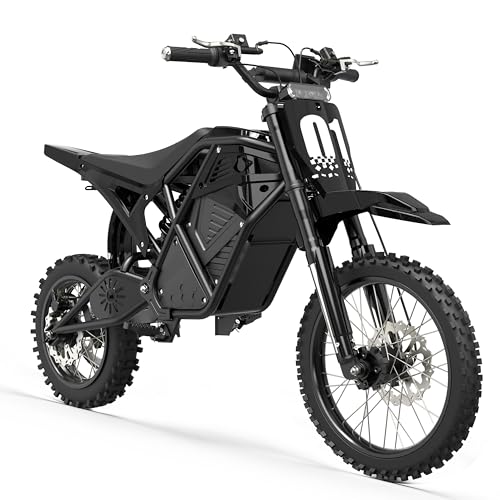
The ESKUTE takes a suspension-focused approach rather than electronic wheelie help. A 3500W peak mid-drive motor with 220Nm torque reaches 38 to 46mph, and hydraulic nitrogen dual shocks aim to keep damping consistent during long, rough rides. That design matters on repeated jumps and washboard trails where standard shocks can fade.
A 48V 23Ah battery is listed for 53 miles with a six-hour full charge, and dual hydraulic disc brakes work with a steel frame rated to 265 pounds. Unlike the NEXVEY models, this bike relies on rider skill for wheelies, so practice should start on smooth, open ground with protective gear. For most riders, that means slower progression and more focus on throttle control.
The Helpful Details
- Nitrogen dual shocks maintain damping under heat
- 53-mile range with six-hour charging time
- Dual hydraulic disc brakes for mud and sand
- Steel frame supports up to 265 pounds
Areas To Watch
- No wheelie assist system for guided practice
- 46mph top speed requires experienced throttle control
What To Check Before Choosing E Bikes For Wheelies
Motor Placement and Torque
Mid-drive motors place weight near the center, which changes how the front wheel lifts and how steering feels. Peak torque figures show potential pull, while rated power shows sustained output during long climbs. A rider practicing on hills should weigh torque and heat management together.
Wheelie Aid Type
Gyro-based assist cuts power at a set angle, while a wheelie bar provides a physical stop. Each approach changes the learning curve and the feel during practice. Beginners often progress faster with a defined limit, while experienced riders may prefer manual control.
Battery, Weight, and Terrain Fit
Removable batteries simplify indoor charging, and listed range helps plan trail length. Weight affects lifting, loading, and storage, especially for riders under 5 feet tall. Tire size and suspension travel should match the actual surface, from grass to gravel to mud.
Practical Checks Before You Commit
Common Shopping Slip Ups
Shoppers sometimes chase top speed and overlook weight, range, and aid type. A 55mph bike with no assist can be harder to learn on than a 35mph model with a wheelie bar. Checking rider height limits, load capacity, and off-road restrictions before ordering prevents a poor fit.
What The Higher Tier Buys
Higher-tier models often add larger batteries, inverted forks, and thermal management for sustained power. Those features pay off on long trail days and steep climbs, not on short backyard sessions. Paying more makes sense when range and repeated torque matter more than a lower entry point.
Frequently Asked Questions
What makes a bike suitable for wheelie practice?
Torque, weight placement, and a defined aid help control front-wheel lift. Gyro assist or a wheelie bar gives beginners a limit while skills develop.
Are these bikes for public roads?
Most listings describe off-road use only and not registration for public roads. Local age, license, and supervision rules should be checked before riding.
How does wheelie assist work?
A gyro sensor tracks pitch angle and the system manages torque or cuts power at a set limit. The Flash PRO cuts power at 30 degrees, while another NEXVEY model allows 20 to 60 degrees.
What battery size matters for trail riding?
Battery capacity in watt-hours and listed range shape how long a session can run. Removable designs allow charging indoors or on the bike.
What safety gear should riders use?
Helmets, knee pads, and elbow pads are recommended in the listings, especially for minors. A pre-ride check of brakes, wheels, and assembly is also described.
Closing Remarks
For guided practice, the NEXVEY FLASH PRO with its 30-degree cutoff offers a clear starting point. For physical support, the Droyd Ravage wheelie bar gives a different kind of confidence. Match the aid type to skill level, then check weight and range for the terrain ahead.