
A steep fire road, a rooty singletrack loop, and a weekday ride across town all ask different things from a bike. Electric assist changes the calculation by adding motor support on climbs, while frame material, suspension travel, gearing, and battery size decide how that support feels in practice. This roundup compares six mountain-focused options, from a carbon full-suspension build without a motor to high-output commuter e-MTBs with larger batteries, so the fit for a particular trail or route stays clear.
The Essentials At A Glance

SAVADECK Carbon Fiber Soft Tail Mountain Bike 27.5 Gray

Schwinn High Timber Electric Mountain Bike 27.5 Black

ESKUTE M200F Electric Bike 27.5 inch Mountain E-Bike
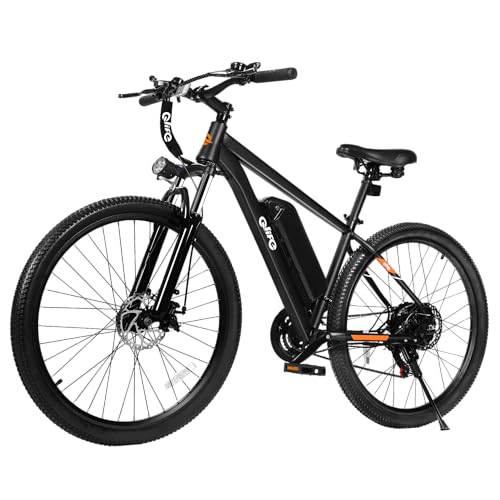
Qlife Racer Electric Bike 21-Speed 26 Inch

Canyon Spectral 125 AL 5

M200 Electric Bike 21-Speed 27.5 Mountain E-Bike
The Details Behind The Selections
Technical trails reward a light chassis and controlled suspension, and this carbon build targets that brief directly. Riders who want a traditional mountain bike, rather than motor assistance, get a dual-link rear system paired with a front fork for rough terrain. The 27.5-inch wheels and 19-inch frame size suit a specific fit range, so you need to check sizing against height before anything else.
Shimano DEORE M6100 12-speed shifting, meaning a wide-range cassette drivetrain for climbing and descending, pairs with four-piston hydraulic disc brakes. A thru-axle, a hollow axle that clamps the wheel for stiffness, helps keep the front wheel aligned under braking. Continental 2.4-inch tires bring multi-directional tread for mud and gravel, with room noted for 2.6-inch upgrades, giving you flexibility on tire choice.
Notable Upsides
- Carbon frame with reinforced rear triangle for technical trails
- DNM air shock with three-stage lockout and rebound adjustment
- Internal cable routing shields cables from mud and debris
- Four-piston brakes support longer descents with heat control
- Wide 12-speed range for steep climbs and flat sections
Things To Consider
- No electric motor, so climbs rely entirely on pedaling effort
- Fixed 27.5 by 19 sizing limits fit options for taller riders
First electric trail rides often come down to simple controls and manageable power, and this Schwinn answers with a 350W hub motor. Pedal-assist, meaning motor support that adds to pedaling effort, offers three levels on a handlebar display, while a throttle gives instant acceleration. Unlike the SAVADECK carbon build, this aluminum frame keeps the entry point approachable for casual dirt paths.
A removable battery rated for up to 40 miles per charge recharges in about 5 hours from a standard outlet, and you can charge it off the bike for storage indoors. Front suspension and knobby tires smooth bumps on gravel and light trails. Disc brakes and a 7-speed shifter keep braking and gear changes straightforward on mixed pavement and dirt.
A Few Highlights
- 350W motor supports speeds up to 20 mph on hills
- Throttle plus three pedal-assist levels for flexible control
- Removable battery with up to 40 miles per charge
- Aluminum frame sized for riders 5’2″ to 5’10”
Worth Noting
- Front suspension only, so rough descents feel harsher than full suspension
- 300-pound maximum weight recommendation limits heavier riders
- 7 speeds offer less range than 21-speed or 12-speed drivetrains
Who It Suits Best
New riders exploring gravel paths and light dirt trails who want simple controls and moderate assist.
Where Another Pick Suits Better
ESKUTE M200F Electric Bike suits riders who need longer range and full suspension for rougher routes.
Long rides and steep hills push battery and motor limits, and this ESKUTE model leans into both with a 1500W peak brushless motor. Peak wattage describes short-term maximum output, which helps on climbs and quick acceleration. Front and rear suspension work together to soften uneven pavement, gravel, and trail chatter.
A 48V 20.8Ah removable battery carries an up to 80-mile rating in pedal-assist mode, and you can remove it for charging at a desk or in an apartment. A central display shows speed, battery level, and trip distance, while NFC card unlocking, a tap-to-start system, removes key handling. Adjustable handlebars and a performance saddle support a step-over riding position.
Advantages To Know
- 1500W peak motor reaches speeds up to 31+ mph
- 20.8Ah battery rated up to 80 miles in assist mode
- Full suspension front and rear for uneven surfaces
- Bottom-mounted battery placement aids weight distribution
- 90% pre-assembled delivery with included tools
Trade Offs
- High output and large battery add heft for carrying upstairs
- 80-mile rating applies in pedal-assist mode, not throttle-only riding
Mixed city and trail use calls for portability plus gearing range, and this Qlife Racer weighs 48.1 pounds with a 21-speed system. Four riding modes cover manual, pedal-assist, pure electric, and walking-assist, which helps on hills and while pushing the bike. A peak 1000W brushless motor provides more hill support than the Schwinn High Timber’s 350W setup, which you will notice on steep grades.
The 48V 7.8Ah battery, listed as 375Wh, is removable with a key lock and charges in about 4 hours. Range reaches up to 40 miles in pedal-assist or 25 miles on throttle alone, and an LCD screen shows speed, battery, and assist level. Dual front suspension, a front light, and a rear reflector add comfort and visibility for daily routes, so you can ride after dark with more confidence.
Practical Advantages
- 21-speed gearing for climbs, descents, and cruising
- Walking-assist mode for steep or difficult sections
- Removable battery charges in about 4 hours
- 26 by 2.1-inch tires suit mixed surfaces
Minor Gripes
- Throttle-only range drops to 25 miles compared with assist mode
- Front-only suspension leaves rear bumps less damped than full suspension
- Key-locked battery needs the key kept separate for charging indoors
Short-travel trail bikes trade long suspension travel for quicker pedaling and sharper handling, and this Canyon follows that formula. An aluminum frame uses progressive geometry, meaning a modern shape tuned for stability at speed. RockShox suspension provides 140mm at the front and 125mm at the rear, a moderate amount that suits technical descents without feeling sluggish on climbs, and you get quicker pedaling between features.
Shimano DEORE M6100 12-speed shifting matches the SAVADECK build on gearing, while tubeless-ready wheels, DEORE brakes, and a dropper seatpost, a seatpost that lowers at the push of a lever, complete the trail setup. For most riders, that component mix signals a bike built for aggressive trail riding rather than relaxed cruising, and you should expect a more focused trail position.
Useful Touches
- 140mm front and 125mm rear RockShox travel
- 12-speed DEORE drivetrain with wide gear range
- Dropper seatpost for steep descents
- Tubeless-ready wheels for trail setup options
- Lightweight aluminum chassis with progressive geometry
Room For Improvement
- No electric assist, so long climbs demand full pedaling effort
- Shorter travel than enduro builds limits very rough descent comfort
Made For
Experienced trail riders who prefer pedal power and agile handling on technical terrain.
Consider Something Else When
M200 Electric Bike suits riders who want motor help on long climbs and daily commutes.
Daily commuting plus weekend trail detours need a balance of speed, range, and simple starting, and this M200 balances those needs. A peak 1200W brushless motor reaches up to 28 mph, sitting between the Qlife Racer at 1000W and the ESKUTE M200F at 1500W. Four modes include manual, pedal-assist, throttle, and walk mode for different terrain.
The removable 48V 10.4Ah battery offers up to 55 miles in pedal-assist or 40 miles on throttle, and you can charge it in about 4 hours. Dual front suspension, 27.5 by 2.1-inch tires, a front headlight, and a rear reflector support mixed routes. NFC unlocking lets the bike start with a tap, and delivery comes 90% pre-assembled with tools included.
Everyday Wins
- 1200W peak motor with speeds up to 28 mph
- 21-speed gearset for city streets and mountain trails
- NFC tap-to-start without a password or key
- Removable battery charges in about 4 hours
- Headlight, rear reflector, and LCD display included
Points To Note
- Range falls from 55 miles in assist mode to 40 miles on throttle
- Front suspension only, unlike the full suspension on ESKUTE M200F
What Matters Most Before Choosing E Bike Mtb
Motor Power and Assist Modes
Peak wattage affects hill climbing and acceleration, while rated wattage shapes sustained output. Match the motor to the steepest regular route, and check whether throttle, pedal-assist, and walk modes are included. You benefit from modes that match daily terrain rather than maximum numbers alone.
Battery Size and Charging
Battery capacity, measured in watt-hours, drives range, and assist level changes that distance sharply. A removable battery eases charging in an apartment and simplifies storage. Check charge time against your weekly schedule, especially for longer commutes.
Frame Fit and Suspension
Wheel size, frame size, and rider height range determine comfort and control on technical trails. Full suspension smooths rough descents, while front suspension keeps weight and complexity lower. Measure your inseam and compare it with the stated height range for a safer fit.
Gearing and Brakes for Terrain
A wide gear range helps on steep climbs without spinning out on descents, and hydraulic disc brakes manage heat on long downhill sections. Your route profile should guide the choice between 7-speed simplicity and 12-speed or 21-speed range.
Key Considerations Across These Picks
Common Shopping Slip Ups
Range ratings often assume pedal-assist on the lowest level, so throttle-only distance runs shorter. Sizing gets overlooked when a frame lists only one size, and storage space for a full-suspension bike gets underestimated. Checking those details before ordering avoids most surprises.
Where The Extra Money Goes
Higher-tier builds use carbon frames, wider-range drivetrains, and larger batteries, each adding cost through materials and components. Those upgrades pay off on technical trails and long rides, while simpler routes gain less from them. Matching the tier to terrain keeps spending focused.
Frequently Asked Questions
What range should be expected from these e-MTBs?
Range varies by assist level, rider weight, and terrain, with listed figures based on pedal-assist. Throttle-only riding reduces distance, so plan routes with that lower figure in mind.
Does full suspension matter for trail riding?
Full suspension absorbs bumps at both wheels and improves control on rough descents. Front-only suspension suits smoother trails and keeps the bike lighter for commuting.
How long does charging take?
Listed charge times range from about 4 hours to about 5 hours for the batteries in this roundup. A removable battery allows charging away from the bike, which helps in apartments.
What wheel size fits most riders?
Wheel size affects rollover and maneuverability, with 27.5-inch and 26-inch options represented here. Frame size and stated rider height range matter more for fit than wheel size alone.
Can these bikes handle both commuting and trails?
Several models combine knobby tires, suspension, and multiple assist modes for mixed use. You get the most versatility from 21-speed gearing paired with a removable battery.
Closing Remarks
For pedal-powered trail focus, the Canyon Spectral 125 AL 5 and SAVADECK carbon build offer distinct handling. For electric help, the Schwinn High Timber suits first rides, while the ESKUTE M200F and M200 cover longer routes. Match motor, battery, and suspension to your typical trail, and your choice becomes clear.