
A downhill run leaves little room for a loose fit or an open face. Chin bars, proper sizing, and airflow matter more on steep, rocky terrain than on a short pavement ride. You need a helmet matched to gravity riding, not a commuter shell with a visor added. Your first check should be head circumference and whether the design covers the chin during a fall.
A Snapshot Of The Selections

Findway Pro Bike Helmet for Adults Adjustable Cycling Helmet

Lixada Full Face Cycling Helmet with Detachable Chin Guard
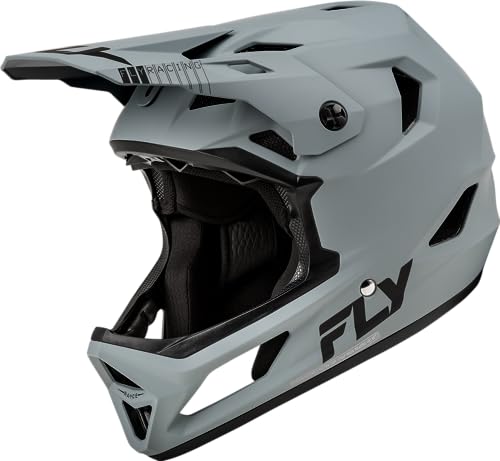
Fly Racing Rayce MTB/BMX Bicycle Helmet (Matte Grey, Large)

Fly Racing Rayce MTB/BMX Bicycle Helmet (Black, Large)
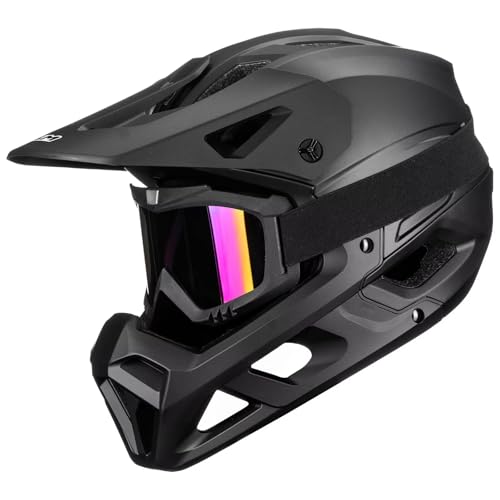
ILM Mountain Bike MTB Full Face Helmet HT58

Findway Pro Bike Helmet for Adults Adjustable Dial
The Details Behind The Selections
This open-face Findway suits commuters and road riders who want a dial-adjust fit without a chin bar. The ABS shell and EPS foam liner form the core impact structure, while 14 vents support airflow on warm rides. For daily commuting, that combination keeps coverage simple and heat manageable.
Fit covers 54 to 61.5 cm, with a rear dial and chin strap for adjustment. A built-in visor shades the eyes, and removable pads can be washed after sweaty rides. The trade-off is clear against the full-face picks later in this list: no chin protection for steep descents.
What Helps Most
- Dial adjustment fine-tunes fit across a wide head range
- Removable, washable pads simplify cleaning between rides
- Built-in visor reduces glare without separate eyewear
- 14 vents help airflow during climbs and city traffic
Things To Consider
- Open-face design leaves chin exposed on downhill terrain
- Measure head circumference carefully before ordering
Findway Pro Bike Helmet for Adults Adjustable Cycling Helmet
Versatility defines this Lixada design, since the chin guard and visor detach to convert between full-face and half-face use. A polycarbonate shell with EPS liner handles impact absorption, and an elongated rear shape extends coverage. You can switch configurations for trail days versus shorter rides, though that flexibility adds parts to manage.
Ventilation comes from 18 vents and breathable inner padding, which helps on climbs before a descent. Fit adjusts from 54 to 61 cm through an internal rotating dial. Ports for glasses and a camera mount add practical touches for recording a run.
Noteworthy Benefits
- Detachable chin guard allows full-face or half-face use
- 18 vents support airflow on warm mountain routes
- Rotating dial adjusts tightness without strap changes
- Glasses and camera ports keep accessories positioned
Worth Noting
- Head shape affects fit beyond a simple circumference measurement
- Detachable parts need secure reattachment before riding
- Chin guard removal changes the protection level for the ride
Who It Suits Best
Riders who switch between trail riding and lighter routes benefit most from the convertible design.
Where Another Pick Suits Better
Fly Racing Rayce MTB/BMX Bicycle Helmet (Matte Grey, Large) suits dedicated downhill riders who want a fixed full-face shell.
Gravity riding sits at the center of this Fly Racing Rayce design, with a poly-alloy shell and EPS liner listed against downhill standards. At roughly 930 g in size M, the shell aims for a lighter feel during repeated bike-park laps. Your neck and shoulders will notice that weight difference across a long day, compared with heavier full-face options.
TFV airflow uses intake and exhaust ports to move warm air out during descents. A removable liner with cheek pads can be washed between sessions, and a D-ring strap gives a secure closure. The adjustable visor uses aluminum hardware for positioning.
A Strong Showing
- Downhill-focused standards support gravity riding use
- Lightweight shell helps during extended laps
- Removable liner and cheek pads wash cleanly
- D-ring closure provides a secure, stable fit
- Adjustable visor adapts to riding position
Trade Offs
- Fixed full-face shape suits gravity riding, not commuting
- D-ring strap takes longer to fasten than a buckle
Color separates this Rayce from the matte grey version, while the underlying build stays the same for downhill and BMX use. The poly-alloy shell and EPS liner carry the same listed standards, and TFV ventilation handles airflow on warm descents. For riders who prefer a black finish, the choice comes down to appearance rather than structure.
Cheek pads and a removable liner support cleaning after muddy runs, and the adjustable visor with aluminum hardware allows quick changes. A D-ring closure keeps the helmet seated through rough sections. That fixed full-face shape makes this a dedicated gravity pick, unlike the convertible Lixada earlier in this list.
Notable Upsides
- Downhill standards support steep terrain riding
- TFV ports help manage heat on long descents
- Washable liner keeps interior fresh between rides
Minor Gripes
- Large size limits fit for smaller head sizes
- Full-face coverage adds warmth compared with open designs
- Black finish shows dust more readily on dry trails
Made For
Gravity riders in large sizes who want the Rayce build in a black finish benefit most.
Look Elsewhere When
ILM Mountain Bike MTB Full Face Helmet HT58 suits riders who want included goggles and a size dial.
New riders get a complete setup here, since the HT58 includes goggles with soft foam padding around the frame. An extended chin bar and adjustable visor support off-road riding, and the EPS shell pairs with an EPP-reinforced chin bar for impact absorption. You get eye protection in the box, which removes a separate purchase for trail days.
Fit uses an adjustable buckle plus a size dial, so fine-tuning happens without rebuilding the strap setup. Multiple vents support airflow during climbs and descents, and the liner can be removed for washing. Sizing runs large, so ordering one size down is recommended for a closer fit.
Notable Gains
- Included goggles protect eyes on dusty trails
- Size dial and buckle allow customized fit
- Removable liner washes clean between rides
- Adjustable visor adapts to changing light
- Multiple vents support airflow on climbs
- EPP chin bar adds impact structure
Points To Note
- Large sizing may require ordering one size down
- Full-face shape adds bulk for short pavement rides
Urban riding and skating shape this second Findway listing, with the same ABS shell and EPS foam core as the first pick. Fourteen vents, washable pads, and a built-in visor keep the design practical for scootering and road biking. Your daily route matters here, since an open-face shell fits pavement use far better than steep descents.
The rear dial and chin strap adjust across 54 to 61.5 cm, and the listed standards include ASTM, CPSC, CE EN1078, and GCC. That range covers many adults, though head shape still affects how the shell sits. Compared with the full-face Fly Racing Rayce, this pick trades chin coverage for lighter everyday wear.
Features That Help
- Rear dial adjusts fit quickly before a ride
- Washable pads refresh after warm weather use
- Built-in visor shades eyes on bright routes
- 14 vents support airflow during longer rides
Small Caveats
- Open-face design lacks chin bar protection
- Fit range still needs a circumference check
- Visor is fixed compared with adjustable visors elsewhere
Fit, Coverage, and Airflow: What Matters Most
Coverage For The Terrain
Steep descents and bike-park features call for a chin bar, while commuting and skating suit an open-face shell. ASTM F1952-15 signals downhill use, and ASTM F1447 appears on broader cycling helmets. Matching coverage to terrain prevents a mismatch between protection and riding style.
Sizing And Closure
Head circumference gives a starting point, and head shape changes how a shell sits. Dial systems allow small adjustments, while D-ring straps hold firmly through rough sections. You should check strap comfort and visor position before a long ride, since a loose helmet shifts during a fall.
Airflow And Cleaning
Vent count and port layout affect heat on climbs, especially inside a full-face shell. Removable liners and cheek pads make cleaning simpler after muddy or sweaty sessions. In warm climates, that washable interior matters as much as vent count.
Key Considerations Across These Picks
Common Shopping Slip Ups
Ordering by size label alone causes many fit problems, since sizing runs differently across brands. Measuring circumference and checking the adjustment system helps narrow the choice. Another slip is buying full-face coverage for short pavement rides, where heat and weight become distracting.
Why Top Tier Costs More
Higher-tier shells use lighter materials and more directed airflow systems for long descents. D-ring closures, aluminum visor hardware, and washable cheek pads add production complexity. Those details pay off during repeated laps, while casual riders may find simpler dial systems sufficient.
Frequently Asked Questions
What makes a helmet suitable for downhill riding?
A chin bar and downhill standards such as ASTM F1952-15 signal gravity use. Ventilation and a secure strap also matter during steep, rough descents.
How should sizing be checked before ordering?
Measure head circumference and compare it with the listed fit range. Head shape still affects fit, so dial adjustment helps fine-tune the result.
Are washable liners important for trail riding?
Washable liners help control sweat and mud after long sessions. Removable cheek pads make cleaning simpler between rides.
What is the benefit of a detachable chin guard?
A detachable chin guard allows switching between full-face and half-face use. That flexibility suits riders who change terrain during the week.
Do included goggles change the buying decision?
Included goggles remove a separate purchase for dusty or windy trails. Soft foam padding around the frame improves comfort during longer rides.
Closing Remarks
Gravity riders should focus on the Fly Racing Rayce for a dedicated full-face build, while new trail riders may prefer the ILM with included goggles. Commuters and skaters will find the Findway designs more practical for lighter routes. Match coverage to terrain, check sizing carefully, and pick the closure system that suits long sessions.