
Cold wind on a bike feels different from cold air on a walk. Your torso leans forward, your arms stay extended, and wind finds every gap at the collar and waist. You need a jacket that blocks that airflow, holds heat during steady pedaling, and still vents when effort builds. The six options below cover different fits, pocket layouts, and warmth levels for commuting, trail riding, and training through winter.
A Snapshot Of The Selections
ARSUXEO Winter Cycling Jacket Men Fleece-Lined Softshell Green XL

Przewalski Cycling Bike Jackets for Men Winter Thermal Softshell

baleaf Men’s Cycling Winter Jacket Windproof Thermal Green L

ROCKBROS Cycling Jackets for Men Windproof Thermal MTB Running
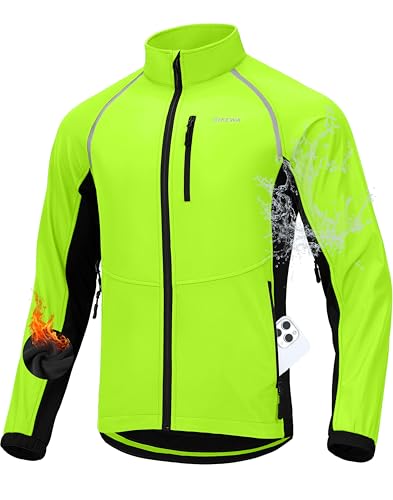
Men’s Winter Cycling Jacket Thermal Fluorescent Yellow/Black L

Men’s Winter Cycling Jacket Thermal White/Black L
More Details On Our Top Picks
The ARSUXEO suits riders who want a straightforward softshell without a complicated layering system. A fleece-lined body carries warmth, while the outer shell resists wind and light splashes. Stretch panels across the shoulders and upper back move with a riding posture instead of pulling tight at the handlebars.
That stretch matters on a commute, where repeated reaches and turns happen in stop-start traffic. A stand-up collar, extended cuffs, and longer rear hem limit drafts during the forward lean. The honest read is that sizing deserves care, since the fit runs close through the torso.
Standout Benefits
- Fleece lining adds warmth for fall and winter rides
- Stretch panels ease movement across the shoulders
- Chest and rear pockets keep small essentials separate
- Extended rear hem covers the lower back while leaning
Things To Consider
- Tight fit may limit layering under the jacket
- Water-repellent shell suits light splashes, not heavy rain
Przewalski takes a different route from the ARSUXEO, leaning into visibility and hand warmth. Brushed fleece inside holds heat, and a high collar plus elastic cuffs close gaps at the neck and wrists. Reflective logo and back stripe help in low light, which matters for early starts and evening returns.
Storage runs wider here, with a chest zip pocket, two rear pockets, and large hand pockets in some colors. Ventilation panels under the arms and across the back release moisture during harder efforts. Sizing guidance suggests ordering up one size over thick layers, a useful check before ordering.
A Few Strong Suits
- Reflective stripe improves low-light visibility
- Hand pockets warm hands off the bike
- Breathable panels help manage sweat on climbs
- Full-length zipper allows quick venting
- Zipper pulls work with gloves on
Worth Noting
- Hand wash only care adds routine effort
- Suited to light rain, not sustained downpours
Who It Suits Best
Riders who commute after dark and want hand pockets plus reflective visibility.
Where Another Pick Suits Better
The baleaf Men’s Cycling Winter Jacket Windproof Thermal Green L suits riders who need chest vents and four utility pockets for longer cold-weather outings.
The baleaf jacket builds on the Przewalski idea with a clearer three-layer structure. A windproof outer surface, breathable membrane in the middle, and fleece inside aim to balance warmth with moisture control. That stack suits rides in the 20 to 50 degree range, where overheating becomes a real concern.
Compared with earlier picks, pocket capacity grows. Two side zip pockets handle valuables or cold hands, and two bellows rear pockets carry gloves and a neck gaiter. Reflective elements at the chest, elbows, back, and rear pocket add visibility from several angles.
A Strong Showing
- Three-layer construction balances warmth and breathability
- Two chest vents increase airflow during effort
- Rear pockets fit gloves and cold-weather accessories
- Silicone gripper at the hem holds position while riding
- Drop-tail hem shields against road spray
Trade Offs
- Form fit with stretch leaves less room for bulky layers
- Left-side zipper design may feel unfamiliar to some
ROCKBROS adds a detail the baleaf jacket lacks: a TPU touchscreen panel on the left sleeve. That panel lets a rider check workout data without removing gloves or the jacket, a small convenience that adds up on training rides. A 320 GSM polar fleece inner layer supports heat retention in fall and winter.
Ventilation comes from six holes across the back and shoulders plus mesh panels at the sides. Unlike the Przewalski layout, storage here centers on two hand pockets and one zippered rear pocket. The fit runs slightly small, so sizing up one to two sizes helps riders who prefer a looser layer underneath.
Why It Works Well
- Touchscreen sleeve panel supports quick data checks
- Six back and shoulder vents release excess heat
- Extended zipper pulls ease use with winter gloves
- Reflective strips front and back aid low-light visibility
Minor Gripes
- Hand wash only care requires gentler cleaning
- Touchscreen sleeve may not suit every rider preference
- Slightly small fit affects layering choices
ROCKBROS Cycling Jackets for Men Windproof Thermal MTB Running
Storage defines this fluorescent yellow and black jacket. Eight pockets include two side zip pockets, one chest zip pocket, two inner pockets, and three rear pockets. That layout carries a phone, wallet, gloves, and a water bottle without a separate bag, which helps on longer winter outings.
The build mirrors the baleaf three-layer approach, with a windproof surface, breathable membrane, and fleece inside. A durable water repellent finish on the shell resists water, dirt, and oil. Underarm zip vents dump heat during climbs, while a high collar and silicone waist grip limit cold drafts.
Good Reasons To Consider
- Eight pockets spread gear across the jacket
- Underarm vents help control sweat buildup
- Water repellent shell sheds light moisture and grime
- Reflective front and back elements aid visibility
- Inner pockets keep valuables close to the body
Room For Improvement
- No stretch in the fabric limits movement range
- Many pockets add bulk when fully loaded
The white and black version shares the same three-layer construction as the fluorescent yellow option, with fleece inside and a breathable membrane in the middle. Heavyweight fabric class sets it apart for colder days, when extra insulation matters more than packability. High collar and silicone waist grip help seal against wind.
Compared with the ROCKBROS jacket, this option trades the touchscreen sleeve for more pocket space. Eight pockets again cover side, chest, inner, and rear storage. That mix suits riders who prefer a classic fit and carry gear across multiple activities, from road cycling to hiking.
Features That Help
- Heavyweight fleece lining suits colder winter rides
- Underarm zip vents release heat during effort
- Three rear pockets hold gloves and a water bottle
- Reflective elements support low-light visibility
Points To Note
- No stretch fabric may feel restrictive in a tucked position
- Heavyweight build adds bulk for milder days
Made For
Riders who want a heavier fleece jacket for road cycling, hiking, and winter touring.
Consider Something Else When
The ROCKBROS Cycling Jackets for Men Windproof Thermal MTB Running suits riders who want a touchscreen sleeve and more ventilation holes for training rides.
What Matters Most Before Choosing Cycle Jackets For Winter
Fit in a Riding Position
A jacket that fits standing still can ride up or pull tight once you lean forward over the bars. Check collar height, rear hem length, and cuff coverage in a tucked posture. Stretch panels help, while a silicone gripper at the waist keeps the hem seated during long rides.
Warmth Versus Ventilation Balance
Fleece lining holds heat, and a breathable membrane helps move moisture away from the body. Chest vents, underarm zips, and back holes matter on climbs, where effort rises fast. Riders logging steady miles benefit from vents that open without removing the jacket.
Pockets and Visibility for Daily Use
Rear pockets keep a phone and essentials within reach, and side pockets warm hands off the bike. Reflective elements at the back, chest, and sleeves improve visibility in low light. Pocket count alone does not decide value, since placement and zip pulls affect glove-friendly access.
Key Considerations Across These Picks
Common Shopping Slip Ups
Ordering a standard jacket size for a cycling-specific fit often leads to a tight torso or short rear hem. Check sizing notes for layering room, and confirm care instructions before choosing between machine wash and hand wash options.
What The Higher Tier Buys
Higher-tier construction adds membrane layers, more venting options, and gripper hems that hold position. Those details help on long, cold rides, while simpler softshells handle shorter commutes well. Paying more makes sense when rides stretch beyond an hour in freezing wind.
Frequently Asked Questions
What temperature range suits these winter cycling jackets?
Most options here target cold weather riding, with one jacket rated for 20 to 50 degrees Fahrenheit. Layering underneath changes comfort, so check the stated range for each pick.
Are reflective details included on every jacket?
Reflective elements appear on the Przewalski, baleaf, ROCKBROS, and the two eight-pocket jackets. Placement varies from a back stripe to chest, elbow, and sleeve details.
How does sizing run on these jackets?
Several jackets run close through the torso, and some guidance suggests sizing up for thick layers. A longer rear hem and elastic or silicone gripper help maintain coverage while riding.
Can these jackets handle rain?
Water-repellent or water-resistant shells shed light splashes and road spray. Sustained rain calls for a dedicated rain jacket with stronger waterproofing.
Which jacket carries the most gear?
The two eight-pocket jackets offer the most storage, including rear pockets for gloves and a water bottle. The baleaf jacket follows with four utility pockets for cold-weather accessories.
Final Verdict
For a first winter jacket, the ARSUXEO gives a simple fleece-lined option for commutes. Riders who want more venting and pocket space should look at the baleaf jacket, while the ROCKBROS adds a touchscreen sleeve for training. Match the fit and storage to the rides planned, and narrow the shortlist from there.