
Older road, touring, and mountain bikes still rely on rim and cantilever setups that need careful pad and cable matching. A worn pad or stretched cable changes stopping feel long before the frame itself shows wear. You need the right shape for your caliper and rim, plus a setup that matches your riding style. Your next choice gets easier when compatibility comes first and material comes second.
The Leading Options At A Glance

Corki Cycles Semi-Metallic Disc Brake Pads TRP Tektro Shimano

Hmseng V-Type Bike Brake Set Front and Rear MTB

Shimano BR-CT91 Brake Shoes Black 1 Pair

Shimano M65T Bicycle Brake Pads Shoes Black 1 Pair
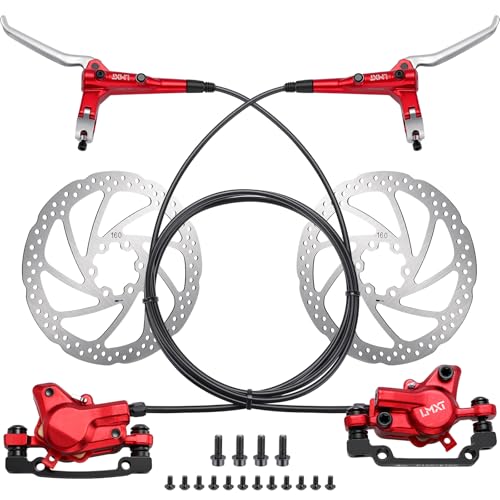
TOBWOLF MTB Hydraulic Disc Brake Kit Dual Piston

Paul Moon Unit Cable Hangers Black Cantilever Brakes
A Deeper Look At The Lineup
Semi-metallic means a blend of resin and metal particles, placed between resin-only and sintered compounds for frequent use. This Corki Cycles set suits riders who replace pads often and want a middle-ground material. You should match the shape against the current pads before ordering, since fit matters more than compound alone.
Compatibility covers TRP Tektro and a long list of Shimano Deore models, including M575, M525, M515, and M475 series numbers. Installation starts with wheel removal, piston pushback, and a caliper check, then the spring and pin secure each pad. Light rubbing after fitting can settle after a few rides, in our view, though persistent contact needs a closer look.
Useful Touches
- Two pairs cover front and rear in one purchase
- Semi-metallic compound suits regular trail and road use
- Thick pad profile supports longer service between swaps
- Clear piston and caliper checks reduce fitting surprises
Things To Consider
- Disc pads only, so cantilever and V-brake bikes need a different pick
- Model list needs checking against the exact caliper fitted
Unlike the disc pads above, this Hmseng set replaces the whole rim-brake hardware for front and rear. V-brake means linear-pull arms mounted on frame bosses, pulling pads straight into the rim. You get a complete refresh in one box, which suits an older mountain bike with tired levers and cables.
The kit includes two pairs of brakes, two levers, two cable wires, four end caps, plus a multi-tool and multi-wrenches. Rear cable runs 175cm with 155cm housing, while front cable runs 75cm with 55cm housing. Aluminium alloy, plastic, and rubber parts resist cold, heat, and oxidation, and black PU housing helps protect the cable run.
What Pays Off
- Front and rear hardware included for a full refresh
- Levers, cables, and end caps arrive together
- Tools in the box simplify mounting and adjustment
- Long rear cable length suits larger frames
- PU housing adds a layer of cable protection
Worth Noting
- Not suitable for children’s bicycles
- Frame bosses and rear mounting holes need confirming first
- V-brake only, so cantilever setups need separate parts
Who It Suits Best
Owners of adult V-brake mountain bikes who need every wear part replaced at once.
Where Another Pick Suits Better
Shimano BR-CT91 Brake Shoes Black 1 Pair suits cantilever bikes where only pads need changing.
Cantilever brakes use two arms linked by a straddle cable, a different layout from the V-brake set above. This Shimano BR-CT91 pair is a straight pad swap for front or rear cantilever positions. You should confirm the model list, since the same brand covers many older ATB and road setups.
Each pad measures 50mm long by 16mm wide, built from rubber and steel for aluminium rims. Fitment includes BR-CT90, BR-CT51, BR-CT20, BR-TY20, and BR-MJ05 families among others. At 30g per piece, the pair stays light on a touring build where extra grams add up over long days.
Advantages To Know
- Exact cantilever pad shape for listed Shimano models
- Rubber and steel build for aluminium rims
- Compact 50mm length suits classic brake arms
Small Caveats
- Pads only, with no cables or carriers included
- Model check matters across the many listed Shimano families
The M65T steps up from the BR-CT91 with a longer 60mm pad and a compound tuned for wet and dry conditions. Metering means how gradually braking force builds as lever pressure increases, and Shimano links that control to matched material hardness. You may find the longer pad gives a steadier feel on aluminium rims in mixed weather.
One pair covers a single brake position, so a full bike refresh needs two pairs. The black pad targets cantilever linings where consistent modulation matters more than aggressive bite. Compared with the shorter BR-CT91, the extra length spreads contact across more rim surface.
The Good Stuff
- 60mm length provides broader rim contact
- Compound blend targets wet and dry performance
- Matched hardness supports controlled metering
- Made for aluminium rims specifically
Points To Note
- Single pair per pack, so front and rear need two packs
- Longer pad needs clearance on compact cantilever arms
Made For
Touring and commuter riders on cantilever setups who ride in changeable weather.
Consider Something Else When
TOBWOLF MTB Hydraulic Disc Brake Kit Dual Piston suits riders planning a full disc conversion instead of rim pads.
Hydraulic disc brakes use fluid pressure through hoses to move caliper pistons, replacing the cable pull of every rim option above. This TOBWOLF kit arrives pre-bled and assembled, with an 85cm front hose and 150cm rear hose. You need 6-bolt rotors and a compatible frame and fork, since a rim-brake frame cannot take this system alone.
Twin-piston calipers clamp symmetrically for even pad contact, and a self-adjusting mechanism keeps pad-to-rotor clearance consistent. Ceramic pads pair with vented stainless steel rotors for heat dissipation. Lever sides can be swapped with basic tools, though a small amount of oil leakage may occur during that process.
Practical Pluses
- Pre-bled setup avoids a separate bleeding step
- Dual pistons promote even pad contact
- Vented rotors help manage braking heat
- Ceramic pads aim for quiet, rotor-friendly use
Honest Caveats
- Requires disc mounts, 6-bolt rotors, and compatible hubs
- Swapping lever sides can release a small amount of oil
- Left front and right rear layout needs checking for regional preference
A straddle cable carrier links the two cantilever arms and carries the main brake cable, so this small part shapes the whole braking geometry. The Paul Moon Unit is CNC machined, meaning it is cut to precise dimensions from solid stock. You get one unit for the front brake and one for the rear, sold as a black pair.
A raised boss simplifies the cable clamp setup and improves cable security, while machined face channels hold cables in place during use. A built-in 8mm hex on the back gives wrench access for adjustment. That detail helps during setup, when small alignment changes alter pad clearance.
A Strong Showing
- Pair covers front and rear cantilever brakes
- Raised boss improves cable clamp security
- Face channels keep cables seated during use
Practical Considerations
- Carrier only, with no pads, cables, or levers included
Factors That Shape a Good Brake Choice
Match The System First
Cantilever, V-brake, and disc systems use different pads, cables, and mounts, so mixing parts across systems causes fit problems. Check frame bosses, caliper shape, and rotor mounts before anything else. You save time when the system match comes before compound or finish.
Pad Shape And Material
Pad length, width, and compound decide rim contact and wear pace. Longer pads spread contact, while softer compounds often give a gentler initial bite. Match the shape to the arms fitted, then pick a compound for wet, dry, or mixed riding.
Cable Routing And Fit
Straddle carriers and housing lengths affect lever feel and adjustment range. A carrier that holds cables securely keeps geometry consistent through braking. Confirm cable lengths against frame size, especially on rear runs.
Tools And Setup Time
Some kits include tools and pre-bled lines, while pad-only swaps need basic wrenches and piston tools. Plan for caliper checks during any pad change. A complete kit suits a full refresh, and a pad pair suits a focused swap.
Key Considerations Across These Picks
Common Shopping Slip Ups
Ordering by brand name alone leads to mismatched shapes across older model families. Measure the current pad and compare model lists before ordering. Cable carriers get overlooked during rebuilds, yet geometry depends on them.
What The Higher Tier Buys
Machined carriers, longer pads, and hydraulic systems cost more through materials and setup complexity. The gain shows in adjustment precision, heat handling, and control. Paying more pays off when the frame already suits the upgraded system.
Frequently Asked Questions
Are cantilever pads interchangeable with V-brake pads?
No, cantilever and V-brake pads use different shapes and mounting layouts. Matching the caliper type matters more than brand alone.
How do semi-metallic and resin pads differ?
Semi-metallic blends metal particles into the compound for frequent use. Resin-only pads suit casual riding with a different wear profile.
What should be checked before ordering replacement pads?
You should compare the current pad shape and model numbers against the listing. Compatibility lists cover many older Shimano and Tektro families.
Does a complete V-brake set include cables and levers?
The Hmseng set includes levers, cables, end caps, and tools for front and rear. Cable lengths differ between front and rear runs.
Can a hydraulic disc kit fit a rim-brake frame?
No, hydraulic disc brakes need disc mounts, compatible hubs, and 6-bolt rotors. Frame and fork compatibility needs confirming first.
Final Verdict
For a simple cantilever pad swap, the Shimano options cover the main sizes, with the M65T suiting mixed weather. A full V-brake refresh points to the Hmseng kit, while disc conversion needs the TOBWOLF system and a compatible frame. You get the smoothest result when system, shape, and cable routing all line up.