
Night riding on a mountain bike puts a different demand on a light than a short road spin. Distance, beam shape, and battery life decide whether roots and loose rock stay visible after dark. You need enough reach for speed, enough spread for turns, and a rear light that stays obvious in dust. That mix helps narrow the field to sets that balance output, runtime, and mounting simplicity.
The Picks In Brief
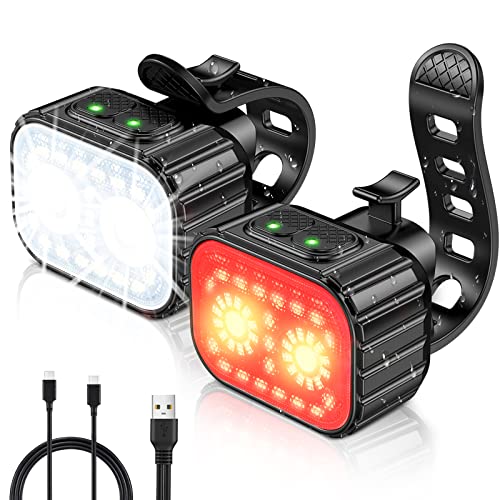
Cuvccn Bike Lights Super Bright Rechargeable Set

Suruid Super Bright LED Bike Light 5 Modes
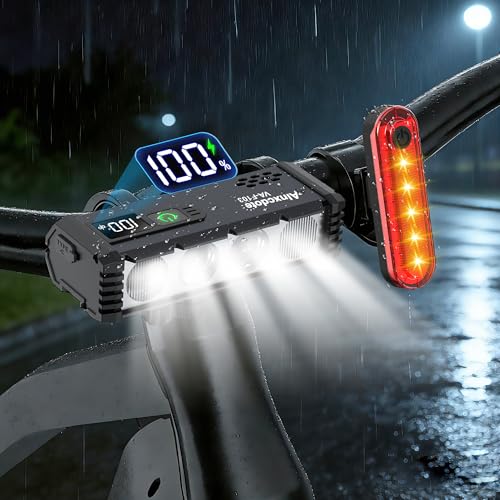
Super Bright Bike Lights 4800 Lumen LCD Display

Zewdov Bike Lights for Night Riding, Rechargeable Taillight

Bike Lights Front and Back Set 9+9 Modes

Ascher Ultra Bright USB Rechargeable Bike Light Set
A Breakdown Of The Leading Choices
A front and rear pair suits riders who want one purchase to cover both ends of the bike. The front unit pairs 2 main LEDs with 19 auxiliary LEDs, while the rear uses a similar layout for side visibility. That split design spreads light wider than a single small lens.
You get separate controls for main and auxiliary LEDs, so flashing patterns can match the road ahead. Runtime reaches 58 hours for the front light in slow flash mode, with 25 hours for the rear. An IPX6 rating, which signals strong resistance to water jets, helps in heavy rain. The honest read is that output in lumens, a measure of total light output, is lower than the 1800-lumen front-only option later in this list.
The Upside
- Front and rear coverage in one set
- Long slow-flash runtime for commuting
- Low-battery indicator below 20 percent
- Tool-free handlebar mounting
- Memory function recalls last mode
Things To Consider
- Rear battery is smaller at 350mAh
- Recharge after 3 months idle for best performance
Unlike the Cuvccn set, this choice is front-only and built for distance. You get a single headlight rated at 1800 lumens, with high and low beams combined for a wider field. That matters on fast descents where a narrow beam can hide a drop just beyond the light pool.
The housing uses anodized aviation aluminum alloy, which helps with heat dissipation during long use. A knob at the base releases the light from its bracket in seconds, handy for locking up or carrying the light indoors. Five modes cover daytime running and night riding, and the IPX-4 rating covers splashes and rain, though it sits below IPX6 and IP65 ratings on other picks here.
Positive Points
- High 1800-lumen output for dark trails
- Aluminum housing aids heat dissipation
- Quick-release knob for fast removal
- USB Type-C charging port
Worth Noting
- Front-only design needs a separate rear light
- IPX-4 rating is lower than IP65 alternatives
- High output drains charge faster than low modes
Who It Suits Best
Riders focused on front visibility for off-road descents who already own a rear light.
Where Another Pick Suits Better
The Cuvccn Bike Lights Super Bright Rechargeable Set suits riders who want front and rear coverage together.
Headline output reaches 4800 lumens in the title, paired with low and high beams for range and spread. An anti-dazzle transition softens brightness changes between modes, which helps on mixed road and trail routes. The set includes front and rear lights, unlike the Suruid front-only pick.
You can check remaining charge at a glance, which helps plan a long evening ride without guessing. The LCD shows battery percentage, and the front light runs 6 to 10-plus hours while the rear runs 50 hours. An aluminum alloy mount with a nut design aims to stay stable on bumpy roads, and IP65 sealing covers heavy rain and splashes. In our view, the display is the clearest practical upgrade here.
Practical Advantages
- LCD shows exact battery percentage
- Front and rear lights included
- Long rear runtime at 50 hours
- Quick-release knob at the base
- IP65 waterproof rating
Trade Offs
- Four modes only, fewer than 9-mode sets
- High output will shorten runtime versus low mode
Size is the story here, with a thickness of 1.7cm and weight of 27g for the set. You carry a slim pair that slips into a pocket between rides, which suits travel or backup use. Elastic rubber straps attach to the front and rear without tools.
Both lights charge together in 1 to 1.5 hours through a 2-in-1 cable, and the headlight offers 4 modes while the taillight offers 6, including a breathing flash pattern. Battery retention reaches up to 7 months, with a prompt to recharge after 3 months idle. The PC housing and IP65 rating cover rain and fog, though the small form leaves less room for a large battery.
Real Benefits
- Very slim, pocket-friendly form factor
- Both lights charge at once
- Strap mounting needs no tools
Minor Gripes
- Compact size limits battery capacity
- Elastic straps need a fit check on wide posts
Made For
Riders who prioritize low weight and easy carrying over maximum front output.
Consider Something Else When
The Super Bright Bike Lights 4800 Lumen LCD Display suits riders who want higher output and a charge readout.
Mode count sets this set apart, with 9 modes on the front light and 9 on the rear, plus memory recall. Output is 300 lumens front and 100 lumens rear, which places it below the high-output picks for dark trails but well suited to lit roads and moderate paths. Each light weighs 35g, so added weight stays low.
You charge both units together through a dual-wire cable in about 1.5 hours. Runtime spans 4 to 20 hours depending on mode, from a 750mAh battery. Soft silicone straps install without tools and fit most bikes, e-bikes, and scooters. For most city routes, that runtime range is enough, though trail riders may prefer a brighter front light.
Useful Highlights
- 9 modes per light with memory
- Dual-wire charging for both lights
- Lightweight 35g per light
- Tool-free silicone strap mounting
- Shockproof ABS and PS housing
Room For Improvement
- 300-lumen front output is modest for dark trails
- Runtime drops to 4 hours on high modes
Simplicity defines this front and rear set, with 4 modes switched by one touch button. You rotate the front light 360 degrees to aim the beam on steep climbs, while the rear light tilts 45 degrees up and down. That adjustment helps on trails where handlebar angle alone may point the beam too low.
The front battery is 2000mAh with 5 to 12 hours runtime, and the rear uses 330mAh for 9 to 16 hours. A silicone mount with four openings fits most handlebars and seat posts, and removal takes seconds without tools. The IPX4 rating covers rain, snow, and mud splashes, though it trails IP65 on the Zewdov and LCD-display picks.
The Helpful Details
- One-touch switching across 4 modes
- 360-degree front rotation for aiming
- Large 2000mAh front battery
- Silicone strap fits most posts
Points To Note
- Only 4 modes, fewer than 9-mode alternatives
- IPX4 rating is lower than IP65 options
What Matters Most Before Choosing Budget Mtb Light
Beam Reach and Spread
High lumens help on fast descents, while a wider beam helps in tight turns. You should match output to speed and terrain rather than chasing the largest number alone. A front-only light needs a separate rear light for full coverage.
Runtime and Charging
Battery capacity and mode choice decide how long a light lasts between charges. Check whether both lights charge together or need separate cables, since that affects daily routine. An LCD percentage display removes guesswork on longer rides.
Mounting and Weather Rating
Handlebar diameter and seat post shape affect strap fit, so measure before ordering. Water ratings such as IPX4, IPX6, and IP65 indicate different levels of splash and jet resistance. Quick-release designs help when the light needs to come off for storage or security.
Key Considerations Across These Picks
Common Shopping Slip Ups
Chasing lumens alone often leads to short runtime on high mode. Skipping a mount check can leave straps loose on wider bars. Comparing front-only and front-plus-rear sets without noting the difference causes gaps in rear visibility.
What The Higher Tier Buys
Higher output, larger batteries, and clearer charge displays add cost through more LEDs and housing materials. Aluminum housings and higher water ratings also raise build cost. The upgrade pays off for riders on dark, fast trails, while commuters on lit roads often get enough from mid-range output.
Frequently Asked Questions
How many lumens does a mountain bike light need for night trails?
Higher output helps at speed on dark trails, while moderate output suits lit roads and slower paths. Beam spread matters as much as the headline number for seeing roots in turns.
Does your light need a separate rear light?
Front-only models need a separate rear light for full visibility. Sets with front and rear lights cover both ends in one purchase.
How long do these batteries last on a single charge?
Runtime ranges widely by mode, from a few hours on high to tens of hours on slow flash. Check the stated hours for each mode before planning long rides.
Which water rating matters for rainy rides?
IP ratings indicate resistance to water ingress, with higher numbers covering stronger exposure. IP65 and IPX6 cover heavier rain than IPX4 in the listings here.
How should mounting be checked before ordering?
Measure handlebar and seat post diameter, then compare that size to the strap design. Quick-release and silicone strap designs differ in how tightly they hold on bumpy terrain.
Final Verdict
For dark trails, the LCD-display set and the Suruid front light stand out for output and charge clarity. For mixed city and trail use, the Cuvccn set and the 9-mode set offer balanced coverage. You can match the choice to speed, terrain, and how often charging happens.