Your weekend trail plan often hinges on motor strength, battery range, and suspension travel working together. You need a bike that climbs steep dirt, handles rough ground, and still feels manageable on pavement, without forcing a choice between speed and control.
The Leading Options At A Glance

QuietEase Electric Dirt Bike 3000W 38 MPH
NEXVEY FLASH PRO Electric Dirt Bike 5000W 55 MPH

4000W Peak Electric Dirt Bike 45 MPH 40 Miles
YVY Adult Electric Bike 1500W-3000W Moped Style
ESKUTE Electric Dirt Bike 3500W Peak 53-Mile Range

WEIZE Mountain Bike 26 inch 18-Speed Dual Suspension
Meet The Standout Selections
Steep, rocky trails suit this mid-drive setup, where the motor sits near the center for climbing torque. You get 3000 watts, 220Nm torque, and a claimed 45 degree climb rating, with speed up to 38 mph. A low-speed mode capped at 9.5 mph gives newer riders a gentler starting point.
Full suspension and dual hydraulic brakes, meaning brakes that use fluid pressure for stronger stopping, help on uneven descents. The 48V 23.4Ah removable battery carries a stated 48-mile range, and the carbon steel frame is rated to 289 lbs. Dimensions of 59.84 x 27.01 x 36.81 inches and weight of 127.9 pounds mean you should check garage storage before ordering.
Noteworthy Benefits
- Three speed modes, including a beginner low-speed setting
- Removable battery for indoor charging away from the bike
- Digital display for speed, battery level, and gear mode
- Full suspension for smoother riding over rough ground
- 90% pre-assembled delivery with included tools
Things To Consider
- Large footprint needs clear storage space
- Charge time of 4 to 5 hours shapes overnight planning
Adult riders chasing higher speed will notice the step up from the QuietEase model. You get a 5000W peak mid-drive motor, 3000W rated output, 220Nm torque, and speed up to 55 mph. Thermal management helps maintain power during longer off-road runs, in our view.
A 60V 27Ah removable lithium battery carries a stated 50-mile range, with charging possible on the bike or indoors. Inverted front forks and a central spring shock pair with 17 inch front and 14 inch rear all-terrain tires. A wheelie assist mode in 4th gear uses a gyro sensor and cuts power at 30 degrees, a feature aimed at experienced riders who want extra control support.
What Earns Its Place
- Highest stated top speed in this group at 55 mph
- Removable battery with two charging options
- Wheelie assist with automatic power cut
- Wide front tire for steering on uneven ground
Worth Noting
- Off-road only use, not for public roads
- High power demands full protective gear and supervision for minors
- Pre-ride inspection matters more at this speed
Who It Suits Best
Experienced adult riders focused on speed and stunt-style control on private trails.
Where Another Pick Suits Better
ESKUTE Electric Dirt Bike 3500W Peak 53-Mile Range suits riders who prefer a lower top speed with similar range.
Quick acceleration defines this option, with 0 to 20 mph in 1.5 seconds from a 4000W peak mid-mounted motor. You get 230Nm torque, speed up to 45 mph, and a 30 degree climb rating. That sits between the QuietEase and NEXVEY models for peak power, with a different balance of speed and range.
A 48V 23Ah removable battery carries a stated 40-mile range, and lifting the seat releases the battery for charging elsewhere. Fourteen inch front and 12 inch rear fat tires, inverted hydraulic front shocks, and nitrogen-filled rear shocks smooth rough terrain. Hydraulic disc brakes, a reverse function, LCD dashboard, and full lighting support mixed road and trail use when you ride both surfaces.
What Pays Off
- Reverse function eases parking and tight turns
- Removable battery charges away from the bike
- LCD dashboard shows speed and battery level
- 330 lbs load capacity and rider height range of 5.4 to 6.5 feet
- Phone holder and disc lock included
Trade Offs
- 40-mile stated range trails the 50 and 53-mile options
- Fat tires add width for storage and transport
Moped styling sets this bike apart from the dirt-focused models above. You get a 1500W peak brushless motor with 80 Nm torque, a 7-speed derailleur, and a 30 degree hill rating. Pedal assistance plus motor power gives more flexibility for long commutes than throttle-only designs.
A removable 48V 15.6Ah battery carries a stated 22 to 70 mile range, depending on riding mode and terrain. Twenty inch by 4.0 inch puncture-resistant fat tires and 5-stage full suspension handle snow, sand, mud, and trails. Hydraulic disc brakes, a round headlight, taillight, horn, LCD, phone holder, USB port, and storage box add everyday equipment for daily commuting.
Useful Highlights
- 7-speed derailleur adapts power to terrain
- Fat tires improve traction on loose ground
- Storage box, USB port, and phone holder for commuting
- High-carbon steel frame supports up to 330 lbs
Minor Gripes
- Lower peak power than the 3000W to 5000W dirt bikes
- Range varies widely from 22 to 70 miles by use
- Check local age and license rules before purchase
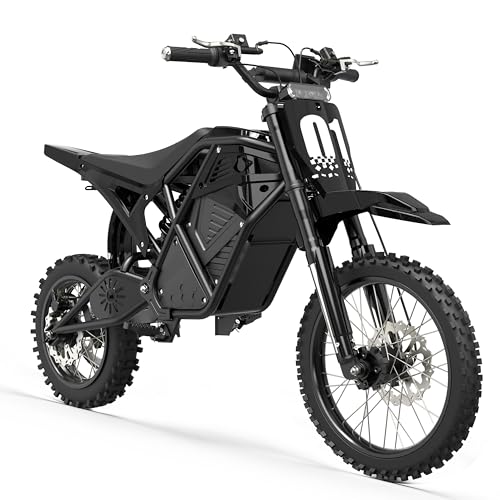
Range leads the conversation here, with a stated 53 miles from a 48V 23Ah battery. You get a 3500W peak mid-drive motor, 220Nm torque, speed from 38 to 46 mph, and a 35 degree climb rating. That places speed below the NEXVEY model while range sits above it.
Nitrogen-filled dual shock absorbers aim to keep damping consistent during long, rough rides. Dual hydraulic disc brakes work in mud, water, and sand, and a reinforced steel frame supports up to 265 lbs. A 6-hour full charge and battery management system for overheat, overcharge, and short circuit protection mean you plan overnight charging around that window.
The Upside
- Longest stated range in this group at 53 miles
- Nitrogen-filled shocks for sustained damping
- Dual hydraulic disc brakes for wet conditions
- Tools included for assembly
Room For Improvement
- 265 lbs frame capacity is lower than 289 and 330 lbs options
- 6-hour charge needs overnight planning
- Verify local age and licensing rules before riding
Made For
Trail riders who prioritize longer rides over maximum top speed.
Consider Something Else When
QuietEase Electric Dirt Bike 3000W 38 MPH suits riders who want a low-speed beginner mode and higher frame capacity.
Pedal power alone makes this the outlier in an electric-heavy list. You get an 18-speed drivetrain with twist shifters and front and rear derailleurs, meaning gears that change cadence for climbs and flats. A steel dual suspension frame uses a front suspension fork and rear coil shock to smooth bumps.
Twenty-six inch all-terrain tires and front and rear linear pull brakes, which use cables to pull pads against the rim, provide control on mixed terrain. The adjustable ergonomic seat gives you a fit range from 5’2″ to 6’2″, and partial assembly with included tools targets about 20 minutes for setup.
Everyday Wins
- 18 speeds for varied terrain and cadence
- Dual suspension smooths trail bumps
- Adjustable seat for a wide height range
- Quick assembly with included tools
Points To Note
- No motor assistance for steep or long climbs
- Rim brakes differ from hydraulic disc systems above
What Matters Most Before Choosing Budget Bike
Motor Power and Climb Rating
Peak watts and torque shape hill performance, while climb ratings show the grade a bike can handle. Match the motor to the steepest trail on a regular route, and check the rider weight limit against the frame capacity. Your storage space matters too, since larger frames need more room.
Battery Range and Charging
Stated range depends on speed, terrain, and rider weight, so treat the headline number as a planning guide. Removable batteries add flexibility for indoor charging, and charge time determines whether overnight charging fits a routine. Compare 40, 48, 50, and 53-mile stated ranges against the longest ride planned.
Suspension, Brakes, and Fit
Full suspension, inverted forks, and fat tires affect control on loose ground, while hydraulic disc brakes provide stronger stopping than rim brakes. Seat height, frame capacity, and tire size change comfort and handling across rider heights. Measure your available storage space and check local rules for age, licensing, and road use.
Key Considerations Across These Picks
Common Shopping Slip Ups
Headline speed often distracts from range, braking, and fit. Check frame capacity, charge time, and storage dimensions before ordering, since those details affect your daily use more than top speed alone.
What The Higher Tier Buys
Higher peak power, larger batteries, and advanced suspension raise capability for steep, long trails. That extra capability pays off for experienced riders on rough terrain, while simpler pedal or lower-power options suit shorter, flatter routes.
Frequently Asked Questions
Are these bikes allowed on public roads?
Many models in this group are for off-road use only and cannot be registered for public roads. Check local rules on age, licensing, and road use before riding.
How long does charging take?
Charge times vary by model, with examples ranging from 4 to 5 hours and 6 hours for a full charge. Plan overnight charging around the stated time for the specific bike.
What range should be expected on trails?
Stated ranges in this group span 40 to 53 miles for electric dirt bikes, plus 22 to 70 miles for the YVY moped-style model. Real range shifts with speed, terrain, temperature, and rider weight.
Which bike suits a beginner?
The QuietEase model includes a low-speed mode capped at 9.5 mph for newer riders. The WEIZE pedal bike also suits beginners who prefer no motor assistance.
What should be checked before the first ride?
Brakes, wheels, and components need correct installation and a full pre-ride inspection. Protective gear and adult supervision for minors remain important for high-power models.
Final Verdict
The ESKUTE model balances range and speed for longer trail days, while the QuietEase adds a beginner mode for newer riders. Match motor power, battery range, and frame capacity to the trails ahead, and the right choice becomes clear.