
A worn or warped rotor turns a steep descent into a guessing game, with noise and fading bite under repeated braking. Size, thickness, and mounting pattern decide whether a replacement matches a frame and caliper without extra adapters. The four options below cover single rotors in several diameters and a paired 160mm set, each built around stainless steel braking surfaces. You can narrow the choice by checking diameter first, then thickness and bolt pattern against the current setup.
The Shortlist At A Glance

BUCKLOS MTB Disc Brake Rotor 6-Bolt 44mm (Silver)

BUCKLOS RT58 MTB Disc Brake Rotor 6-Bolt (Black)
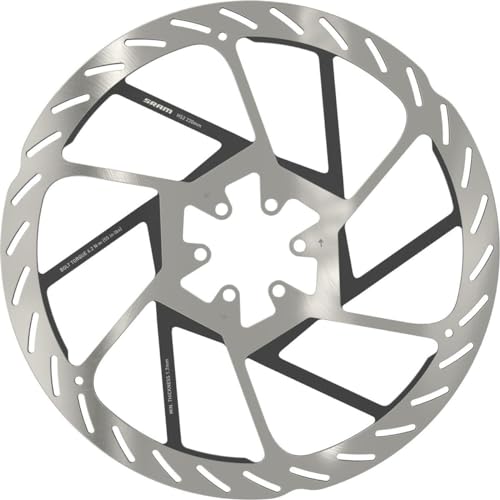
SRAM HS2 Disc Brake Rotor 200mm 6-Bolt Rounded

2Pcs 160mm Disc Brake Rotor Stainless Steel 6-Bolt
A Deeper Look At The Lineup
Size choice drives the whole decision here, and this silver BUCKLOS rotor covers 140mm, 160mm, 180mm, and 203mm in one listing. The 6-bolt pattern, meaning six bolts on a 44mm hole circle, matches many mountain, road, e-bike, and BMX hubs. You can match diameter to frame clearance and caliper position before ordering.
Stainless steel construction at 1.8mm thickness gives a wear-resistant braking surface for everyday trails. Vent openings in the design help shed heat during repeated stops, which matters on longer descents. The honest read is that thinner steel asks for careful pad alignment, since runout shows up faster on light rotors.
Bright Spots
- Four diameters let one listing cover front or rear needs
- 1.8mm stainless steel resists wear during regular use
- Vent design supports heat shedding on long braking runs
- 6-bolt mounting with M5 screws fits common hub patterns
Things To Consider
- Diameter must be confirmed against fork and frame limits before purchase
- 1.8mm thickness is thinner than the 2mm options elsewhere in this lineup
The RT58 keeps the same size range as the silver BUCKLOS rotor, yet the black finish and perforated pattern set it apart. Dense holes across the braking track help move heat away during sustained braking. You get six bolts in the package, which simplifies a like-for-like swap on a disc-ready hub.
An integrated vibration-damping structure targets noise and vibration, a detail that matters on quiet trail sections. Stainless steel at 1.8mm keeps weight modest while resisting wear. In most trail settings, the trade-off is a thinner disc compared with 2mm rivals, so pad setup needs patience.
A Few Strong Suits
- Dense perforations help limit heat buildup on descents
- Vibration-damping structure aims to reduce braking noise
- Six bolts included for a straightforward hub swap
Worth Noting
- Black coating is a finish choice, not a performance upgrade over silver
- Single rotor only, so front and rear replacement needs two orders
Who It Suits Best
Riders replacing a noisy or heat-stressed rotor on a 6-bolt hub who want size flexibility.
Where Another Pick Suits Better
SRAM HS2 Disc Brake Rotor 200mm 6-Bolt Rounded suits riders who need a thicker 200mm disc for long descents.
A single 200mm size defines this SRAM rotor, and that focus suits larger-diameter setups for stronger leverage. Rounded edges and recessed spokes shape a mountain-specific profile aimed at heat management. You benefit from 2mm thickness, which adds thermal mass compared with the 1.8mm BUCKLOS rotors.
Thermal dissipating paint on the spokes and a patterned braking track work together to shed heat and limit noise. Compatibility with all pad compounds widens use across different pad choices. The catch is fixed sizing, so fork clearance and caliper adapter needs deserve a check before ordering.
What Earns Its Place
- 2mm disc thickness adds heat capacity for long descents
- 200mm diameter increases leverage over smaller rotors
- Recessed spokes and heat-dissipating paint aid cooling
- Patterned track supports pad traction and quieter braking
- Works with all pad compounds for setup flexibility
Trade Offs
- Fixed 200mm size requires adapter and clearance checks
- Single rotor at 300g adds rotating weight versus lighter options
Two rotors in one package change the math for a full refresh, with both at 160mm and 6-bolt mounting. Each disc measures 2mm thick and weighs 110g, which keeps the pair light for trail use. You can replace front and rear together and keep braking feel consistent across the bike.
Large ventilation holes and a hollow design help shed heat while trimming weight. Polished stainless steel resists wear and high temperatures during braking. The limit is simple: 160mm only, so riders needing 180mm or 200mm leverage need a different size elsewhere in this lineup.
Standout Benefits
- Pair pack covers front and rear replacement in one order
- 2mm thickness matches the SRAM rotor and beats 1.8mm discs
- 110g per rotor keeps rotating weight modest
- Ventilation holes support cooling during repeated stops
Minor Gripes
- 160mm fixed size limits use on larger-diameter setups
- 44mm center distance needs confirmation against hub pattern
- Pair format adds no value for single-wheel replacement
Made For
Owners refreshing both wheels on a 160mm 6-bolt setup who prefer matched rotors.
Consider Something Else When
BUCKLOS MTB Disc Brake Rotor 6-Bolt 44mm (Silver) suits riders who need a diameter other than 160mm.
Factors That Shape Brake Rotor Choice for Mountain Bikes
Diameter And Leverage
Larger diameters increase leverage, meaning a given hand force creates stronger stopping power at the wheel. A 203mm rotor on a suitable fork behaves differently from a 140mm rotor on the same bike. Confirm frame and fork clearance, plus caliper adapter needs, before moving up in size.
Thickness And Heat
Thickness adds thermal mass, which helps a rotor absorb heat from long descents without fading as quickly. The 2mm discs in this lineup carry more heat capacity than 1.8mm discs. Riders with steep, sustained braking benefit more from that extra mass than casual trail riders.
Mounting Pattern And Fit
Mounting pattern, defined by bolt count and hole spacing, must match the hub exactly. All four picks here use 6-bolt mounting, with 44mm spacing called out on the BUCKLOS and paired options. Check hub markings and measure the current rotor before ordering a replacement.
Quantity And Use Case
A single rotor suits a focused front-wheel upgrade, while a pair suits a full refresh. E-bikes and heavier riders often lean toward larger diameters for added leverage. Daily trail riders may prioritize quiet operation and heat shedding over maximum diameter.
Key Considerations Across These Picks
Common Shopping Slip Ups
Ordering a larger diameter without checking fork clearance leads to fit problems at installation. Mixing rotor sizes front to rear without adjusting calipers can also cause uneven braking feel. Measure the old rotor and confirm adapter requirements first.
What The Higher Tier Buys
Higher-tier rotors add thickness, larger diameters, and coatings aimed at heat control. Those features pay off on long descents and repeated heavy braking. For short, flat rides, a thinner 160mm rotor often handles the work with less weight.
Frequently Asked Questions
What size rotor should a mountain bike use?
Size depends on fork and frame clearance, rider weight, and terrain. Larger diameters add leverage, while smaller sizes save weight and suit lighter use.
What does 6-bolt mounting mean?
It means six bolts secure the rotor to the hub on a shared hole pattern. Matching bolt count and spacing matters more than brand.
Is a thicker rotor better for heat?
Thicker steel adds thermal mass for sustained braking. That helps on long descents, with a small weight trade-off.
Can front and rear rotors be different sizes?
Yes, many setups run a larger rotor up front for stronger braking. Caliper adapters must match each diameter correctly.
How often should rotors be replaced?
Replacement timing depends on wear, warping, and pad condition. Thin, glazed, or bent surfaces signal a need for a fresh rotor.
Final Verdict
Match diameter and mounting first, then decide on thickness and quantity. The SRAM HS2 suits long descents, the paired 160mm set suits a full refresh, and the BUCKLOS options suit size-flexible replacements. A careful measurement before ordering keeps the swap straightforward.