
A first bike needs to match height, braking style, and balance support in one small package. That match matters on a driveway, a quiet sidewalk, or a paved park path where a child practices pedaling and steering. You get the clearest result by measuring height first, then checking seat adjustment and brake type. The six options below cover 12-inch through 20-inch sizes, plus a convertible toddler design for earlier stages.
The Essentials At A Glance

WEIZE 14 Inch Kids Bike for Boys Ages 3-5 Blue

WEIZE 16 Inch Kids Bike for Boys Ages 4-6 Black
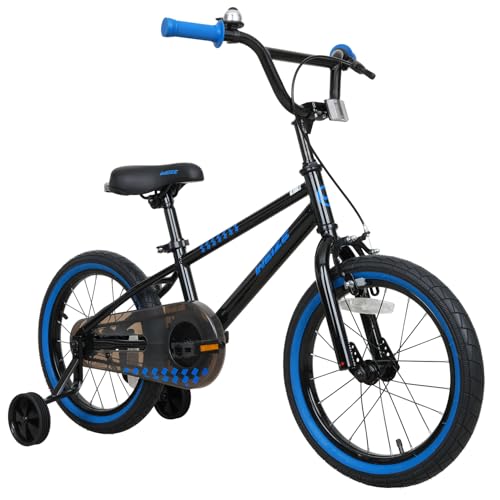
WEIZE 16 Inch Kids Bike Nighthawk Ages 4-7

Schwinn Koen 20-Inch Bike for Kids Ages 7-10

JMMD 6 in 1 Toddler Bike with Push Handle

cubsala Kids Bike BMX Style Training Wheels
A Deeper Look At The Lineup
You can match this 14-inch WEIZE model to a rider between 35.4 and 41.3 inches tall. A coaster brake, which stops by pedaling backward, sits alongside a hand lever, so a child gets two familiar ways to slow down. The setup suits a driveway or smooth sidewalk where early steering practice stays low speed.
Seat height moves 3 inches without tools, and the handlebar also adjusts, which helps the fit last through a short growth stretch. Wide 2.125-inch tires soften small bumps on paved paths, and a full chain cover keeps clothing away from the chain. Training wheels add balance support during the first rides.
Where It Helps
- Two brake types support practice with smaller hands
- Seat adjustment without tools simplifies fit changes
- Full chain cover reduces contact with moving parts
- Wide tires suit paved neighborhood streets
Things To Consider
- Height range ends at 41.3 inches, so taller riders outgrow it sooner
- Assembly arrives 85% complete and needs a brake check before riding
Stepping up from the 14-inch WEIZE model, this 16-inch version fits riders from 38 to 48 inches tall. That extra wheel size suits a child who has outgrown the smaller frame but still needs training wheel support. Height matters more than age here, since the range overlaps with the next size up.
You can use the 5-inch seat range to keep pedaling comfortable as legs grow. The same hand and coaster brake pairing appears, with wide tires and a full chain cover for paved park paths. Reflectors add visibility on shared paths, and the high-carbon steel frame supports everyday recreational use.
Points In Its Favor
- 5-inch seat adjustment covers a longer growth period
- Dual brakes give practice options for new riders
- Reflectors help visibility on paved paths
Worth Noting
- Installation tools are not included, so a basic tool check helps before setup
- Single-speed design limits use to flat, paved terrain
Who It Suits Best
Children ages 4-6 who have outgrown a 14-inch bike and still need balance support on paved streets.
Where Another Pick Suits Better
WEIZE 16 Inch Kids Bike Nighthawk Ages 4-7 suits riders who want removable training wheels and an assembly video.
Compared with the previous 16-inch WEIZE bike, this Nighthawk version widens the age guidance to 4-7 while keeping a 38-48 inch height range. Removable training wheels make the transition off balance support simpler, since they detach as confidence improves. Smaller grips give little hands a steadier hold during steering practice.
You will notice the front hand brake paired with a rear coaster brake, a setup that spreads stopping control across two methods. Wide anti-slip tires and a full chain cover suit sidewalks and paved park paths. An adjustable saddle and handlebar keep ground reach comfortable through early growth.
Positive Takeaways
- Removable training wheels support a gradual transition
- Smaller grips improve hold for little hands
- Assembly video and basic tools simplify setup
- Anti-slip tires add traction on paved paths
- Adjustable saddle and handlebar extend fit range
Trade Offs
- Height guidance stays at 38-48 inches despite the wider age label
- Brakes and fasteners need a check before the first ride
Mounting feels easier for your child with a low step-over frame and an upright riding position. This 20-inch Schwinn Koen targets ages 7-10, a stage beyond the 14 and 16-inch WEIZE models. Kid-sized seat, grips, and pedals keep proportions matched to smaller bodies.
Stopping uses a coaster brake, so pedaling backward slows the bike in a way many children learn quickly. A chainguard protects clothing, and a seat handle gives a gentle guiding point during first rides. One included tool handles assembly, and training wheels remove without tools when balance improves.
The Value In It
- Low step-over frame simplifies mounting and dismounting
- Upright position supports controlled pedaling
- Seat handle helps guide early rides
- One-tool assembly keeps setup straightforward
Minor Gripes
- 20-inch size suits only taller, older beginners
Unlike the pedal bikes above, this JMMD design starts as a parent-push trike for ages 18-60 months. It converts through balance bike and toddler bike stages, so one frame covers several early years. A 60-degree steering limiter prevents sudden turns during guided rides.
You can guide steering from behind with a push handle that rotates 135 degrees and adjusts to adult height. An aluminum alloy frame, 12-inch puncture-proof rubber wheels, and a chain-free gear system keep control smooth. Folding with one press of a red button under the frame helps with car trunk storage.
Everyday Advantages
- 6-in-1 conversion covers push trike through pedal stages
- Push handle adjusts to adult height for guiding
- Folding design simplifies storage and transport
Room For Improvement
- Conversion steps take time to change between modes
- 12-inch wheels suit younger riders, not older children
- Seat extension rod adds a part to track during setup
Made For
Toddlers 18-60 months who need guided rides before independent pedaling on a standard bike.
Consider Something Else When
cubsala Kids Bike BMX Style Training Wheels suits a child ready for a dedicated pedal bike in a specific size.
You can choose among 12, 14, 16, and 18-inch sizes in this BMX style range, covering ages 2-10 by height. That spread helps a family match a frame to a specific child rather than guessing from age alone. Training wheels and an adjustable seat support the earliest pedal stage.
A high-tensile carbon steel frame handles rough surfaces, and a coaster brake keeps stopping simple for small hands. Wide tires add slip-resistant traction, while a full chain guard protects clothing. Assembly arrives 85% complete with included tools for finishing setup.
Noteworthy Benefits
- Four sizes cover a wide height range
- Coaster brake suits small hands learning to stop
- Wide tires improve traction on varied pavement
- Adjustable seat grows with a child
Points To Note
- BMX styling may feel bulkier than a standard kids frame
- Size choice needs a height check to avoid a poor fit
What Matters Most Before Choosing a First Bike
Height Before Age
Age labels overlap across brands, while height ranges stay specific to each size. You should measure standing height and compare it with the listed range for 14, 16, or 20-inch wheels. A child near the top of a range will outgrow the frame sooner, while a child near the bottom may struggle with reach.
Brake Style and Hand Size
A coaster brake stops by pedaling backward, which many young children learn faster than squeezing a lever. A hand brake sized for small hands builds early control, and dual systems give two options. Check grip size and lever reach during setup, since a lever that feels distant will get less use.
Seat Adjustment and Storage
Seat adjustment without tools makes small fit changes quick, and a wider range stretches the bike across more growth. Folding designs help with car storage, while larger frames need clear garage space. Confirm storage space before ordering a 20-inch model for a small home.
Key Considerations Across These Picks
Common Shopping Slip Ups
Age alone leads to the wrong size more often than any other mistake. Height, inseam, and seat range give a clearer match for a first bike. You can avoid a quick outgrow by checking the top of each height range before ordering.
What The Higher Tier Buys
Higher tier models often add removable training wheels, folding frames, or push handles that change how a child learns. Those features cost more because they add parts and conversion steps. The upgrade pays off for toddlers who need guided rides, while a standard pedal bike suits a child ready for steady practice.
Frequently Asked Questions
What size bike fits a 3 year old?
A 14-inch bike often fits a child 35.4 to 41.3 inches tall, which covers many 3 year olds. Height gives a better guide than age alone.
Are training wheels removable?
Some models include removable training wheels that detach as balance improves. Check the listing details for the specific size and style.
Which brake type suits a beginner?
A coaster brake suits many beginners because pedaling backward feels intuitive. A hand brake adds a second option for practice.
How much seat adjustment matters?
A wider seat range helps a bike last through more growth. You can adjust height without tools on several models listed here.
Can a toddler bike fold for travel?
The JMMD 6 in 1 design folds with a press of a red button under the frame. That design helps with car trunk storage during family outings.
Final Verdict
For a child 35.4 to 41.3 inches tall, the WEIZE 14 Inch Kids Bike for Boys Ages 3-5 Blue gives dual brakes and a simple fit. For a toddler who needs guided rides first, the JMMD 6 in 1 Toddler Bike with Push Handle covers earlier stages. Pick by height, brake style, and storage space, and the right choice becomes clear.