
A bike lifted to waist height changes chain cleaning, gear tuning, and tire work from a floor-level chore into a focused task. You can reach the drivetrain, meaning the chain, gears, and pedals, without kneeling or leaning a frame against a wall. Your setup matters more than extras, because clamp fit, height range, and base stability decide whether a stand feels steady during each job.
A Side-By-Side Look
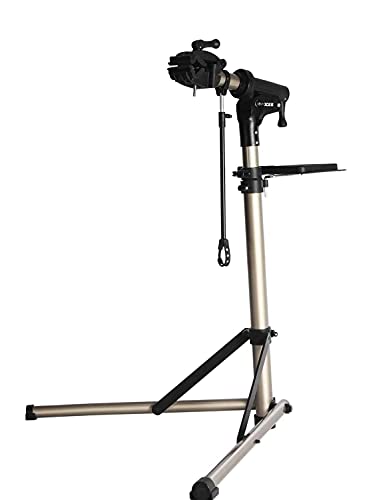
CXWXC RS-100 Bike Repair Stand (Champagne)
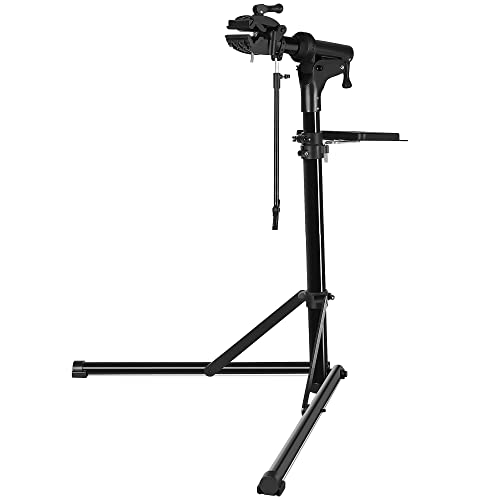
CXWXC RS100 Bike Repair Stand (Black)

CXWXC Bike Repair Stand for Maintenance Workstand

Park Tool PCS-10.3 Deluxe Home Mechanic Repair Stand

VEVOR Bike Repair Stand 66 lbs Adjustable Height
More On The Choices That Made The List
The CXWXC RS-100 suits home mechanics who want a light stand that still holds a 60-pound bike steady. Its clamp, the grip that secures a frame tube or seatpost, rotates 360 degrees, so the bike can turn toward the work instead of forcing awkward reach.
Height adjusts from 102 to 161 cm, a range that helps taller users work upright. A separate tightening rod steadies the front wheel, and that detail reduces sway during wheel removal.
Where It Delivers
- Alloy barrel keeps carry weight low and resists corrosion
- Triangle base with rubber feet grips smooth floors
- Clamp fits tubes from 25 to 50 mm in diameter
- Front-wheel rod adds stability during repairs
- Folds for storage in a garage corner
Things To Consider
- 60-pound ceiling excludes some heavy e-bikes
- No tool tray included for small parts
Black finish aside, this version adds a magnetic tool tray to the RS-100 formula. That tray changes the workflow during a tune-up, because small screws and bolts stay in one place. You get the same 360-degree clamp and alloy barrel, with organization built in.
Compared with the champagne model, the practical gain is storage at the stand, not a different load limit. The 60-pound rating and front-wheel rod remain, so the choice comes down to whether a tray matters during longer sessions.
What Stands Out
- Magnetic tray holds screws and small hardware
- Alloy construction stays light for moving between rooms
- Rubber feet protect floors and limit slipping
- Adjustable height suits standing repairs
Worth Noting
- Same 60-pound limit as the champagne version
- Tray depth suits small parts, not large tools
- Tripod base needs clear floor space
Who It Suits Best
Home mechanics who lose small hardware during tune-ups and want a tray within reach.
Where Another Pick Suits Better
CXWXC RS-100 Bike Repair Stand (Champagne) suits shoppers who prefer the lighter setup without a tray.
This CXWXC model shifts from alloy to welded iron, with ABS-plated clamp surfaces to reduce frame scratches. Height spans 80 to 146.1 cm, lower at the bottom end than the RS-100, which can help seated work. The clamp still rotates 360 degrees and fits tubes from 25 to 45 mm.
A plastic magnetic tray keeps lubricants and spare parts close during washing or tuning. In a busy garage, that built-in storage cuts trips to a bench, though the iron frame will feel heavier to carry than alloy options.
A Strong Showing
- Welded iron tubes give a sturdy feel
- Magnetic tray organizes tools and parts
- Lower height range supports seated repairs
- ABS plating helps protect frame finish
- Folds small for storage and travel
Trade Offs
- Heavier carry than alloy stands
- Clamp range tops out at 45 mm
Made For
Garage-based mechanics who work seated or standing and want parts storage on the stand.
Consider Something Else When
Park Tool PCS-10.3 Deluxe Home Mechanic Repair Stand suits heavier bikes beyond 60 pounds.
Steel construction and an 80-pound capacity separate this Park Tool stand from the 60-pound CXWXC models. A cam-actuated clamp, meaning a lever that grips with one hand, fits tubes from 22 to 76 mm, including aero shapes and seatposts. You can load fat bikes and most e-bikes that lighter stands cannot support.
Height adjustment covers 18 inches with 360-degree clamp rotation, and a height-adjustable parts tray sits within reach. The honest read is that steel adds weight during transport, so folding storage matters more here.
Useful Touches
- 80-pound capacity covers heavier e-bikes
- Wide clamp range fits varied tube shapes
- One-handed clamp entry speeds setup
- Accessory ports support extra trays and holders
- Teardrop tubing adds rigidity
Small Caveats
- Steel frame is heavier to move
- Extra accessories are sold separately
- Higher positioning suits a dedicated workspace
Tall users get the most from this VEVOR stand, because height reaches 1600 mm, higher than the CXWXC options. A 66-pound capacity edges past 60-pound models, while a telescoping arm adjusts from 1020 to 1600 mm for standing or seated work. You can center the bike’s weight to keep balance during repairs.
Stability comes from a fixing rod that can attach to handlebars or the front wheel, plus a three-legged non-slip base. A magnetic tray keeps tools in place, and the stand folds for a trunk or garage corner.
What Makes Sense
- 66-pound capacity handles heavier frames
- Tallest height range in this group
- Fixing rod steadies handlebars or front wheel
- Magnetic tray keeps small tools secure
- Foldable design saves storage space
Points To Note
- Correct centering matters for balance
- Stand must be fully expanded before clamping
What Matters Most Before Choosing a Work Stand
Clamp Fit and Load Limit
Measure a frame tube or seatpost before selecting a clamp. A stand rated for 25 to 50 mm suits most standard frames, while wider aero tubes need a broader range. Weight capacity deserves equal attention, because a 60-pound limit can exclude a heavy e-bike that an 80-pound steel model can hold.
Height Range for Your Workspace
Your working height changes the comfort of long sessions. A range starting near 80 cm supports seated repairs, while a top end near 160 cm helps taller mechanics work upright. Check ceiling clearance in a small garage, since a raised bike adds height above the clamp.
Base, Storage, and Small Parts
A tripod base needs floor space, while rubber feet help on smooth concrete or tile. Folding designs fit closets and car trunks, but steel frames trade portability for rigidity. A magnetic tray helps during chain and gear work, where dropped bolts slow progress.
Key Considerations Across These Picks
Common Shopping Slip Ups
Many shoppers focus on color or extra trays and skip clamp diameter. That mismatch shows up during setup, when a frame tube sits outside the grip range. Checking tube size and bike weight first prevents a return.
Why Top Tier Costs More
Higher-tier stands use steel tubing, wider clamps, and stronger joints to carry heavier bikes. Those materials add weight and build complexity, which explains the positioning. The upgrade pays off for frequent mechanics and e-bike owners, while occasional users can stay with lighter alloy models.
Frequently Asked Questions
What clamp size fits most bikes?
Most standard frames fall within 25 to 50 mm, which covers many road and mountain models. Aero tubes and larger seatposts need a wider range, such as 22 to 76 mm.
How much weight should a stand support?
Capacity should exceed the bike weight with room for tools and accessories. A 60-pound rating suits lighter bikes, while 66 to 80 pounds covers heavier e-bikes.
Can a stand work for seated repairs?
Lower height settings near 80 to 102 cm support seated work at a bench. Higher settings near 150 cm suit standing repairs for taller users.
Why does a front-wheel stabilizer matter?
A free front wheel can swivel during brake or fork work. A tightening rod or fixing strap limits that movement and keeps the bike aligned.
Do magnetic trays help during maintenance?
A magnetic tray keeps screws and bolts in one spot during gear adjustments. That storage reduces lost hardware on a garage floor.
Final Thoughts
Match clamp range and load capacity to the bikes in the household first. For lighter bikes, the CXWXC RS-100 keeps carry weight low. For heavier e-bikes, the Park Tool PCS-10.3 provides broader support, and choosing based on those two numbers leads to a stand that fits daily repairs.