
A wobbly parked bike is a daily annoyance at coffee stops, trailheads, and busy racks. Center-mount and rear-mount stands solve that problem in different ways, and hole spacing decides which one fits. The chainstay, meaning the rear frame tubes that run from the bottom bracket to the rear axle, carries the mounting holes on most rear-mount designs. Measure chainstay holes, wheel size, and frame height before choosing, because those three numbers narrow the field fast. You get a steadier lean angle when the stand length matches your frame, and your bike stays upright on gravel, grass, and damp pavement.
The Leading Options At A Glance

Lumintrail Center Mount Bicycle Kickstand 24-29 Inch

DACKZZM Bike Kickstand 18mm Rear-Mount

Cyfie Adjustable Bike Kickstand 24-29 Inch Black
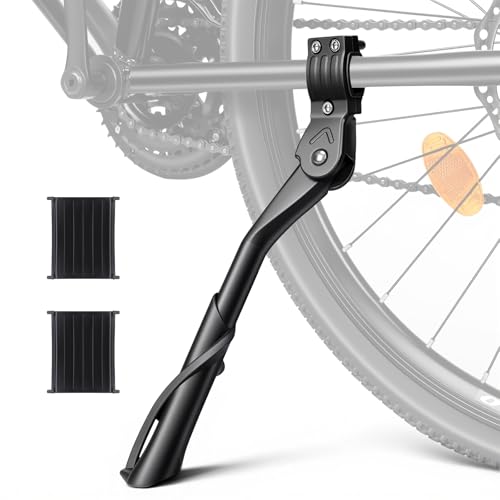
WSDCAM Bike Kickstand Adjustable Rear Side 24-29 Inch

HENMI Adult Bike Kickstand Magnesium Alloy Clamp 24-29
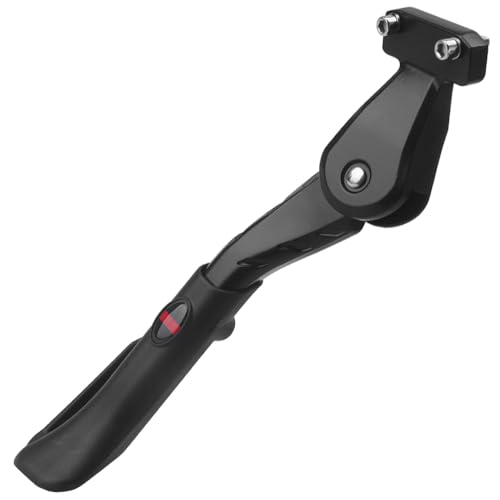
Sataway Height Adjustable Bicycle Kickstand 16-22 Inch
Bike Kickstand 40mm Hole Spacing Side Stand 170 LBS

RBRL Bike Kickstand 18mm Hole Spacing 100lbs
More Details On Our Top Picks
Center mounting changes the parking feel in a useful way, because the leg sits near the middle of the frame instead of at the rear. That placement suits cruisers and hybrids that lean at a shallow angle on a rack or sidewalk. You can set the stance on uneven ground without reaching for tools, thanks to a push-button latch.
The leg extends from 13.5 inches to 16.5 inches, covering ground clearance from 10.5 to 12 inches on 24 to 28 inch wheels in the detailed sizing. Aluminum alloy construction keeps weight at 10.6 ounces, and a wide reinforced foot spreads load on soft surfaces. An adapter is included for frames without a mounting plate, which widens fit beyond bikes with a ready bracket.
Everyday Advantages
- Push-button adjustment changes length quickly at the curb
- Wide foot resists sinking on mud and loose gravel
- Adapter helps bikes that lack a mounting plate
- Center position gives a balanced lean on level ground
- Light aluminum body keeps added weight low
Things To Consider
- Center-mount geometry differs from rear-mount stands, so lean angle needs a quick check
- Ground clearance outside 10.5 to 12 inches falls outside the stated range
Rear mounting at 18mm hole spacing is a common pattern on mountain bikes, BMX, and road frames. The DACKZZM version locks length with screws, so added weight on a loaded bike will not cause the leg to shorten on its own. That locked setting feels reassuring on a commuter carrying a bag.
Construction uses high-strength aluminum alloy at 0.48 lb, with a stated maximum load of 35 kg. Your chainstay must have two holes spaced 18mm apart, and the package includes M5 and M6 stainless screws in pairs. Length and angle can be tuned by trial, which suits riders who park on sloped driveways.
Useful Touches
- Screw lock holds the chosen length under load
- Aluminum alloy body resists weather exposure
- Two screw sizes cover different mounting setups
- Adjustable angle helps balance on uneven ground
Worth Noting
- Requires two chainstay holes at exactly 18mm spacing
- Screw needs care not to overtighten during adjustment
- Maximum load of 35 kg limits heavier e-bike use
Who It Suits Best
Mountain bike and road bike owners with confirmed 18mm dual holes who want a locked length.
Where Another Pick Suits Better
The Lumintrail Center Mount Bicycle Kickstand 24-29 Inch suits bikes without that rear hole pattern.
Load capacity sets this one apart, with a stated 176-pound limit that covers many e-bikes and loaded commuters. Unlike the DACKZZM model at 35 kg, the Cyfie design targets heavier frames while keeping a rear-side layout. You can park a heavier machine on dirt or grass with a wider foot spreading the load.
Length adjusts from 14.01 to 15.94 inches using a 4mm Allen key, and Allen wrenches are included for installation. Fit covers 24, 26, 27.5, 28, and 29 inch wheels, provided frame height from ground stays between 11.22 and 12.6 inches. Chainstays must be oval or rectangular, 15 to 25mm, since round or triangular shapes are excluded.
Real-World Strengths
- 176-pound capacity suits heavier e-bikes and cargo loads
- Wide anti-slip pad grips dirt, grass, and gravel
- Included Allen wrenches simplify installation
- Aluminum alloy construction resists wear
- Length range covers many adult wheel sizes
Small Caveats
- Round or triangular chainstays are not compatible
- Frame height must fall inside a narrow stated window
Cargo and freight bikes place extra stress on a stand, because racks and loads shift the balance point. The WSDCAM leg uses reinforced aluminum alloy with rivet fastening and a thickened foot, rated up to 66 pounds or 30kg. That rating sits below the Cyfie limit, so the trade-off is a lighter-duty build with a broader everyday focus.
Height adjusts from 13.78 to 15.75 inches through rear screws, and the widened foot carries anti-slip texture for grass, mud, cement, and snow. A threaded rubber pad at the mounting point helps protect the frame from scratches. The package includes three screws, two hex wrenches, and the rubber pad pack.
The Value In It
- Textured wide foot improves grip on varied surfaces
- Rubber pad protects the frame at the mount
- Two hex wrenches cover installation and adjustment
- Rear screw adjustment tunes height in small steps
Points To Note
- 66-pound limit is lower than heavier-duty options here
- Adjustment screw must not be loosened too far
- Oval or rectangular chainstay shape is required
Made For
Commuters and cargo bike owners parking on mixed surfaces who need frame protection at the mount.
Consider Something Else When
The Cyfie Adjustable Bike Kickstand 24-29 Inch Black suits heavier e-bikes beyond a 66-pound load.
Clamp mounting gives this design a different fit story from hole-based rear stands. The HENMI clamp fits oval and rectangular tubing up to 0.9 inch, which helps bikes without pre-drilled chainstay holes. Your tubing shape matters more than hole spacing here, a useful distinction on older commuter frames.
Length adjusts between 13.3 and 15.7 inches, and the frame blends magnesium with aluminum alloy for a lightweight yet sturdy structure. A maximum load of 99 pounds is stated, with enlarged anti-slip pads to resist sinking in sand or mud. Installation accessories and instructions are included in the package.
Benefits That Matter
- Clamp fits tubing up to 0.9 inch without drilled holes
- Magnesium-aluminum blend keeps the leg lightweight
- Enlarged pads resist sinking in soft ground
- 99-pound limit covers many mountain and commuter bikes
- Accessories and instructions are included
Trade Offs
- Load limit sits below the 176-pound Cyfie rating
- Tubing must be oval or rectangular within the stated size
Wheel size alone separates this pick from the 24 to 29 inch group. The Sataway stand is sized for 16 to 22 inch wheels, including folding e-bikes, fat tire models, and compact urban cycles. You can match a smaller frame without an oversized leg that leans too far.
Mounting requires chainstay holes spaced 40mm apart, and bikes without those holes cannot use the design. A rear adjustment screw allows precise height tuning, while thickened aluminum alloy forms the body. Pre-packed M5 bolts and a widened anti-slip base are included for parking on uneven or slick surfaces.
The Good Stuff
- Sized specifically for 16 to 22 inch wheels
- Rear screw gives precise height tuning
- Thickened aluminum alloy body for folding e-bikes
- Widened base resists sliding on slick ground
- M5 bolts are pre-packed for mounting
Honest Caveats
- Requires 40mm chainstay hole spacing
- Frames without chainstay holes are incompatible
- Wheel size range excludes standard adult bikes
Dual-hole mounting at 40mm spacing defines this side stand, and the design is stated as not universal. Fit covers 24 to 29 inch mountain bikes, road bikes, fat tire bikes, and select lightweight e-bikes that meet that hole pattern. The 170-pound maximum load places it near the Cyfie rating, with a clear warning against heavier electric bikes.
Length adjusts for stable support on flat ground, and the package contains screws, washers, and lock washers, with nuts not included. That hardware detail matters at installation, because extra parts may be needed depending on the frame. Solid construction suits daily commuting and recreational riding within the weight limit.
Practical Advantages
- 170-pound capacity covers many adult bikes
- Adjustable length supports a steady lean
- Hardware includes screws, washers, and lock washers
- 40mm dual-hole pattern fits fat tire frames
Points To Keep In Mind
- Nuts are not included in the package
- Requires two mounting holes spaced 40mm apart
- Heavy e-bikes above 170 pounds are unsuitable
Right Fit For
Riders with confirmed 40mm dual holes and bikes under the stated load who want adjustable length.
Not Your Match When
The RBRL Bike Kickstand 18mm Hole Spacing 100lbs suits frames with 18mm holes instead of 40mm.
Tool-free adjustment is the headline here, with a red side button that changes length without tools. You can dial in the lean angle at a trailhead or on a sloped sidewalk in seconds. That convenience differs from screw-locked designs, where a tool stays part of every change.
Length spans 13.78 to 16.53 inches, and the aluminum alloy body weighs 0.71 lb with a 100-pound load limit. Fit requires 24 to 29 inch wheels, two holes at 18mm spacing, and mounting height from 10.2 to 12.6 inches. An enlarged nylon foot and included Allen wrench with screws support parking on sidewalks, gravel, and uneven roads.
Practical Pluses
- Red button adjusts length without tools
- Enlarged nylon foot grips uneven surfaces
- Allen wrench and screws are included
- Aluminum alloy body resists deformation
- Length range covers many frame heights
A Few Limitations
- 100-pound limit is lower than 170-pound options
- All three fit requirements must be met together
What To Check Before Picking a Stand
Mounting Hole Spacing
Hole spacing is the first filter, because 18mm and 40mm patterns are not interchangeable. Measure center to center with a ruler before ordering, and note whether the frame has two holes or none. Clamp designs such as the HENMI model follow a different rule based on tubing size.
Wheel Size and Frame Height
Wheel size narrows the list quickly, with most picks here covering 24 to 29 inches and the Sataway covering 16 to 22 inches. Frame height from ground to the mounting point matters just as much, since several stands state a narrow window. A stand that is too short or too long will lean at an awkward angle.
Load Capacity and Foot Design
Load limits range from 66 pounds to 176 pounds across this group, so bike weight plus cargo should stay inside the stated cap. Foot design matters on soft ground, where a wider pad spreads weight and resists sinking. You can judge that choice by parking surface, from pavement to gravel to grass.
Adjustment Type
Push-button and red-button designs allow quick changes without tools, while screw-locked legs hold a set length firmly. Allen-key adjustment sits in between, offering precise tuning at the cost of carrying a tool. Commuters who change surfaces often may value tool-free changes, while loaded bikes may value a locked setting.
Key Considerations Across These Picks
Common Shopping Slip Ups
A frequent slip is ordering by wheel size alone and skipping hole spacing, which leads to a stand that cannot mount. Another slip is ignoring frame height, even though two bikes with the same wheels can sit at different heights. Measuring both numbers first prevents most fit problems.
What The Higher Tier Buys
Higher load ratings usually come with thicker aluminum bodies, wider feet, and hardware for heavier frames. Those details help when an e-bike or cargo load is involved, and they matter less on a light road bike. Paying more makes sense when weight and surface demand it.
Frequently Asked Questions
How do I measure hole spacing on a chainstay?
Measure from the center of one mounting hole to the center of the second hole. That distance should read 18mm or 40mm for most rear-mount designs here.
Can a clamp stand fit a frame without mounting holes?
Yes, clamp designs grip oval or rectangular tubing instead of using drilled holes. The HENMI clamp fits tubing up to 0.9 inch, so tubing shape and size still need a check.
What load limit should a commuter look for?
Match the limit to total bike weight plus racks, bags, and cargo. A 170-pound or 176-pound rating gives more headroom than a 66-pound or 100-pound rating.
Why does frame height matter for length adjustment?
Length must match the distance from the mounting point to the ground at the desired lean angle. A mismatch leaves the bike leaning too far or not far enough.
Which foot design works on grass and gravel?
A wider, textured or enlarged foot spreads load across soft surfaces. That design resists sinking better than a narrow foot on loose ground.
Final Verdict
Match hole spacing first, then wheel size, frame height, and load limit, and the right stand becomes clear. The Cyfie suits heavier bikes, the RBRL suits tool-free tuning, and the Sataway suits smaller wheels. You can narrow the choice in minutes with a ruler and a scale.