
A garage with bikes leaning against walls quickly becomes a trip hazard, especially in a busy household where floor space already holds tools, bins, and a car. Overhead hanging lifts that problem clear, keeping frames off the ground while keeping them within reach. You get the most from a ceiling system by matching capacity, ceiling height, and bike weight before mounting anything.
A Snapshot Of The Selections
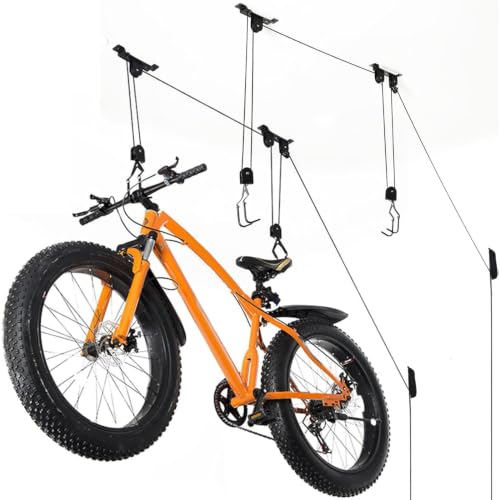
Wallmaster Ceiling Bike Hanger Pulley System 50lb 2 Pack

GURADESIGN 8-Pack Heavy Duty Bike Hook 100 LBS 6 inch

Rad Sportz Bike Hanger Set Overhead Pulley System Green 2-Pack

Tlence 4 Pack Overhead Garage Storage Hooks 16.5 Heavy Duty
Urban Deco Ceiling Mounted Bike Rack 8 Adjustable Hooks

USA Based Ceiling Bike Rack 6 Bikes Sliding 51 Rails

RAD Sportz Bicycle Hoist 2-Pack 100 lb Capacity Garage Lift
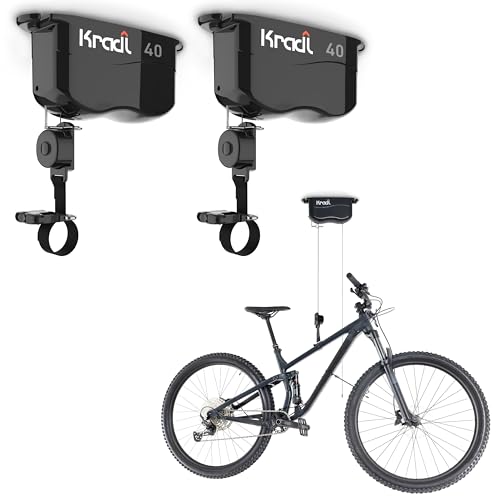
Kradl Spring-Powered Ceiling Bike Hoist Rack 40lb Model
A Breakdown Of The Leading Choices
A two-pack pulley hoist suits households storing a pair of standard bikes overhead in a garage. Steel construction and a locking mechanism hold each bike at a chosen height, up to ceilings 12 feet tall. That setup clears floor space for parking or workbenches while keeping bikes out of daily traffic.
Rubber-coated hooks cushion contact points, which matters for painted frames and carbon parts. A pulley, meaning a wheel-and-rope system that changes the lifting effort, lowers the bike in a controlled way rather than dropping it. You benefit most here with road or hybrid bikes under the 50-pound limit, in our view, because lighter frames make the rope pull feel smoother.
What It Does Well
- Two hoists cover two bikes in one purchase
- Locking mechanism prevents accidental release
- Rubber hooks reduce scratch risk on frames
- Height adjustment fits ceilings up to 12 feet
Things To Consider
- 50-pound limit excludes heavier e-bikes and some cruisers
- Mounting needs a ceiling beam for secure anchoring
Simple screw-in hooks take a different approach from pulley hoists, trading powered lifting for low cost and flexibility. Each 6-inch hook threads 1.2 inches into a wall or ceiling surface and carries up to 100 pounds. That design suits a garage where bikes stay parked for seasons rather than moving up and down daily.
Carbon steel with a galvanized surface resists rust, a practical point in a damp garage. PVC coating on the hook arm cushions the wheel rim during hanging. Compared with the Wallmaster pulley set, this option removes rope handling entirely, though lifting a bike overhead by hand takes more effort.
Practical Pluses
- Eight hooks spread across walls, ceilings, and racks
- 100-pound rating handles heavy mountain bikes
- Galvanized steel resists rust in humid spaces
- PVC coating cushions contact with rims
- Plastic case keeps spare hooks organized
Worth Noting
- Manual lifting lacks pulley mechanical advantage
- Threaded mounting needs solid material behind the surface
Who It Suits Best
Seasonal storage for several bikes in a garage with solid wall or ceiling material.
Where Another Pick Suits Better
Wallmaster Ceiling Bike Hanger Pulley System 50lb 2 Pack suits daily lifting with pulley assistance.
Rad Sportz doubles the Wallmaster capacity, rating each hoist at 100 pounds for heavier bikes or ladders. The pulley system includes a safety lock, and the 49-foot rope length supports ceilings up to 12 feet. Neon green and black coloring makes the hardware easy to spot in a dim garage, a small detail that helps during evening use.
Steel, polypropylene, and rubber-coated hooks combine structure with frame protection. Mounting options include a joist directly or a 2×4 board screwed to a joist, which spreads load across a wider surface. You may find that board option steadier on ceilings where joist spacing makes direct placement awkward.
The Case For It
- 100-pound capacity per hoist exceeds standard bikes
- Locking pulley prevents accidental release
- Rubber coating protects frames from scratches
- 2×4 mounting option spreads load across joists
Trade Offs
- Rope system needs more ceiling clearance during lowering
- Green color may clash with finished garage interiors
Unlike bike-specific hoists, these T-bar racks cradle long items horizontally across two supports. Each hook measures about 16.5 by 10.7 by 7.5 inches, and each side carries 33 pounds. That shape works well for lumber, pipes, fishing rods, and skis, where a single bike hook would leave long items unbalanced.
Thick iron with a powder-coated finish and EVA foam padding addresses rust and slipping. Screws and expansion anchors come included, simplifying installation into a ceiling surface. The catch is fixed positioning, since bikes must be lifted manually onto the bars rather than raised on a pulley.
Where It Excels
- Double T-bar supports long bulky items evenly
- Powder coating and EVA foam limit rust and slipping
- Installation hardware included in the set
Minor Gripes
- 33 pounds per side limits heavy bike use
- Fixed bars require manual overhead lifting
- Large footprint needs careful ceiling placement
Made For
Workshops storing lumber, pipes, and sports equipment alongside bikes.
Consider Something Else When
Rad Sportz Bike Hanger Set Overhead Pulley System Green 2-Pack suits heavy bikes needing pulley lifting.
Families with many bikes get the most from a rack built for volume rather than individual lifting. This two-piece set holds up to eight bikes vertically or four horizontally, using coated steel rails mounted to the ceiling. Each hook carries 80 pounds, for a stated total of 640 pounds across the system.
Hooks measure 11 by 3.5 inches and fit tires up to 3.5 inches wide, covering road, mountain, children, and leisure bikes. Multiple mounting holes let spacing shift as bike sizes change. Your garage layout decides the orientation, since vertical storage saves ceiling length while horizontal storage saves depth.
What Stands Out
- Eight hooks store a full family fleet overhead
- Adjustable spacing adapts to mixed bike sizes
- Rubber coating protects tires and improves grip
- Installation kit includes hardware and a screwdriver
- 80-pound rating per hook supports heavy frames
Room For Improvement
- Manual lifting grows tiring with eight bikes
- Large rail footprint needs a wide ceiling area
Sliding hooks on long rails solve a common annoyance with fixed racks, bikes crowding together during removal. Three rails measure 51 inches long, with six padded hooks that move along the track. A bike can slide aside while another comes down, which helps in a garage where bikes sit side by side.
Rubber coating over the hooks cushions frames during hanging. The rack mounts parallel or perpendicular to ceiling joists, giving flexibility for different garage layouts. One set stores six bikes vertically, and two sets together reach twelve horizontally, a useful scaling path for larger households.
Strong Points
- Sliding hooks improve access between parked bikes
- Padded mounts cushion frames during storage
- 51-inch rails mount parallel or perpendicular to joists
- Expandable with a second set for more bikes
Points To Note
- Long rails need an uninterrupted ceiling run
- Manual lifting remains part of daily use
Right Fit For
Households with several bikes used often, where sliding access saves daily hassle.
Not Your Match When
Kradl Spring-Powered Ceiling Bike Hoist Rack 40lb Model suits single bikes needing effortless lifting.
This hoist shares the 100-pound pulley concept with the Rad Sportz set earlier, with smooth pulleys and a rope lock for controlled lifting. Indoor ceilings up to 12 feet tall are the stated fit, and mounting goes to a joist or rafter directly or through a 2×4 board. Rubber-coated hooks protect frames while bikes or ladders hang overhead.
The design suits garages and sheds where two items need regular lifting without strain. Rope handling takes practice, and the locking mechanism must engage fully before release. You get a straightforward system with few moving parts, which keeps operation predictable for seasonal storage.
Reasons It Performs
- 100-pound capacity covers bikes and ladders
- Rope lock prevents unwanted release
- Rubber hooks protect finishes from scratches
- Joist or 2×4 mounting offers placement flexibility
Small Caveats
- Pulley rope needs clear space below the mount
- Lock engagement requires a deliberate check
An internal spring replaces ropes and pulleys, lifting the bike with stored spring energy rather than arm strength. The 40-pound model in this two-pack suits bikes from 26 to 40 pounds, including mountain bikes and steel frames. Cable travel reaches 10 feet, fitting ceilings up to 12 feet tall.
Installation uses two included mounting screws, keeping setup simple. Compatibility covers step-through frames with a crossbar adapter, and pairs of units can handle e-bikes up to 80 pounds with a separate kit. Weighing the bike before ordering matters here, since the 25-pound model suits lighter road and kids bikes instead.
Notable Upsides
- Spring lift removes ropes and manual pulleys
- Two screws simplify ceiling installation
- Stops at any height between floor and ceiling
- Works with step-through frames via adapter
Areas To Watch
- 40-pound model excludes bikes under 26 pounds
- Correct capacity selection requires weighing the bike
What To Check Before Hanging Bikes Overhead
Weight Capacity And Bike Weight
Capacity ratings range from 33 pounds per side to 100 pounds per hoist across these picks. Weigh each bike, including racks and accessories, then choose a system with headroom. E-bikes often exceed basic hoist limits and may need paired units or a higher-rated pulley.
Ceiling Height And Mounting Surface
Ceiling height determines rope length and cable travel, with several systems rated to 12 feet. Joist location matters just as much, since secure mounting needs solid wood behind the hardware. A 2×4 board screwed across joists spreads load where direct mounting feels uncertain.
Lifting Method And Daily Use
Pulley systems reduce lifting effort but add rope management. Spring-powered hoists remove ropes entirely, while fixed hooks and rails require manual lifting. Daily riders benefit from assisted lifting, whereas seasonal storage tolerates simpler hooks.
Space Layout And Bike Count
Vertical storage suits narrow garages, horizontal storage suits wide ceilings, and sliding rails improve access between bikes. Count bikes first, then match the format, since an eight-hook rack wastes space for a single bike.
Key Considerations Across These Picks
Common Shopping Slip Ups
Shoppers often skip weighing bikes and overlook joist placement, leading to mismatched capacity or awkward mounting. Measuring ceiling height and checking tire width against hook size prevents most fit problems.
What The Higher Tier Buys
Higher-tier systems add assisted lifting, locking mechanisms, and adjustable spacing. Those features pay off with daily use, heavy frames, or multiple bikes, while simple hooks remain sensible for occasional storage.
Frequently Asked Questions
How much weight can a ceiling bike hanger hold?
Capacity varies by design, from 33 pounds per side on T-bar racks to 100 pounds per pulley hoist. Always compare the stated limit with the actual bike weight before choosing a system.
What ceiling height works for pulley hoists?
Several pulley systems support ceilings up to 12 feet tall. Rope length and cable travel should match the ceiling height so the bike reaches a safe storage position.
Can ceiling racks store more than bikes?
Many racks also hold ladders, lumber, fishing rods, and sports equipment. T-bar designs suit long items best, while bike hooks focus on wheel-based storage.
Which option suits a family with many bikes?
Multi-hook rails storing four to eight bikes handle larger households efficiently. Adjustable spacing helps accommodate mixed sizes from kids bikes to adult mountain bikes.
What mounting surface does a ceiling hanger need?
Secure mounting needs solid material such as a ceiling joist or a board anchored to joists. Drywall alone does not support the stated loads safely.
Final Verdict
Pulley hoists from Rad Sportz suit heavy bikes, sliding rails suit busy families, and the Kradl spring system suits effortless daily lifting. Match capacity to bike weight, confirm ceiling height, and pick the lifting method that fits how often bikes move.