
A rear light matters most on the ride home, when traffic picks up speed and daylight fades fast. Commuters, road riders, and mountain bikers all face the same problem: a driver behind needs a clear, steady signal that a bicycle is there. The eight options below cover simple two-packs, high-output daytime flashers, and smart brake-sensing models, so you can match brightness, runtime, and mounting style to a real route.
A Closer Look At The Lineup
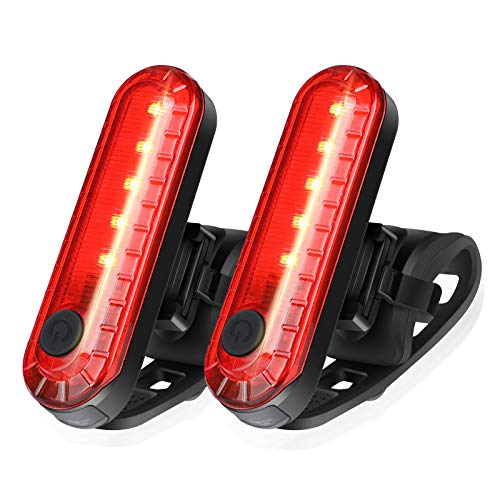
Ascher Bike Tail Lights 2 Pack USB Rechargeable

Cygolite Hypershot 350 Lumen Bike Tail Light 7 Modes

USB-C Rechargeable Bike Tail Light 2 Pack 120LM

ONVIAN Bike Tail Light 2 Pack USB Rechargeable IP64

BLITZU Bike Tail Light 2 Pack USB-C

Zewdov Bike Lights for Night Riding Rechargeable
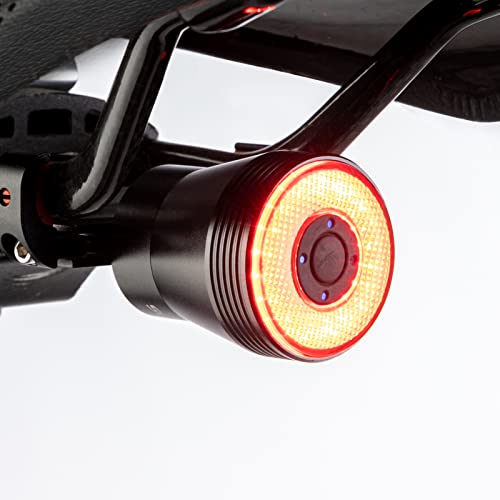
ROCKBROS Bike Tail Light Smart Brake Rechargeable IPX6
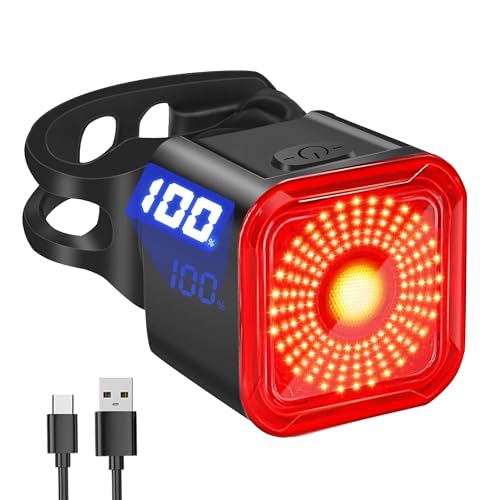
DARKBEAM Bike Tail Light LED Display USB-C Rechargeable
The Details Behind The Selections
A two-pack with a simple one-touch switch suits commuters who want a spare light in a drawer. The silicone strap slides over most seatposts, and the light itself separates from the bracket without undoing the strap. That matters on a daily commute, where removing the whole mount each time gets tedious.
Four modes cover steady and flashing use, with full brightness lasting about 9.5 hours and half brightness about 16 hours. The 330 mAh cell charges through micro USB, a slower, older connector than USB-C, but cables are widely available. On a 30-minute evening ride, the wide beam gives drivers behind a clear cue.
Bright Spots
- Two lights in one set for a backup or second bike
- Slide-off design keeps the seatpost bracket in place
- Long runtimes in half-brightness and flashing modes
- Lightweight body that is easy to carry in a pocket
Things To Consider
- Micro USB charging is slower than USB-C models below
- IPX4 rating handles splashes, not heavy downpours
Daytime visibility is the whole point here. At 350 lumens, this single light pushes far harder than the Ascher two-pack, and the Daylighting Flash mode is built for busy streets in broad daylight. Riders who cross multi-lane traffic will appreciate that extra punch.
Seven modes include Steady Pulse, which keeps a base beam so drivers can judge distance while pulses add alertness. Two buttons let the flash speed and steady brightness be adjusted, and runtime stretches from 2 to 200 hours across modes. At 75 grams with hard seatpost and seatstay mounts, the setup feels secure on rough roads, though the hard mount is less flexible than a silicone strap.
A Few Strong Suits
- 350-lumen output for daytime and nighttime use
- Adjustable flash speed through two-button control
- Steady Pulse mode balances distance cues and alertness
- Compact 75-gram body with low-battery indicator
- USB rechargeable design for regular top-ups
Worth Noting
- Hard mounts fit seatpost and seatstay, not helmets or bags
- Single light, so a second bike needs another unit
USB-C charging sets this two-pack apart from the Ascher set above, and the connector matches what most phones use now. Five red LEDs deliver 120 lumens across a wide angle, which suits night commuting and foggy mornings. You’ll get steady light for about 4 to 5 hours, with strobe modes running 10 to 12 hours.
The silicone strap fits seatposts, helmets, backpacks, and strollers without tools, so one light can move between bikes. Two cables are included, one per light. IPX5 rating covers splashes and light rain, a step up from IPX4, though sustained heavy rain remains a stretch for any small light.
The Practical Payoff
- USB-C ports align with modern phone chargers
- Five LEDs spread light across a wide angle
- Strap mounts on bikes, helmets, and bags
- Two-pack covers a second bike or a spare
Trade Offs
- 120 lumens trails the Cygolite 350-lumen output
- Steady-mode runtime is shorter than flashing modes
- IPX5 rating suits splashes, not submersion
Who It Suits Best
Commuters who charge gear through USB-C and ride several bikes benefit most.
Where Another Pick Suits Better
The Cygolite Hypershot 350 Lumen Bike Tail Light 7 Modes suits riders who need stronger daytime flashes.
Constant brightness technology is the headline here, using a constant-current driver so output holds steady as the battery drains. A 270-degree viewing angle and claimed visibility beyond 500 meters suit riders on dark country lanes. At 18 grams, the light barely adds weight to a road bike.
Five modes include a memory function that resumes the last setting, which saves a few clicks at the start of a ride. IP64 protection and ABS construction handle humid conditions, and the silicone strap mounts to seatposts, helmets, or backpacks. Charging needs the waterproof plug removed first, a small step that is easy to forget on a rushed evening.
The Good Stuff
- Constant brightness as battery level falls
- Memory function restores the last mode
- Only 18 grams for long-distance rides
Minor Gripes
- Waterproof plug must be pulled off before charging
- Charger is not included in the set
Mounting range is the selling point: seatposts, seatstays, helmets, saddle bags, backpacks, strollers, and even dog collars. An adjustable hinge tilts the beam up or down, which helps when a seatpost angle points the light at the road. Families with kids on different bikes will find that flexibility handy.
USB-C charging and up to 10 hours of illumination keep maintenance simple, and the waterproof build suits rain, snow, and fog. The Cyborg 120T naming points to the 120-lumen class, similar to the USB-C two-pack earlier in the list, but the broader mount list and hinge give this set a different edge.
Notable Upsides
- Adjustable hinge aims the beam where it is needed
- Mounts across bikes, helmets, bags, and strollers
- USB-C charging with up to 10 hours per charge
- Two-pack works for adults and kids
- Weather-resistant build for wet conditions
Small Caveats
- Brightness class trails the 350-lumen Cygolite
- Flexible straps need a check on thin seatposts
Made For
Households with multiple bikes and mixed mounting points suit this set well.
Consider Something Else When
The ROCKBROS Bike Tail Light Smart Brake Rechargeable IPX6 suits riders who want brake sensing.
Slim and light defines this set: 1.7 cm thick and 27 grams, so it tucks into a pocket or bag without bulk. The package includes a headlight and taillight that charge together in 1 to 1.5 hours through a 2-in-1 cable. That paired charging suits riders who want a complete night setup in one box.
Taillight modes reach six, with a breathing flash that stays less harsh than a strobe. IP65 rating covers rain and fog, and PC shell construction adds shock resistance. Elastic rubber straps attach front and rear, and the lights also work on scooters, strollers, and backpacks. Battery guidance notes charging after three months without use to keep performance up.
Useful Touches
- Headlight and taillight charge together quickly
- Slim 1.7 cm profile fits pockets easily
- Six taillight modes with memory function
Points To Note
- Set includes a headlight, adding cost for taillight-only needs
Brake sensing changes the behavior in traffic. A sensor triggers a high-intensity flash for about 5 seconds when slowing down, giving drivers behind a clear signal at intersections. Aluminum alloy construction and IPX6 rating suit riders who face rain regularly.
Four modes include Normal Flash, Breathing Flash, Fast Flash, and Steady On. Motion and light sensors turn the light off after 30 seconds of inactivity in modes 1 and 2, then restart it on movement. A 400 mAh battery runs up to 50 hours, with four blue indicators showing charge in 25% steps. Dual brackets cover saddle rail and seatpost mounts.
Practical Pluses
- Brake flash alerts drivers during stops
- Auto on-off saves battery at traffic lights
- Four-step power indicator shows charge level
- Up to 50 hours on a full charge
Areas To Watch
- Auto off applies only to modes 1 and 2
- Aluminum body adds weight versus plastic lights
Right Fit For
City riders who stop often in traffic gain the most from brake sensing.
Not Your Match When
The DARKBEAM Bike Tail Light LED Display USB-C Rechargeable suits riders who want a digital battery readout.
A digital display shows battery level in real time, so a low charge never comes as a surprise mid-ride. At 0.85 oz and about 1.26 inches square, the unit fits a pocket or bag. Six memory modes include stay on, flash, breathing, single flash, burst flash, and heartbeat patterns.
Brake sensing brightens the light under rapid braking, and sleep mode kicks in after 30 seconds still, waking on vibration. USB-C charging, IP55 rating, and 14 to 38 hours of runtime cover most commuting patterns. Installation uses a 45-degree insert and rotate motion, and the light also clips to backpacks, helmets, and strollers.
The Value In It
- LED display shows battery level at a glance
- Brake sensing plus sleep mode saves power
- Six modes with memory of the last setting
- Mini size at 0.85 oz for pockets
- USB-C charging with included cable
Honest Caveats
- Display adds complexity versus simple indicator lights
- IP55 rating trails IP64 and IP65 rivals
- Runtime range depends heavily on mode choice
What To Check Before Choosing a Rear Light
Brightness And Flash Patterns
Lumens describe total light output, and higher numbers help in daylight traffic. A steady beam helps drivers judge distance, while flashing modes draw attention from farther away. On a busy arterial road, a high-output flasher such as the 350-lumen Cygolite makes more sense than a basic steady light.
Runtime And Charging
Runtime varies sharply by mode, so steady light drains a cell faster than a slow flash. USB-C charging aligns with current phone cables and usually tops up faster than micro USB. Riders on long evening routes should check steady-mode hours, not the longest flashing figure, before committing.
Mounting And Weather Rating
Mount type decides where the light can go: hard seatpost mounts stay firm, while silicone straps move between bikes, helmets, and bags. IP ratings indicate protection against dust and water, with higher numbers handling stronger spray. A rider in frequent rain gains more from IP64 or IP65 than from extra modes.
Key Considerations Across These Picks
Common Shopping Slip Ups
Many shoppers compare lumen counts alone and overlook mounting fit. A bright light that wobbles on a thin seatpost loses its advantage. Checking strap diameter and bracket type before ordering avoids a loose fit on the first ride.
When Paying More Pays Off
Higher-tier models add brake sensing, adjustable flash speed, and clearer battery indicators. Those features earn their place for riders in dense traffic or on long commutes. A simple two-pack still covers short, quiet routes well, so the upgrade makes sense only when the route demands it.
Frequently Asked Questions
How bright should a rear light be for daytime riding?
Daytime riding benefits from a high-output flasher, such as a 350-lumen model with a dedicated daylight mode. Steady modes suit nighttime streets where drivers need distance cues.
What does an IP rating mean on a bike light?
An IP rating shows protection against dust and water, with the second number covering moisture. IPX4 handles splashes, while IP64 and IP65 cover stronger spray and rain.
USB-C or micro USB: which charging port matters?
USB-C matches most current phone cables and charging bricks, which simplifies daily top-ups. Micro USB still works, but finding a cable adds friction on the road.
Can one light move between bikes and bags?
Silicone strap mounts move easily between seatposts, helmets, backpacks, and strollers. Hard seatpost mounts stay fixed to one bike and suit a dedicated setup.
How long does a rechargeable tail light run?
Runtime depends on mode, ranging from a few hours in steady light to well over 10 hours in flashing modes. Checking the steady-mode figure gives a safer estimate for long rides.
Wrap Up
For busy daytime streets, the Cygolite Hypershot 350 Lumen Bike Tail Light 7 Modes stands out on output and control. For a simple two-pack with USB-C charging, the USB-C Rechargeable Bike Tail Light 2 Pack 120LM covers most commuting needs. Match brightness, mount style, and runtime to the route, and the right choice becomes clear.