
A steerer tube is the tube running through the headset that the stem clamps onto, and a riser adds height above that tube. You notice the ache in the neck and shoulders after a long ride, and a higher handlebar can bring the cockpit closer to an upright position. Your current stem may leave too little steerer tube to add spacers, so an extender creates room without changing the fork. The picks below split between simple height extenders and adjustable stems that also change angle.
The Shortlist At A Glance
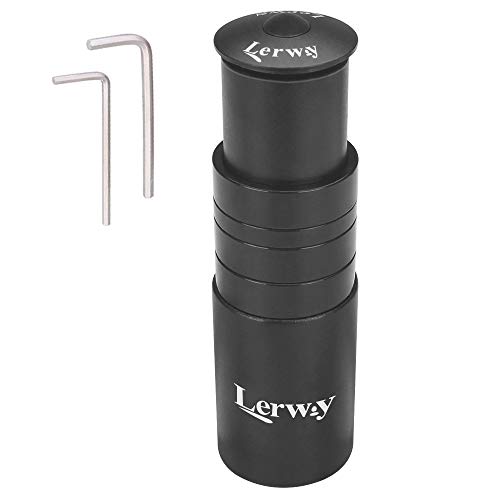
LERWAY Bike Stem Riser Extender MTB Handlebar Stem Adapter

TRIWONDER Bike Stem Riser 28.6mm Handlebar Extender Adjustable 73mm Rise

LUNJE Bike Stem Riser Extender 1-1/8 28.6mm Fork 90mm

Adjustable Bike Stem Riser Bike Handlebar Extender Set 31.8mm 60 Black

Bike Stem Riser & Adjustable Stem Set 31.8mm

Bike Stem Riser 28.6mm Bike Fork Aluminum Adjustable 150mm

BUCKLOS Bike Stem Riser Handlebar Extender for MTB 1-1/8 28.6mm
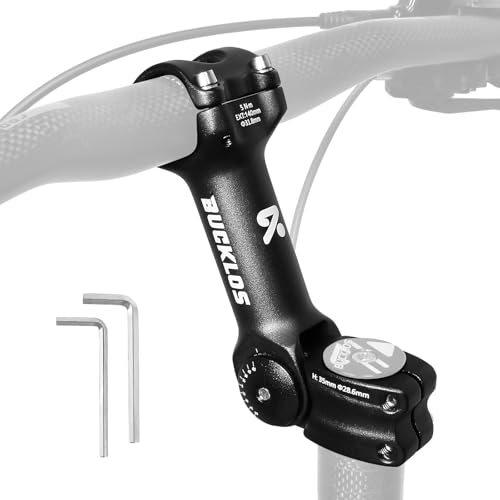
BUCKLOS Adjustable Bike Stem Riser Extender 31.8 25.4mm MTB Handlebar Stem
Inside Each Recommended Option
Commuters who want a taller cockpit without replacing the fork get a straightforward answer here. You get up to 85mm of added height, with spacers to dial the rise in smaller steps. That spacer system matters because a 10mm change can shift weight distribution and reach more than expected.
The body uses forged 6061 aluminium alloy, a grade chosen for a balance of strength and low mass. Total height reaches 120mm and mass sits at 211g, so the addition stays modest on a daily bike. In a busy commute, that upright position can reduce the forward lean that builds up over repeated trips.
What Earns Its Place
- Four spacers allow height tuning in 5mm and 10mm steps
- Forged 6061 aluminium keeps mass low for daily riding
- Two hex keys included for tightening during setup
- Matte black finish matches many cockpit parts
Things To Consider
- Fit requires a 1-1/8 inch threadless steerer tube
- Cable length may need checking after adding 85mm
Road and hybrid riders often need a moderate lift rather than a tall tower. Your steerer tube diameter must match 28.6mm before this one makes sense, and the listing states that check plainly. Rise tops out at 73mm, which suits a mild upright shift for city routes.
Compared with the LERWAY option, mass drops to 180g and clamping uses two stainless steel hex bolts. The package also includes a top cap and a long threaded bolt, so the stack can be completed without hunting for small parts. For most commutes, that completeness saves a separate trip to a parts bin.
A Few Highlights
- Dual-bolt clamp gives a firm grip around the steerer tube
- 180g mass keeps front-end weight modest
- Four spacers support fine height tuning
- Top cap and long bolt included in the set
- Works across MTB, BMX, road and city bikes
Worth Noting
- 73mm rise limits adjustment for riders needing more lift
- Diameter check remains essential before ordering
Who It Suits Best
Road and hybrid riders who need a moderate 73mm lift and a light front end.
Where Another Pick Suits Better
LERWAY Bike Stem Riser Extender MTB Handlebar Stem Adapter suits riders who need up to 85mm of rise.
Size choice drives this pick, with six lengths listed from 90mm to 210mm. You can match a mild lift for a commuter or a longer extension for trail use, rather than forcing one fixed height. Each size is marked, so selection happens before ordering rather than after a return.
The body uses forged 6061-T6 aluminium alloy, a heat-treated variant of the 6061 family. Mass varies by size from 113g to 287g, which explains the trade-off between the compact 90mm version and the tall 210mm version. Two hex keys and a step-by-step guide sit in the package for first-time installers.
What Helps Most
- Six lengths cover mild lifts through maximum extension
- 6061-T6 alloy balances strength with low mass
- Two hex keys included for installation
Trade Offs
- Taller sizes add mass up to 287g
- Long extensions need a cable length check
- Size selection must happen at ordering time
Angle adjustment sets this one apart from the fixed risers earlier in the list. Your handlebar clamp size must be 31.8mm, and the steerer size must be 28.6mm, with a 110mm length and 0 to 60 degree range. That combination changes reach as well as height, which can help on touring rides.
A clear angle indicator and a four-bolt clamp help lock the setting in place. Adjustment happens without removing the stem, a practical detail for riders who test positions over several short rides. The alloy build stays lightweight for road bikes and MTBs, though the moving joint adds a setup step that fixed risers skip.
What Makes Sense
- 0 to 60 degree angle range changes reach and height
- Four-bolt clamp secures handlebar position
- Angle indicator supports repeatable setup
- 110mm length suits many road and MTB cockpits
- Tools included for a quick setup
Minor Gripes
- Angle joint requires periodic bolt checks
- 31.8mm handlebar size is a strict requirement
Long touring days put pressure on wrists and shoulders, and this two-piece set attacks both height and angle. You gain a 115mm riser with four spacers plus a 145mm adjustable stem spanning -90 to +90 degrees. That wide range lets a rider sit more upright for hours in the saddle.
Aluminium construction with an oxidized finish keeps mass down while handling all-mountain use. The package includes two wrenches and an instruction note, so setup stays contained. Compared with a single adjustable stem, the extra riser adds height that angle alone cannot provide.
A Favorable Mix
- Two-piece set combines height and angle adjustment
- Wide -90 to +90 degree stem range
- Four spacers included with the 115mm riser
- Two wrenches included for installation
Room For Improvement
- Two-piece setup takes longer than a single riser
- 31.8mm handlebar size must be confirmed first
- Combined height may exceed cable length on some bikes
Made For
Touring riders who spend long hours in the saddle and need both height and angle control.
Consider Something Else When
BUCKLOS Bike Stem Riser Handlebar Extender for MTB 1-1/8 28.6mm suits riders who want a single simple riser.
Height and angle adjust together here, with 150mm of height adjustment and 120 degrees of angle adjustment. Your fork diameter must be 28.6mm and handlebar diameter 31.8mm, with no room for a mismatch. That dual adjustment suits mountain and road bikes where reach needs a bigger change.
Three-dimensional forged alloy construction forms the core, with a polished and anodized surface. An angle indicator on the joint helps set the position accurately during setup. The kit includes washers in 20mm, 10mm and 5mm sizes, two hex wrenches, a threaded rod, a handle cap and six screws.
Points In Its Favor
- 150mm height adjustment plus 120 degree angle range
- Three-dimensional forged alloy construction
- Angle indicator supports accurate setup
- Full hardware kit included in the package
Points To Note
- Strict 28.6mm fork and 31.8mm handlebar fit
- Multi-part assembly needs more time than a single riser
A 100mm size with 70mm of non-detachable height keeps this extender compact. You keep the cockpit change moderate, which suits MTB, road, e-bike and BMX frames with a 1-1/8 inch steerer. Mass sits at about 144.5g, lighter than several fixed risers in this list.
Spacer count and type can be adjusted to match height, and the package includes a threaded rod, stem cover and dust cover. Cable and brake hose length should be measured before ordering, since even a compact lift can pull at routing. That check takes minutes and avoids a frustrating first ride.
The Upside
- Compact 100mm size for moderate height gains
- About 144.5g mass keeps front end light
- Stem cover and dust cover included
- Fits MTB, road, e-bike and BMX frames
Softer Spots
- 70mm non-detachable height limits maximum lift
- Brake and cable length need a pre-purchase measure
Right Fit For
MTB and e-bike owners who need a compact lift without a tall stack.
Not Your Match When
LUNJE Bike Stem Riser Extender 1-1/8 28.6mm Fork 90mm suits riders who need a taller 210mm option.
Length choice and angle range make this adjustable stem a tuning tool. You adjust height and angle on demand, with lengths from 100mm to 140mm in 10mm steps. The -60 to +60 degree range covers a wide span of riding positions for long rides.
CNC-machined aluminium construction aims for rigidity at low mass. Fit covers a 31.8mm handlebar and a 28.6mm steerer tube, with two hex wrenches included. Clear instructions and simple clamps keep installation straightforward across mountain, road, e-bike, commuter and city bikes.
Bright Spots
- Five lengths from 100mm to 140mm
- -60 to +60 degree angle range
- CNC-machined aluminium for rigidity and low mass
- Two hex wrenches included for setup
Small Caveats
- Handlebar and steerer diameters must both match
- Angle joint needs bolt checks after setup
What Matters Most Before Choosing a Raised Handlebar Setup
Steerer Diameter Comes First
Most picks here require a 28.6mm threadless steerer tube, measured across the tube below the stem. You measure that diameter before ordering, since a mismatch stops installation entirely. Handlebar clamp size, often 31.8mm, needs the same check on adjustable stems.
Rise Versus Angle
Fixed risers add height only, while adjustable stems change height and reach together. A taller riser suits a commuter who needs an upright posture, and angle adjustment suits a rider who also needs shorter reach. The trade-off shows up in setup time, with angle joints needing bolt checks.
Cable Length And Clamp Size
Your brake hoses and gear cables must reach the higher handlebar position without tight bends. A 50mm lift may work with existing routing, while 150mm or 210mm often needs longer housing. Clamp size matters just as much, since a 31.8mm clamp will not fit a 25.4mm handlebar.
Spacer Tuning For Fine Adjustments
Spacers in 5mm and 10mm steps let height change in small increments, which helps find a position that balances comfort and control. For most riders, a 10mm change feels noticeable in reach and weight distribution. Start low, ride, then add or remove a spacer rather than jumping to the maximum.
Key Considerations Across These Picks
Common Shopping Slip Ups
Ordering by height alone causes most fit problems, since steerer and handlebar diameters get overlooked. Measuring both diameters and cable length before ordering avoids a return trip.
What The Higher Tier Buys
Higher tier sets add angle adjustment, forged alloy construction and fuller hardware kits. That extra range pays off for touring riders who test several positions, while a simple commuter gains little from angle joints.
Frequently Asked Questions
What diameter must a steerer tube have for these risers?
Most picks require 28.6mm, or 1-1/8 inch, threadless steerer tubes. Measuring the tube below the stem confirms fit before ordering.
How much height can a riser add?
Options range from about 70mm of fixed height to 210mm lengths and 150mm of adjustment. Spacer steps in 5mm and 10mm sizes help tune the final height.
What is the difference between a fixed riser and an adjustable stem?
A fixed riser adds height only and clamps in one position. An adjustable stem changes both height and angle, so reach changes along with height.
What handlebar size do adjustable stems need?
Adjustable stems in this list use a 31.8mm handlebar clamp. Checking handlebar diameter prevents a clamp mismatch at installation.
Do cables need extra length after adding height?
Longer risers can pull brake hoses and gear cables tight. Measuring cable length before ordering shows whether longer housing is needed.
Final Verdict
You will get the most from matching height, angle and clamp size to a specific riding style. Fixed risers suit simple commutes, while adjustable stems reward riders who test positions over time. Measure diameters first, then choose the rise that fits daily routes.