
A loose gravel path after rain, a park trail that turns to dirt, and a paved route home can all appear in one ride. That mix makes wheel size, gear range, and tire width matter more than styling. This roundup covers adult mountain bikes, a kids model, and electric fat-tire options, so the right choice depends on rider height, trail surface, and how much help pedaling feels useful.
A Side-By-Side Look

StarterRide 26″ MTB Mountain Bike 21-Speed
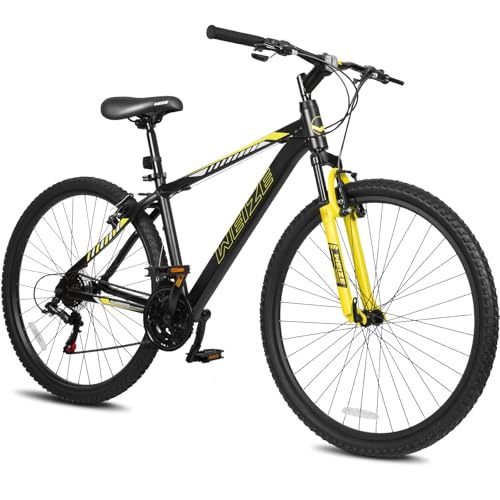
WEIZE Hardtail Mountain Bike 29 Inch Wheels

Glerc 20 24 26 Inch Kids Mountain Bike

AVASTA Thrax Adult MTB Mountain Bike

FLIWIN Electric Bike 20″ Fat Tire Ebike 48V

TST Electric Bike 48V 15Ah Fat Tire

CYBIC 26 Inch Mountain Bike 21 Speed Hardtail

Outroad Mountain Bike Fat Tire 26 Inch
A Closer Look At Each Pick
Petite riders often get lost on full-size frames, and this model targets heights from 5’3″ to 6’0″ with a quick-release seat for fast height changes. A 21-speed drivetrain, meaning the set of gears for pedaling effort, gives lower gears for gentle climbs and higher gears for longer flat stretches.
Front suspension softens bumps, while disc brakes at both wheels, meaning pads squeeze a rotor for stopping, add control on descents. Magnesium alloy mag wheels have no spokes, so cleaning takes less effort after muddy park paths, though spoke replacement is not an option at all.
Points In Its Favor
- Seat adjusts quickly as a rider grows or shares the bike
- Disc brakes front and rear suit mixed pavement and trails
- Reflectors and kickstand help with daily neighborhood use
- 85% pre-assembled, with setup described around 20 minutes
Things To Consider
- 26-inch wheels roll less efficiently than 29-inch wheels on long paths
- Mag wheels cannot be trued like spoked wheels after hard impacts
Unlike the 26-inch StarterRide, this hardtail, meaning suspension only at the front, pairs 29-inch wheels with an aluminum frame. Larger wheels tend to roll over roots and rocks with less interruption, a real plus on gravel paths and light trails.
Trigger shifters let a rider change gears with a push or pull of the fingers, which feels quicker than twist shifting on uneven ground. Knobby tires add grip, and the adjustable comfort saddle supports longer fitness rides, though taller riders will want to confirm frame fit before ordering.
What Earns Its Place
- Aluminum frame keeps weight lower than steel options
- 29-inch wheels help maintain momentum over rough sections
- Front suspension fork absorbs bumps on dirt paths
- Double-wall rims add strength without much added weight
Worth Noting
- 29-inch wheels can feel less nimble on tight, twisty trails
- Hardtail design passes more rear shock to the rider on rough drops
Who It Suits Best
Adult riders who cover longer gravel and light trail routes and prefer trigger shifting.
Where Another Pick Suits Better
StarterRide 26″ MTB Mountain Bike 21-Speed suits petite riders who need a smaller fit range.
For a growing child, sizing matters more than speed, and this line offers 20, 24, and 26-inch versions for ages 6 and up. The 20-inch size fits heights from 45 to 55 inches, with inseam from 21 to 25 inches, so checking those numbers first prevents a cramped or stretched position.
A high-carbon steel frame, front suspension, and disc brakes give a young rider real trail equipment rather than a basic single-speed. At 30 lbs for the 20-inch version, weight is a factor for lifting onto a rack, and assembly covers the front wheel, handlebar, saddle, pedals, and bell.
Benefits That Matter
- 21 speeds help young riders handle hills and varied paths
- Disc brakes give more precise control than rim brakes
- Suspension fork softens rough ground for comfort
Trade Offs
- 30 lb weight can be heavy for small riders to lift
- Brakes may need fine adjustment after initial assembly
- Multiple sizes mean height and inseam must be checked carefully
Choice of wheel size is the headline here, with 24, 26, and 27.5-inch options and quick-release wheels for fit by height. That range makes this a sensible pick for households where riders differ in stature, since one frame family covers more sizes than a single-wheel model.
A high-carbon steel frame and premium suspension fork handle everyday trails, and a 21-speed derailleur, meaning the mechanism that moves the chain between gears, pairs with disc brakes. Setup is 75% pre-assembled, with an installation video, so the remaining work is more than the StarterRide at 85%.
Well-Handled Touches
- Three wheel sizes help match rider height
- Quick-release wheels simplify storage and transport
- Disc brakes and 21 speeds cover hills and flats
- Installation video supports a smoother setup
Minor Gripes
- 75% pre-assembly leaves more setup than some rivals
- Steel frame adds weight compared with aluminum frames
Made For
Adults who want to choose a wheel size based on height and trail style.
Consider Something Else When
WEIZE Hardtail Mountain Bike 29 Inch Wheels suits riders who prefer a lighter aluminum frame.
Electric assist changes the equation for steep climbs and long commutes, and this model uses a brushless motor with 1500W peak power and a stated top speed up to 30 MPH, with a 20 MPH limiter noted in the details. Fat tires and a front suspension fork help on loose trails, while dual disc brakes handle stopping with motor weight in mind.
A removable 48V 16Ah lithium-ion battery, meaning a rechargeable pack that detaches for charging, is stated to reach up to 40 miles in pedal-assist mode and charge in about 5 hours. An LCD display shows speed, mileage, battery level, and gear, and modes cover pure electric, pedal-assist, and standard bicycle use.
Features That Help
- Removable battery allows charging at home or office
- LCD display keeps ride data visible at a glance
- LED headlight and brake-activated taillight aid night visibility
- 7-speed gears help match pedaling cadence to terrain
- 85% pre-assembled with manual and tools included
Room For Improvement
- Electric weight and battery storage need space at home
- Range depends on rider weight, terrain, and assist mode
Dual suspension sets this electric model apart from the FLIWIN, which has front suspension only, and that extra rear damping can reduce fatigue on bumpy paths. A 750W motor with 1500W peak power and 20 by 4-inch puncture-resistant tires aim at grip on sand, snow, and rugged ground.
The removable 48V 15Ah battery is stated to reach up to 60 miles in pedal-assist mode, with charging in 6 to 7 hours, and the bike weighs 66 lbs with a 450 lb maximum load. Three working modes, 7-speed gears, and an LCD display give options, while 90% pre-assembly keeps setup shorter.
Strong Points
- Front and rear suspension smooth rough terrain
- Stated 60-mile pedal-assist range suits longer rides
- Bright front light improves night visibility
- Mechanical disc brakes front and rear add control
Points To Note
- 66 lb weight makes lifting onto racks demanding
- Brakes need inspection and adjustment before rides
Color choice and a straightforward steel build make this a simple trail and commuting option in black, blue, or orange. An 80mm travel suspension fork, meaning the fork can compress up to 80 millimeters, absorbs bumps on dirt paths and gravel trails.
Front and rear mechanical disc brakes give stopping power in varied weather, and the 21-speed system handles hills with smooth shifting. Compared with the aluminum WEIZE, this high-tensile steel frame trades lighter weight for a sturdy, familiar build, and ergonomic geometry aims at a comfortable fit.
Practical Pluses
- 80mm fork softens uneven trail surfaces
- Disc brakes front and rear aid wet-weather control
- 21 speeds cover hills and flat commuting stretches
Softer Spots
- Steel frame is heavier than aluminum alternatives
- 26-inch wheels suit shorter riders better than tall riders
Right Fit For
Riders who want a traditional steel mountain bike for trails and daily commuting.
Look Elsewhere When
Outroad Mountain Bike Fat Tire 26 Inch suits riders facing sand, snow, or very loose ground.
Four-inch wide tires on 26-inch wheels give this non-electric model a clear grip advantage on sand, snow, and loose dirt. That width spreads weight across the surface, which helps in soft terrain where narrower tires tend to sink or slip.
A high-carbon steel frame, front suspension with a thickened shock absorber, and dual disc brakes support off-road use, while 21 speeds help with uphill effort. Tools are included and setup is described at 20 to 40 minutes with an installation video, and fat tires will feel slower and heavier on pavement than standard tires.
The Upside
- 4-inch tires add grip on soft, loose surfaces
- 21 speeds improve uphill speed changes
- Dual disc brakes add stopping control
- Thickened fork helps absorb trail shocks
- Tools included for assembly and maintenance
Small Caveats
- Fat tires roll with more resistance on pavement
- Steel frame and wide tires add overall weight
What To Check Before Riding Off Road
Fit And Wheel Size
Height and inseam decide comfort more than color or styling. A 26-inch wheel often suits petite riders, while 29-inch wheels roll over obstacles more easily for taller riders. Kids models need height and inseam checks before any other feature.
Tires And Suspension
Knobby tires grip dirt and gravel, and fat tires at 4 inches wide help on sand and snow. Front suspension absorbs bumps, while dual suspension on electric models adds rear damping at the cost of weight. Disc brakes matter on descents and wet paths.
Gears And Power
Twenty-one speeds give a wide range for hills, flats, and changing terrain. Electric assist adds help on climbs and commutes, with removable batteries for charging away from the bike. Stated range changes with terrain, rider weight, and assist level, so plan routes with margin.
Key Considerations Across These Picks
Common Shopping Slip Ups
Ignoring inseam for kids, choosing fat tires for mostly pavement, and underestimating electric bike weight are frequent errors. Checking storage space and lifting ability before ordering avoids frustration later.
What The Higher Tier Buys
Aluminum frames, larger wheels, dual suspension, and removable batteries add cost through materials and components. Those upgrades pay off on longer rides, steep climbs, and rough terrain, less so on short neighborhood routes.
Frequently Asked Questions
What wheel size suits most adult riders?
It depends on height and trail style. Riders around 5’3″ to 6’0″ are matched to 26-inch options in this list, while taller riders often prefer 29-inch wheels for rolling over obstacles.
Are fat tires needed for off-road riding?
Fat tires help on sand, snow, and very loose dirt. Knobby standard tires handle gravel and light trails with less rolling resistance on pavement.
How do disc brakes compare with other brakes?
Disc brakes squeeze a rotor for strong, consistent stopping. That design helps on descents and wet surfaces, though pads and rotors need occasional adjustment.
What does pedal-assist mode mean on an electric bike?
Pedal-assist adds motor help while pedaling. Range in that mode is usually longer than throttle-only use, and it changes with terrain and rider weight.
How much assembly should be expected?
Many models arrive 75% to 90% pre-assembled. Front wheels, handlebars, saddles, and pedals often need fitting, with tools and videos included on several models.
Final Thoughts
For mixed pavement and light trails, the StarterRide and CYBIC cover daily riding with different frame choices. For soft terrain, the Outroad fat-tire model or an electric option from FLIWIN and TST adds grip and power. Match wheel size and tire width to the routes ahead, and your next ride will feel far more settled.