
A power meter turns effort into numbers you can compare ride to ride. ANT+ is a wireless protocol that lets sensors send data to a computer or app without cables. Pedal systems move between bikes in minutes, while crank and computer setups solve different problems. Your choice depends on whether training data, route guidance, or simple ride tracking matters most.
A Closer Look At The Lineup

SRAM Force Left Crank Arm Power Meter 165mm

Favero Assioma PRO RL-1 Single-Sided Power Meter Pedals

Favero Assioma Pro RS-2 Dual-Sided Power Meter Pedals
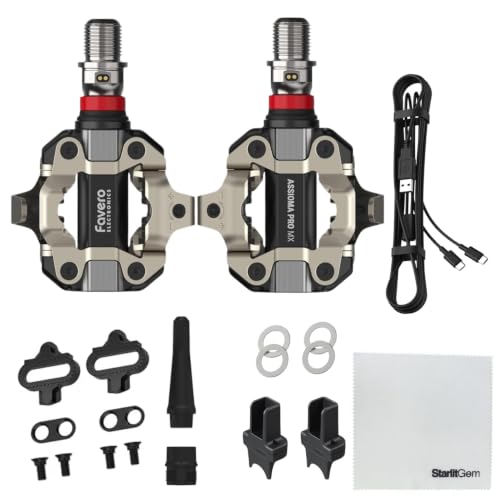
Favero Assioma Pro MX-2 Dual-Sided Power Meter Pedals

iGPSPORT BSC100S GPS Bike Computer 2.6 LCD

iGPSPORT BSC500 GPS Bike Computer 3.3 Touchscreen

GEOID CC700 2.8 Color Screen Bike Computer

CYCPLUS GPS Wireless Bike Computer M1 2.9 LCD
More Details On Our Top Picks
Road riders already running SRAM DUB components get a clean way to add power data without changing pedals. This left crank arm measures left-side output and doubles it for total wattage, a common single-sided approach that keeps the setup light. You need a matching right arm, spider, chainring, and bottom bracket, since those parts ship separately.
The 165mm length and 47.5mm chainline suit a precise fit check before ordering. Carbon construction keeps weight down for performance road riding, and IPX7 protection covers wet conditions up to 1 meter for 30 minutes. ANT+ and Bluetooth LE let a compatible computer or app receive the data.
What Stands Out
- Carbon left arm keeps the crankset light for road use
- ANT+ and Bluetooth LE cover most computers and apps
- IPX7 protection suits rainy training rides
- 165mm length matches a common road fit
Things To Consider
- Right arm and drivetrain parts ship separately
- Single-sided measurement cannot show left and right balance
Unlike the SRAM crank arm, this pedal system moves between bikes in minutes and needs no crank compatibility check. Each pedal weighs 130g, with a carbon-fiber-reinforced techno-polymer body and needle roller bearings. Look Keo cleats in 5 degrees are included for riders already using that system.
Power accuracy is listed at plus or minus 1 percent using the IAV system, which tracks angular velocity for metrics such as cadence, power phase, and pedal smoothness. Your rechargeable battery runs up to 160 hours per charge, and auto-calibration removes manual setup. Three simultaneous Bluetooth connections plus ANT+ cover a computer, watch, and app at once.
Where It Excels
- 130g per pedal keeps road weight low
- 160-hour battery reduces charging frequency
- Auto-calibration simplifies setup between bikes
- Advanced metrics help analyze pedaling technique
- Modular bodies allow road and MTB swaps
Worth Noting
- Look Keo cleat compatibility limits pedal choice
Who It Suits Best
Road riders using Look Keo cleats who want pedal power without crank changes.
Where Another Pick Suits Better
Favero Assioma Pro RS-2 suits riders who want left and right balance data instead.
Dual-sided measurement sets this apart from the RL-1, since each pedal reports its own output. Left and right balance, torque effectiveness, and pedal smoothness come from the IAV system with plus or minus 1 percent accuracy. You get that detail even with oval chainrings, which some single-sided setups handle less cleanly.
At 123.5g per side, the carbon-fiber tech-polymer body stays light for road training. A rechargeable lithium-ion battery provides over 60 hours per charge, shorter than the RL-1 but paired with true dual-sided data. Electronics sit sealed in the spindle, and pedal bodies can be swapped for road or MTB use.
Good Reasons To Consider
- Dual-sided data shows left and right balance
- 123.5g per side keeps road weight low
- Sealed spindle design simplifies body replacement
- SPD-SL cleat compatibility covers SM-SH10, SH11, and SH12
Trade Offs
- Battery life is shorter than the RL-1 at over 60 hours
- Dual-sided pedals cost more than single-sided options
- SPD-SL cleat system must match current shoes
Gravel and MTB riders get a different build from the road-focused RS-2. The MX-2 uses an aluminum 6061-T6 pedal body for rough terrain, with a clipless surface hardness up to 800 HV. That construction suits rocky trails where a carbon road pedal would feel out of place.
Your electronics and rechargeable battery sit inside a compact spindle, and magnetic charging avoids cable tugging issues. One charge provides at least 60 hours of use. Bluetooth and ANT+ connect with most bike computers, watches, and training apps, and installation takes minutes without special tools.
The Upside
- Aluminum body suits gravel and trail use
- Magnetic charging simplifies cable management
- Swaps between bikes like standard pedals
Minor Gripes
- Trail build adds weight compared with road pedals
- SPD cleat system must match current shoes
Made For
Gravel and MTB riders who want dual-sided power on rough terrain.
Consider Something Else When
Favero Assioma Pro RS-2 suits road riders who prioritize low pedal weight.
Power sensors need a head unit to display data, and this computer handles that role at a straightforward level. A 2.6 inch anti-glare LCD shows speed, distance, grade, cadence, calories, time, and temperature among more than 40 data fields. You can read those fields in bright sunlight without touchscreen glare issues.
Five satellite systems support faster positioning, and ANT+ plus Bluetooth 5.0 connect speed, cadence, and heart rate sensors. A 600mAh battery provides up to 40 hours, with USB-C charging for faster turnaround. IPX7 protection covers heavy rain.
The Good Stuff
- 2.6 inch anti-glare screen aids sunlight reading
- 40-hour battery suits long-distance rides
- USB-C charging speeds up refills
- ANT+ and Bluetooth cover common sensors
Small Caveats
- LCD screen lacks map display for route guidance
Route guidance moves to the center here, unlike the BSC100S data-only screen. A 3.3 inch touchscreen shows up to 12 data fields per page, with button operation as a backup. Smart maps accept routes from the iGPSPORT app and third-party apps such as Strava and Komoot.
Your ride gets voice alerts for turns, with advance warnings that adjust to current speed. Dual-band L1 and L5 positioning plus five satellite systems improve accuracy and interference resistance. Off-course detection replans a route automatically, and iClimb 2.0 previews climbs for pacing.
Where It Helps
- 3.3 inch touchscreen shows 12 fields per page
- Voice alerts reduce screen glancing
- Automatic replanning handles missed turns
- Climb preview helps distribute effort
- Dual-band positioning improves location accuracy
Points To Note
- Touchscreen use needs care with gloves
- Route planning works best through the phone app
Right Fit For
Riders who explore new routes and want spoken turn guidance.
Look Elsewhere When
iGPSPORT BSC100S suits riders who want a simpler data screen without maps.
Color and customization define this computer, compared with the monochrome BSC100S. A 2.8 inch color screen with Asahi glass uses a three-button layout, and data pages support charts, dials, line graphs, and bar charts. You can set up to 10 pages with 10 items each from 108 supported data items.
WiFi syncs records and firmware directly on the device, which speeds transfers compared with Bluetooth alone. Five satellite systems plus AGNSS aim for 5-second positioning after a WiFi sync. ANT+ and Bluetooth connect up to 9 device types, and indoor training supports custom power targets and gradients.
Useful Touches
- Color screen with customizable data layouts
- WiFi sync speeds record transfers
- Indoor training supports power targets
Honest Caveats
- AGNSS positioning needs WiFi sync within 14 days
- Three-button control limits on-screen editing
- Color screen may use more power than LCD
A bundled sensor makes this computer ready for speed and cadence tracking out of the box. The included sensor switches between speed and cadence modes, and Bluetooth or ANT+ links it to the computer. Your handlebar mount fits 31.8mm bars and installs in about 60 seconds with the included screwdriver.
The 2.9 inch FSTN LCD uses a backlight that adjusts to sunrise and sunset, with tempered glass for scratch resistance. A 1200mAh battery provides more than 60 hours of working time, and IPX6 protection covers rain. Strava sync runs through the CYCPLUS FIT app.
Well-Handled Touches
- Included speed and cadence sensor starts tracking quickly
- Auto backlight adapts to daylight changes
- 1200mAh battery supports more than 60 hours
- Compact 29g mount keeps setup light
Points To Keep In Mind
- Mount fits only 31.8mm handlebars
- Time zone setup is needed before first use
What To Check Before Adding ANT+ Gear
Match The Sensor To The Bike
Crank arms need exact length, chainline, and spindle compatibility. Pedal systems need cleat alignment with current shoes. A mismatch here blocks installation, so confirm those details before ordering.
Decide What Data Matters Most
Single-sided power keeps cost and weight down. Dual-sided power adds balance data for technique work. Computers add route guidance, sensor display, and training structure, depending on screen type.
Check Battery And Charging Habits
Long battery life suits riders who charge weekly. Magnetic charging reduces cable wear on pedals. USB-C charging speeds turnaround on computers. Match charging style to a realistic routine at home.
Confirm Computer Compatibility
ANT+ and Bluetooth LE cover most modern computers and apps. Older head units may lack Bluetooth, so check supported protocols first. Multi-device support matters for riders using a watch, computer, and phone together.
Key Considerations Across These Picks
Common Shopping Slip Ups
Ordering a crank arm without measuring length causes return hassle. Ignoring cleat type leads to shoe changes. Checking those two details first saves time.
What The Higher Tier Buys
Dual-sided pedals add balance metrics that single-sided systems cannot show. Larger color screens add route guidance and custom layouts. Paying more makes sense for structured training and exploration.
Frequently Asked Questions
What does ANT+ do on a cycling power meter?
ANT+ sends power, cadence, and other sensor data wirelessly to a computer or app. That link lets training data appear on a head unit during a ride.
Are pedal power meters easier to move between bikes?
Pedal systems swap like standard pedals and need no crank compatibility check. Crank arms require matching spindle, length, and chainline.
What is the difference between single-sided and dual-sided power?
Single-sided systems measure one leg and double the value for total power. Dual-sided systems measure each leg and show balance between sides.
Can a GPS computer display power data from a sensor?
Yes, computers with ANT+ or Bluetooth can receive power from compatible sensors. Screen size and data field layout affect how clearly those numbers read.
What should be checked before ordering a crank power meter?
Crank length, chainline, spindle interface, and drivetrain speed count must match the bike. Missing any one detail can prevent proper installation.
Final Verdict
Road riders focused on training data get strong pedal options in the Favero range, while SRAM suits DUB crank setups. GPS computers cover display and route needs at different levels. Match the sensor type to the bike first, then let data needs guide the final choice.