
A wobbly lean against a wall works until the ground slopes, the surface is wet, or a loaded pannier shifts the balance. A proper stand holds the rear wheel area steady, keeps the bike upright for loading, and makes a quick stop feel controlled. Mounting style, length range, and foot design decide whether a stand suits a commuter, a trail bike, or a heavier city frame.
The Shortlist At A Glance

BV Bicycle Kickstand for 24-28 Adjustable

Lumintrail Center Mount Bike Kickstand 24-29 Inch

Schwinn Adjustable Kickstand Black Fits 16-24
Csoalpo Bike Kickstand for 22-26 Adjustable

Bike Kickstand Adjustable Aluminum Rear Mount 20-27.5 inch

Psmriec Bike Kickstand for 22-28 Inch Adult Bikes

Sataway Heavy Duty Rear Mount Kickstand 26-29inch
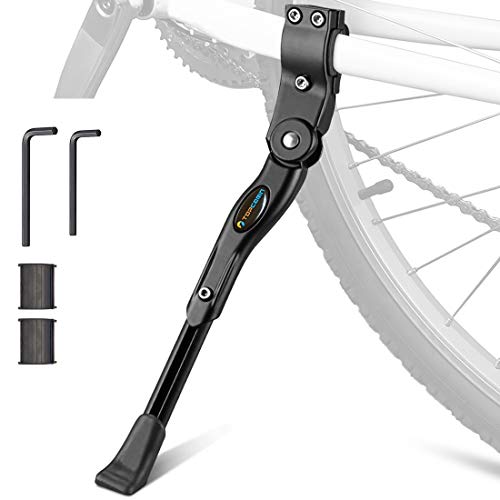
TOPCABIN Bike Kickstand Adjustable Aluminium Alloy 22-28
Meet The Standout Selections
Daily commuting on mixed pavement calls for a stand that adjusts in seconds, and this BV model does that without tools. A concealed spring latch lets the foot slide along the leg, then lock at the chosen length for an any-angle stance. That flexibility helps on uneven ground near a market or a gravel path.
Aluminum alloy construction keeps weight at 0.56 lbs, so the stand adds little burden on a mountain, city, or hybrid frame. A reinforced plastic foot with a non-slip sole resists sliding on wet pavement and sinking in soft mud. Typically, center mounting gives a balanced lean, and a steel hex bolt stops the foot from sliding off the leg.
Standout Benefits
- Tool-free length change for quick stops
- Any-angle stance for uneven surfaces
- Non-slip foot for wet or soft ground
- Lightweight alloy for daily riding
- Steel bolt holds foot in place
Things To Consider
- Center-frame mount only, so frame thickness matters
- Needs at least 2.75 inches pedal to disc clearance
Center mounting changes the feel compared with a rear mount, and the Lumintrail leans into that balance. A push-button latch changes length without tools, so a rider can set a level stance or a slight lean on a slope. That matters on a cruiser used for errands, where loading a basket needs a steady hold.
An included adapter helps on frames without a mounting plate, which widens fit beyond bikes with a factory plate. The wide reinforced foot resists slipping on wet ground and sinking in mud. For most riders, the 13.5 to 16.5 inch range covers 24 to 29 inch wheels with 10.5 to 12 inch ground clearance.
The Upside
- Push-button adjustment without tools
- Adapter included for frames without a plate
- Wide foot for wet or soft surfaces
- Any-angle stance on level or uneven ground
Worth Noting
- Needs space for a center mounting plate
- Not suited to motorized bikes
- Mounting bracket needs an 8mm Allen wrench
Who It Suits Best
A commuter with a cruiser or mountain bike and no factory plate benefits most from the adapter and center balance.
Where Another Pick Suits Better
Sataway Heavy Duty Rear Mount Kickstand 26-29inch suits heavier e-bikes with 40mm chainstay holes more directly.
Smaller wheels change the geometry, and this Schwinn stand targets 16 to 24 inch bikes rather than full-size adult frames. Steel construction gives a straightforward, firm feel for storage at home or a short stop. A top plate and bolt are included for bikes without a factory mounting plate.
Length adjusts without cutting, which helps across different frame heights in that wheel range. Mounting uses a Phillips screwdriver plus a 16mm or adjustable wrench, tools common in a garage drawer. In our view, the simpler design suits a household bike that needs upright storage more than trail-stop flexibility.
Where It Helps
- Steel body for firm upright storage
- Fits 16 to 24 inch wheel sizes
- Top plate and bolt included
- Adjustable length without cutting
Trade Offs
- Wheel range stops at 24 inches
- Steel adds weight compared with alloy options
Compact frames need a shorter stand, and this Csoalpo model covers 22, 24, and 26 inch wheels for mountain, road, and BMX use. A central screw sets foot height between 9-5/6 and 11-2/5 inches, matching the frame clearance range. That narrow window makes measuring first a practical step before fitting.
Thickened aluminum alloy resists rust and wear, with a wide diamond-patterned rubber pad for grip on damp ground. Two wrenches, 4mm and 8mm, plus instructions are included in the package. Often, that included tooling keeps a first installation simple in a driveway or garage.
Noteworthy Benefits
- Shorter height range for 22-26 inch wheels
- Diamond-patterned pad for damp surfaces
- Two wrenches included for installation
- Rust-resistant thickened alloy
- Screw adjustment for precise height
Minor Gripes
- Frame clearance must fall inside a narrow range
- Wheel sizes above 26 inches fall outside fit
- Screw adjustment needs a wrench, unlike tool-free latches
Made For
A rider with a 22 to 26 inch BMX, road, or mountain bike and matching clearance benefits most from this shorter range.
Consider Something Else When
BV Bicycle Kickstand for 24-28 Adjustable suits larger adult frames needing tool-free adjustment on uneven ground.
Rear mounting suits a different parking feel from the center-mount options earlier, and this black alloy stand uses that layout for 20 to 27.5 inch road and mountain bikes. Length adjusts from 13.4 to 15.3 inches by loosening a screw with a 4mm hex wrench. That range helps tune lean angle after a frame change.
Three screws on the upper section secure the stand to a rear bracket with a provided 5mm wrench. A coated aluminum alloy surface resists corrosion in rain, which matters for a bike stored outdoors. Typically, rear mounting keeps the stand clear of the center area, a plus on frames with limited center space.
Bright Spots
- Rear mount for frames with limited center space
- Length range 13.4 to 15.3 inches
- Both hex wrenches included
- Coated alloy resists corrosion
Room For Improvement
- Adjustment needs a 4mm hex wrench
- Rear bracket fit needs checking before fitting
City commuters and trail riders often share a garage, and this Psmriec stand spans 22 to 28 inch bikes plus 700C wheels. Height adjusts between 13.4 and 15.7 inches by loosening screws with a hex wrench. Frame clearance between 9.8 and 12 inches determines fit, so a quick measurement settles compatibility.
Aluminum alloy construction keeps the stand light at 10.5 ounces while resisting rust for indoor or outdoor storage. A wear-resistant sleeve at the base adds friction on concrete, asphalt, or tile. For most daily parking, that sleeve helps the foot stay planted during loading.
A Strong Showing
- Wide wheel range including 700C
- Height range 13.4 to 15.7 inches
- Two hex wrenches included
- Wear-resistant base sleeve for grip
- Lightweight rust-resistant alloy
Points To Note
- Clearance outside 9.8 to 12 inches will not fit
- Height change needs a hex wrench
Heavier bikes place different demands on a stand, and this Sataway rear mount targets 26 to 29 inch e-bikes, fat-tire models, and full-suspension frames. Heavy-duty aluminum alloy forms the leg, with a rear-installed screw for height tuning. An extra-wide non-slip footpad spreads contact on slick or irregular ground.
Fit depends on a specific detail: chainstay mounting holes spaced 40mm apart. Two M6 bolts are included for installation on frames with those holes. Measuring that spacing first prevents a mismatch, especially on a heavier bike where a loose stand would be more noticeable.
Everyday Wins
- Heavy-duty alloy for heavier bikes
- Extra-wide footpad for slick ground
- Rear screw height adjustment
- Two M6 bolts included
Softer Spots
- Requires 40mm chainstay holes exactly
- Cannot mount on bikes without those holes
- Wheel range starts at 26 inches
Right Fit For
A rider with a 26 to 29 inch e-bike or fat-tire bike and 40mm chainstay holes benefits most from this heavier build.
Not Your Match When
Lumintrail Center Mount Bike Kickstand 24-29 Inch suits lighter cruisers and mountain bikes without 40mm holes.
Fine tuning matters on a bike with oval frame tubes, and this TOPCABIN stand adjusts from 12.2 to 14.2 inches with an integrated wrench. That shorter range fits 22 to 28 inch mountain, road, BMX, and MTB frames with 9.8 to 11.8 inch clearance. Measuring clearance gives a clearer fit check than wheel size alone.
Aluminum alloy with a rust-resistant finish suits daily commuting and off-road rides in varied weather. A wide anti-slip reinforced rubber foot resists wet surfaces and sinking in mud without blocking pedal movement. Two hex keys and a pair of rubber mats are included in the package.
Where It Excels
- Fine length tuning from 12.2 to 14.2 inches
- Wide rubber foot for wet or soft ground
- Fits oval tubes 15 to 25mm diameter
- Rust-resistant alloy finish
Small Caveats
- Clearance must stay between 9.8 and 11.8 inches
- Overtightening can damage threads
What Matters Most Before Choosing Bicycle Kickstand
Mounting Position And Frame Fit
Center mounts balance the bike near the middle, while rear mounts suit frames with limited center space. Frame thickness, plate presence, and chainstay hole spacing decide which style fits. Measuring clearance from frame to ground gives a direct check before ordering.
Length Range And Adjustment Style
Tool-free latches change length in seconds for frequent stops on varied ground. Screw adjustments need a wrench but allow fine tuning at home. A wider length range helps across bike changes, while a narrow range suits a single frame.
Foot Design And Ground Conditions
A wide foot spreads load on gravel, mud, or wet pavement and resists sliding. Rubber or reinforced plastic soles add grip on smooth surfaces. Foot width matters more on soft ground than on a garage floor.
Material And Weight
Aluminum alloy keeps weight low for daily riding, while steel offers a firm feel for smaller bikes. Heavier e-bikes benefit from a heavier-duty leg and wider pad. Material choice should match bike weight and storage conditions.
Key Considerations Across These Picks
Common Shopping Slip Ups
Relying on wheel size alone leads to mismatch, because clearance and mounting holes vary between frames. Measuring frame-to-ground distance and checking plate or hole spacing prevents most fit problems.
What The Higher Tier Buys
Higher-tier stands often add tool-free latches, wider feet, and heavier alloy for loaded bikes. That extra structure pays off on uneven ground or with an e-bike, while a simple commuter gains less from the added complexity.
Frequently Asked Questions
How do I measure clearance for a kickstand?
Measure from the frame mounting area straight down to the ground with the bike upright. Compare that number with the clearance range listed for the stand before fitting.
What is the difference between center mount and rear mount?
Center mount attaches near the middle of the frame and balances the lean from the center. Rear mount attaches near the chainstay and suits frames with limited center space.
Can a kickstand handle soft or wet ground?
A wide non-slip foot helps on wet pavement and soft mud by spreading load and adding grip. The effect depends on foot width and surface softness, so a wider pad suits softer ground better.
Why do some stands need 40mm holes?
Rear-mount stands with two bolts require chainstay holes spaced 40mm apart for correct alignment. Frames without those holes need a center-mount or plate-based design instead.
Does length adjustment need tools?
Some models use a spring or push-button latch for tool-free changes on the go. Others use a screw that needs a hex wrench, which allows finer tuning at home.
Final Thoughts
Matching mounting style to frame design matters more than any single feature. A center-mount tool-free stand suits daily commuters, while a heavy-duty rear mount suits larger e-bikes with 40mm holes. Measuring clearance first keeps the choice straightforward.