
Cadence means pedal revolutions per minute, and a crank-mounted sensor turns that rhythm into live data for indoor training and outdoor rides. ANT+ is a low-power wireless protocol common on bike computers, while Bluetooth Low Energy connects the same data to phones and training apps. You get steadier pacing when the numbers stay visible during intervals, and your setup stays simpler when one sensor feeds the devices already in use.
The Lineup, Simplified
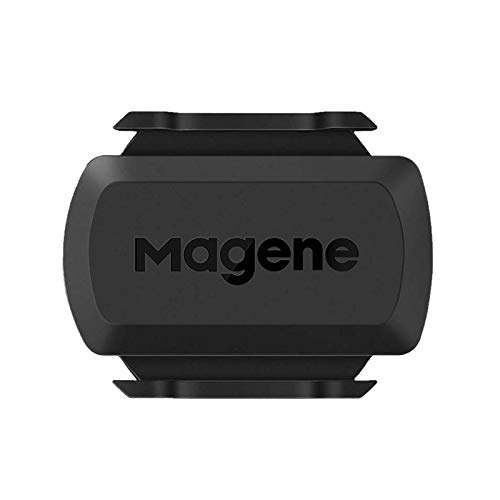
Magene Speed/Cadence Sensor for Cycling

moofit Cadence Sensor Bluetooth/ANT+ IP67

CYCPLUS Cycling Speed & Cadence Sensor

Garmin Cadence Sensor 2 Black

COOSPO Bike Cadence Sensor BK9C

COOSPO Bike Speed Sensor BK9S

GEOID CS600 Cadence/Speed Sensor

COOSPO Cadence & Speed Sensor for Cycling
A Breakdown Of The Leading Choices
The Magene sensor suits riders who want one clear job per unit, with speed or cadence selected at a time. That separation keeps pairing straightforward on a road bike or an indoor trainer, and it avoids confusion during setup. You can plan around two units for simultaneous speed and cadence data.
Bluetooth pairing connects to a single app or device at once, while ANT+ can feed multiple devices together. The sensor sleeps after a minute without movement, which helps preserve battery between rides. Unlike the CYCPLUS dual-mode option, this design asks for a second sensor for both metrics.
The Value In It
- Bluetooth and ANT+ support covers phones and bike computers
- Single-mode operation keeps app pairing easy to manage
- Sleep behavior reduces idle battery drain
- Works with Zwift, Wahoo Fitness, and Onelap setups
Things To Consider
- One unit cannot send speed and cadence together
- Bluetooth connection reaches only one device at a time
- Mode change requires battery reinstallation
The moofit sensor targets spin bike and crank-arm setups where magnets add clutter. Crank attachment keeps installation tidy, and IP67 sealing covers rainy commutes and sweaty indoor sessions. Real-time cadence display helps keep effort steady during structured workouts.
Compatibility spans Wahoo Fitness, Endomondo, OpenRider, TacX, and TrainerRoad, with Peloton limited to iOS. That breadth helps mixed-device households, though Wahoo pairing stays restricted to one third-party sensor at a time. In our view, that limit matters most for riders wanting speed and cadence together in Wahoo.
Where It Delivers
- Crank-arm mounting needs no magnets
- IP67 rating suits wet-weather riding
- Bluetooth 4.0 and ANT+ cover apps and trainers
- Live cadence feeds computers and phones
Worth Noting
- Wahoo app pairs only one third-party sensor at once
- Peloton support is iOS only
Who It Suits Best
Spin bike riders and commuters wanting simple crank-mounted cadence data.
Where Another Pick Suits Better
Garmin Cadence Sensor 2 Black suits Garmin owners wanting tighter ecosystem pairing.
The CYCPLUS sensor stands out for size, at 38 by 29.5 by 9.5 millimeters and 9.2 grams. That small footprint suits riders who notice added weight on the crank or hub. You can move it between bikes with the included elastic bands and tape, without magnet alignment.
A switch toggles between speed and cadence modes, so one unit still serves one metric at a time. Battery life reaches 300 hours in use, with 300 days in standby and sleep mode when motion stops. Compared with the Magene option, mode switching here uses a toggle rather than battery reinstallation.
The Helpful Details
- 9.2g weight keeps added mass low
- 300-hour use time supports long training blocks
- Tool-free elastic mounting moves between bikes
- Bluetooth and ANT+ cover broad device support
- IP67 sealing handles rain and road spray
Trade Offs
- Speed and cadence remain separate modes
- Elastic mounting needs a snug crank or hub fit
The Garmin Cadence Sensor 2 fits riders already invested in Garmin watches and Edge computers. Crank-arm attachment works across sizes, with no magnets or exposed alignment parts to manage. Your Garmin Connect workflow stays central, with data flowing to compatible devices and training apps.
Measurement accuracy is listed at plus or minus 0.5 rpm, tighter than the COOSPO BK9C figure of plus or minus 1 rpm. That difference suits structured training where small cadence changes guide effort. The trade-off is ecosystem focus, since the appeal grows strongest with Garmin hardware.
Well-Handled Touches
- Plus or minus 0.5 rpm stated accuracy
- Mounts to any-size crank arm
- ANT+ and Bluetooth Low Energy both supported
- Easy transfer between bikes
Minor Gripes
- Cadence-only focus, no speed mode
- Strongest value inside Garmin ecosystem
The COOSPO BK9C brings Bluetooth 5.0 and ANT+ to crank-mounted cadence tracking. Stated accuracy is plus or minus 1 rpm across a 40 to 160 rpm range, which covers most training zones. You can feed Rouvy, Zwift, Peloton, or Wahoo during indoor sessions.
IP67 sealing and 300 hours of CR2032 battery life support regular outdoor use. Crank-arm mounting needs no magnets and fits most frame sizes. For most riders, the Wahoo pairing limit for third-party sensors is the main setup check before adding a second sensor.
Bright Spots
- Bluetooth 5.0 plus ANT+ dual connectivity
- 300 hours from a CR2032 cell
- IP67 waterproof sealing
- Magnet-free crank mounting
Small Caveats
- Wahoo app limits third-party sensor pairing
- Measuring range starts at 40 rpm
- Cadence-only design
Made For
Indoor trainers using Rouvy, Zwift, Peloton, or Wahoo on a phone or computer.
Consider Something Else When
CYCPLUS Cycling Speed & Cadence Sensor suits riders wanting a lighter dual-mode unit.
The COOSPO BK9S shifts focus from pedaling rhythm to wheel speed and distance. Hub mounting with included mounts keeps installation magnet-free, and stated accuracy is plus or minus 0.1 km/h. That makes it a natural partner for the BK9C cadence sensor on the same bike.
Bluetooth 5.0 and ANT+ connect to apps, trainers, bike computers, and GPS watches. IP67 sealing covers wet roads, and 300 hours of battery life reduces upkeep. Unlike cadence-only picks such as the Garmin model, this unit tracks speed instead of pedal strokes.
Positive Takeaways
- Hub mounting needs no magnets
- Plus or minus 0.1 km/h stated accuracy
- 300-hour CR2032 battery life
- IP67 waterproof rating
Areas To Watch
- Speed-only design, no cadence data
- Wahoo app limits third-party sensor pairing
The GEOID CS600 covers ANT+ computers, watches, and Bluetooth apps in one dual-protocol design. Compatibility lists include Zwift, Rouvy, Peloton, TrainerRoad, RideWithGPS, and Wahoo Fitness. Your multi-device setup can record the same ride across a head unit and an app for later comparison.
Each unit handles speed or cadence, not both together, so two sensors are needed for a full picture. Sleep starts after one minute without motion, saving power between rides. The honest read is that Wahoo still limits simultaneous third-party data, even with two units installed.
Points In Its Favor
- ANT+ and Bluetooth dual protocol
- Wide app and watch compatibility
- Automatic sleep after inactivity
- Multiple simultaneous data copies
Honest Caveats
- One mode per sensor at a time
- Wahoo cannot track two third-party streams together
Right Fit For
Virtual cycling riders juggling a computer, watch, and phone app at once.
Not Your Match When
Magene Speed/Cadence Sensor for Cycling suits riders wanting simpler single-brand pairing.
The COOSPO dual-mode sensor switches between cadence and speed by changing the battery position. A blue LED signals cadence mode on the crank, while a red LED signals speed mode on the axle. You can repurpose one unit across seasons, though both modes cannot run together.
Bluetooth reaches one app or device at a time, while ANT+ can connect to multiple devices. Compatibility includes Zwift, Peloton, Rouvy, RideWithGPS, and Cyclemeter, plus COOSPO bike computers. Compared with the newer BK9C and BK9S pair, this older-style approach trades simplicity for flexibility.
A Favorable Mix
- Battery position switches speed and cadence modes
- LED indicators confirm active mode
- ANT+ supports multiple connected devices
- IP67 rating listed for wet conditions
Points To Note
- Modes cannot operate at the same time
- Bluetooth limited to one device concurrently
- Wahoo app allows one third-party sensor
What Matters Most Before Choosing Bicycle Cadence Sensor
Protocol Match For Existing Devices
ANT+ suits bike computers and watches that broadcast to several devices at once. Bluetooth Low Energy suits phone apps, where a single active connection is typical. Matching the protocol to existing hardware prevents a sensor that works in theory but not in a current setup.
Single Mode Versus Dual Metrics
Many units send speed or cadence, never both together. Riders wanting both metrics need two sensors or a dedicated cadence unit paired with a speed unit. You can check app limits early, since some platforms restrict third-party pairing.
Mounting, Size, and Battery Care
Crank mounting suits cadence, while hub mounting suits speed. Weight matters on lighter bikes, and sleep mode helps coin cells last between rides. IP67 sealing matters for commuters riding through rain.
Key Considerations Across These Picks
Common Shopping Slip Ups
Assuming one sensor sends speed and cadence together causes most setup frustration. Checking app pairing limits before ordering saves a return trip.
When Paying More Pays Off
Higher-tier pricing often reflects tighter ecosystem integration and finer stated accuracy. Garmin owners gain the most from that step, while mixed-app riders can stay with dual-protocol options.
Frequently Asked Questions
Can one sensor show speed and cadence at the same time?
Most options here send one metric at a time. Two sensors are needed for simultaneous speed and cadence data.
Does Bluetooth connect to multiple devices?
Bluetooth typically connects to one app or device at a time. ANT+ can connect to multiple devices together.
Are magnets needed for installation?
No magnets are needed on the crank or hub options listed. Elastic bands, tape, or included mounts handle attachment.
Which apps work with these sensors?
Zwift, Rouvy, Peloton, Wahoo Fitness, TrainerRoad, and RideWithGPS appear across the range. Wahoo limits third-party sensor pairing to one at a time.
How long does the battery last?
Several models list 300 hours of use from a CR2032 cell. Sleep mode helps preserve charge while parked.
Wrap Up
Garmin Cadence Sensor 2 Black leads for Garmin owners, while CYCPLUS Cycling Speed & Cadence Sensor leads for lightweight dual-mode flexibility. You can match the final choice to existing devices and app limits, and the right pairing will make cadence data a steady part of training.