
Uneven paths, busy sidewalks, and long neighbourhood walks all put extra demand on balance and joints. Adjustable poles let a shorter walker and a taller walker share the same pair, and a telescoping shaft packs down for storage. Nordic walking uses a planted pole and a push through the grip, which engages the upper body while the legs move. Length, grip shape, and lock type decide whether a pair feels steady on pavement, trail, or a rehab walk.
Your height sets the starting length, and your grip comfort sets how long a walk feels manageable. The picks below separate trail-focused aluminum, carbon, and balance-focused grips so the match is clear.
The Essentials At A Glance
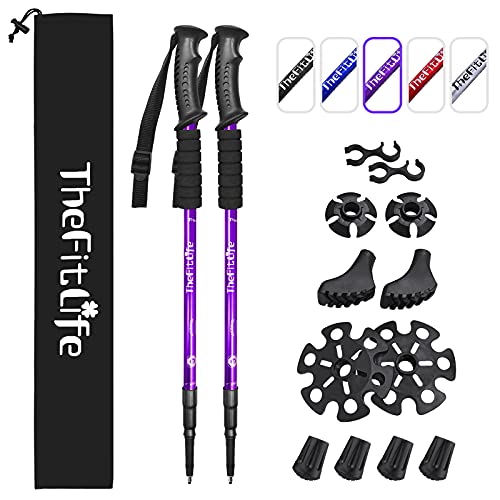
Telescopic Trekking Poles Anti-Shock Nordic Walking Sticks

York Nordic Motivator Walking Poles Patented Stability Grips

Urban Poling ACTIVATOR Walking Poles CoreGrip Handles Pair

York Nordic Motivator Walking Poles Flip Locks 230 lbs

Carbon Fiber Trekking Poles Cork EVA Foam Grips Flip Locks

York Nordic Motivator Walking Poles Balance Rehab 2 Pieces
A Deeper Look At The Lineup
Trail days and neighbourhood walks share a simple need: a pole that adjusts quickly and carries little weight. This aluminum pair extends from 25.6 to 51.2 inches, with a twist lock that suits gloved hands in cold weather. The shaft separates into three sections, and the shortest section measures 21.46 inches for diagonal packing in larger suitcases.
A built-in spring softens impact on descents, which matters on rocky paths where each step lands harder. The rubber grip stays non-slip, and the accessory kit covers rubber tips, walking caps, mud baskets, and snow baskets. For a commuter who also hikes weekends, that range of fittings avoids swapping poles between pavement and trail.
Notable Upsides
- 9.92 oz per pole keeps a full pack lighter on long hikes
- Twist lock adjusts height in seconds without bulky levers
- Shock-absorbing spring reduces jarring on uneven ground
- Full basket and tip kit covers mud, snow, and pavement
- Wide 25.6 to 51.2 inch range fits teens through seniors
Things To Consider
- Three-section packing needs a suitcase interior over 22 inches diagonally
- Twist locks need a firm twist to hold on steep climbs
Balance-focused walking puts the grip at the centre of the design, not the shaft. This pair uses a patented contoured grip with two thumb positions, one for a side grasp and one for a top pinch. That shape aims to reduce strain at the thumb base joint during repeated steps.
The 7075 aluminum shaft keeps each pole at 9.5 oz, or 11 oz with the round rubber tip. Flip locks adjust the length from 32 to 54 inches, and the stated support limit is 230 lbs. In a rehab setting, the round tip offers a broader contact patch than a thin point on pavement.
What Works In Its Favor
- Dual thumb positions support a more stable hand placement
- Flip locks adjust faster than twist locks on the first pick
- Round rubber tip suits beaches, streets, and indoor paths
- 7075 aluminum keeps weight low without a carbon shaft
Worth Noting
- Round tip suits pavement more than loose mountain scree
- Contoured grip takes a short practice period to learn
York Nordic Motivator Walking Poles Patented Stability Grips
Who It Suits Best
Walkers focused on balance, rehab, and joint support on smooth surfaces benefit most.
Where Another Pick Suits Better
Carbon Fiber Trekking Poles Cork EVA Foam Grips Flip Locks suits hikers who prioritise low weight on mountain trails.
Recovery walking often starts with a grip that keeps the wrist neutral rather than bent. The CoreGrip handle shapes the hand position to engage core muscles during each stride. The design comes from an occupational therapist and gerontologist, with a focus on posture and walking speed.
Each pair weighs 1.44 lb, and each pole carries a stated weight-bearing capacity of 200 lb. Height adjustment runs from 4 feet 2 inches to 6 feet, and the collapsed length is 29 inches. That shorter collapsed size fits a hallway closet more easily than the 25.6 inch telescopic pair in pick one, though the extended range is narrower.
Noteworthy Benefits
- CoreGrip handle keeps the wrist in a neutral position
- 1.44 lb per pair stays easy to carry on short walks
- 29 inch collapsed length stores in tight spaces
- 200 lb capacity per pole supports steady leaning
Minor Gripes
- Height range tops out at 6 feet, so taller walkers need a different pair
Similar in purpose to pick two, this version leans on the same patented grip and flip lock system. The shaft adjusts from 32 to 54 inches, covering heights from 4 feet 6 inches to 6 feet 2 inches. A tungsten steel tip sits at the base, paired with durable round rubber tips for smoother surfaces.
At 9.5 oz per pole, the pair stays light during urban walks, beach paths, and wooded trails. The palm cradle helps maintain a neutral wrist, and the thumb pinch position changes how pressure travels through the hand. That difference in grip geometry is the main reason to choose this shape over a standard trekking grip.
Where It Delivers
- Two thumb positions give grip options on long walks
- Flip locks change height quickly between walkers
- Round rubber tips add stability on hard ground
Trade Offs
- Rubber tips wear on rough rock and need replacement over time
- Flip lock levers can catch on pack straps during transport
- 54 inch maximum suits most adults, not taller hikers
Made For
People walking on pavement, beaches, and gentle trails who want thumb support benefit most.
Look Elsewhere When
Telescopic Trekking Poles Anti-Shock Nordic Walking Sticks suits hikers who need snow baskets and shock absorption.
Backpacking weight adds up fast, and carbon shafts cut that total in a direct way. Each pole here weighs 7.6 oz, which is lighter than the 9.92 oz aluminum pole in pick one. The 3k carbon fiber construction aims to keep strength while trimming grams on long climbs.
Cork grips conform to hand shape, and an EVA foam extension gives a second hold position on steep sections. Metal flip locks secure the shaft from 24 to 55 inches, a wider span than the balance-focused pairs. Neoprene padded straps reduce chafing during repeated planting and lifting.
What Earns Its Place
- 7.6 oz per pole trims pack weight on multi-day hikes
- Cork grip adapts to hand shape during long walks
- EVA foam extension gives a higher hold on climbs
- Metal flip locks hold length securely under load
- 24 to 55 inch range fits short and tall hikers
Points To Note
- Carbon shafts need more care than aluminum on rock strikes
- Cork grips need drying after wet weather to stay fresh
Style rarely drives a pole choice, yet design options change how often a pair gets used. This Motivator set offers over 20 designs, which helps a walker pick a pair that matches personal preference. The underlying grip remains the patented contoured shape with a palm cradle and two thumb positions.
The kit includes detachable rubber feet, snow and sand baskets, and a foldable nylon travel bag. That bundle suits a household where one pair moves between street walks and seasonal trail trips. Flip locks adjust the height, and the neutral wrist position supports longer sessions on flat ground.
Key Advantages
- Over 20 designs let walkers match personal style
- Travel bag keeps poles contained during transport
- Snow and sand baskets cover seasonal surfaces
- Palm cradle supports a neutral wrist position
Small Caveats
- Design choice adds no functional change to the shaft
- Detachable feet need checking before each surface change
What Matters Most Before Choosing Adjustable Nordic Walking Poles
Height Range and Lock Type
Height range decides whether a pair fits a household with mixed statures. Twist locks suit gloved adjustment, while flip locks change length faster between walkers. Check the minimum and maximum against the shortest and tallest user before settling on a model.
Grip Shape and Hand Position
Grip geometry affects wrist angle and thumb pressure during each push. Contoured grips with thumb rests suit balance walking, while cork and foam grips suit long trail days. A neutral wrist position matters more on daily walks than on a single hike.
Shaft Material and Weight
Aluminum tolerates knocks on rock, and carbon trims weight for distance. The difference between 7.6 oz and 9.92 oz per pole shows up after several miles. Material choice should match terrain frequency, not just a preference for lighter gear.
Tips, Baskets, and Packing Size
Rubber tips suit pavement, while baskets stop poles sinking in mud or snow. Collapsed length decides storage in a closet, car, or suitcase. Measure the storage space first, then match the collapsed size to that space.
Key Considerations Across These Picks
Common Shopping Slip Ups
Many shoppers size poles by total height alone and skip grip shape. A correct length with an uncomfortable grip still leads to short walks. Test the thumb position and wrist angle in the product details before ordering.
What The Higher Tier Buys
Higher tier pairs often use carbon shafts, metal locks, and shaped grips. Those changes trim weight and refine hand position, which helps on long or frequent walks. Short neighbourhood walks gain less from the upgrade.
Frequently Asked Questions
How should pole length be set for Nordic walking?
Set the length so the elbow bends near 90 degrees with the tip planted beside the body. A shorter setting suits flat pavement, while a slightly longer setting helps on descents.
Are flip locks better than twist locks?
Flip locks adjust faster and suit walkers who change height often. Twist locks have fewer protruding parts and suit gloved use in cold weather.
Which shaft material suits rocky trails?
Aluminum tolerates impacts on rock more forgivingly than carbon. Carbon suits long distance hiking where weight matters more than impact tolerance.
Can the same poles work on pavement and trails?
A pair with interchangeable tips and baskets can cover both surfaces. Rubber tips suit pavement, and baskets suit mud, snow, or sand.
How often should rubber tips be replaced?
Check the tip before each walk for flattening or cracks. Worn tips reduce grip on smooth ground, and replacement takes seconds on standard fittings.
Final Thoughts
For trail hiking, the carbon pair trims weight on long climbs, while the aluminum telescopic pair adds shock absorption and baskets. For balance and rehab walking, the contoured grip pairs give thumb support that standard trekking grips lack. Match shaft material to terrain, then match grip shape to daily use.