
A rainy Tuesday, a dark garage, and a bike that stays parked for weeks can stall fitness fast. Smart trainers solve that problem by linking a rear wheel or cassette to virtual routes, structured workouts, and live resistance changes. With seven strong options here, you can keep training when outdoor conditions turn against a regular ride. The right choice depends on setup style, noise tolerance, and how closely power data needs to match outdoor efforts.
Wheel-on models keep setup simple, while direct-drive models remove the rear wheel for a more direct feel and steadier resistance. Power accuracy, gradient simulation, connectivity, and storage size separate the picks below, and each review explains where a model fits best in a real home.
A Quick View Of The Lineup

Saris M2 Smart Indoor Bike Trainer (Black)

Garmin TacX Neo 2T Smart Trainer

ThinkRider XXPRO Smart Bike Trainer (Black)
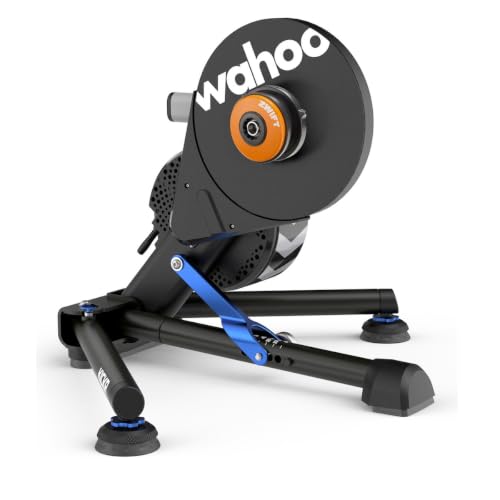
Wahoo KICKR V6 Zwift Click and Cog Trainer

Wahoo Fitness KICKR CORE 2 Zwift Cog and Click

Wahoo Fitness KICKR CORE 2 11 Speed Cassette

ThinkRider X2Max Smart Bike Trainer
The Strengths Of Each Pick
The Saris M2 suits riders who want smart training without removing a wheel. A wheel-on design clamps to the rear tire, so setup stays quick between outdoor rides and indoor sessions. In our view, that simplicity matters most for beginners building a routine.
Electromagnetic resistance adjusts in measured steps, and power accuracy sits within plus or minus 5 percent. Dual ANT+ FE-C and Bluetooth links connect to indoor apps, including Zwift. A Clutch knob helps set tire contact, while a steel quick-release skewer fits common road and mountain frames.
The Upside
- No wheel removal keeps transitions between rides simple
- Electromagnetic resistance gives consistent, controlled workouts
- Dual ANT+ and Bluetooth support covers most app setups
- Steel skewer included for common frame types
Things To Consider
- 69 decibels at 20 mph needs a mat and room for tire noise
- Plus or minus 5 percent accuracy trails direct-drive rivals
Unlike the Saris M2 wheel-on design, the Garmin TacX Neo 2T uses direct drive with the rear wheel removed. That change creates a steadier feel under hard efforts and removes tire wear from the equation. Riders in apartments often value the calmer sound profile.
Magnetic resistance comes from 32 neodymium magnets, and the frame folds for storage. ANT+ and Bluetooth connect across iOS, Android, macOS, and Windows. Front wheel block, power cable, skewers, and axle adapters for several thru-axle sizes are included.
A Few Highlights
- Direct drive removes tire noise and wear
- Foldable frame saves space in small rooms
- Adapter set covers 130mm, 135mm, and 12mm thru-axle frames
- Works across phone, tablet, and computer platforms
- Front wheel block included for level setup
Worth Noting
- 47.4 pounds makes moving the unit between rooms harder
- Direct drive means removing the rear wheel each session
Power-focused riders get a direct motor drive with plus or minus 1 percent accuracy and no calibration step. Maximum output reaches 2500 watts, and simulated gradient tops out at 25 percent. Those numbers suit steep virtual climbs and standing sprints.
Self-power generation allows use without a power adapter, a clear contrast with plug-in models. Bluetooth and ANT+ connect to Zwift and bike computers. Downhill simulation adjusts resistance with map slope, which keeps descents from feeling flat.
Useful Touches
- Plus or minus 1 percent accuracy supports precise power work
- Self-power generation reduces cable clutter
- 25 percent gradient handles steep virtual climbs
- Downhill simulation follows map slope changes
Trade Offs
- Direct drive requires wheel removal before each ride
- High maximum power suits strong riders more than casual ones
The Wahoo KICKR V6 targets riders who train with structured power goals. Resistance reaches over 2200 watts with accuracy within plus or minus 1 percent, and automatic calibration keeps readings steady. A high-inertia flywheel helps the ride feel closer to outdoor momentum.
Wi-Fi at 2.4 GHz sends ride data quickly to a computer, tablet, or phone. KICKR AXIS feet allow slight side-to-side movement, and compatibility covers almost any 8 to 12-speed bike. Zwift Cog and Click integration simplifies shifting inside Zwift.
What Helps Most
- Plus or minus 1 percent power accuracy for structured training
- Wi-Fi connection keeps data transfer stable
- AXIS feet add natural side-to-side movement
- Works with 8 to 12-speed bikes
- Automatic calibration reduces manual setup
Minor Gripes
- Premium positioning means a larger upfront commitment
- Direct-drive setup takes more time than wheel-on models
New Zwift riders get a simpler entry point with the KICKR CORE 2 Zwift Cog and Click. Direct integration with Zwift Cog and Click removes cassette swapping for many setups. That focus keeps early sessions straightforward.
Integrated Wi-Fi speeds pairing and handles automatic updates on an active network. Smooth resistance and road-like feel come from the KICKR platform, built for hard efforts and structured sessions. Compared with the KICKR V6, this version trades premium features for a cleaner starting setup.
Useful Highlights
- Zwift Cog and Click integration simplifies setup
- Integrated Wi-Fi supports faster pairing
- Smooth resistance suits structured workouts
Small Caveats
- Cog setup suits Zwift-focused riders more than multi-app users
- Direct drive still requires wheel removal
Who It Suits Best
First-time Zwift riders who want a guided setup without cassette decisions benefit most.
Where Another Pick Suits Better
The Wahoo Fitness KICKR CORE 2 11 Speed Cassette suits riders who already own a compatible cassette.
The cassette version of the KICKR CORE 2 keeps familiar shifting for riders with an 11-speed drivetrain. Direct drive gives smooth resistance for hard efforts and structured training. Setup feels straightforward for riders already comfortable with bike mechanics.
Integrated Wi-Fi delivers faster pairing and automatic updates on an active network. The design builds on the original CORE with better connectivity and added KICKR ecosystem features. Riders switching between apps may prefer this cassette route over a Cog-only setup.
Key Advantages
- 11-speed cassette keeps shifting familiar
- Integrated Wi-Fi improves pairing speed
- Smooth resistance supports structured training
- Automatic updates keep firmware current
Room For Improvement
- Cassette compatibility needs checking before ordering
- Wheel removal adds setup time compared with wheel-on trainers
Made For
Riders with an 11-speed bike who want familiar shifting indoors benefit most.
Consider Something Else When
The ThinkRider XXPRO Smart Bike Trainer suits riders chasing higher maximum power and steeper gradients.
The ThinkRider X2Max balances quiet operation with strong power output. A dynamic electromagnetic torque meter reaches 2000 watts with plus or minus 2 percent accuracy. At 30 km/h, noise sits around 58 decibels, which helps in shared living spaces.
BLE and ANT+ dual protocols connect to mainstream cycling software, including Zwift. Resistance simulates up to 18 percent slope and matches map tilt during rides. An I-beam triangular structure supports balance and stability during hard efforts.
Practical Advantages
- 58 decibels at 30 km/h helps shared spaces
- 2000 watts covers most training efforts
- 18 percent slope simulation adds climb realism
- I-beam structure supports stable riding
Points To Note
- Plus or minus 2 percent accuracy trails plus or minus 1 percent rivals
- 18 percent gradient sits below the XXPRO 25 percent ceiling
What Matters Most Before Choosing Trainer For Zwift
Mounting Style And Setup Time
Wheel-on trainers keep the rear wheel installed and suit riders who switch between outdoor and indoor sessions often. Direct-drive trainers remove the wheel for a steadier, quieter feel and no tire wear. Check frame standards and skewer types before ordering, since adapters vary by model.
Power Accuracy And Gradient Range
Accuracy within plus or minus 1 percent supports structured power training, while plus or minus 5 percent suits general fitness riding. Gradient simulation matters for steep virtual climbs, with ranges here from 18 percent to 25 percent. Strong riders benefit from higher maximum power, while beginners rarely need the top end.
Noise, Space, And Connectivity
Noise figures help plan training in apartments, with direct-drive models generally keeping sound lower than wheel-on setups. Weight and folding design affect storage, especially for the 47.4-pound Garmin TacX Neo 2T. Wi-Fi, Bluetooth, and ANT+ support determine pairing stability across phones, tablets, and computers.
Key Considerations Across These Picks
Common Shopping Slip Ups
Many shoppers overlook frame compatibility and order a trainer before checking skewer or thru-axle standards. Others ignore noise and weight, then struggle with storage in a small room. A quick check of adapters, decibel ratings, and folded size prevents most early frustrations.
Why Top Tier Costs More
Higher-tier models add tighter power accuracy, stronger resistance motors, and Wi-Fi or advanced flywheel features. Those upgrades pay off for structured training and frequent use. Casual riders often get enough value from simpler wheel-on or midrange direct-drive options.
Frequently Asked Questions
Does a wheel-on trainer work well with Zwift?
Yes, wheel-on trainers connect through ANT+ or Bluetooth and adjust resistance in Zwift. The Saris M2 uses dual ANT+ FE-C and Bluetooth for that connection.
How accurate should power readings be for training?
Accuracy within plus or minus 1 percent suits structured power workouts best. Models at plus or minus 2 percent or 5 percent still work for general fitness goals.
Which trainer suits a small apartment?
A foldable direct-drive model helps with storage in limited space. The Garmin TacX Neo 2T folds, while quieter direct-drive models reduce sound for shared walls.
Can these trainers simulate steep climbs?
Yes, gradient simulation ranges from 18 percent to 25 percent across these picks. Higher ranges suit steep virtual routes and standing efforts.
What connectivity should a trainer include?
Bluetooth and ANT+ cover most app and bike computer connections. Wi-Fi adds stable data transfer and automatic updates on some models.
Final Verdict
For most riders, the Saris M2 offers simple smart training, while the Wahoo KICKR V6 suits structured power work. Quiet direct-drive fans may prefer the Garmin TacX Neo 2T or ThinkRider X2Max. Match mounting style, accuracy, and noise to the training space, and the choice becomes clear.