
A shared lane at dusk, a Class 3 e-bike humming past, and traffic turning across your path create a clear need for lighting that signals intent, not just presence. Smart helmets add front and rear LEDs, turn signals, brake alerts, Bluetooth audio, or cameras to a standard shell, and the right choice depends on commute length, speed, and how much tech you want to manage. The six options below separate those priorities so your pick matches your route.
The Essentials At A Glance

LUMDEER E-Bike Smart Helmet NTA 8776 LED Turn Signals
ILM Smart Adult Bike Helmet MB101L LED Turn Signal

ASIEVIE Bluetooth Smart Bike Helmet Built-in Speakers
EKUZO DC Smart Bike Helmet Dual HD Cameras Black

Lumos Ultra Bike Helmet 360 Visibility LED Lights

Sena R1 / R1 EVO Smart Communications Cycling Helmet
The Details Behind The Selections
Class 3 speed changes the lighting brief, and this LUMDEER model is built around that reality with NTA 8776, CPSC, and EN 1078 standards for use up to 28 mph. A wireless handlebar remote triggers front and rear turn signals, while sudden braking brings up a bright rear light for about three seconds. That setup suits a commuter weaving through intersections where a hand signal alone disappears behind a jacket.
The magnetic photochromic visor darkens in strong sun and clears in low light, so dawn and dusk rides need less visor swapping. Ten vents help airflow on longer stretches, and the listed 12-hour lighting runtime covers a full week of short commutes on one charge in our view. The trade-off is added electronics to charge and a remote battery to replace, which matters for riders who prefer zero charging.
Standout Benefits
- Remote turn signals visible from front and rear
- Automatic brake light alerts following traffic
- Photochromic visor adapts through changing light
- Four lighting modes for different conditions
- USB rechargeable with water-resistant shell
Things To Consider
- Remote uses a CR2032 cell that needs a small screwdriver to replace
- Charging status relies on red and green indicator lights
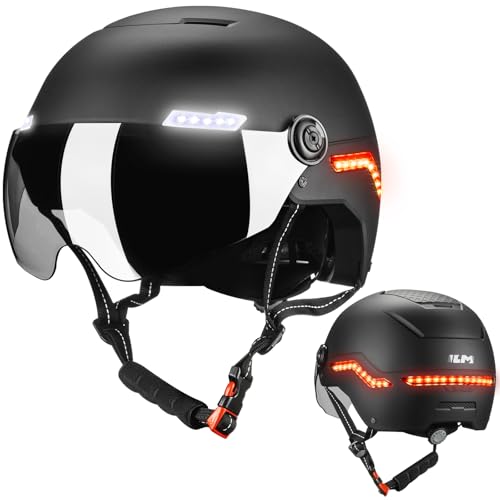
Unlike the LUMDEER option that uses a handlebar remote, the ILM MB101L triggers turn signals with a gentle head tilt through its gravity sensor. Front, side, and rear light bars give visibility from more angles, and the brake light reaches full intensity during sudden stops. Riders who keep hands on the bars during training loops will value that hands-free approach.
An ABS shell with an EPS liner handles impact energy, and the shell meets NTA 8776, CPSC, CE, and ASTM standards for speeds up to 28 mph. Ten vents, an adjustable dial fit, and a removable liner address heat and fit across head sizes. The detachable tinted visor blocks sun, wind, and debris, though it stays fixed in tint rather than adapting like the photochromic visor on the LUMDEER model.
Reasons It Performs
- Head-tilt signals keep hands on the handlebars
- Front, side, and rear lights improve side visibility
- Dial fit adjusts for different head sizes
- Removable liner simplifies cleaning after sweaty rides
Worth Noting
- Fixed tint visor needs swapping for night rides
- Side light bars add width around the helmet profile
Who It Suits Best
Road cyclists and e-bike riders who prefer signaling without a remote.
Where Another Pick Suits Better
The Lumos Ultra Bike Helmet 360 Visibility LED Lights suits commuters who want app control and sync with other Lumos lights.
Solo audio is the main draw here, with built-in speakers and a microphone paired through Bluetooth 5.3 for music and calls. An 80-lumen headlight, front and rear LED turn signals with remote control, and an automatic brake blinker keep the safety side covered. At 365 grams, the shell stays light for riders who wear a helmet through a full commute.
Nineteen ventilation holes move air across the head, and the 1000mAh battery lists 4 to 18 hours of music playback depending on light use, with up to 120 days of standby. That range is wide, so heavy light use will shorten playback in most cases. Bluetooth here covers earphone functions only, with no intercom for group chat, which separates it from the Sena option later in this list.
Strong Points
- Built-in speakers avoid separate earbuds
- Microphone supports hands-free calls
- Remote turn signals plus auto brake blinker
- Lightweight 365-gram shell for daily wear
- 19 vents for airflow on warm routes
Trade Offs
- No intercom for talking with riding partners
- Playback time drops toward the lower end with lights active
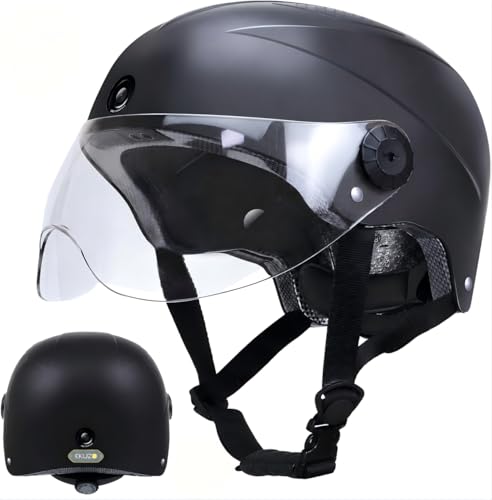
Recording sets this EKUZO model apart from the lighting-focused picks, with a front camera that reaches 2K through the app and a rear camera at 1080P. Recording starts automatically at power-on, so a rider does not need to launch the app before leaving the driveway. That automatic start matters on short errands where setup time often kills the idea of filming.
Bluetooth handles hands-free calls, voice navigation, and music, and an EPS shell with adjustable fit covers head circumferences from 21 to 24.8 inches. IPX5 water resistance and a 4-hour battery support rainy commutes, though opening the app disconnects Bluetooth while recording continues. Riders focused on footage over turn signals will notice the different priority here.
What Works In Its Favor
- Dual cameras capture front and rear views
- Auto-start recording needs no app launch
- Bluetooth for calls, navigation, and music
- IPX5 rating suits wet-weather rides
Minor Gripes
- Four-hour battery limits long recording days
- Opening the app pauses Bluetooth connectivity
- Front 2K resolution requires an app setting
Made For
Riders who record routes for sharing or incident review on e-bikes and scooters.
Consider Something Else When
The LUMDEER E-Bike Smart Helmet NTA 8776 LED Turn Signals suits riders who prioritize signals and brake alerts over video.
The Lumos Ultra leans on a cleaner, sporty shell with front and rear LEDs that provide 360-degree visibility for day and night riding. The included Remote Lite activates rear turn signals, and app control adjusts brightness and modes through USB-C charging. Up to 10 hours of battery life covers a week of commutes for many riders, depending on mode and usage.
Sync compatibility is the distinguishing detail, since pairing with the separate Lumos Remote adds automatic brake lights and flashing sync with compatible Lumos lights. CPSC standards cover the base protection, and select models add MIPS, a low-friction layer designed to reduce rotational forces from certain angled impacts. That extra layer is model-specific, so checking the exact version matters before purchase.
A Few Highlights
- App control for brightness and light modes
- Remote Lite included for turn signals
- Sync with compatible Lumos lights
- USB-C charging for faster top-ups
Room For Improvement
- Automatic brake lights need the separate Lumos Remote
- MIPS layer appears only on select models
Group talk is the core of the Sena R1, with integrated speakers and a microphone plus Bluetooth intercom for up to three other riders within 900 meters. Smartphone pairing adds music and calls, and a dedicated app adjusts friend groups, volume, and other settings. Club rides and family outings gain the most from that range, since a single rider gains little from intercom hardware.
Removable and washable padding, a nylon chinstrap, and a spin lock keep fit and cleaning straightforward. Sizing runs small, so checking head circumference against the size chart matters more than usual here. An optional visor is sold separately for sun protection, and lighting features from the other picks are absent, which keeps the focus narrow and clear.
Key Advantages
- Intercom with up to three other riders
- 900-meter range for group communication
- Smartphone music and call access
- Washable padding for easier upkeep
Points To Note
- Sizing runs small, so size checks matter
- Visor is an optional separate purchase
- No built-in turn signal lighting system
What To Check Before Committing To A Smart Helmet
Signal Method And Speed Rating
Turn signals arrive through a handlebar remote, a head tilt, or an app, and each method suits a different riding style. Speed ratings matter just as much, since NTA 8776 models are built for up to 28 mph while basic CPSC models target lower speeds. Match the rating to your e-bike class before comparing lights or audio.
Battery And Charging Habits
Runtime figures shift with brightness and mode, so a 10-hour claim in steady mode will not match flashing mode on a long night ride. USB-C charging simplifies cable clutter, while proprietary cables add friction at home. Riders with short daily routes can tolerate smaller batteries, and longer tours need the larger capacities listed for the ASIEVIE and LUMDEER models.
Fit, Vents, And Extra Hardware
Dial fit systems, removable liners, and vent counts affect comfort on warm climbs and longer commutes. Extra hardware such as a separate remote for brake lights, an optional visor, or a second camera changes total cost and setup time. Check sizing notes closely, since the Sena R1 runs small and the EKUZO fit range is 21 to 24.8 inches.
Key Considerations Across These Picks
Common Shopping Slip Ups
Skipping the speed rating is a frequent slip, since a helmet built for standard bicycles may not match Class 3 e-bike speeds. Ignoring whether brake lights need a separate remote or come built in also leads to surprise add-on purchases.
What The Higher Tier Buys
Higher-tier models add sync systems, group intercom, dual cameras, and adaptive visors that basic lighting helmets omit. Those extras pay off for commuters in traffic, group riders, and anyone recording routes, while solo daytime riders often gain little from them.
Frequently Asked Questions
Which smart helmet suits a Class 3 e-bike?
A model with NTA 8776 standards and a 28 mph rating suits Class 3 use, such as the LUMDEER or ILM options. Check that rating against your e-bike class before comparing lighting modes.
How do turn signals work on these helmets?
Some models use a handlebar remote, others use a head tilt sensor, and the Lumos Ultra uses Remote Lite. Each method keeps hands in a different position during turns.
Can a smart helmet handle calls and music?
Bluetooth models such as the ASIEVIE, EKUZO, and Sena R1 pair with a smartphone for audio. The Sena R1 also adds intercom for group conversation within its stated range.
What battery life should commuters expect?
Listed runtimes range from 4 hours for recording to 12 hours for lighting, depending on mode and features in use. Brighter and flashing modes typically reduce runtime compared with steady modes.
Are cameras worth choosing over extra lights?
Dual cameras suit riders who want route footage or incident review, while extra lights suit riders focused on visibility in traffic. The EKUZO prioritizes recording, and the LUMDEER prioritizes signals and brake alerts.
Final Verdict
For faster e-bike commuting, the LUMDEER E-Bike Smart Helmet NTA 8776 LED Turn Signals combines remote signals, brake alerts, and an adaptive visor in one package. Group riders should look at the Sena R1 for intercom, and riders who record trips should consider the EKUZO dual-camera model instead.